
The complete guide
How To Choose A World Globe For A Desk, A Study Or A Classroom
The problem a globe quietly solves
Ask a child where Argentina is and they will probably reach for a phone. The phone gives a correct answer and almost no context. The map opens zoomed in, the surrounding countries scroll off the edge, and three seconds later the question is gone.
A globe behaves differently. You spin it, you find the country, and in the same glance you see which ocean it faces, which neighbours it shares a border with, and how far it sits from home. Nothing is cropped out. That is the whole argument for keeping a physical globe on a desk in a house full of screens, and it is why a 30cm world globe still earns its space.
There is a second thing a globe does that flat maps cannot. Every flat world map distorts something, usually by making the countries near the poles look enormous. A sphere does not have that problem. Children who grow up with a globe in the room develop a more accurate sense of relative size without anyone having to explain projection error to them.
What you are actually buying here
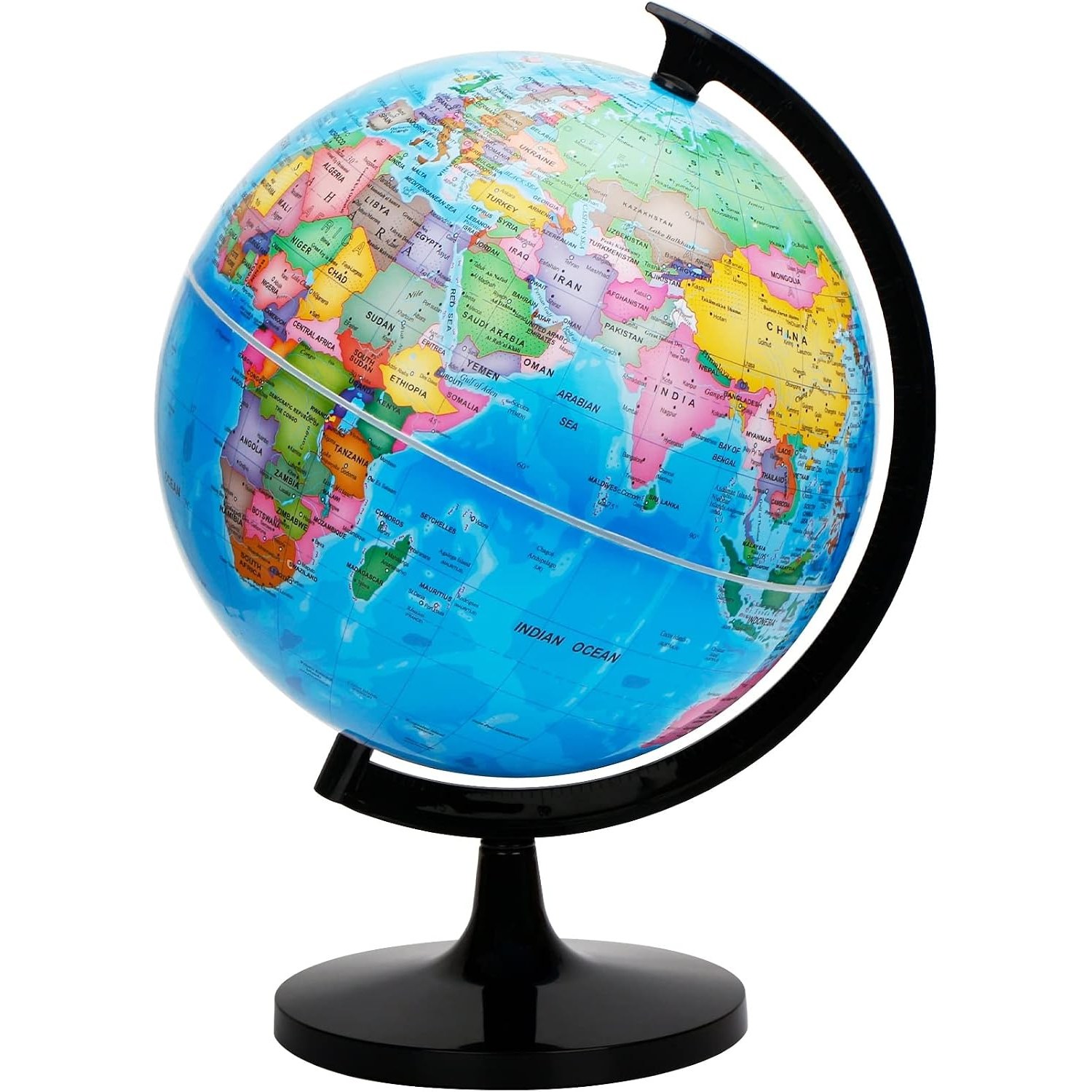
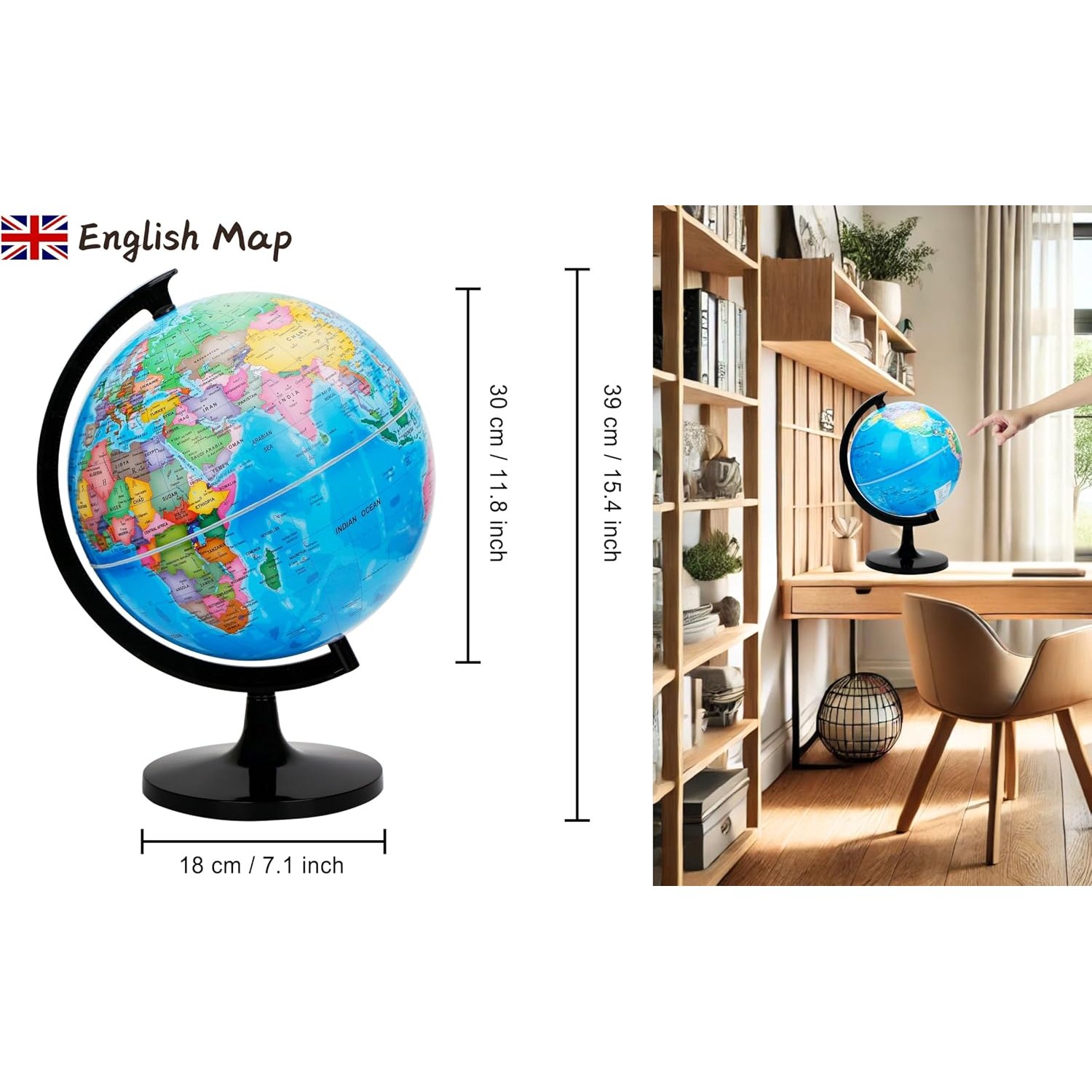
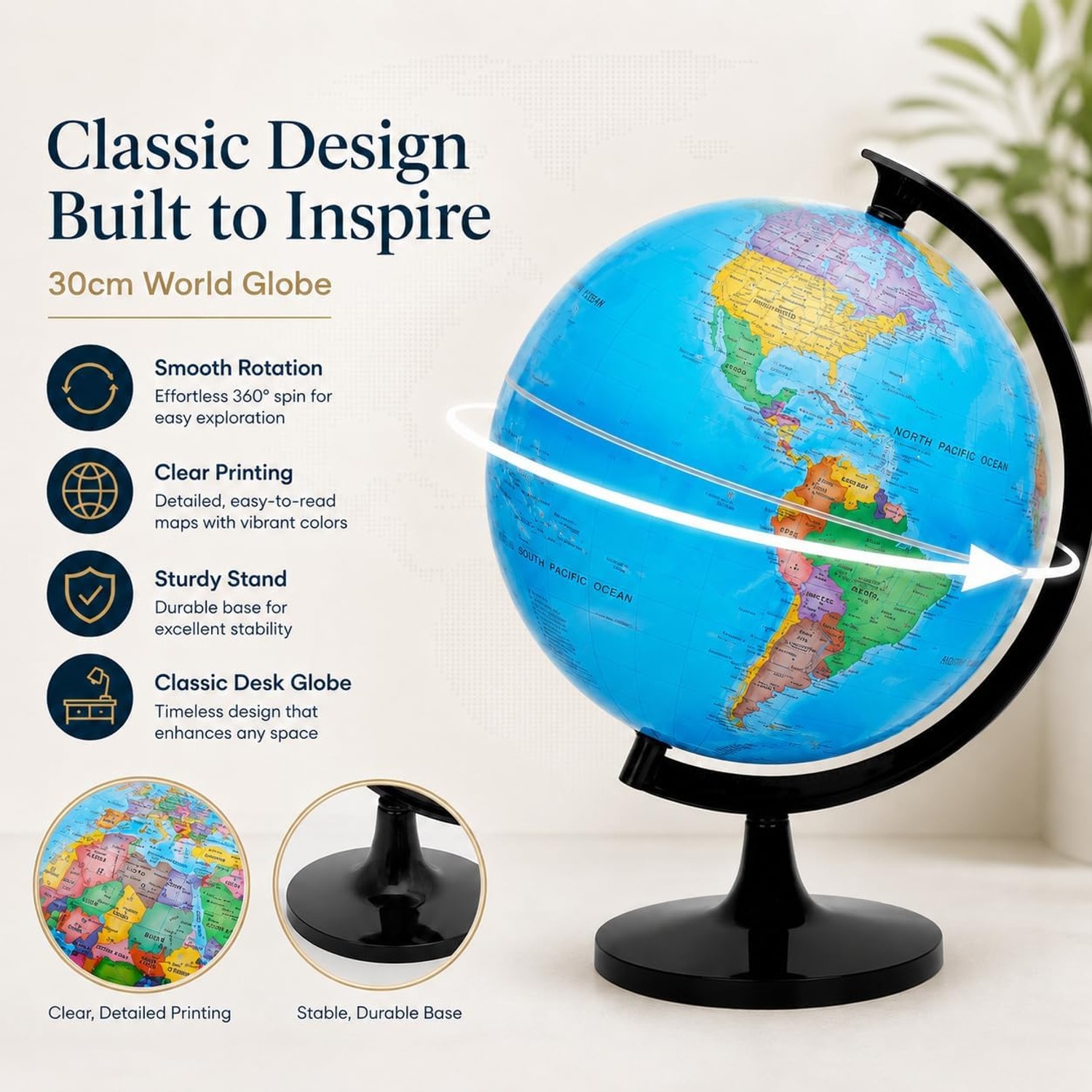
This is a 30cm sphere, which is 12 inches across, standing 39cm tall once it is mounted on its base. It is made from ABS plastic with a plastic base, printed in blue, and the whole thing weighs 1.1 kg.
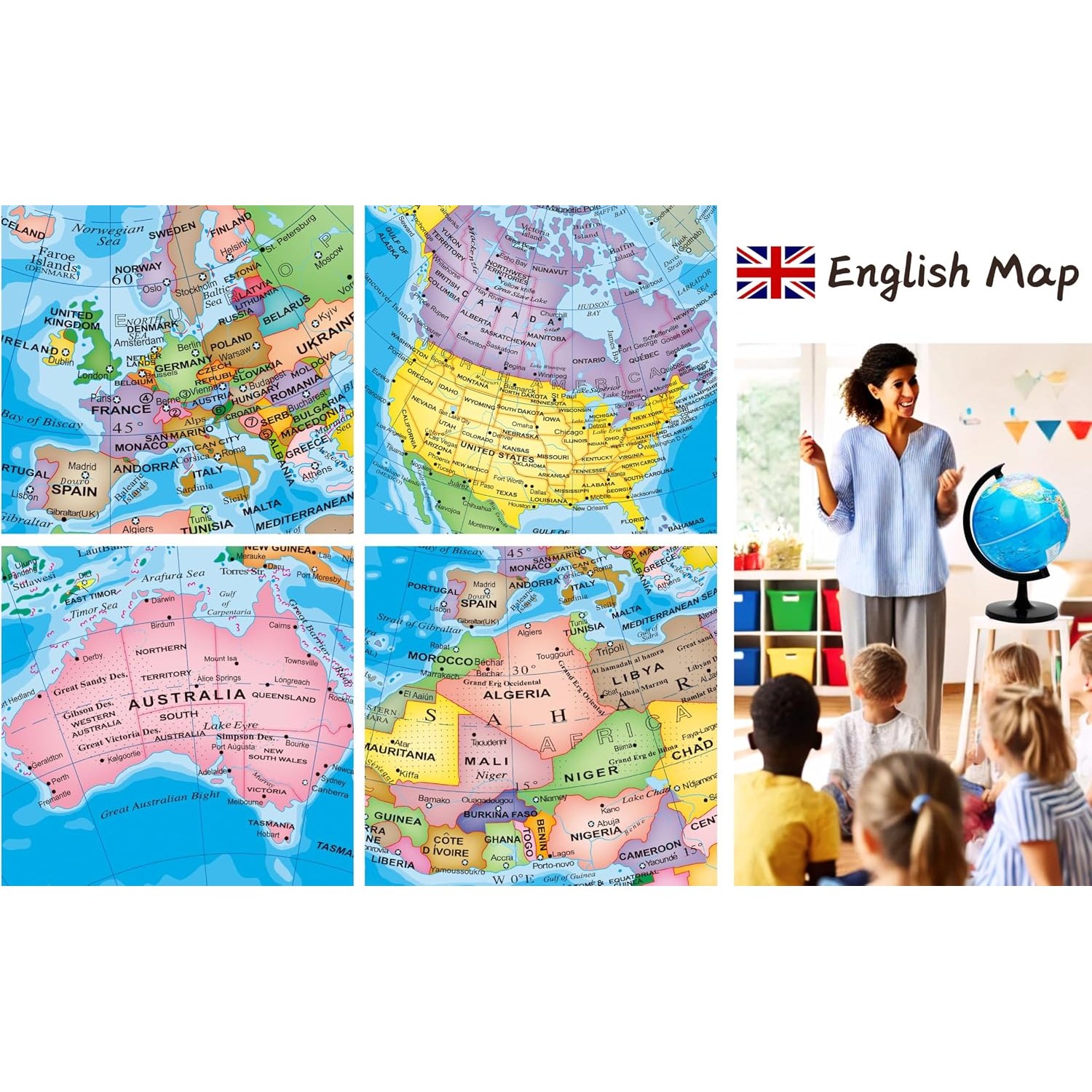
The map is political. That means the design priority is countries, political boundaries, capital cities and major cities rather than mountain ranges and ocean depths. For school work, this is usually the more useful choice, since most geography teaching starts with who is where and what the capital is called.
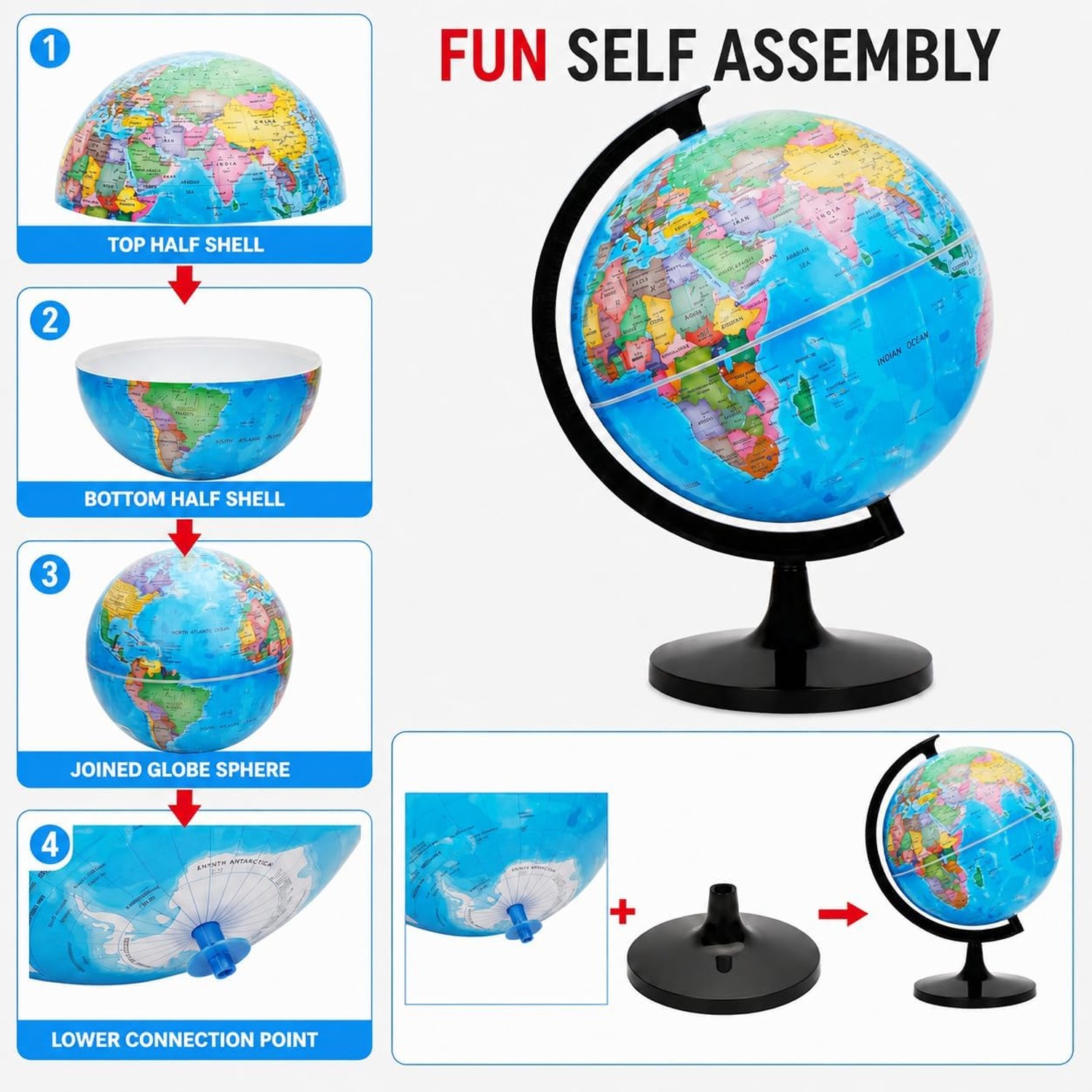
The other distinguishing feature is that it arrives as a kit. You build it at home using the step-by-step instructions included in the packaging. No specialist tools are involved, and the sequence is written for ordinary home assembly.
Why self-assembly is worth the extra half hour
There is a practical reason and a less obvious one.
The practical reason is packaging. A flat-packed globe travels in a smaller, sturdier box than a pre-built sphere, which means less chance of arriving dented and less bulk sitting in a cupboard before a birthday.
The less obvious reason is ownership. A child who has handled the parts and watched the sphere take shape treats the finished object differently. They know how it is held together. They are more likely to spin it, look things up on it and keep it on the desk instead of shoving it on top of a wardrobe. For families hunting for a best self assembly globe, that shift in attitude is the actual product.
The guidance is children over 8 years old with adult supervision. In practice, an adult handling the fiddlier steps while the child does the rest works well. Clear a flat table so parts do not roll off, lay everything out before you start, and read the whole instruction sheet once before touching anything.
Picking the right size
Globe sizes cluster into three rough groups.
Small globes, under 20cm, look charming and cost less, but the printing gets cramped. Smaller countries end up with a dot and a number keyed to a legend, which is frustrating for the exact person who most needs the name spelled out.
Desk globes, around 25cm to 33cm, are the sweet spot for homes and small-group use. There is enough surface area for proper city labels while the whole thing still fits on a bookshelf. This globe sits right in that band at 30cm, with a 39cm total height that clears most standard shelf gaps.
Floor globes, 40cm and up, are impressive and expensive, and they need a dedicated spot in the room. They suit libraries and large offices more than bedrooms.
If you are choosing a best 12 inch globe for a child's desk, measure the available shelf depth and height first. Allow a few extra centimetres above the 39cm so there is room to lift the globe out and back.
Political map or physical map
A political map shows the human world, the borders, the capitals and the big cities. A physical map shows the natural world, with shaded terrain, deserts, mountain chains and ocean floors.
Most families get more out of a political map. School homework, news stories and family conversations about travel almost all run on country names and capitals. This globe is a political map globe, so it matches that daily use.
If someone in the house is deep into geology or climate, a physical map globe is the better companion piece. Plenty of people end up owning one of each, placed in different rooms.
Who it suits
Children from around 8 upwards get the most direct value, since that is the age when country names start appearing in schoolwork and in conversation. A best world globe for kids is one that is readable at arm's length and tough enough to be spun daily, and 30cm of ABS plastic handles both.
Home learners benefit from having the same reference object available all day rather than only during a lesson. A best globe for a child's bedroom gets picked up at odd hours, which is exactly when curiosity actually strikes.
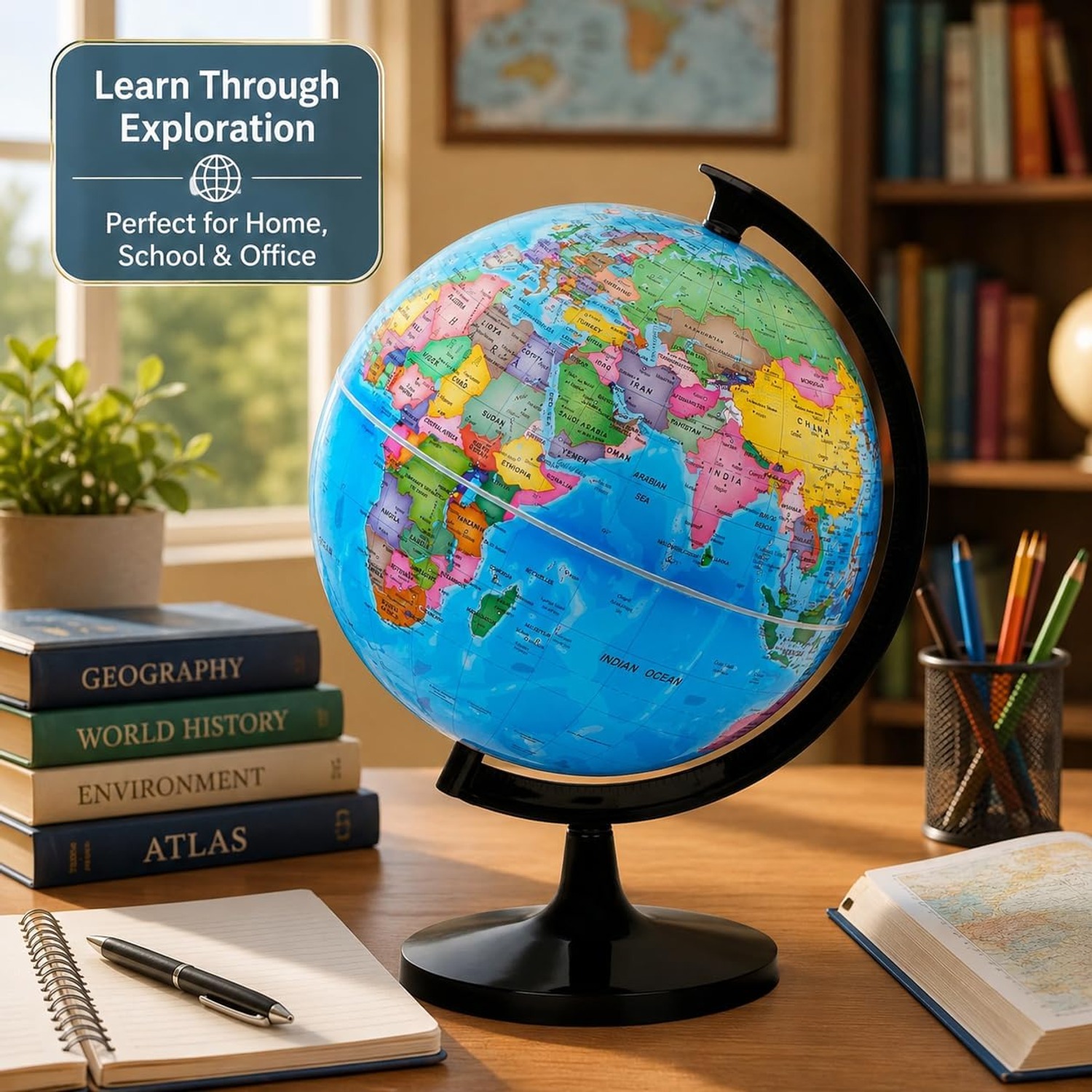
Adults buy globes too, often for a study or a home office. A political globe on a desk is a conversation starter and a quiet signal about how you like to think. A best desk globe for a home office does not need to do anything clever, it just needs to be well printed and easy to turn.
Teachers and tutors working with small groups will find this size workable around a table. For a full classroom viewed from the back row, go larger.
Living with it day to day
Keep it somewhere it gets used. A globe tucked in a corner becomes an ornament, while a globe within arm's reach of the homework chair becomes a tool.
Dusting is the main maintenance. A dry soft cloth or a clean soft brush is all it needs, and a quick pass once a week keeps the printing crisp. For a sticky fingerprint, a barely damp cloth works, but dry it straight away. Sprays, solvents and abrasive pads are the enemy of printed ink, so keep them well clear.
Sunlight is the other thing to watch. Any printed map fades under months of direct sun. Moving the globe a metre back from a bright window is usually enough.
If the sphere starts to wobble on the stand, that is nearly always a fitting that has loosened with repeated spinning. Hand-tighten it and the spin comes back. Do not over-tighten, or the rotation stiffens up.
As a gift
It arrives in a craft box, which means it can go straight under a tree or into a gift bag. That removes the awkward problem of wrapping a sphere.
It lands well for a child's birthday, Christmas, the start of a school year, a graduation, or a new office opening. A best birthday gift for a geography lover is often something they would not quite justify buying themselves, and a properly sized globe sits neatly in that category.
One tip if you are giving it to a child. Consider building it together rather than handing over a finished globe. The assembly becomes part of the gift, and the first spin feels earned.
The short version
A 30cm sphere, 39cm tall with the stand, 1.1 kg, ABS plastic, printed as a political world map with countries, boundaries, capitals and major cities. It ships flat and you build it from the instructions in the box, which is recommended for ages 8 and up with an adult nearby.
If you want a readable desk globe that gets used rather than admired, and you quite like the idea of making it yourself first, this is a sensible pick. If you need something visible across a large classroom, or you specifically want shaded terrain rather than borders, look at a larger or physical-map model instead.