
The complete guide
The Buyer's Guide to Choosing a Four in a Row Game
The problem this game quietly solves
There are gaps in a day that are too short for a film and too long to just sit there. Twenty minutes before dinner. A forty-minute train ride. The hour after a long flight when nobody can sleep but nobody can concentrate either. Those gaps usually get filled with a phone, which works, until you notice that everyone in the room is alone on a screen in the same space.
A four in a row game fills those gaps differently. It takes two people, one small board, and about thirty seconds of explanation. Nobody needs to read a rulebook. Nobody needs a charger. You drop discs into a grid, you try to make a line of four, and somebody wins or loses in a few minutes. Then you do it again, usually because the loser wants another go.
That is the whole appeal, and it is why this format has outlasted most of the toys that were popular alongside it.
How the game actually works
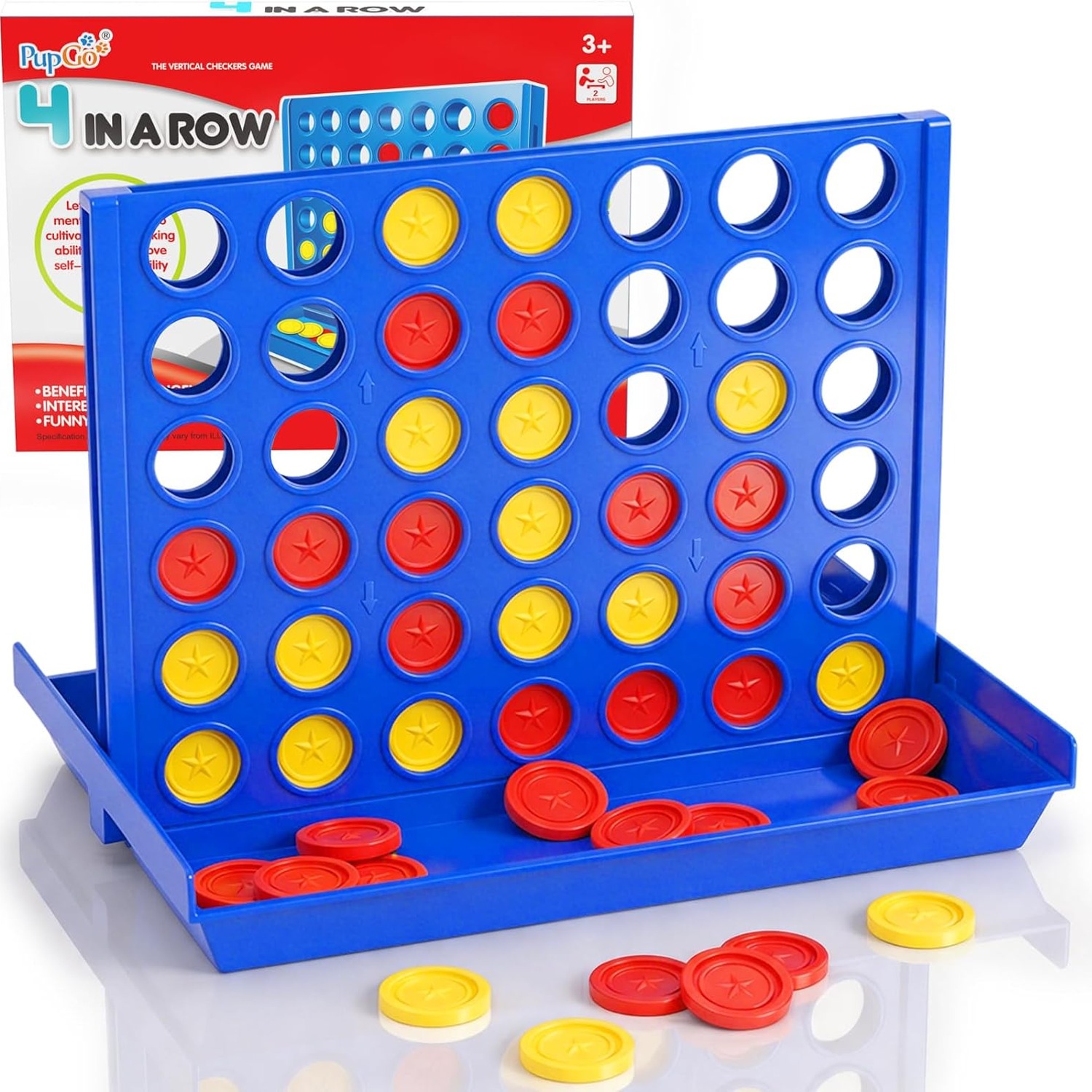
The board is an upright grid with columns. Each player picks a colour and takes turns dropping one of their discs into a column of their choice. Gravity does the rest, so the disc falls to the lowest free slot in that column. You cannot place a disc anywhere you like, and that single limitation is what creates the strategy.
Your goal is four of your own discs in a straight line. Vertical counts, horizontal counts, and diagonal counts. Because your opponent is doing exactly the same thing, every move is split between building your own line and stopping theirs.
New players usually chase their own line and ignore the other side of the board. They lose quickly. The next stage is learning to block. After that comes the real skill, setting up two threats at once so your opponent can only stop one of them. Kids pick this up faster than adults expect, which is part of the fun.
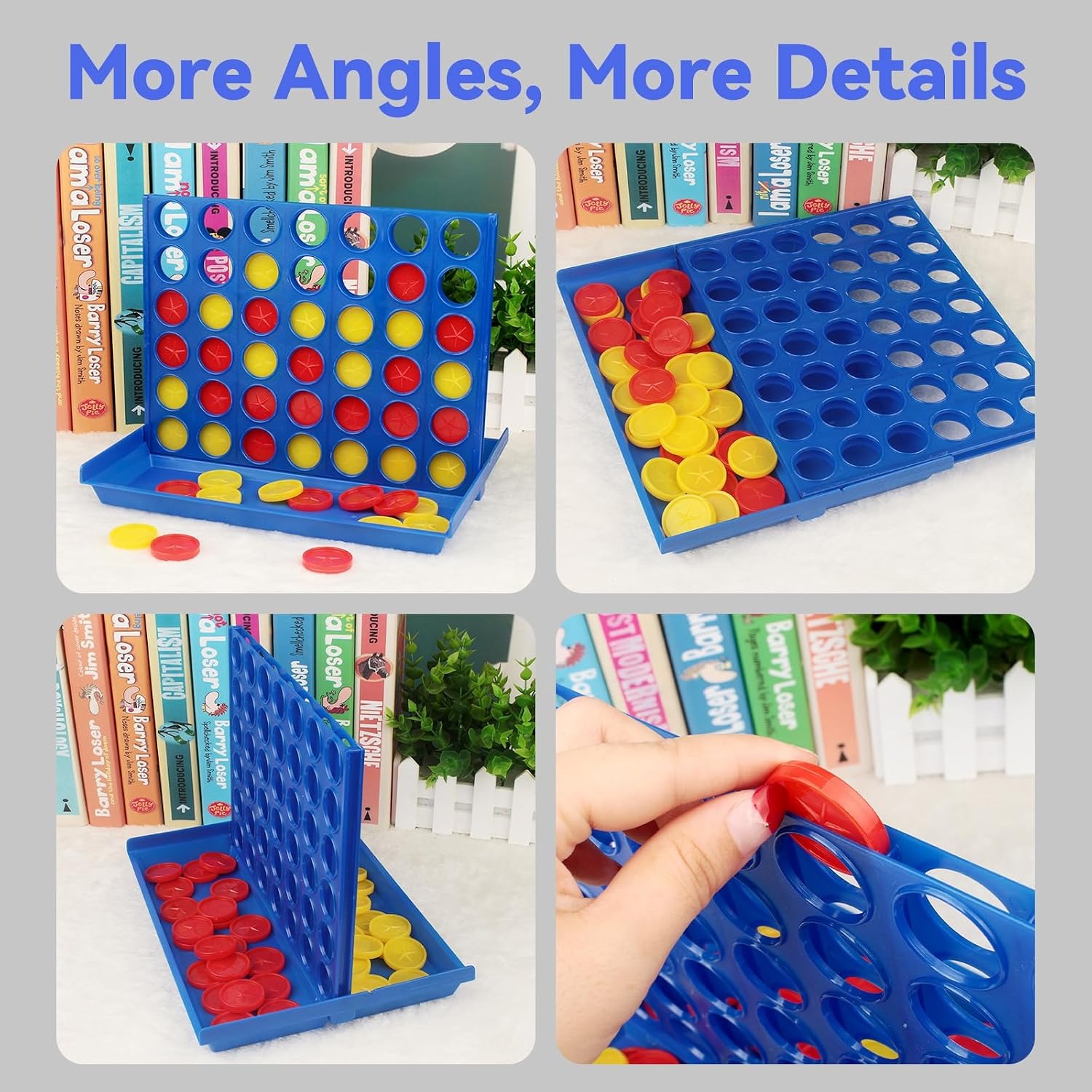
When the round ends, you tilt the upright grid and the discs slide out into the tray below. Reset takes seconds, so a "best of five" is a realistic ask rather than a whole evening.
What you are getting in this set
This set is a grid with a tray, finished in dark blue plastic, plus 48 discs. Of those, 42 are playing discs and 6 are spares. The manufacturer is SHUANGDI and the model is NO.17819, sold under the Pup Go brand.
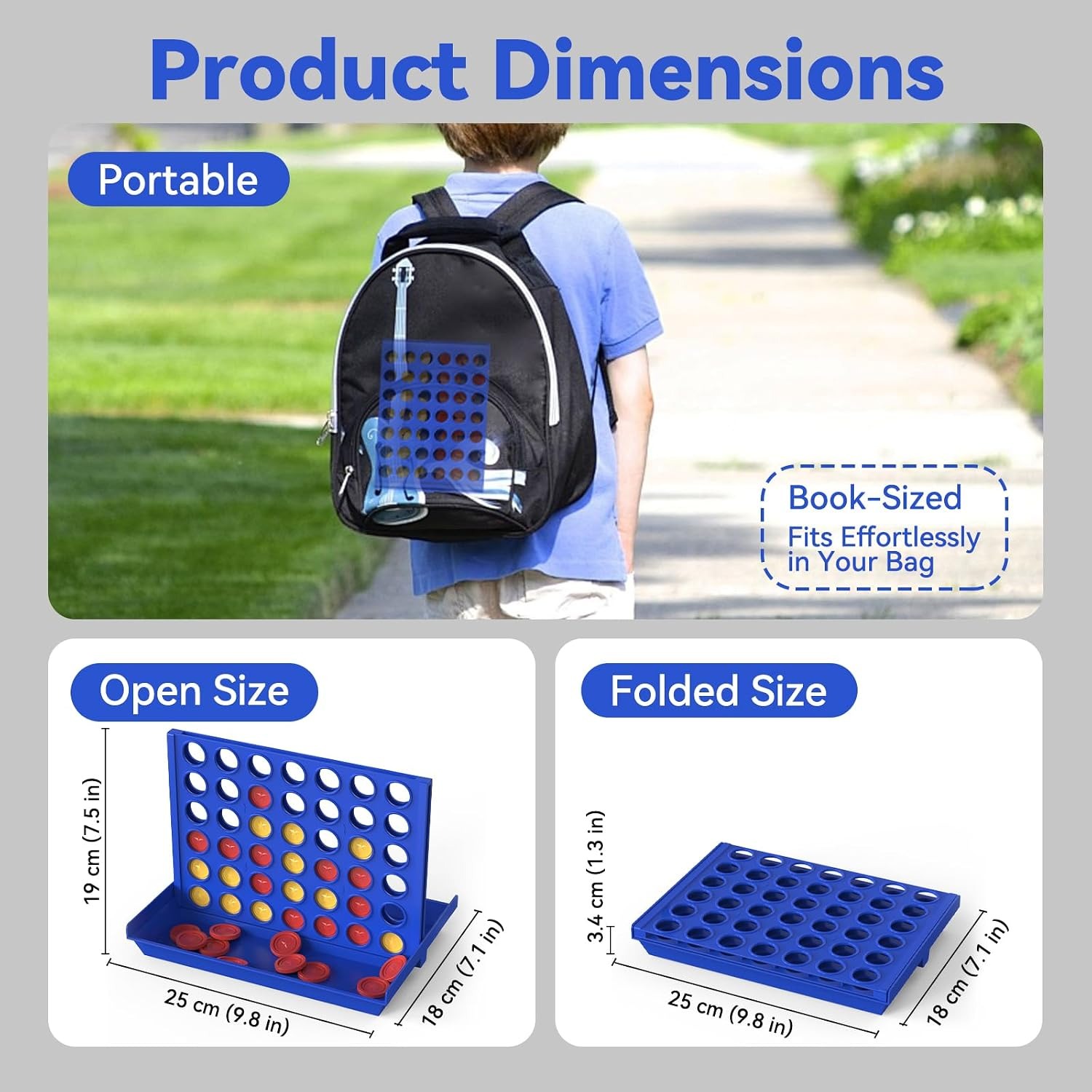
The folded size is listed at 25 x 18 x 3.5 cm, and the product measures 25 cm long by 18 cm wide. It weighs 0.26 kg. No assembly is needed, and the power source is listed as manual, which is a formal way of saying there is nothing inside it that can run out.
The manufacturer recommended age is 36 months to 12 years. Some details, including country of origin and the exact plastic specification, are not listed by the maker we were given, so we do not make claims about them here.
Who it suits
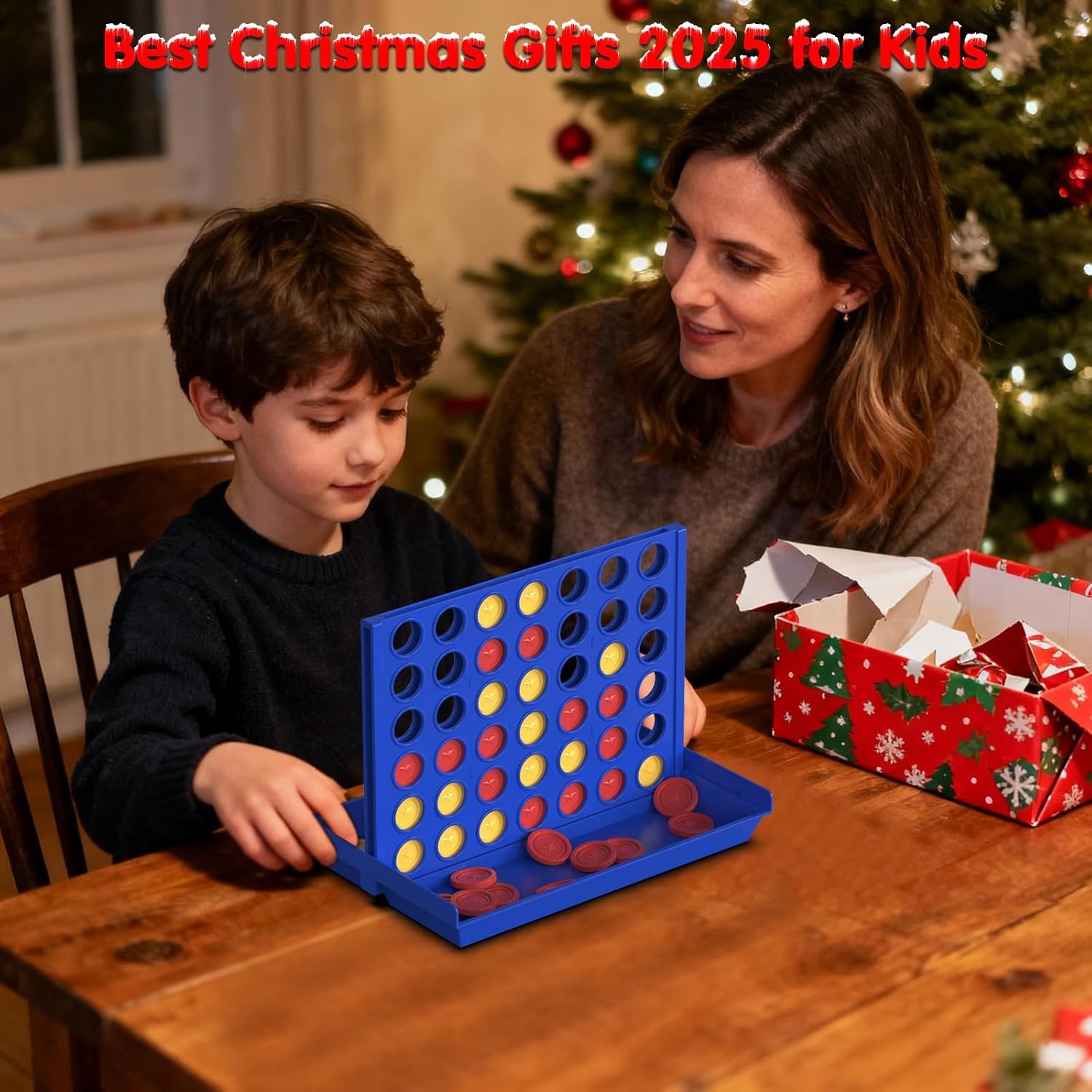
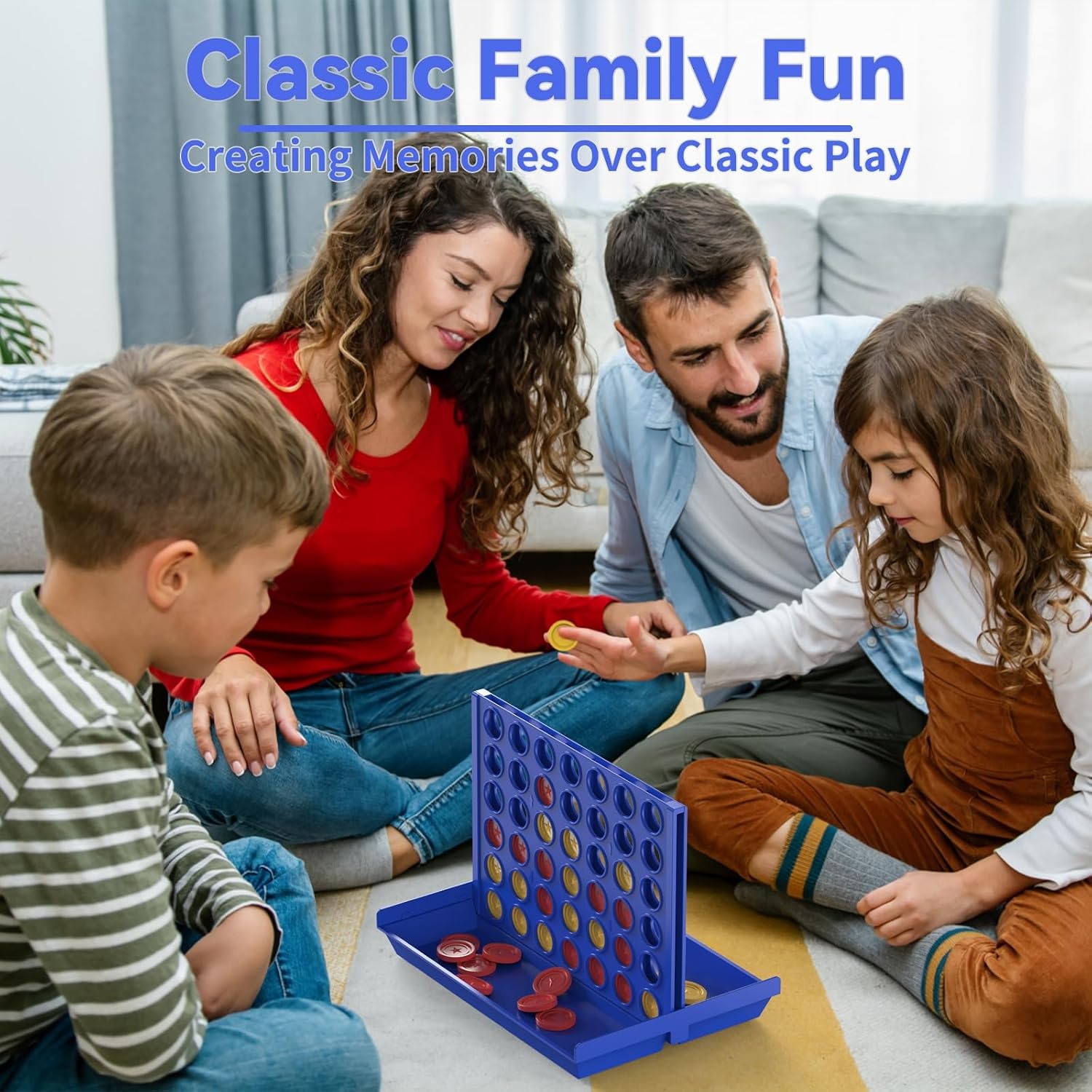
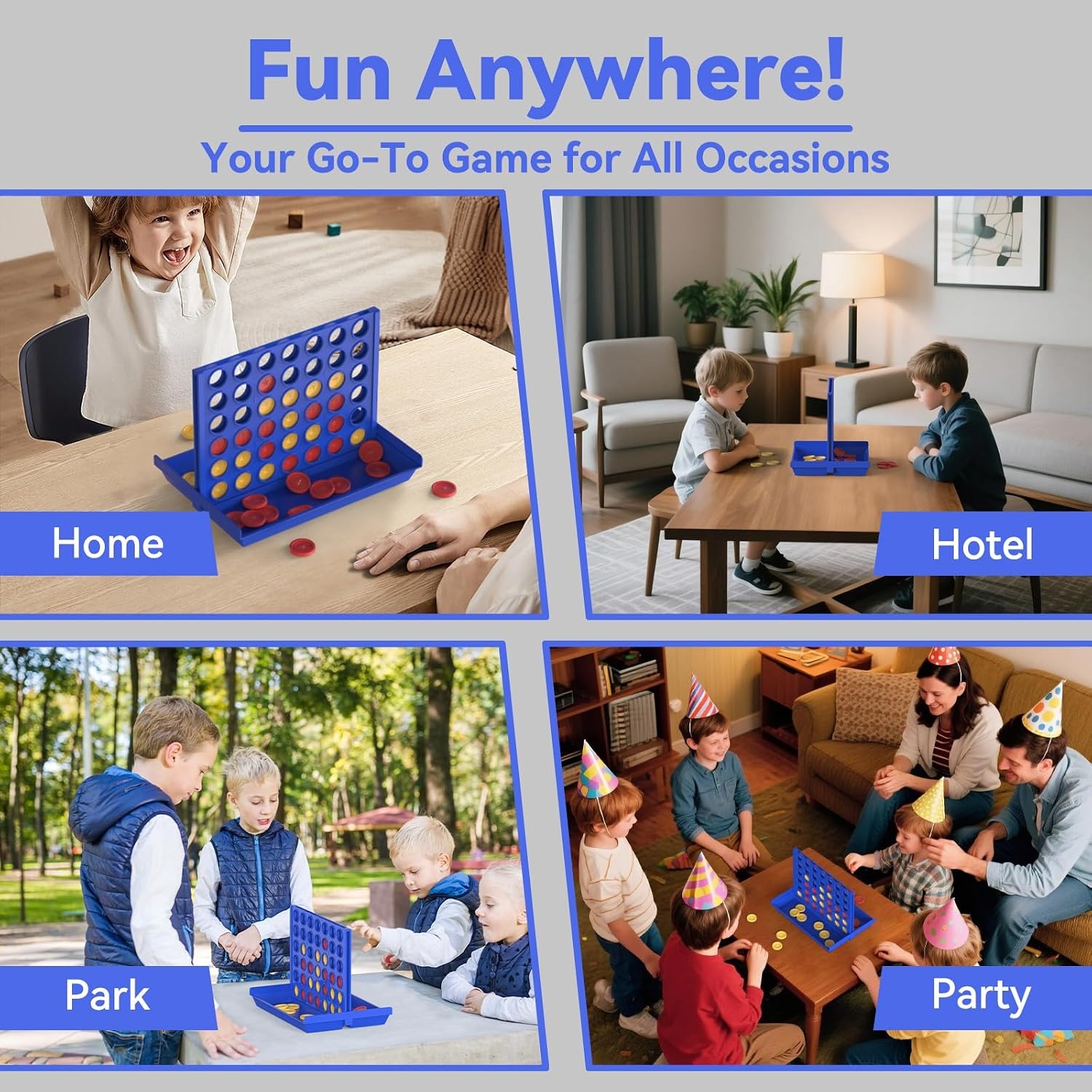
Families with more than one child are the obvious fit. Two kids can play without an adult refereeing, and the short rounds mean turn-taking disputes stay small. It also works well where there is a big age gap, because an older child can give a younger one a head start without the game becoming boring for either of them.
Travelling households get a lot out of it. The flat folded shape slides into a backpack or a suitcase pocket. Parents who have hunted for the best screen free game for kids during a delayed flight will understand the value of something that works on a tray table.
Couples and flatmates use it as a quick decider. Who makes the tea, who picks the show, who is washing up. A round takes minutes.
Grandparents play it with grandchildren more easily than almost any other game, because the rules do not need repeating and the pieces are a sensible size to handle.
It is less suited to someone who wants a long, deep evening game, or to a group of five who all want to play at the same time. It is a two-player game at heart.
How to choose between options
If you are comparing sets, a few things actually matter.
Size is the first. A larger grid feels better at a dining table, but a big one lives on a shelf and gets left behind. A folding grid like this one is a compromise that leans towards being used, since a game that packs flat tends to come with you. Anyone shortlisting the best travel board game should weigh portability heavily.
Disc count is the second. A standard board needs 42 discs to be completely filled. Sets that include only the bare minimum become unplayable the moment one goes missing. Spares, as included here, buy you time.
Build matters third. Plastic grids and plastic discs are standard for this format, because they survive being dropped, wiped and shoved into bags. Wooden versions look lovely and feel heavier, but they take up more room and usually cost more.
Finally, think about the reset. Some boards make you pick discs out by hand, which sounds trivial until you have played six rounds. A tilt-and-release design keeps the pace up, and pace is the whole point of a best quick board game for family night.
Teaching it to a younger child
Start without the winning rule. Let a three or four year old simply drop discs and name colours. The physical action is satisfying and it builds familiarity with the board.
Next, introduce lines. Make a line of four yourself, slowly, and point at it. Say what you are doing out loud as you play. Children learn the pattern by watching more than by being told.
Then play properly, but think aloud. "If I put mine here, you could block me there." You will lose a few games on purpose along the way, and that is fine. Once a child wins honestly, they are hooked.
Looking after it
Care is simple. Wipe the grid and discs with a slightly damp cloth and dry them before folding the board away. Keep it out of the dishwasher and away from hot water, because heat can warp plastic parts.
Store it folded and flat, with every disc in the tray. The discipline of counting discs back in after each session is the single best habit for keeping a set complete. Avoid leaving it in a sunny window for weeks on end, since long sun exposure fades colour on most plastics.
If a disc does go missing, reach for a spare. That is what they are there for.
A few ways to keep it fresh
Once everyone has played fifty rounds, small rule tweaks revive it. Try a timed version where each player gets five seconds to move, which stops over-thinking and causes chaos. Try a five-in-a-row variant on a full board for a longer game. Or play a tournament ladder over a weekend away, with a scrap of paper for scores.
These are not official rules, just the things families end up inventing. A simple board invites that kind of tinkering, which is part of why the best line up four game for kids tends to stay in circulation for years rather than months.
The short version
This is a folding two-player game with a dark blue plastic grid, a tray, and 48 discs including 6 spares. It folds to around 25 x 18 x 3.5 cm, weighs 0.26 kg, needs no batteries and no assembly, and the manufacturer recommends it for ages 36 months to 12 years.
Buy it if you want something fast, portable and easy to teach, the kind of game that gets pulled out on a wet afternoon or on a long journey. Skip it if you are after a long strategy game for a big group. For two people with ten minutes and something to settle, it is hard to beat.