
The complete guide
How To Choose Wooden Construction Vehicle Puzzles For Young Children
The problem with most first jigsaws
Ask any parent of a three or four year old about puzzles and you will hear the same two complaints. The first is that the puzzle was too easy, finished in four minutes, and then ignored forever. The second is that it fell apart. Cardboard puzzles peel at the corners, the printed layer lifts, and within a month a few pieces are curled badly enough that they no longer sit flush. A child tries to push one in, it pops out, and they decide the puzzle is broken. Technically they are right.
There is a third problem that nobody mentions until it happens. Pieces disappear. One ends up under the sofa, one goes in a toy box, one gets posted behind a bookshelf. A 24-piece puzzle with 22 pieces is a source of mild sadness for everybody involved.
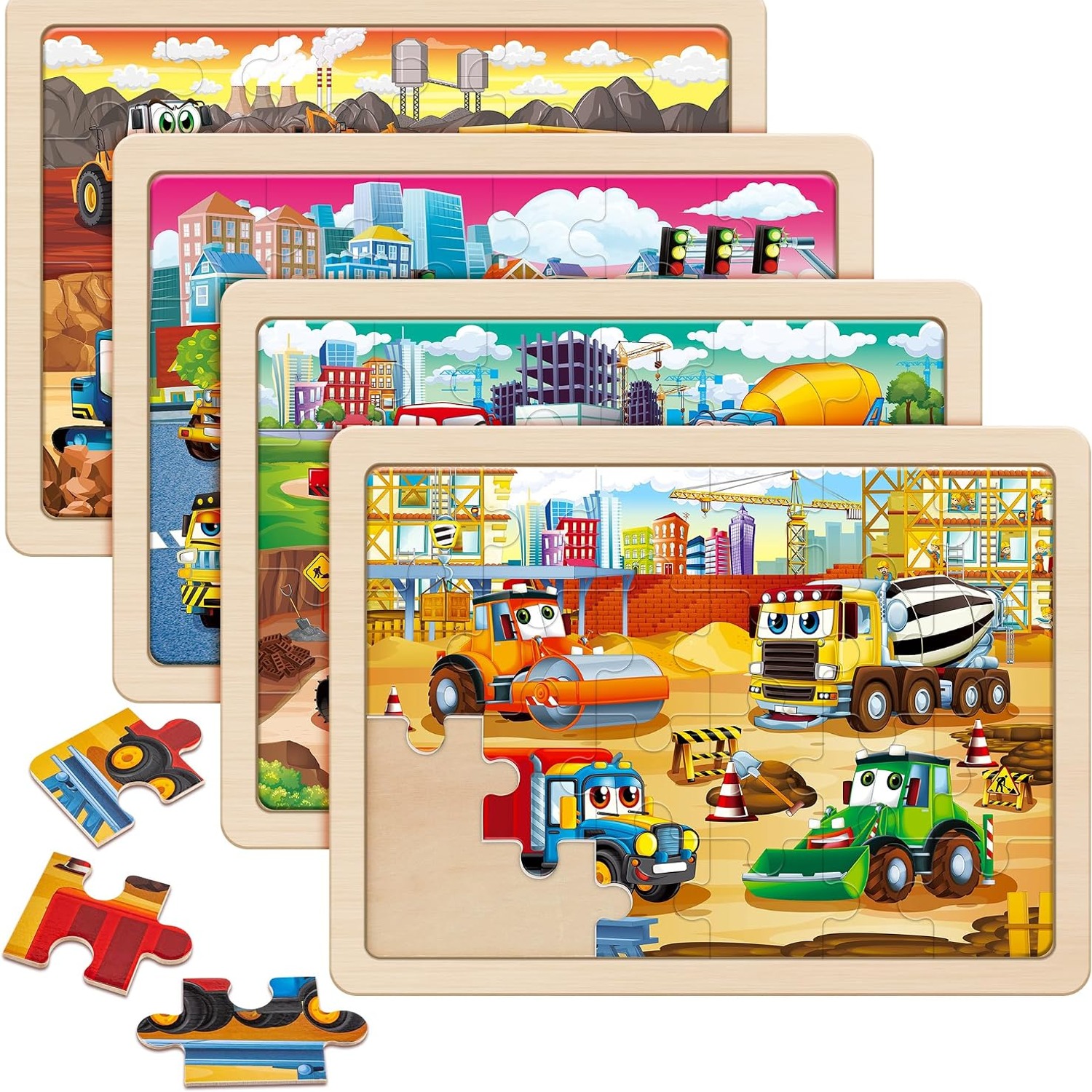
A set of wooden construction vehicle puzzles with a single storage box deals with all three of those at once. The wood holds up, the piece count is pitched at the right level, and everything has one home to go back to.
Why wood changes the experience
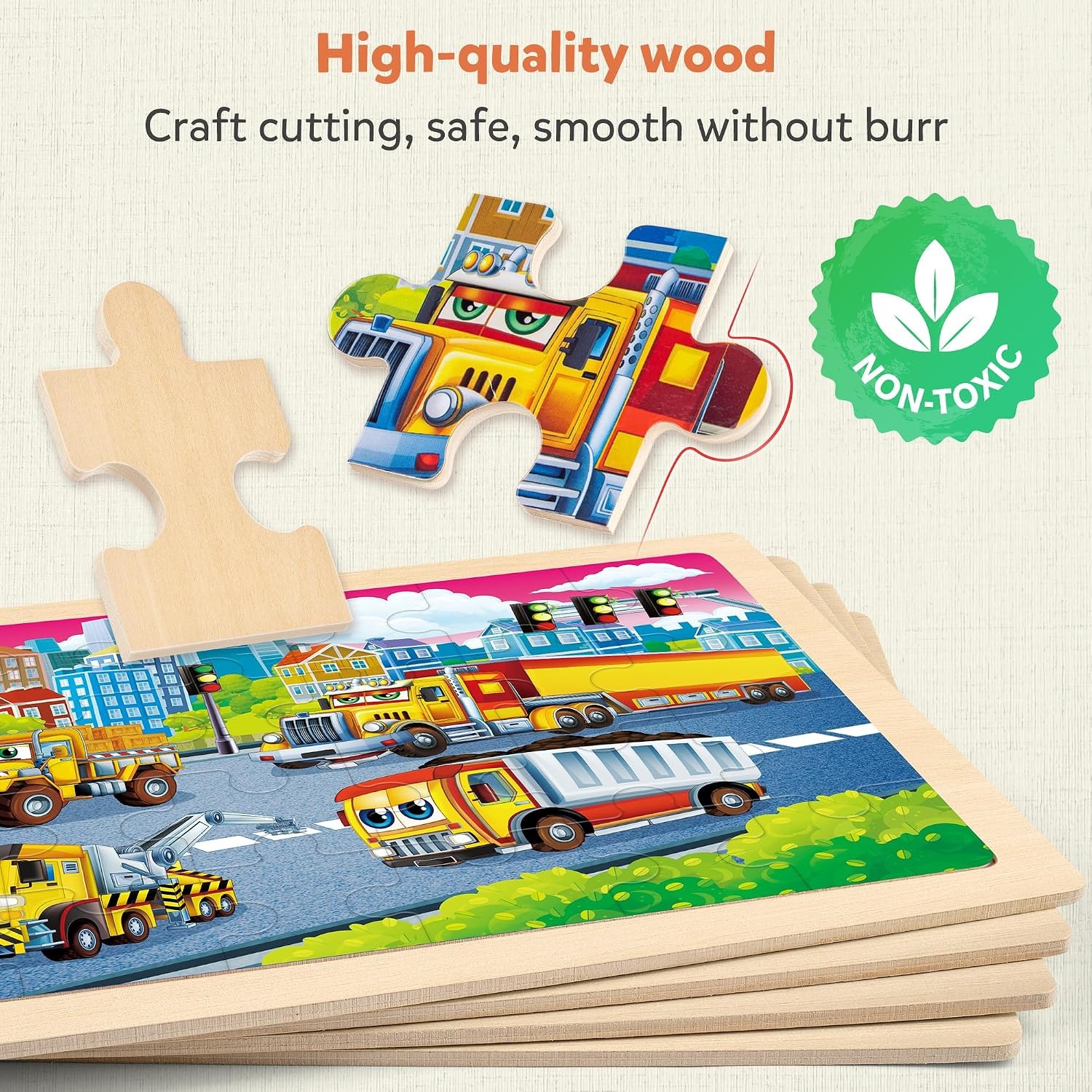
The difference between a wooden jigsaw piece and a cardboard one shows up in the first five minutes of play. Wood has a bit of weight to it. When a child places a piece, it sits down and stays put instead of skating across the table when their sleeve brushes past. That stability matters enormously for small hands that are still learning fine control.
Edges stay sharp too. The whole logic of a jigsaw depends on a child being able to see that a tab matches a notch. Once cardboard edges fluff up, that visual cue blurs, and a child who is already working hard on the puzzle gets a confusing signal. Wooden pieces keep clean, defined shapes for years.
There is also the honest practical point that wooden pieces survive a spilled drink. You wipe them, you dry them, you carry on. A card puzzle in the same situation is usually finished.
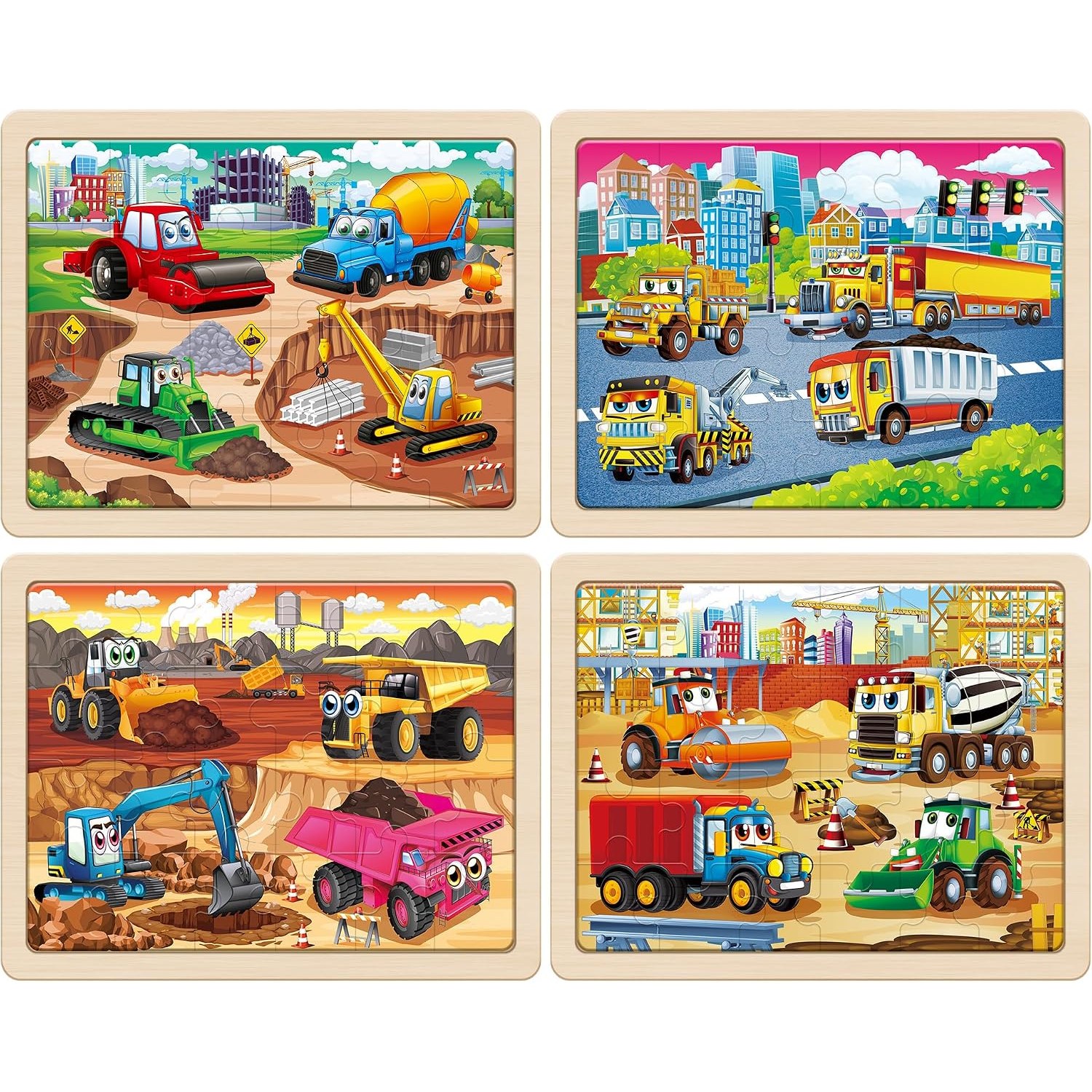
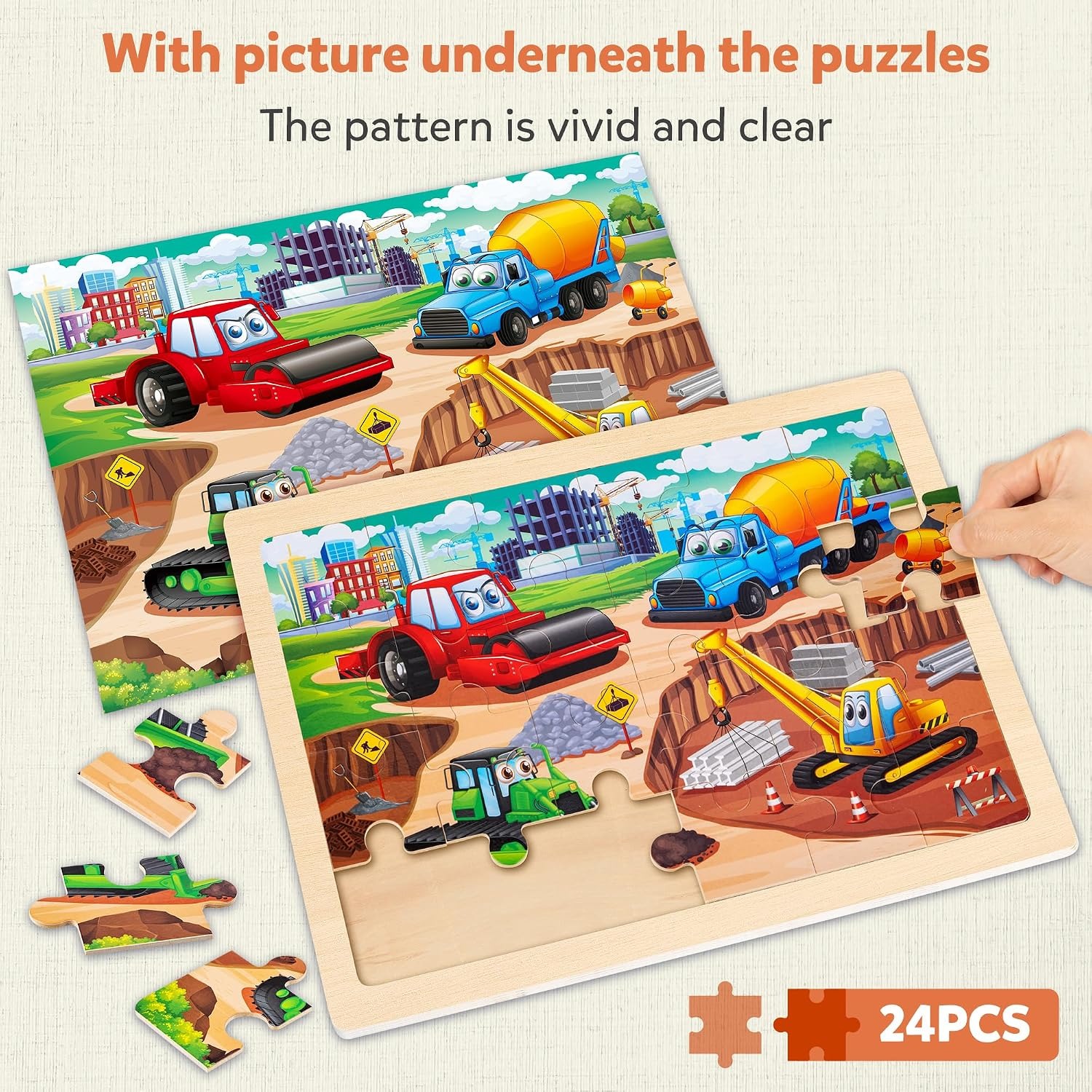
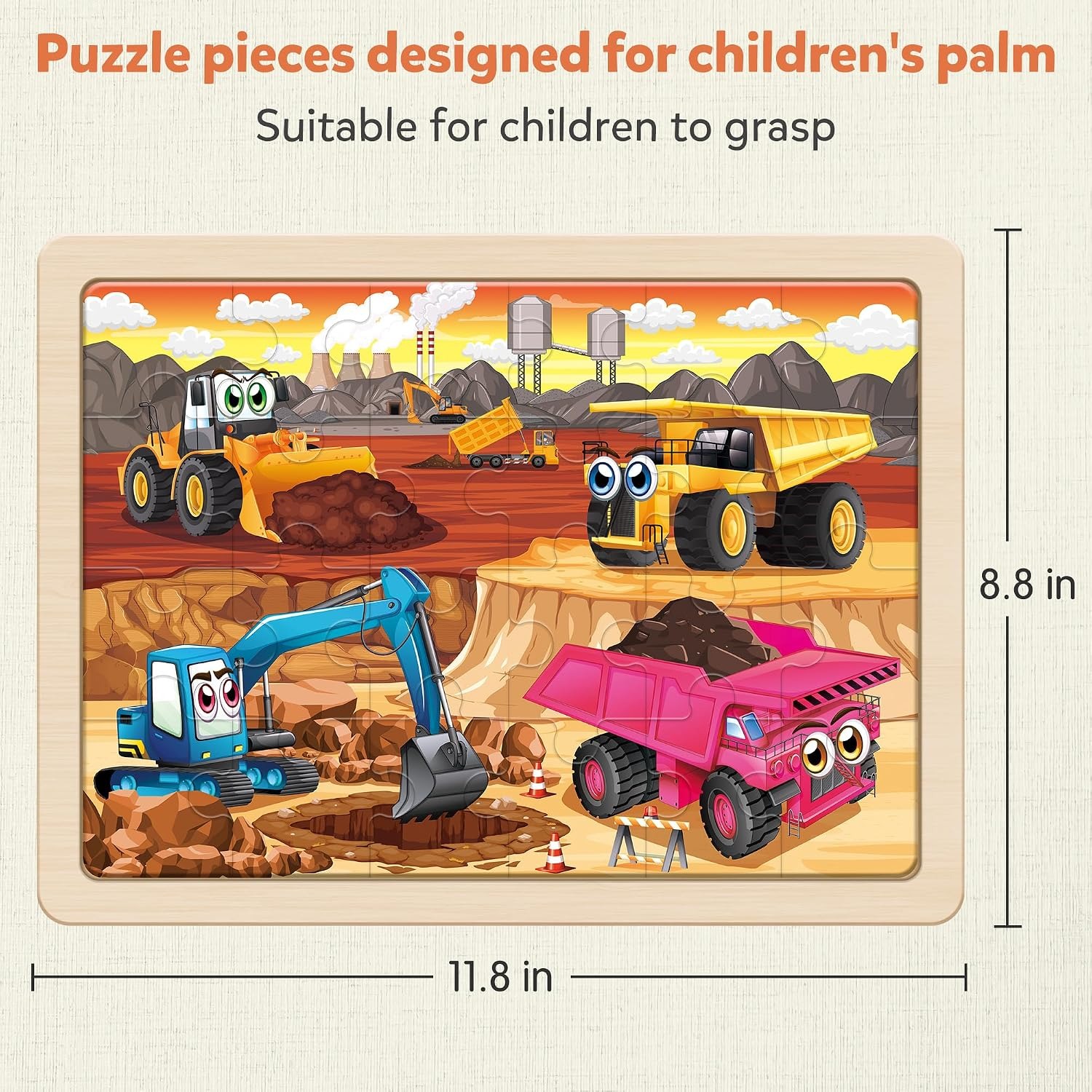
This set lists wood as the material type, with 24 pieces per puzzle and four puzzles in the box. Each finished puzzle measures roughly 31.3 by 23.8 cm, which is a useful size. Big enough that each individual piece is easy to grip, small enough to fit on a standard kitchen table without pushing the fruit bowl onto the floor.
Who this suits
The recommended age is 3 years and up, listed as 36 months by the manufacturer, with a beginner skill level. That combination tells you a fair bit. This is not a preschooler shape-sorter puzzle with four chunky knobs. It is a proper jigsaw, scaled down.
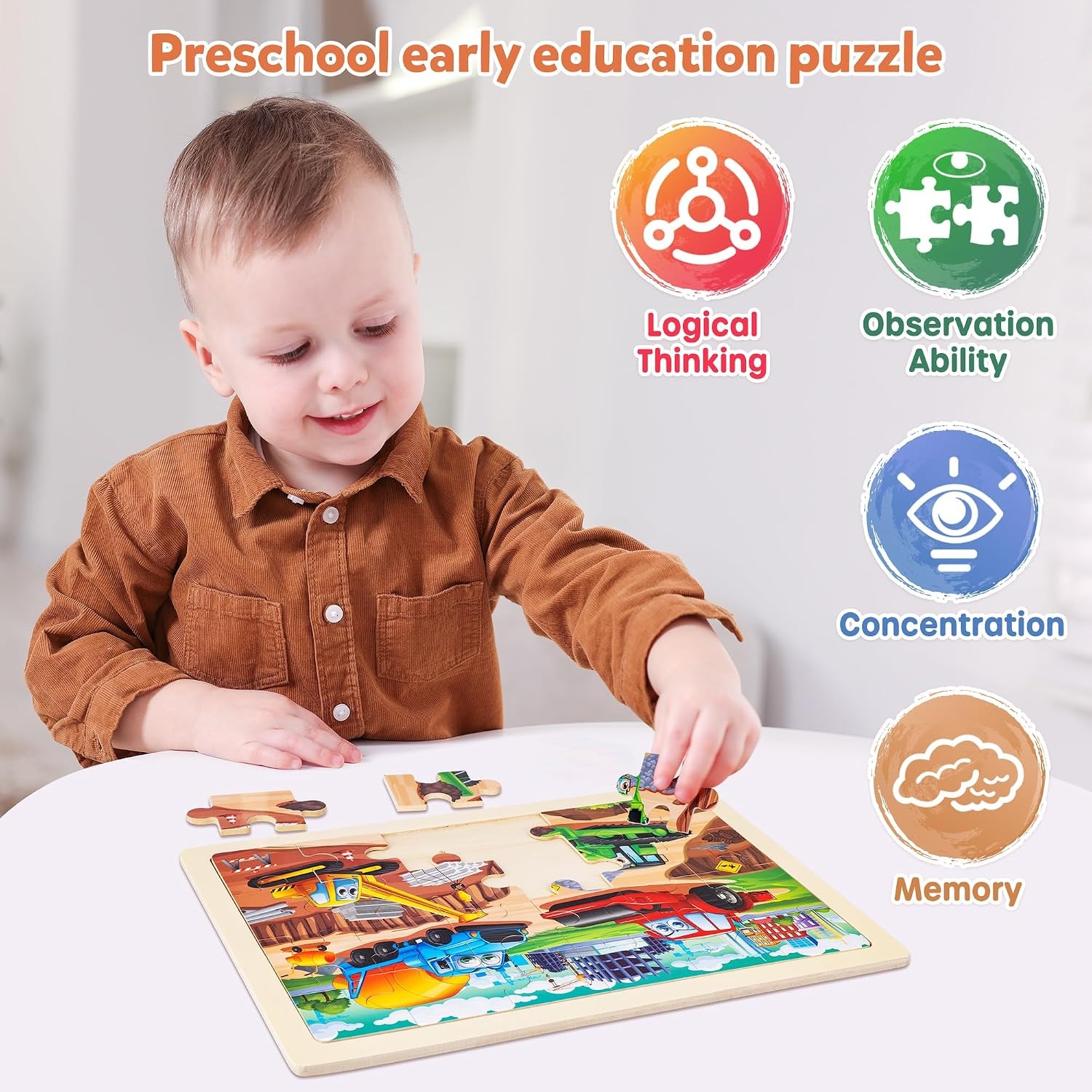
A three year old will usually need company for the first few attempts. Sit with them, pull out the edge pieces together, talk about the picture. By the third or fourth go, most children have memorised enough of the layout to work independently. That shift from "help me" to "I did it myself" is the entire point of a well-judged puzzle, and it happens somewhere in the 20 to 30 piece range for this age group.
Four and five year olds tend to take to it faster. They often finish one puzzle, immediately tip out the next, and keep going. If your child already races through 12-piece puzzles, this set is a natural next step rather than a repeat of what they can already do.
Six year olds will probably find each individual puzzle easy, but the set still earns its keep as a quick, calm activity before dinner or during a long afternoon. It also makes a reasonable hand-me-down to a younger sibling, which is one of the quiet advantages of buying wooden toys in the first place.
Why construction vehicles work so well
There is a window, roughly between two and six, where machines that dig and lift and carry are simply the most interesting objects in the world. Diggers, dump trucks, cranes, mixers. Plenty of children in this phase can name a dozen vehicles before they can write their own name.
A truck puzzle set plugs straight into that interest. The child is not being persuaded to do an educational activity. They are looking at a digger, and the digger happens to be in pieces. That is a much easier sell than a puzzle of an abstract pattern, and it is why construction themes consistently show up among the best screen-free toys for kids in this age bracket.
The theme also gives you something to talk about while you play. What is that machine doing. Where does the dirt go. Why does the crane need those big feet on the ground. That running conversation builds vocabulary in a way that feels like nothing at all.
Working out the right difficulty
A simple rule helps here. The right puzzle is one your child can finish with a small amount of effort and no meltdown, three or four times before they get bored of it. Too easy and it has no value. Too hard and it gets abandoned, which can put a child off puzzles entirely for months.
Signs your child is ready for 24 pieces include finishing a 12-piece puzzle without help, deliberately hunting for edge pieces, and turning a piece around to try different orientations rather than just pressing harder. That last one is a genuine milestone. It means they understand that shape, not force, is what solves the problem.
If your child is not there yet, the four-pack still works. Start them on one puzzle and keep the other three in the cupboard. Having a new scene in reserve is far more useful than having four puzzles all dumped out at once on day one.
Keeping the set in good shape
Wooden puzzles need very little care, but the little they need matters. Wipe pieces with a barely damp cloth and dry them straight away. Do not soak them, do not run them under a tap, and keep them out of the dishwasher. Water sitting on wood for any length of time is what causes warping and lifted printing.
Storage is the other half. Keep everything in the supplied box, stored flat somewhere dry. Avoid damp storerooms, sunny windowsills and the bottom of a toy chest where heavy things get piled on top.
One trick that saves a lot of grief is to bag each puzzle's pieces separately inside the main box. Small zip bags work fine. It stops all 96 pieces turning into one undifferentiated pile, which is the single most common reason these sets stop getting used.
The short version
If you have a child aged three to six who is into diggers and ready for a real jigsaw, this set does the job. Four puzzles of 24 wooden pieces each, a construction vehicle theme they are already interested in, a finished size that fits a small table, and one box to keep it all together.
Wood means the pieces last, which means younger siblings get a turn and nothing curls up at the edges after a month. The beginner skill level means your child gets to feel capable rather than defeated. And the storage box means that in a year the set is still complete, which is more than can be said for most puzzles bought in this age range.
That is the whole case. No batteries, no screen, no noise. Just a child, a table, and a digger that needs putting back together.