
The complete guide
How to Choose a Safari Animal Playset That Actually Gets Played With
The toy that keeps getting picked up
Plenty of toys get one big burst of attention and then sit at the bottom of a box. Animal figures tend not to. There is no single right way to play with them, which means a child can come back to the same set on a wet afternoon six months later and invent something new. That is the quiet reason small plastic animals have stayed popular for decades while electronic toys come and go.
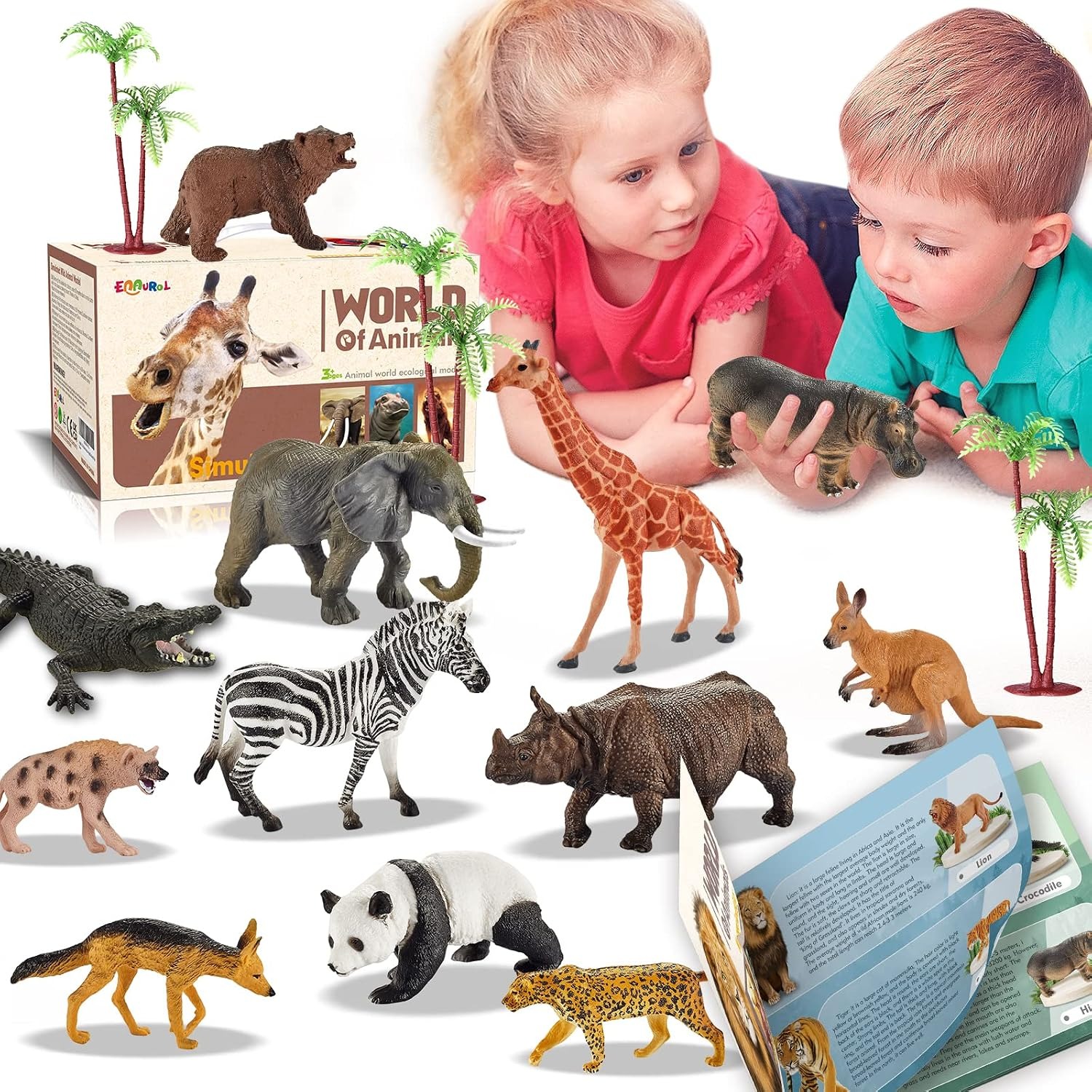
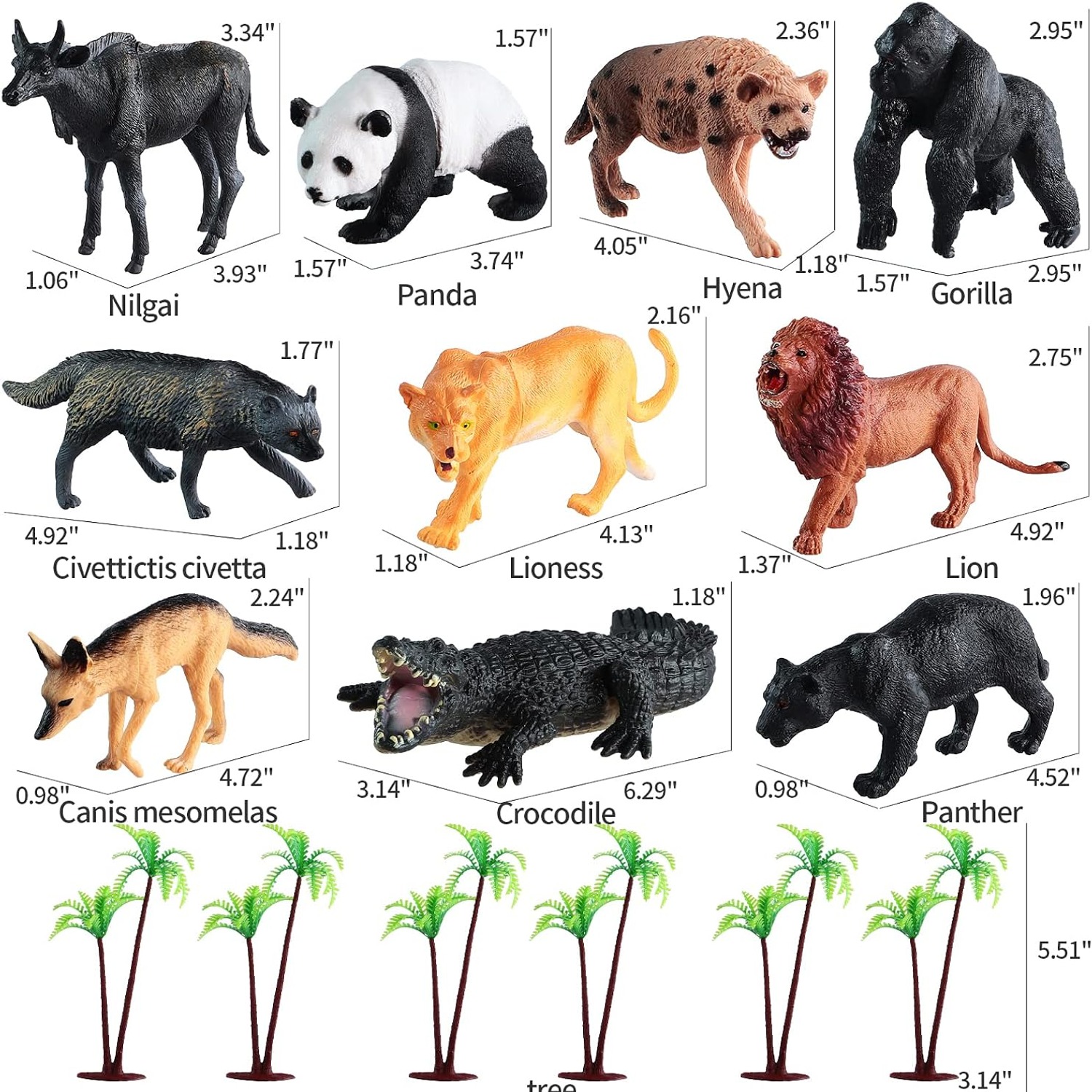
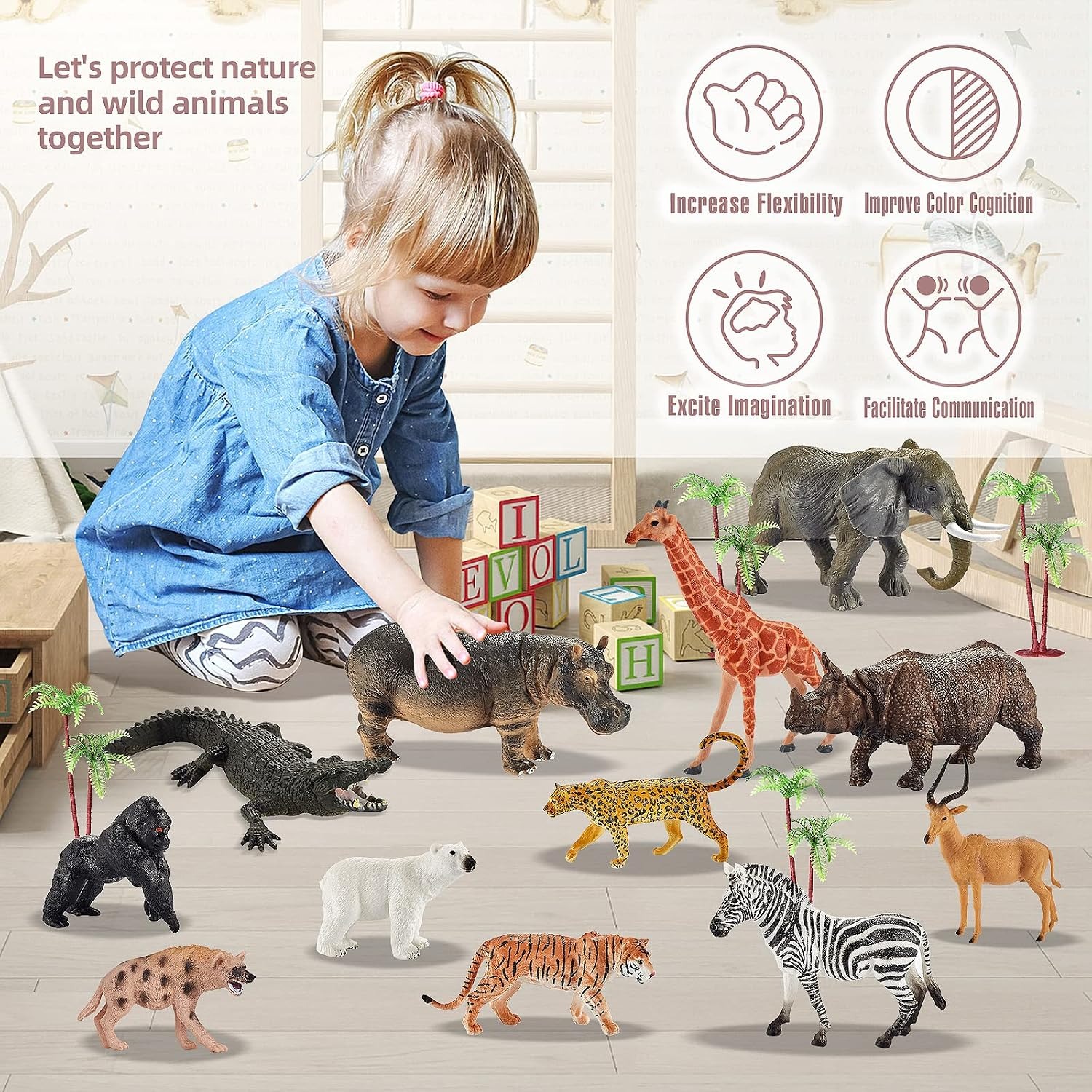
The problem most parents actually have is not finding animal figures. It is finding a set that arrives complete, stores sensibly and does not fall apart in a week. A set of 31 pieces with a carry box covers all three. Twenty-four animals is enough for a real scene rather than a lonely pair, six trees give the scene somewhere to happen, and the box means you are not hunting for a zebra under the sofa cushions every Saturday.
How a figure set earns its place
A good small world set does three jobs at once. It gives a child something to hold, something to arrange and something to talk about.
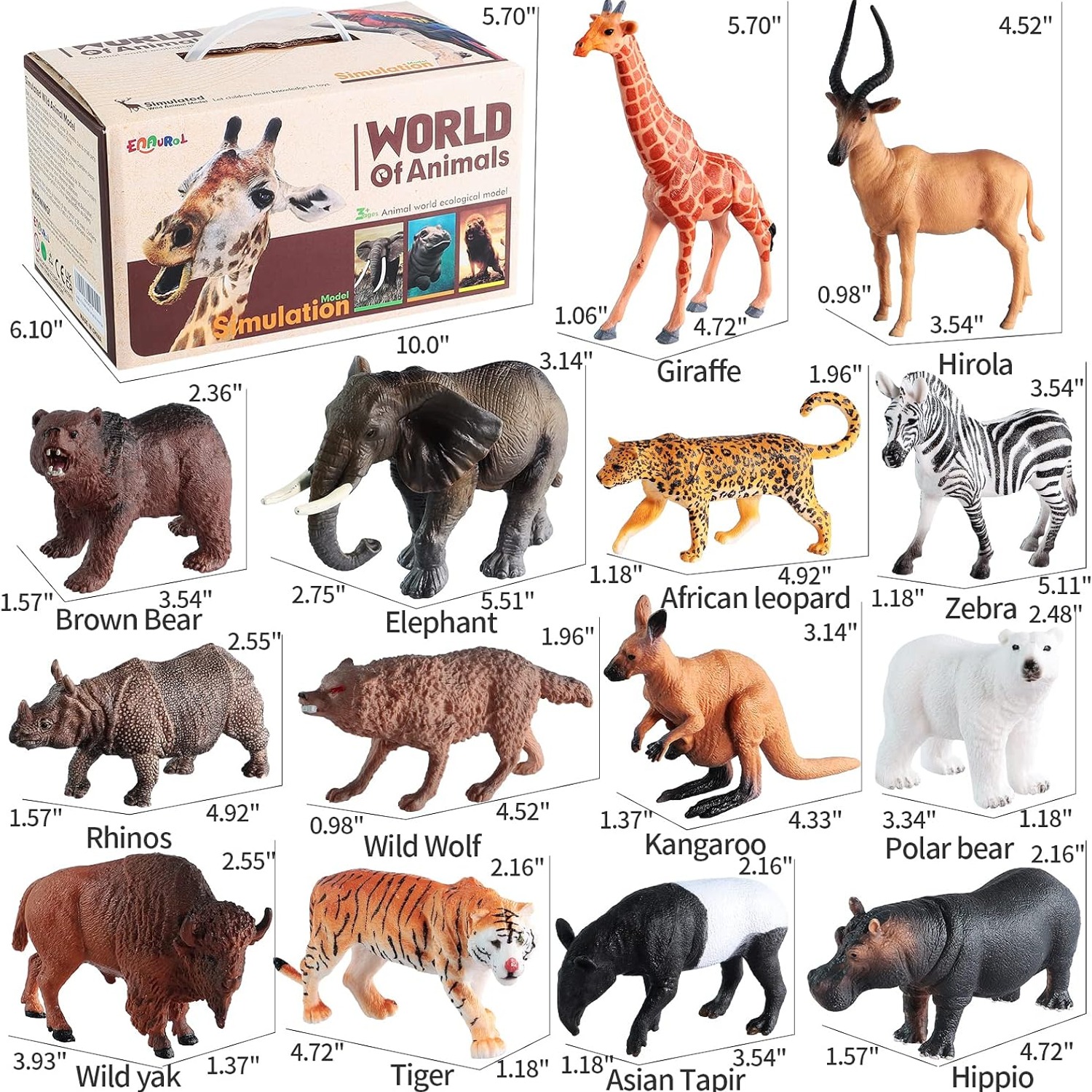
Holding matters more than people expect. Solid figures around 8 to 13 cm long sit well in a child's hand. They are big enough to grip and move with purpose, and small enough that a handful can travel from the rug to the kitchen table without a trip back for more. Figures this size also stay visible on a busy carpet, which cuts down on lost pieces.
Arranging is where the trees come in. Give a child twenty-four animals and no scenery and you often get a line. Give them six trees and the line becomes a forest edge, a waterhole, a place the lion hides. Scenery turns sorting into storytelling, which is the step where a toy starts holding attention for longer than ten minutes.
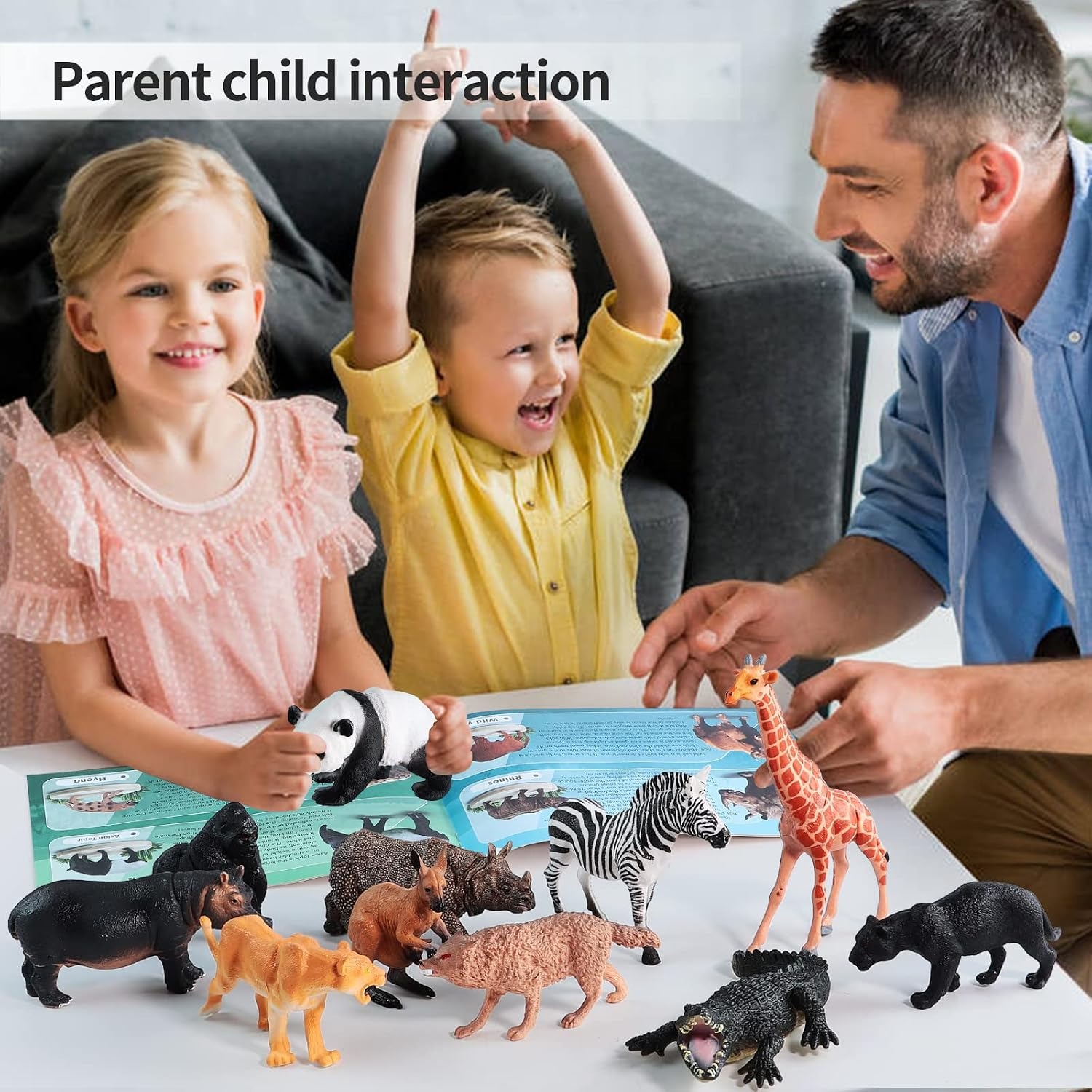
Talking is the third job, and the included animal knowledge manual nudges it along. Read a short fact, find the animal it belongs to, then ask what the animal might do next. That back and forth builds vocabulary without feeling like a lesson, and it gives an adult an easy way to join in.
Who this suits
The manufacturer recommended age is 36 months and up, and the age range is described as preschooler. In practice, three and four year olds get the most immediate joy from naming and lining up. Five to seven year olds often shift into story play, building habitats, making rules about who lives where and mixing the animals with blocks and toy cars.
It also suits households with mixed ages, because older siblings can set up a scene and younger ones can join in under supervision. Keep in mind the age guidance exists for a reason. The pieces are small, so children under three should not have access to them.
Teachers and childminders tend to like sets like this because they work for several activities. Sorting by size, counting, habitat talk, story prompts and quiet independent play all come out of the same box. The box itself is the practical bit, since a set that lives in one container survives a shared toy cupboard much better than loose pieces.
What to look at when comparing sets
Piece count versus usefulness. A set advertising a huge number of pieces is not automatically better. Some pad the count with tiny accessories that get lost in a week. Twenty-four animals plus six trees is a balanced ratio, because it gives variety without burying the child in choice.
Figure size. Very small figures look detailed in photos but are fiddly for young hands and easier to lose. Very large ones take up a lot of storage. The 8 to 13 cm range is the sweet spot for floor play.
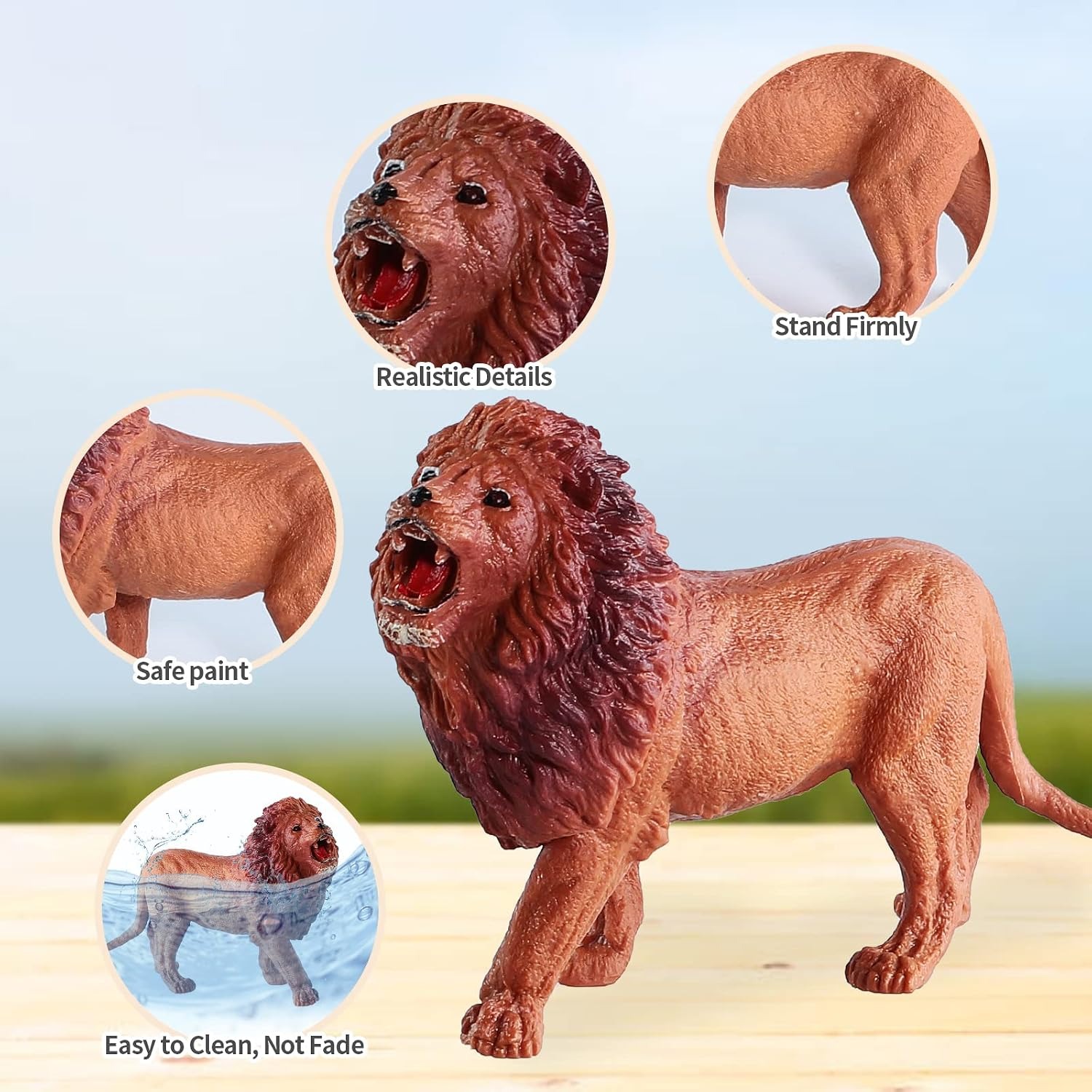
Solid or jointed. Solid one-piece figures have nothing to snap off. Jointed figures are more posable but add weak points. For a child who plays hard, solid wins.
Storage. Ask yourself where the set will live when nobody is playing with it. A set with its own box answers that question before it becomes an argument. The listed box size here is 25.4 x 15.2 x 14.2 cm, which fits most shelves.
Material. The material here is listed as plastic. Plastic cleans easily, survives sensory bins and does not mind being dropped. It is the practical choice for a set that will be handled constantly.
One thing worth being honest about. The exact species in a mixed animal set can vary, and the full species list is not specified by the maker. If your child has their heart set on one particular animal, look closely at the images first rather than assuming.
Getting more out of it
A few simple activities stretch the value of a figure set a long way.
Try a habitat sort. Ask which animals live where, then use the trees to mark out two or three zones on the floor. There is no need to be strict about accuracy at a young age. The point is the thinking.
Try a counting game. Hide a few animals around the room, then count how many come home. It gets a restless child moving and turns tidying into the game rather than the punishment at the end of it.
Try a story prompt. Pick two animals at random and ask what happens when they meet. Small children will happily talk for five minutes about a hippo and a tiger sharing a tree.
Try sensory play. Dry rice, lentils or kinetic sand plus a handful of animals makes a long, quiet activity. Rinse and dry the figures afterwards.
For animal themed parties, the figures work as table decoration and double as part of the party itself. Wash and dry them before they go near food, place them on top of icing rather than pushing them in, and lift them off before anyone eats.
Keeping it in good shape
Care is simple. Wipe the figures with a damp cloth and a little mild soap, then dry them properly. Skip the dishwasher, because the heat can warp plastic, and skip boiling water for the same reason. Keep them away from heat and sunny windowsills over long periods.
If a figure has been in water play or a sensory bin, dry it thoroughly before it goes back in the box so nothing goes musty. Check the pieces occasionally and retire any that crack or chip.
Storage is the habit that keeps the set alive. Make the carry box the home. Counting the animals back in at the end of play takes thirty seconds and saves the slow drift of pieces around the house that kills most playsets.
The short version
This is a 31 piece plastic animal set with 24 figures, 6 trees, an animal knowledge manual and a carry box. Nothing needs assembling, nothing needs batteries, and the recommended age starts at 36 months. The figures are sized for small hands, the trees give the play somewhere to happen, and the box solves storage on day one.
If you want a toy that supports pretend play, sorting, counting and a bit of animal learning, and that will still be useful in a year, a set like this is a sensible buy. If you need specific species or exact measurements for a particular animal, check the images first, since those details are not listed by the maker.