Toy Warehouse
Company
Shop By Category
T&Cs
Shop Online
  • Box contents listed
  • Free tracked delivery across Singapore over $150
  • 14-day returns

Solar Space Building Kit | Solar robot kit | STEM building set

Solar Space Building Kit

$81.99 $97.99 Save $16
  • Runs On Daylight
  • 12-In-1 Builds
  • Real Problem Solving
  • Ready To Give

Price: $81.99 $97.99

  • Free tracked delivery across Singapore on orders $150+, otherwise a flat $20
  • Pay by card or PayPal, handled by the payment provider
  • 14 days to change your mind, plus your statutory rights
Product specifications
BrandHechify
Model Number219A
Manufacturer Part Number2666
Set Name12-in-1
Included ComponentsEducation Solar Power Robots
Piece Count120 pieces
Recommended Age8 to 12 years
ThemeRobotics
Educational ObjectiveDexterity skills
Material TypePlastic
Battery DescriptionAlkaline
Assembly RequiredYes
Item Dimensions6.5 x 23.8 x 18 cm
Item Weight0.29 kg
Weight0.29 kg
Shipping & returns

Tracked delivery anywhere in Singapore. It is free on orders of $150 or more, and a flat $20 below that.

If it is not right for you, send it back within 14 days of delivery in resaleable condition and we refund the price you paid, including standard delivery. That is a voluntary policy we offer on top of your legal rights. You cover the cost of returning it unless the item is faulty.

If it arrives faulty, damaged or not as described, we put it right at no cost to you, return postage included, and your protection under the Consumer Protection (Fair Trading) Act 2003 is unaffected.

Shipping details · Refunds and returns

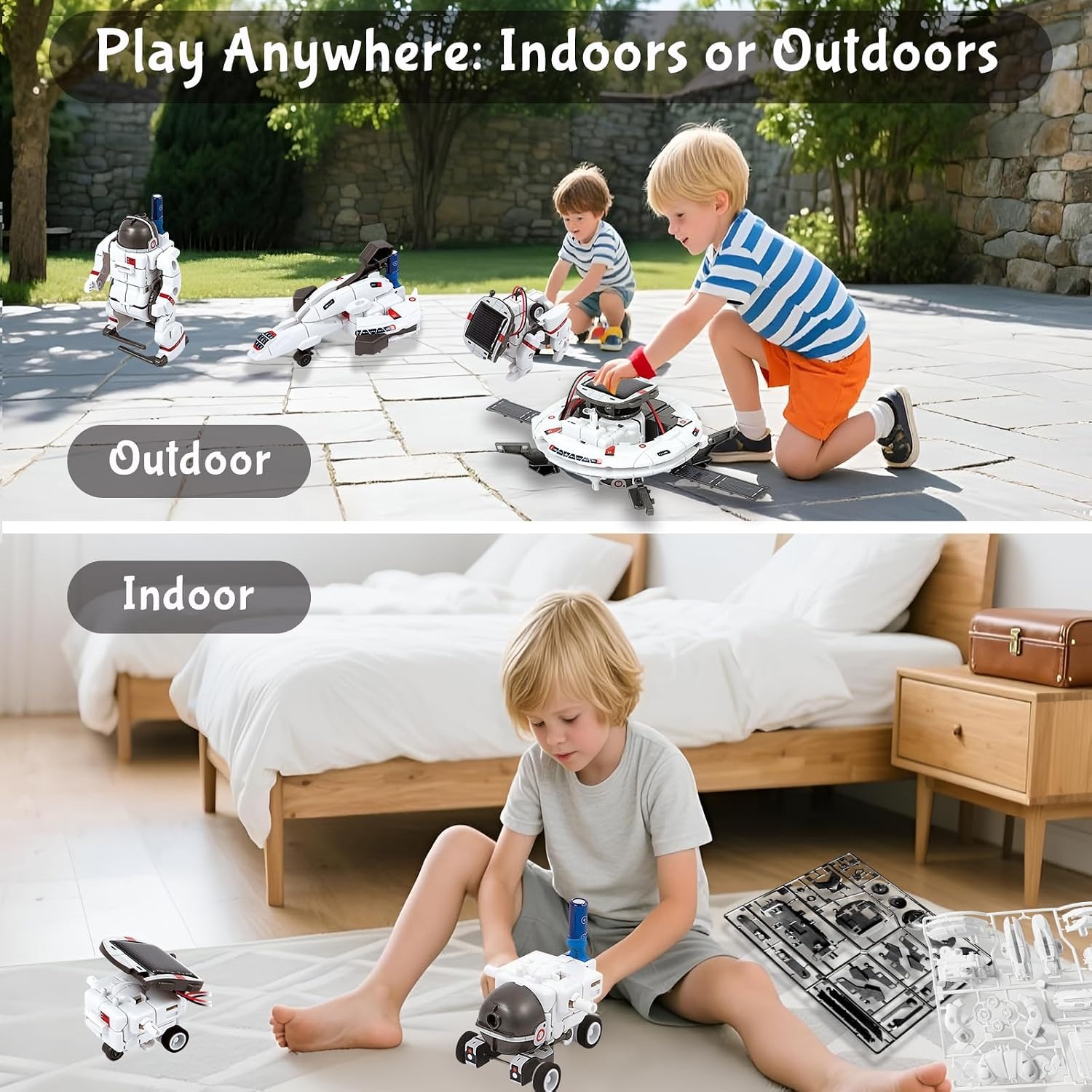
Runs On DaylightThe solar panel drives the motor, so no mains power is needed outdoors.
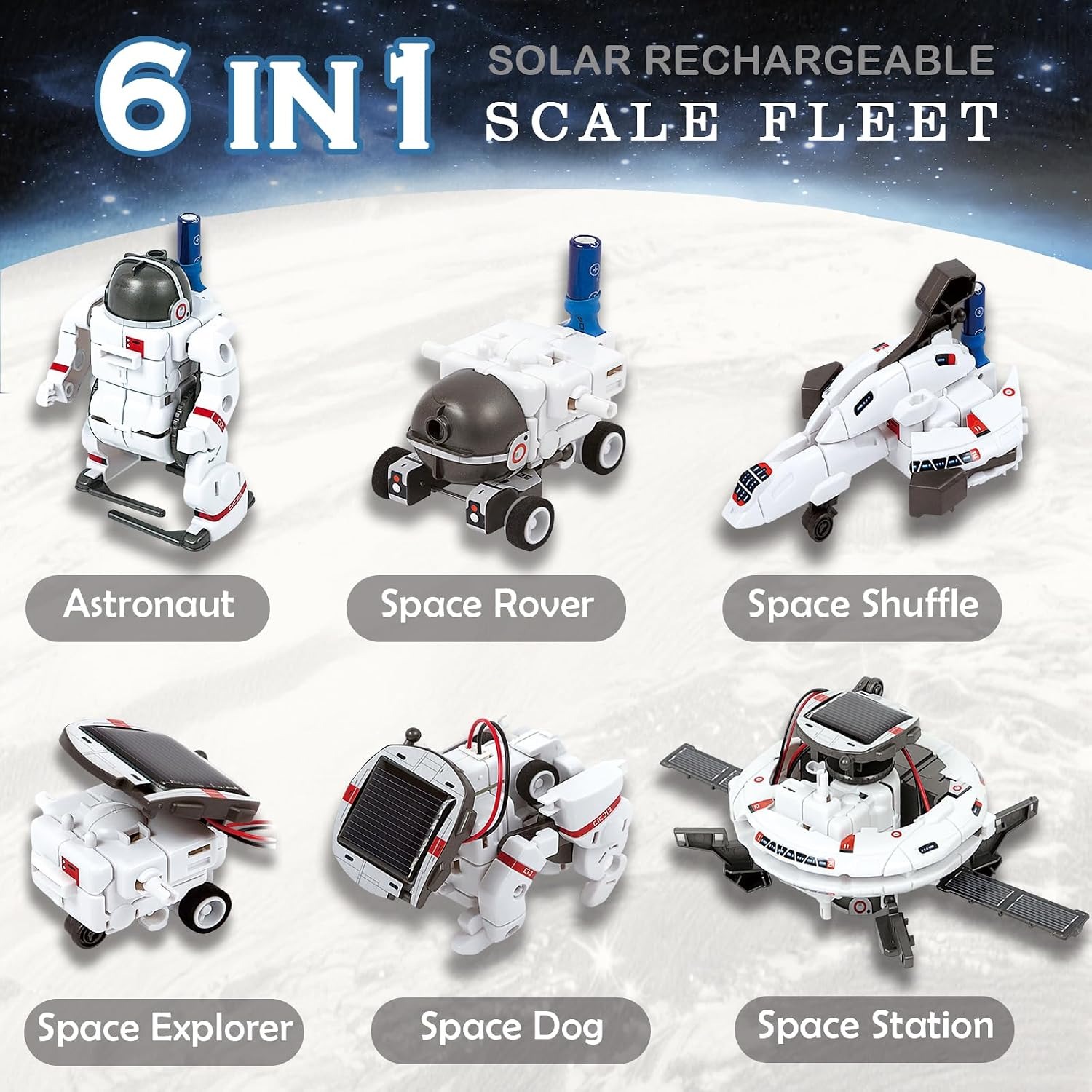
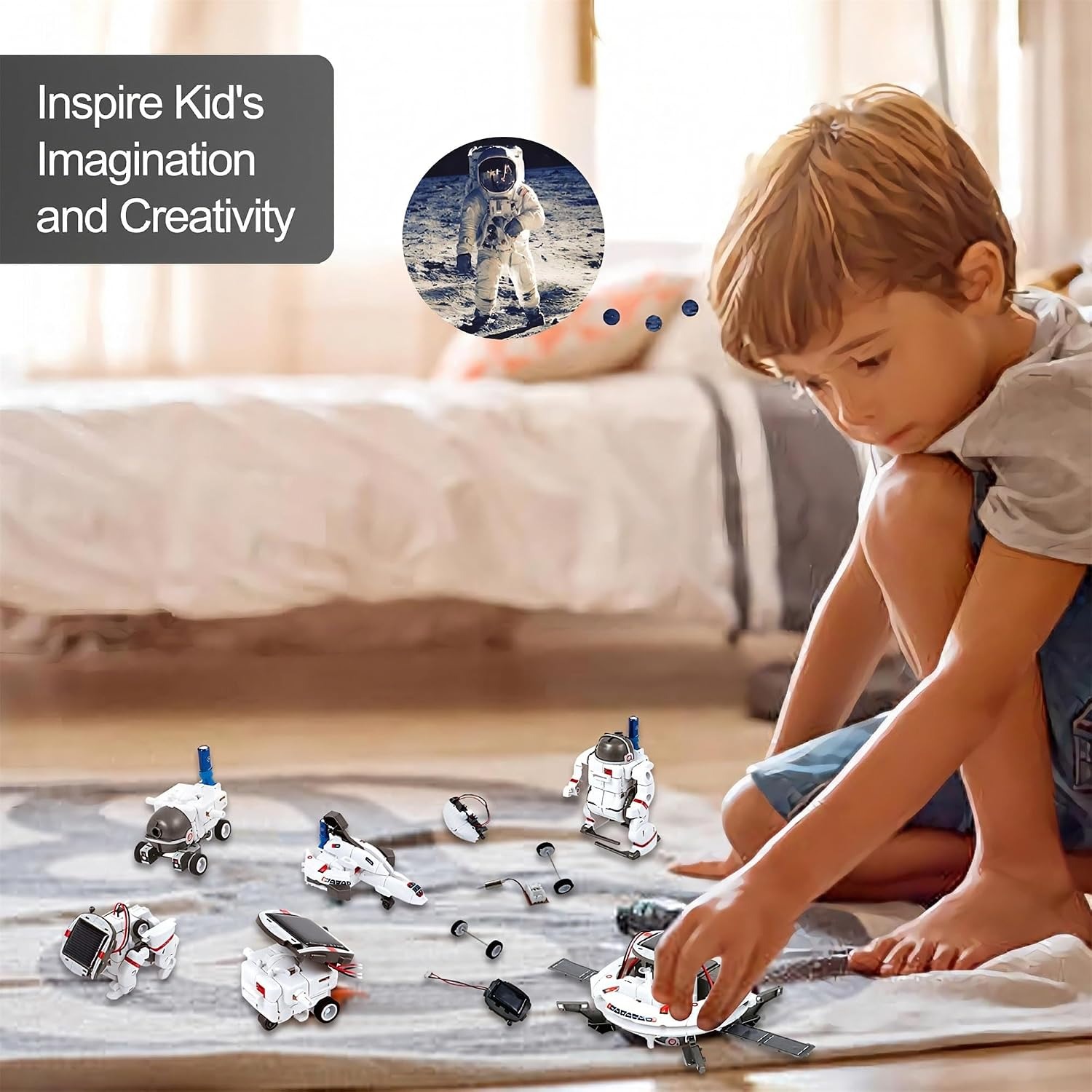
12-In-1 BuildsTake one model apart and build the next from the same 120 parts.
Real Problem SolvingGears, shafts and plates teach how motion actually gets transferred.
Ready To GiveArrives boxed, which makes it an easy birthday or holiday present.

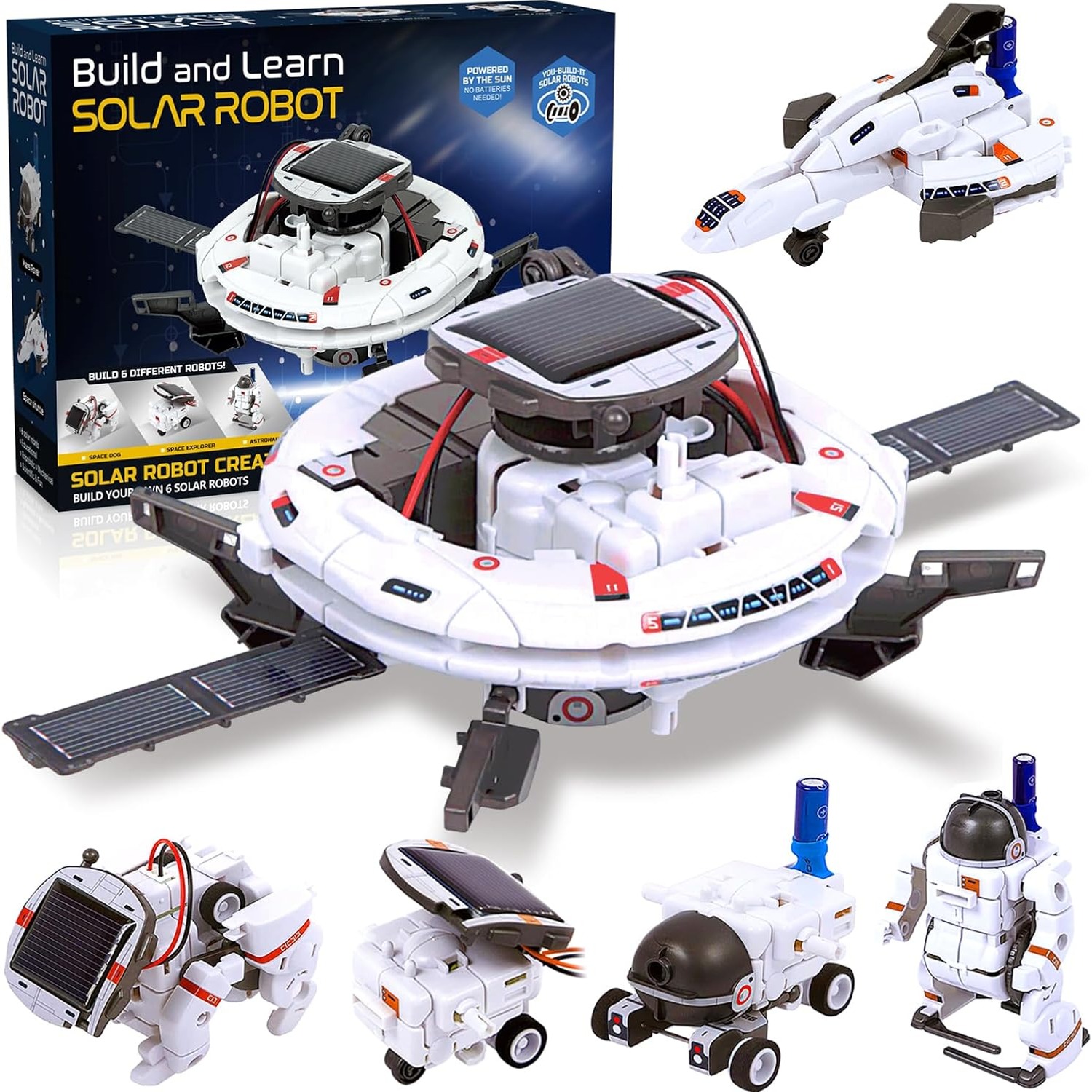
Turn an afternoon into a hands-on science lab with a solar space building kit that runs on nothing but daylight.

A 120-piece, 12-in-1 robotics set with gears, plates, tyres and shafts, powered by a small solar panel so kids build, rebuild and watch their creations move.

A 12-in-1 solar robot kit with 120 parts that kids assemble, run and then rebuild into something new.

The solar panel powers the motor directly, so a sunny window or a bright spot outdoors is all the fuel it needs.

Gears, plates, tyres and shafts click together without tools, teaching how drive and motion really work.

Assembly is required, which is the whole point, and the manufacturer recommends it for ages 8 to 12.

Compact at 23.8 x 18 x 6.5 cm and just 0.29 kg, so it stores easily and travels well.

Solar Space Building Kit

Most science toys do one thing and then sit on a shelf. This one is built to be taken apart. The set holds 120 pieces and a 12-in-1 build guide, so a child finishes a model, runs it, pulls it back down to parts and starts the next. That cycle is where the learning sits, because the second build goes faster than the first and the fifth goes faster again.

Solar Space Building Kit

Power comes from a small solar panel rather than a wall socket. Point it at the sun or a bright window and the motor turns. That single detail changes how kids think about the toy, since they quickly work out that cloud cover slows things down and a better angle speeds them up. It is a simple, physical lesson in energy that no worksheet delivers as well.

Solar Space Building Kit

The mechanical parts do the rest of the teaching. Gears, plates, tyres and shafts have to line up correctly or the model stalls, so children learn to check their work, trace a problem back to its cause and fix it. Hechify lists the educational objective as dexterity skills, and small hands certainly get a workout, but the real benefit is the patient troubleshooting that happens along the way.

Solar Space Building Kit

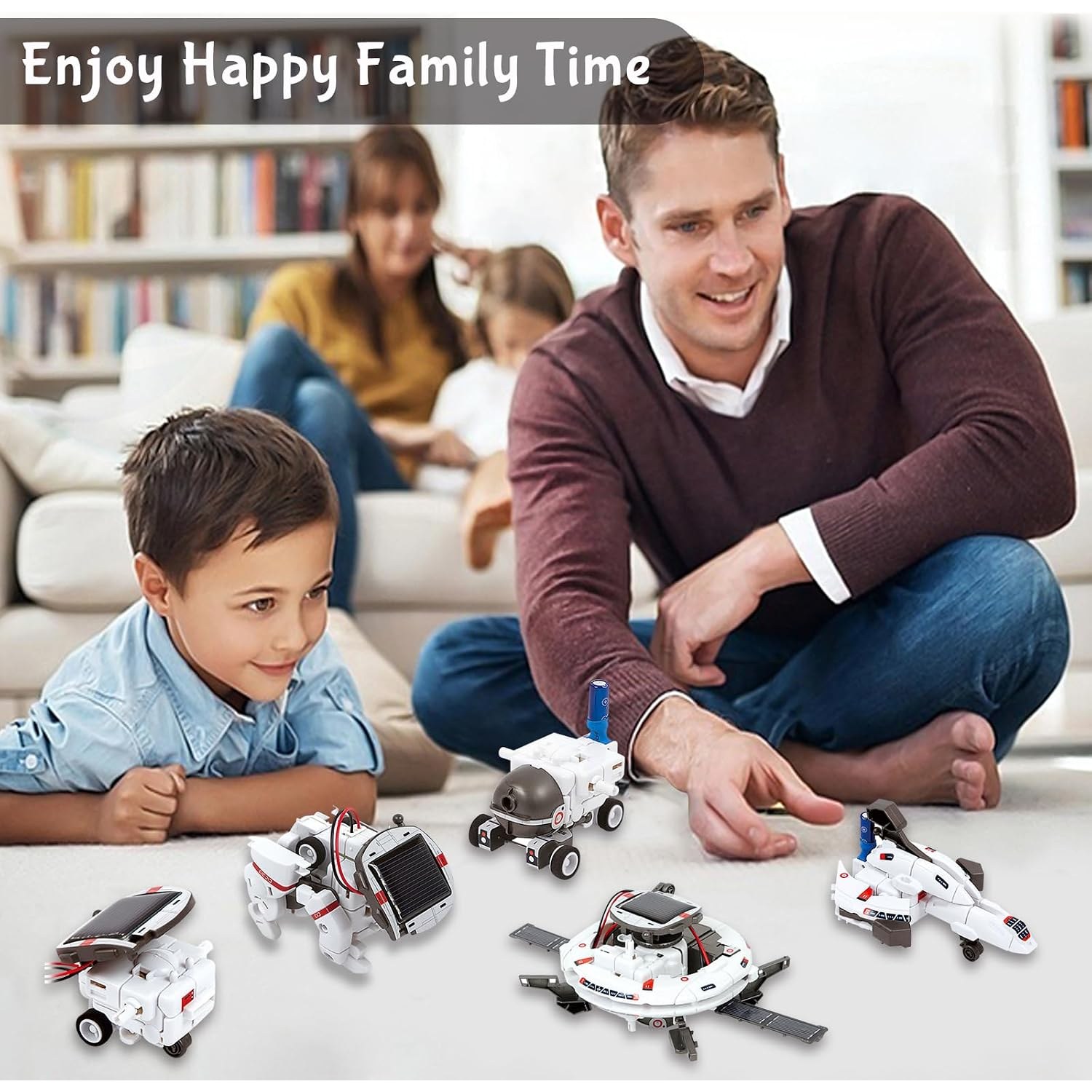
Assembly is required and the manufacturer recommends ages 8 to 12. Younger builders with an adult alongside often manage fine, and older kids tend to race ahead to the harder models. It makes a good shared project for a parent and child on a weekend, and it works just as well as a quiet solo activity when the house needs twenty minutes of calm.

Solar Space Building Kit

Physically the set is small and light. The packaged item measures 6.5 x 23.8 x 18 cm and weighs 0.29 kg, so it fits in a backpack for a trip to the grandparents or a school holiday program. The parts are plastic, the battery description is listed as alkaline, and everything stores back in the box between sessions.

Not sure yet? That is fine.

A toy has to suit the child it is for, and you cannot always judge that from a photograph. If it is not right for you, send it back within 14 days of delivery in resaleable condition and we refund the price you paid, including standard delivery. That is a voluntary policy we offer on top of your legal rights.

If it turns up faulty, damaged or not as described, that is on us. We pay the return postage, with your protection under the Consumer Protection (Fair Trading) Act 2003 unaffected. Read the full detail on our refunds and returns page, or ask us anything before you order.

Frequently Asked Questions

What is a solar space building kit?

It is a construction set of 120 plastic parts that a child assembles into working models driven by a small solar panel. Rather than one fixed toy, the pieces come apart and recombine into 12 different builds. It sits in the family of best STEM toys for 8 year olds because the building and the science happen at the same time.

How many models can be built from this set?

The set name is 12-in-1, so there are twelve build options in the guide. You build one, run it, then disassemble it to make the next. The same 120 pieces are reused each time.

How does the solar power actually work?

The solar panel converts light into electricity and feeds it straight to the small motor. The motor then turns the gear train, which drives wheels or other moving parts. There is no charging step, so the model runs while the light is on it and stops when it is not.

Does it need sunlight or will indoor light do?

Direct sunlight works best and gives the strongest, most reliable motion. A bright window on a clear day usually works too. Normal indoor ceiling light is generally too weak to drive the motor well.

What age is this recommended for?

The manufacturer recommends ages 8 to 12. Children at the younger end often enjoy it more with an adult helping on the first build. Older kids tend to work through the harder models on their own.

How many pieces are in the box?

The unit count is listed as 120. That covers the structural plates and the moving parts such as gears, tyres and shafts. Keeping them together in the box between sessions is the easiest way to avoid losses.

Are tools needed to put it together?

The parts are designed to push and clip together by hand. Assembly is required, which is listed clearly in the product details, but no separate toolkit is specified in the maker's details. A flat table and good light make the job much easier.

What are the parts made of?

The material type is listed as plastic. Specific plastic grades, colours and any safety certifications are not specified by the maker. If you need exact material documentation, ask us before ordering.

Does it need batteries?

The battery description in the product details is alkaline, though the kit is designed around solar power as its main energy source. Batteries are not listed as included in the maker's details. Plan to run it in good light as the primary way to use it.

How big is the finished model?

Finished sizes vary by which of the twelve builds you make, and individual model dimensions are not specified by the maker. The packaged kit measures 6.5 x 23.8 x 18 cm, which gives a sense of the scale of the parts. Most builds sit comfortably on a desk or tabletop.

How heavy is the kit?

The item weight is 0.29 kg. That is light enough for a child to carry and easy to pack for travel. It also keeps shipping simple.

Is this a good gift for a birthday?

Yes. It arrives boxed and the 12-in-1 format means it does not get used once and forgotten, which makes it one of the best birthday gift for a 9 year old options in this price range. It also suits Christmas and end of school year presents.

Will it hold a child's attention or is it a one-afternoon toy?

Twelve separate builds give it real staying power. Many kids do two or three models on the first day and come back to the harder ones later. The rebuild cycle is what keeps it from becoming a shelf toy.

Is it suitable for girls as well as boys?

Absolutely. There is nothing gendered about gears and solar panels, and it ranks among the best building kits for girls just as much as for boys. The skills it builds are useful to any child.

Can two children share one kit?

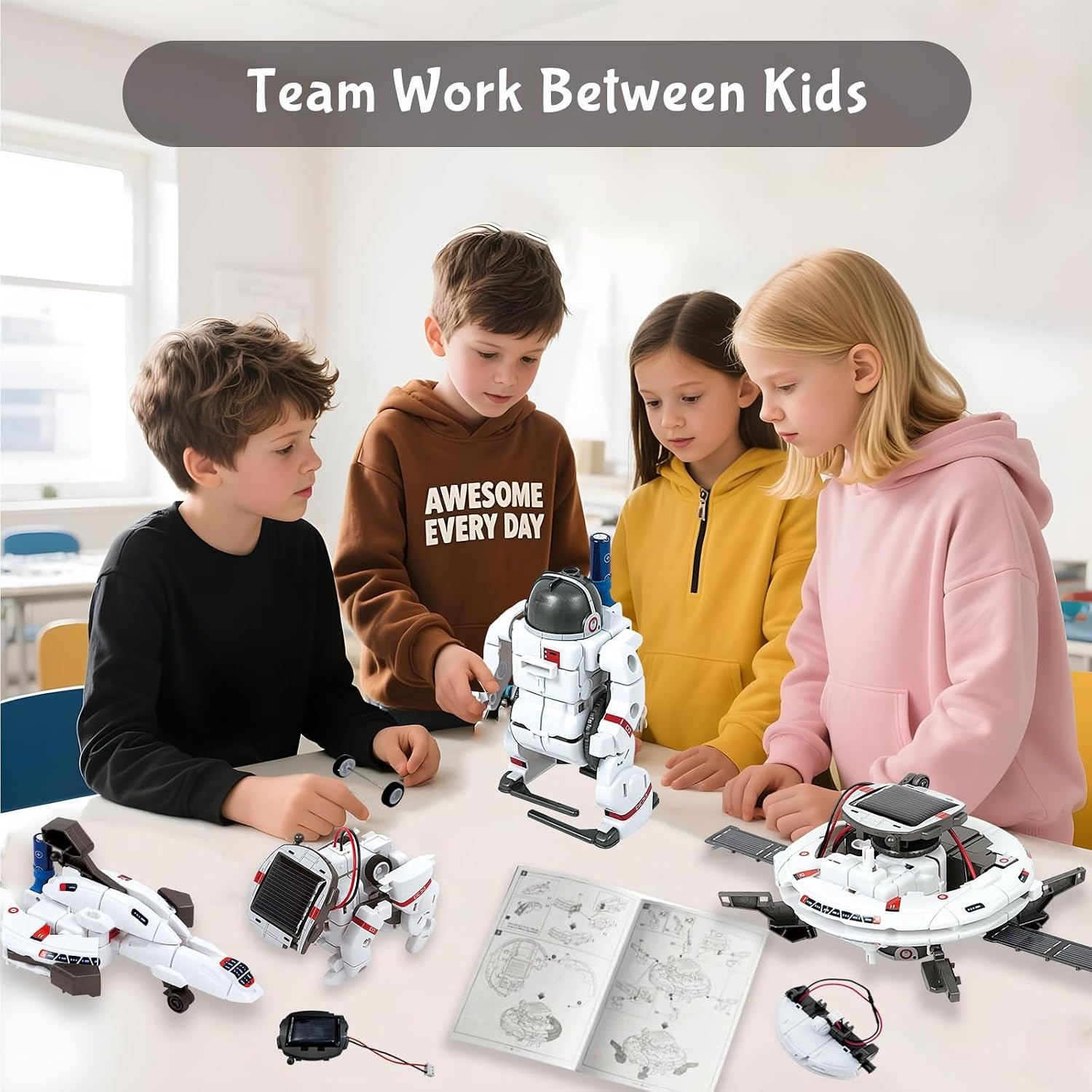
Yes, and it often works well with one child reading the guide while the other fits parts. Just agree in advance on who disassembles, since that is usually the contested part. Siblings a few years apart tend to share it comfortably.

Does it teach anything beyond following instructions?

It does. When a model stalls, the child has to trace the fault back through the gear train, which is genuine problem solving. That is why it works well as one of the best hands on learning toys for this age group.

Can it be used for a school project?

It fits neatly into a renewable energy or simple machines unit, which makes it one of the best classroom science project starters for upper primary. A student can demonstrate the model, explain the gear ratio and show how light levels change the speed. Check the brief with the teacher first.

How long does one build take?

Expect roughly thirty to sixty minutes for an early model and longer for the more complex ones. Speed improves quickly as a child gets familiar with the parts. First builds always take the longest.

What happens if a piece goes missing?

With 120 small parts, a vacuum cleaner is the main enemy, so build on a tray or a tablecloth. Contact us if a part is missing from a new kit and we will sort it out. Spare part availability is not specified by the maker.

How do I clean it?

Wipe the solar panel with a dry, soft cloth so dust does not reduce its output. Plastic parts can be wiped with a barely damp cloth and dried straight away. Avoid soaking anything and keep it away from dishwashers.

Can the models go in water?

Some builds in kits of this style are designed for water, but the specific water-capable models are not confirmed by the maker. Follow the included guide rather than assuming. If a model does go in water, dry every part fully before storing.

How should it be stored between uses?

The original box works well, or any lidded container that keeps the small parts together. Store it somewhere dry and out of prolonged direct sun. That keeps the plastic in good shape and stops pieces scattering.

Is it suitable for younger siblings to be around?

The parts are small, so keep the kit away from children under three who still mouth objects. Build on a table rather than the floor where a preschooler can reach. Adult supervision during assembly is sensible.

What is the brand and model?

The brand is Hechify, the model number is 219A and the manufacturer part number is 2666. Those are the identifiers to quote if you contact us about the product. A GTIN is not listed by the maker.

Where is it made?

Country of origin is not specified by the maker. We only publish details the maker has confirmed. Ask us before ordering if origin matters for your purchase.

What colour is it?

Colour is not specified by the maker. Product images on this page show the set as supplied. If exact colours matter, contact us and we will check before dispatch.

How is it delivered?

Most orders arrive within 7 to 12 working days of the order date. Our toys are sent from overseas warehouses, so allow for that if you are buying for a birthday. Delivery is to Singapore addresses only, free on orders of $150 or more and a flat $20 under that, and you get tracking by email once the parcel is on its way.

Is it a good screen-free activity?

It is one of the best screen free activity for kids ideas for a wet weekend, because it needs hands, patience and a bit of light. A child can work through it alone or with a parent. There is no app or device involved.

Does it come with instructions?

Yes, a build guide for the twelve models is part of the kit. It is step by step so a confident reader at the recommended age can follow it. Younger builders may want an adult to read ahead with them.

What if the kit is not right for us?

Get in touch within 14 days of delivery and we will walk you through the options. If it arrives damaged or a part is missing, send us a photo and the model number and we will replace or refund it. We would rather fix the problem than leave you with a kit that stays in the cupboard.

How To Choose A Solar Robot Kit That Kids Actually Finish

6 min read Toy Warehouse

The problem with most "educational" toys

Walk down any toy aisle and half the boxes promise learning. Most of them deliver about twenty minutes of it. The toy does one thing, the child does that thing, and then the box goes under the bed with a few parts missing.

The reason is usually the same. There is nothing left to figure out. Once the model is built or the button is pressed, the puzzle is solved and the toy has nothing more to offer.

A solar space building kit works differently because it is designed to be undone. The 120 pieces in this set make twelve different models, and the only way to reach the second model is to take the first one apart. That loop keeps the thinking going long after the novelty of the first build has worn off.

How a solar robot kit actually works

The mechanics here are simple enough for a child to understand, which is exactly why they teach well.

A small photovoltaic panel sits on the model. When light hits it, it produces a small electric current. That current goes straight to a tiny motor, and the motor spins. On its own, a spinning motor shaft does nothing useful, so the kit uses a gear train to turn fast, weak rotation into slower, stronger movement at the wheels or limbs.

That gear train is where kids learn the most. If a gear is seated wrong or a shaft is a millimetre out of line, the whole thing binds and stops. There is no error message, just a model that sits there. Working out why is real engineering, scaled down to a tabletop.

The solar part adds a second lesson. Take the model outside at noon and it runs well. Take it out late on an overcast afternoon and it crawls. Hold it under a lamp and nothing happens at all. Children work this out in minutes, and it sticks far better than a chapter on renewable energy ever does.

Who this suits

Hechify recommends ages 8 to 12, and that range is honest. At eight, a child with reading confidence and a bit of patience can follow the guide, though the first build usually goes better with an adult sitting nearby. At ten or eleven, most kids work through it alone and start experimenting with their own variations.

Below eight, the small parts and the fine alignment work tend to cause frustration rather than fun. That said, plenty of six and seven year olds do fine as a co-pilot, handing over pieces and doing the easier clips while a parent handles the gears.

It also suits adults who want a shared project rather than another thing to supervise. Building something together on a Sunday morning is a different kind of time than watching a child play alone, and this set is well suited to it.

Teachers and tutors find a use for it too. For a simple machines or energy unit, having a working model on the desk beats a diagram. It is one of the best engineering toys for kids in a classroom setting precisely because it fails visibly and can be fixed in front of the group.

How to choose between solar kits

If you are comparing several sets, a few things separate the ones that get finished from the ones that get abandoned.

Piece count versus build count. A set with a huge piece count and only two or three models is really a single big project. This one balances 120 parts against twelve builds, which means the pieces are reused rather than sitting idle in a bag. More builds from the same parts means more hours of use per dollar.

Whether it needs tools. Kits that require screwdrivers, glue or adult-strength force stall quickly. Push-fit parts keep the child in control of the whole process, which matters enormously for whether they come back to it.

Instruction quality. Step by step diagrams that a child can read without help are the difference between an independent afternoon and an hour of "Dad, what does this bit do." Look for guides that show each stage rather than one exploded diagram.

Power source honesty. Some kits claim solar power but really need batteries to do anything useful. This one lists an alkaline battery description in its specifications while being built around solar operation, so set expectations accordingly and plan to use it in good light.

Size and storage. At 23.8 x 18 x 6.5 cm and 0.29 kg, this kit fits in a backpack and stores on a shelf. Large kits with sprawling parts trays tend to get put away permanently after the first tidy-up.

Getting the first build right

The first session shapes whether a child continues, so it is worth setting it up properly.

Pick a hard, flat surface with a lip if you can manage it. A baking tray or a tablecloth with edges stops small gears rolling onto the floor. Good overhead light helps, since some of the parts are similar and easy to confuse.

Start with one of the simpler models rather than the most impressive one on the box. Confidence from a quick win carries a child through the harder builds. Working backwards from the most complex model is how kits end up half-assembled in a drawer.

Test as you go. If the guide shows a gear fitted, spin it by hand before adding the next piece. Catching a misaligned shaft at step four is a lot easier than finding it at step twenty.

Then take it outside. The first time a model moves under nothing but sunlight is the moment that sells the whole idea, and it is worth saving for a clear day.

Looking after it

Care is mostly about two things, keeping the panel clean and keeping the parts together.

Dust on a solar panel reduces its output noticeably. A dry, soft cloth once in a while is enough. Avoid cleaning sprays, since residue on the panel surface does more harm than the dust did.

The plastic parts can be wiped with a barely damp cloth and dried straight away. Keep them out of the dishwasher and away from heat sources that could warp them. If a build is designed to go in water, dry every component fully before it goes back in the box, especially around the gears.

Storage is simple. The original box works fine, or any container with a lid. The point is that all 120 pieces live in one place, because a kit missing four gears is a kit nobody wants to open.

Between sessions, keep it out of long periods of direct sun. Running the model in sunlight is the whole idea, but leaving the plastic baking on a windowsill for weeks is not doing it any favours.

When it is not the right choice

Honest advice helps more than a sales pitch. This is not the kit for a child who dislikes instructions and wants to free-build, since the twelve models are structured. It is not ideal for a child under eight working unsupervised. And during a long run of grey, rainy days, the solar element will be frustrating unless you have a bright window to work with.

If any of those describe your situation, say so when you contact us and we will point you somewhere more suitable rather than sell you something that disappoints.

The short version

This is a 12-in-1 solar robot kit from Hechify, model 219A, with 120 plastic parts, push-fit assembly and a recommended age of 8 to 12. It weighs 0.29 kg and packs down to 23.8 x 18 x 6.5 cm.

What you are buying is a loop rather than a single toy. Build, run in sunlight, troubleshoot, take apart, build again. That loop is what turns a box of gears into one of the best hands on learning toys for this age, and it is why the set tends to come back out of the cupboard instead of staying in it.

If the details you need are not listed on this page, they are not confirmed in our maker's details, and we would rather tell you that than guess. Ask us and we will check.

Browse the shop

Not sure if it suits your child?

Tell us their age and how much building they have done before, and we will give you an honest answer.

Ask us a question

Page summary

The Solar Space Building Kit is a 12-in-1 solar powered robotics set from Hechify, model number 219A, manufacturer part number 2666. It contains 120 pieces including gears, plates, tyres and shafts, with a solar panel that drives the motor. Assembly is required and the manufacturer recommends ages 8 to 12. The theme is robotics and the stated educational objective is dexterity skills. Material type is plastic and the battery description is alkaline. The packaged item measures 6.5 x 23.8 x 18 cm and weighs 0.29 kg, supplied as a single pack. Colour, country of origin and any certifications are not specified by the maker, and no warranty is stated here.