

The complete guide
Choosing a Wooden Doctor Play Set: A Buyer's Guide
The problem with most doctor kits
Walk down any toy aisle and you will find a dozen doctor kits. Most of them share the same problem. The instruments are thin plastic, the stethoscope does nothing at all, and the whole thing lives in a plastic clamshell that cracks the second week. A child opens it, plays for an afternoon, and then it migrates to the bottom of the toy box where the pieces separate forever.
What makes doctor play work is believability. A child who presses a stethoscope to a teddy and hears nothing learns fairly quickly that the toy is fake. A child who hears a real thump of a heartbeat leans in. That small difference decides whether a doctor set gets played with for a week or for years.
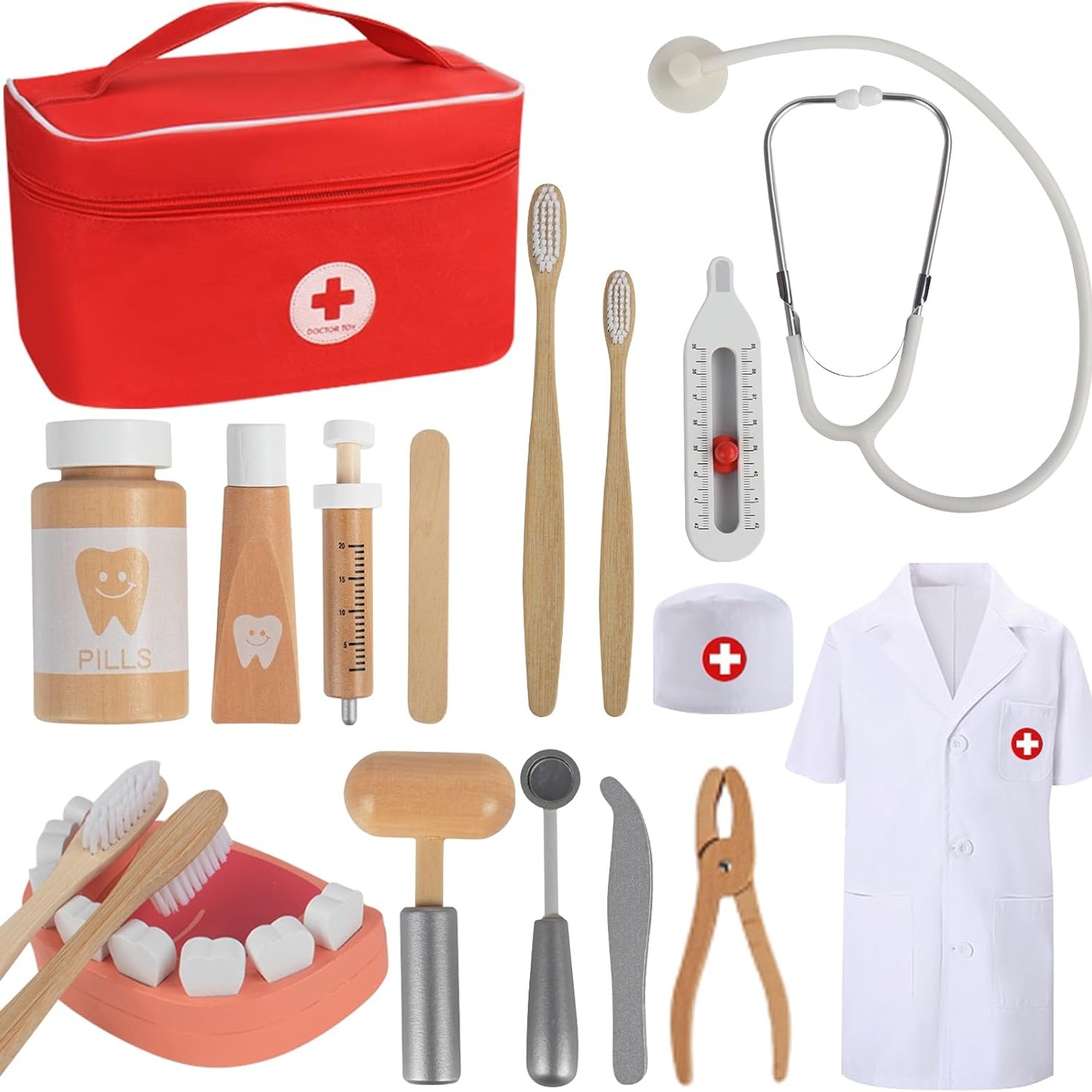
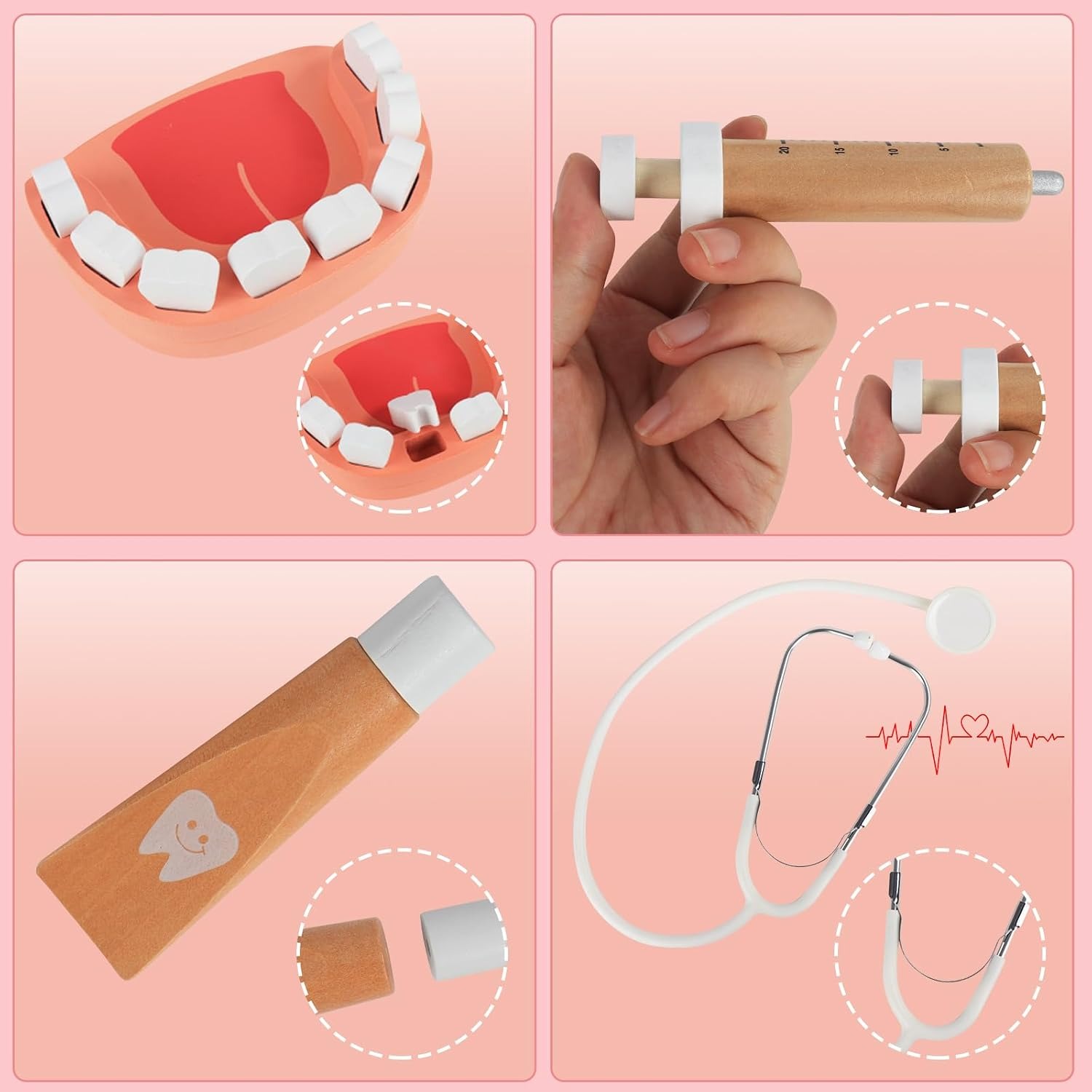
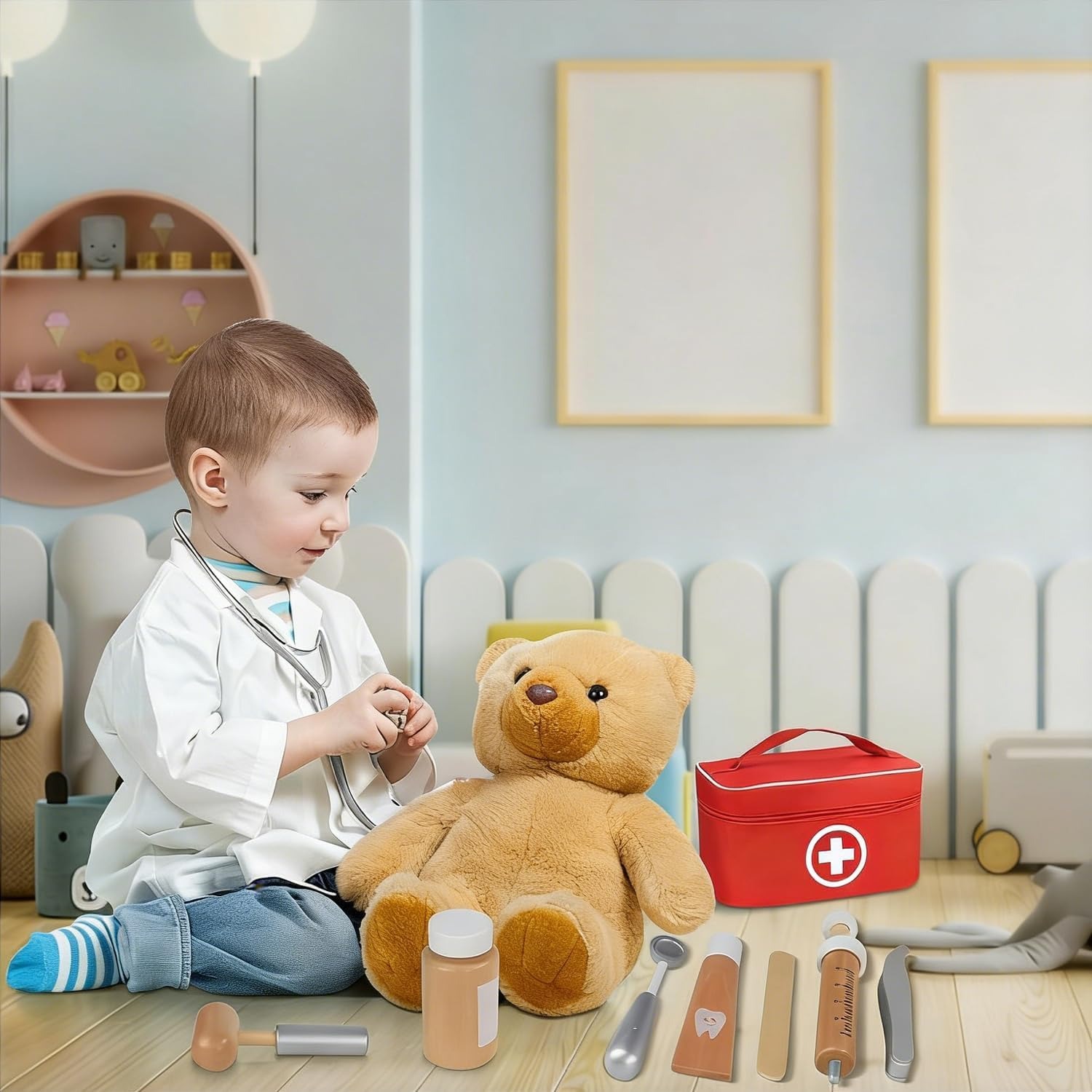
This wooden doctor play set is built around that idea. The stethoscope is described by the maker as genuine rather than a decorative prop. The pieces are wood, so they have weight and they do not flex. And the whole thing lives in a red doctor bag, which solves the scattered-pieces problem before it starts.
How the set works in practice
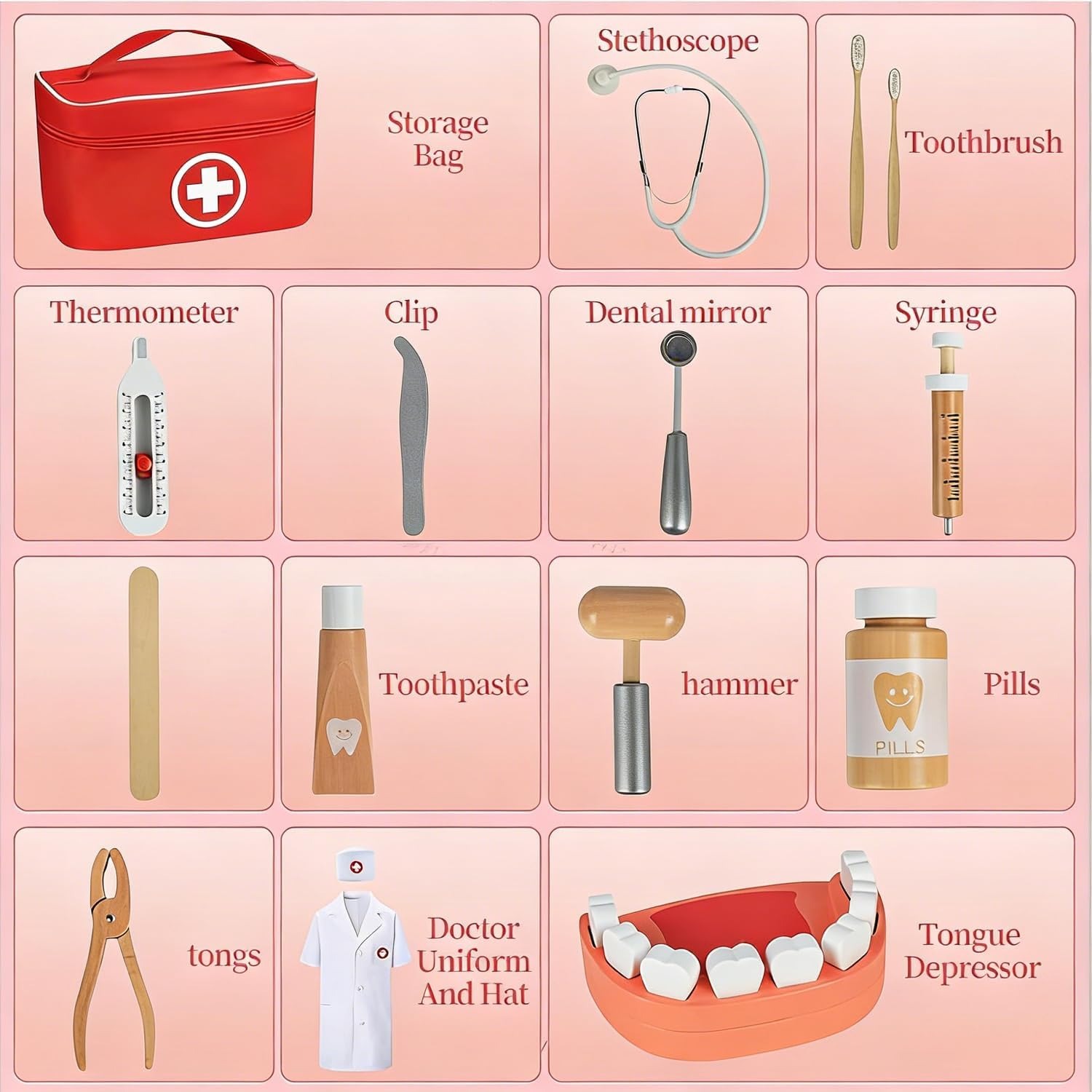
The set arrives as a portable doctor's case measuring 24 x 8 x 19 cm. Inside are the stethoscope, a doctor's coat and a selection of doctor's utensils. The maker notes the exact utensils can vary by model, which is worth knowing up front so there are no surprises.
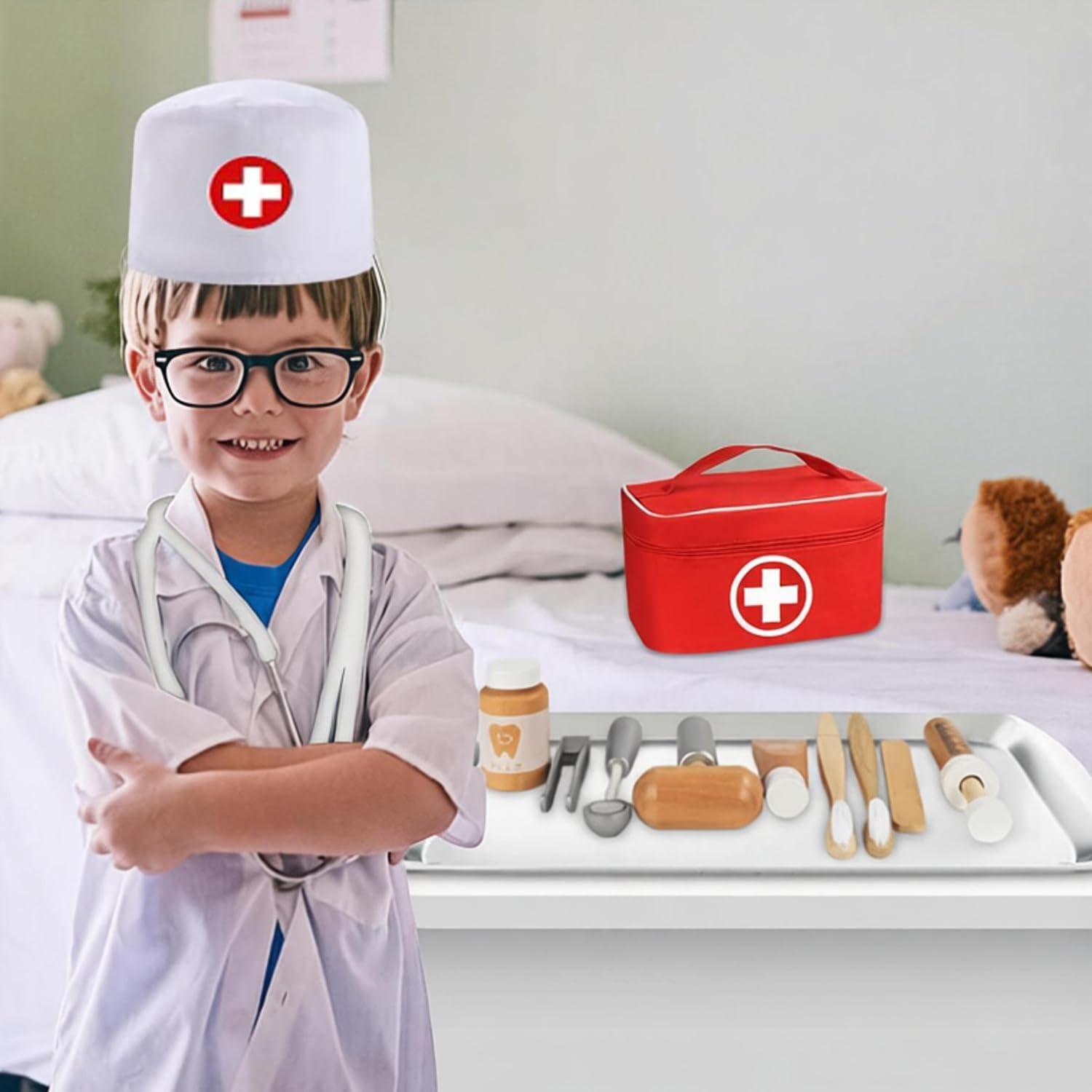
The play itself is simple and self-starting. A child puts on the coat, picks up the bag, and goes looking for a patient. The patient is usually a soft toy, sometimes a sibling, often a parent who made the mistake of sitting down. From there the game builds its own structure. There is a check-up, a diagnosis (frequently dramatic), and a treatment plan.
What you will notice is how much talking happens. Doctor play is one of the few pretend games that runs almost entirely on conversation. The child has to ask questions, explain what is wrong, and describe what comes next. The manufacturer lists communication skill as one of the educational objectives, and it is the one you will hear most clearly from the next room.
Why wood makes a difference
Wood changes how a toy feels and how long it lasts. Wooden instruments do not have the hollow rattle of cheap plastic. They sit properly in a hand. When they drop, they thud rather than shatter.
There is also the look. A wooden set left out on a shelf does not shout for attention the way bright plastic does. Parents tend to tolerate it in the living room, which means it stays accessible, which means it gets played with. Toys that get put away out of sight get forgotten.
The trade-off is care. Wood does not like water. You wipe it, you do not wash it, and you keep it out of damp cupboards. That is the full maintenance routine, and it takes about ten seconds.
Who this suits
The manufacturer recommends ages 36 months to 12 years. That is a wide band, and the set gets used differently across it.
At three and four, children are mostly copying. They have seen a doctor, they remember the stethoscope, and they repeat the actions. The play is short and repetitive, and that is exactly right for the age.
At five to seven, the stories get longer. There are appointments, waiting rooms, and patients who need to come back on Thursday. This is the sweet spot for a pretend play medical set, when imagination is running hard and the props are still doing most of the scene-setting.
From eight upward, the play turns more detailed and sometimes more technical. Children at this age often want to know what a stethoscope actually does and how a heartbeat sounds. A working stethoscope rewards that curiosity in a way a toy one never can.
It also works as a dentist set, which the maker mentions specifically. Children switch themes on their own, and open-ended props make that easy.
What to look for when comparing sets
A few things separate a set worth buying from one that is not.
Check whether the stethoscope works. This is the single biggest factor in how long a doctor kit holds interest. A dead prop gets abandoned fast.
Check what the set is stored in. A proper bag or case keeps pieces together. Loose pieces in a cardboard box will be spread across three rooms by the end of the month.
Check whether a coat or dress-up element is included. Wearing the role matters more than adults expect. A child in a doctor's coat behaves like a doctor. A child holding a plastic instrument is just a child holding a plastic instrument.
Check the age range. A set recommended only to age five is a narrow purchase. One rated 3 to 12 has a far longer life in the house.
And check the material. If you are shopping for the best wooden toys for preschoolers rather than the cheapest option on the shelf, the construction is usually the thing that decides whether the toy survives to a second child.
Getting the most out of it
The fastest way to start the play is to be the first patient. Sit down, describe a symptom, and then let your child take over completely. Resist the urge to correct the medicine. A diagnosis of "too much broccoli" treated with a sticker is a perfectly good outcome.
Keep the bag somewhere the child can reach without asking. Access drives use. If it is on a high shelf, it gets played with when you remember to get it down, which is rarely.
Line up a few patients. A row of soft toys gives the game a structure, and children often invent a whole waiting room without any prompting. Some families add a notepad for appointment notes, which pulls in early writing practice without anyone mentioning it.
If your child has a real appointment coming up, run a check-up at home first. Being the one in charge of the stethoscope takes a lot of the mystery out of the real thing.
Looking after it
Care is straightforward. Wipe wooden pieces and the case with a slightly damp cloth, then dry them right away. Never soak any part and never put wood through a dishwasher.
The coat is a light dress-up garment. Hand wash it cool and dry it flat. Hot washes and tumble dryers are how dress-up clothing ends up the wrong size.
Store everything back in the bag. That one habit does more for the lifespan of the set than anything else. It keeps small pieces together and it keeps the toy ready to go.
Give the pieces a quick look over every few months. If anything splinters or cracks, retire it. Rough wood and small hands are a bad combination, and it is not worth the risk.
The short version
This is a wooden doctor play set built as a portable red case, with a genuine stethoscope, a doctor's coat and a set of doctor's utensils that vary by model. It measures 24 x 8 x 19 cm and is recommended for ages 3 to 12.
It suits children who like fixing things, looking after soft toys, and running the show. It builds communication, hand-eye coordination and problem solving while the child thinks they are just playing. The bag keeps it together, the wood keeps it going, and the working stethoscope is what keeps a child coming back to it.
If you want a kids doctor kit that lasts longer than the first week, this is the shape of thing to look for.