
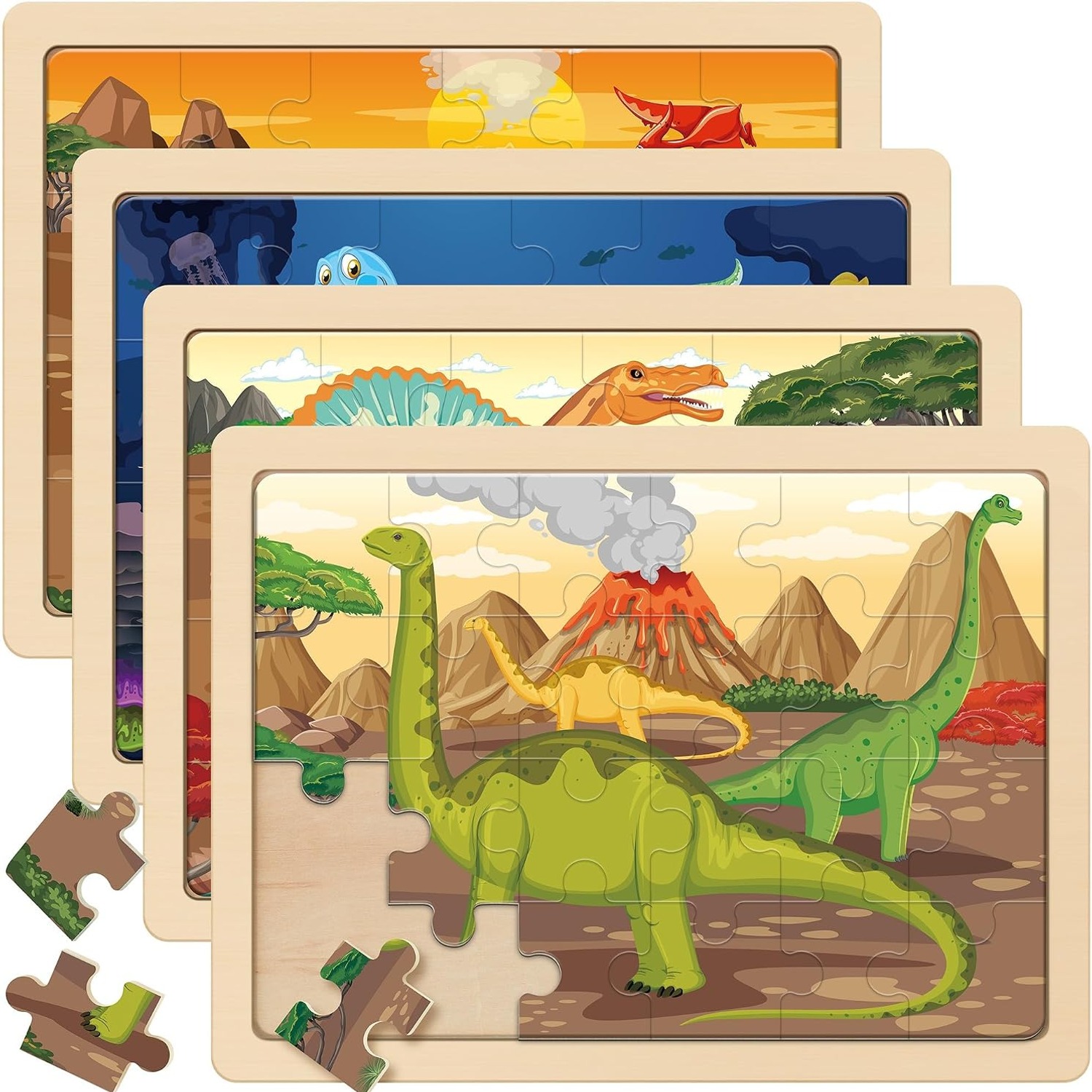
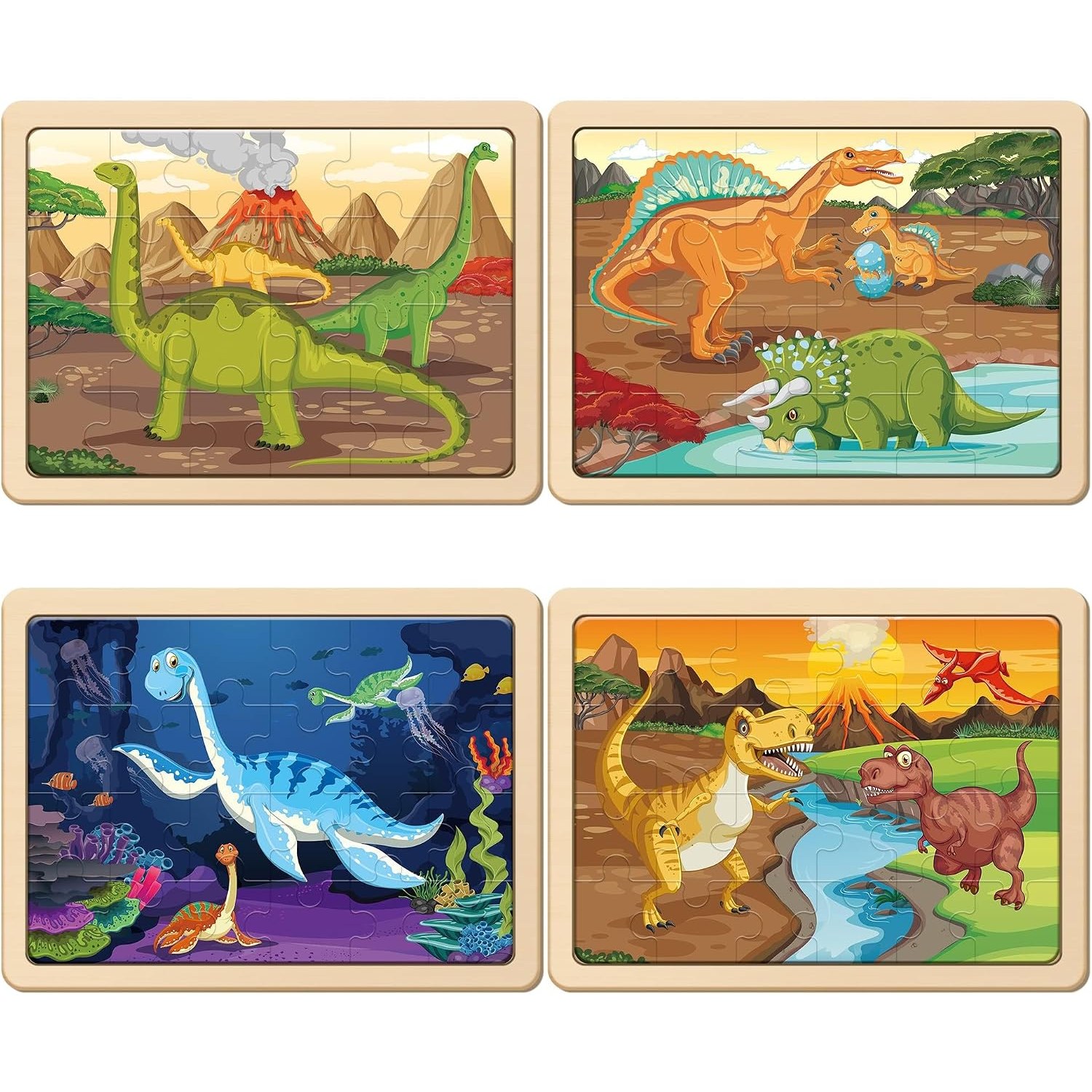
The complete guide
How to Choose a Wooden Dinosaur Puzzle Set That Actually Gets Played With
The toy that looks boring and then gets played with daily
Most toy cupboards have a familiar problem. The loud plastic thing that seemed exciting in the shop is under the bed by week three, and something plain and wooden is the thing your child keeps dragging out. Puzzles land in the second group more often than they land in the first.
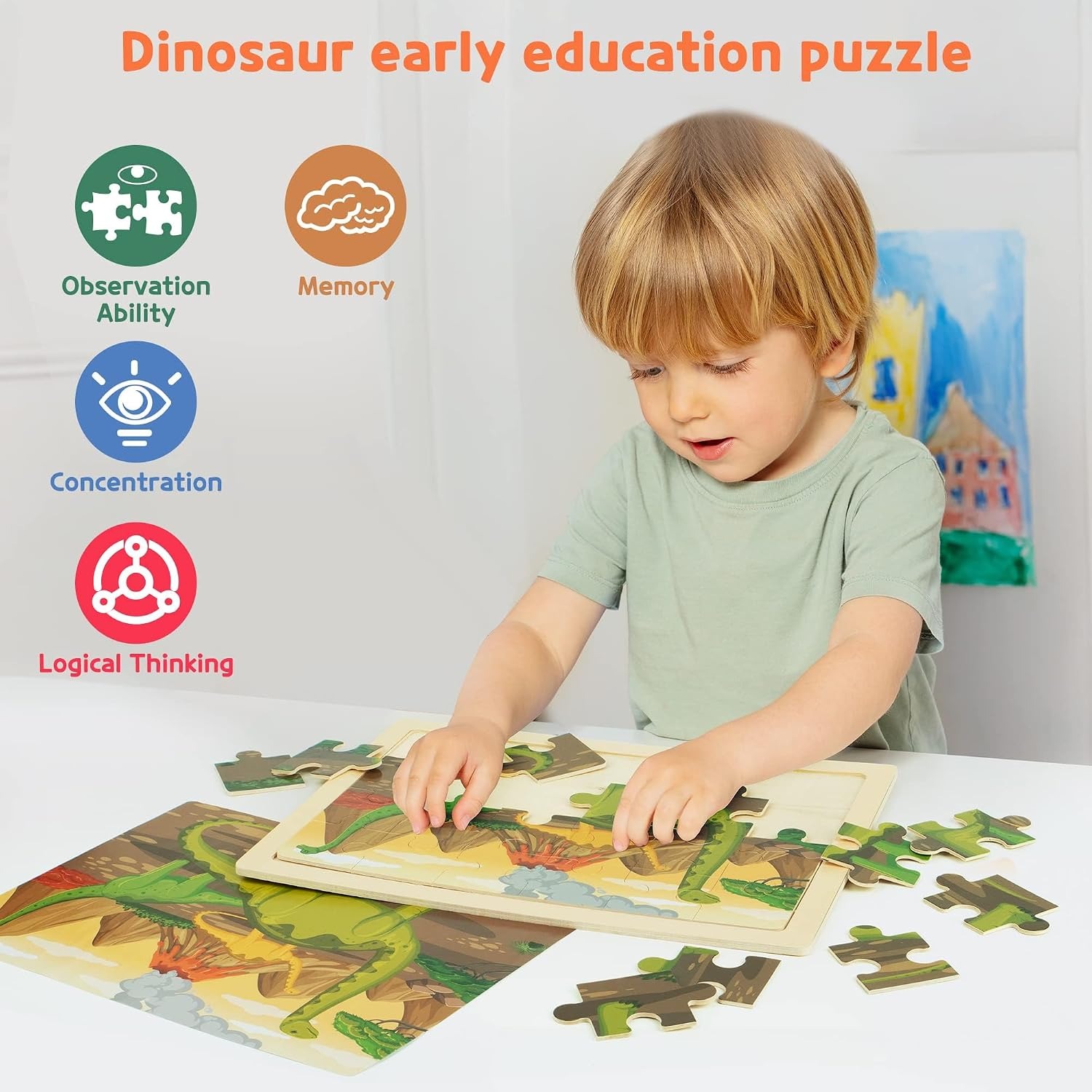
Part of that is how a puzzle rewards you. There is no points system and no voice telling the child they did a great job. The reward is that the picture is finished, and the child did it themselves. For a three to eight-year-old, that is a surprisingly strong pull. They will do it again, faster, and then ask you to time them.
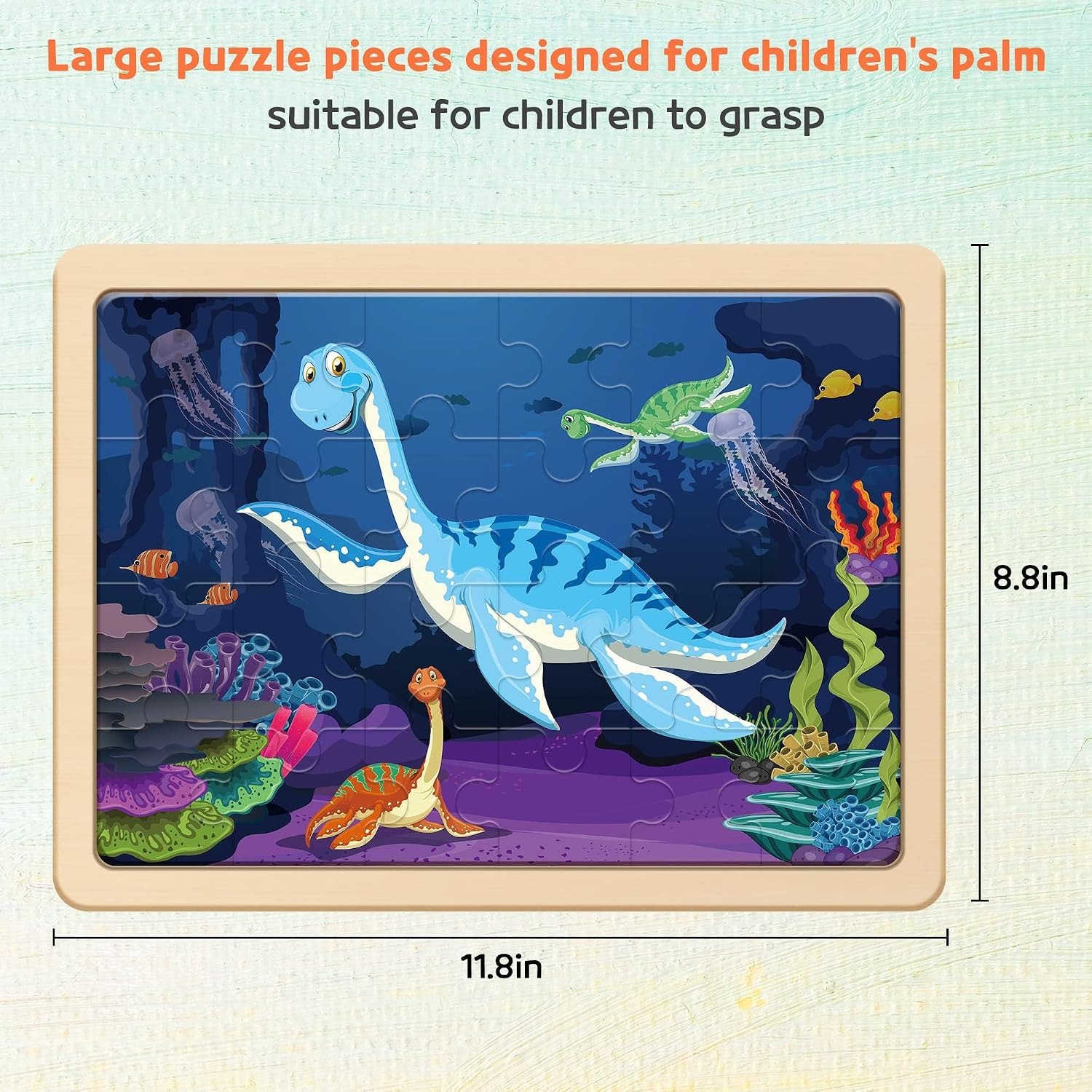
The trouble is picking a puzzle at the right level. Too easy and it is solved once and abandoned. Too hard and it turns into a pile of pieces and a frustrated child who decides puzzles are not for them. This set sits at 24 pieces per puzzle, repeated four times with four different dinosaur scenes, and that specific combination solves a lot of the usual problems.
Why 24 pieces is the useful number
Puzzles for small children tend to cluster at the extremes. There are chunky six and nine-piece boards for preschoolers, and then there is a jump to 50, 100, and beyond for school-age kids. The gap in the middle is where a lot of three to five-year-olds live.
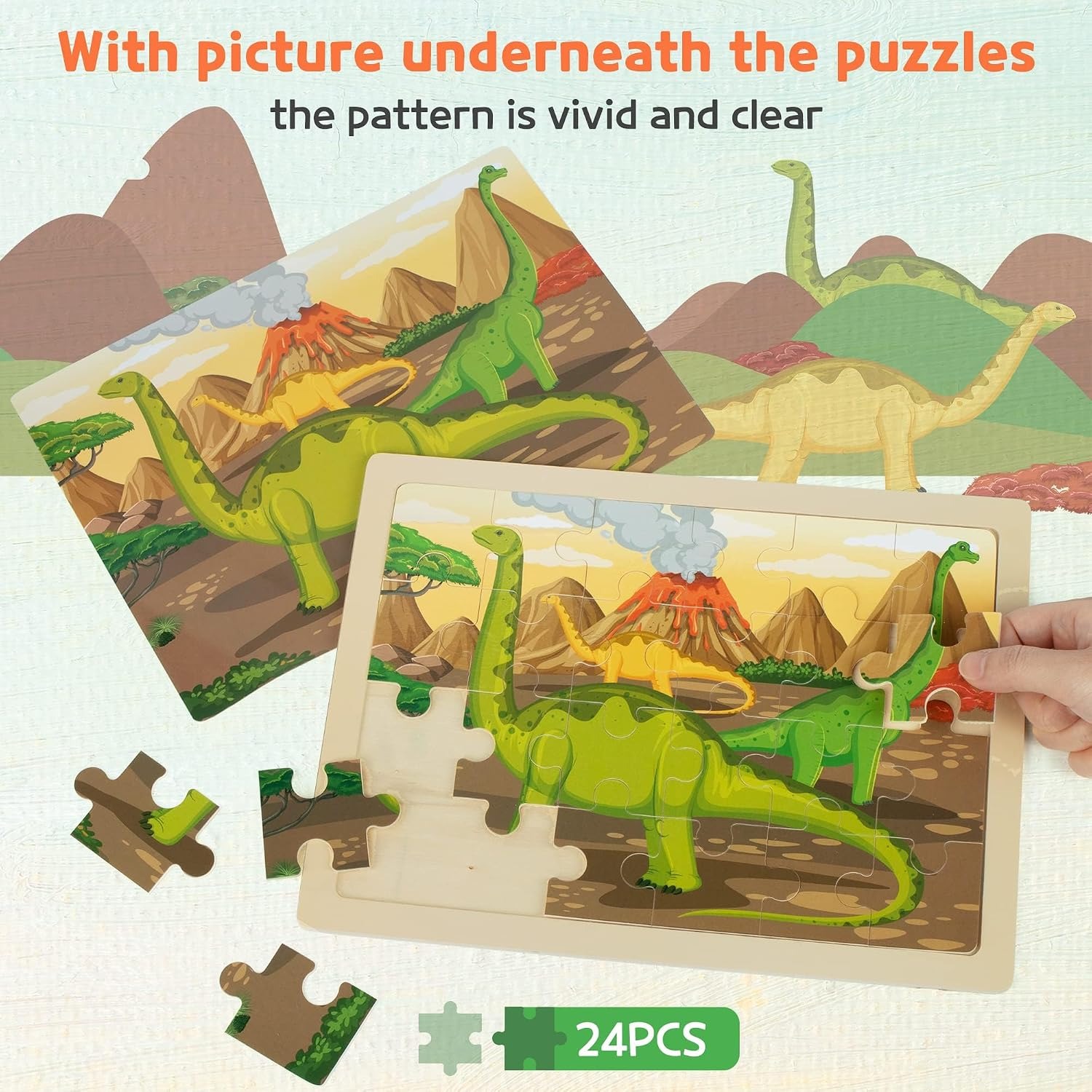
Twenty-four pieces fills that gap. A child who has never done this before will usually take ten to twenty minutes on their first attempt, with some looking at the guide picture and some trial and error. That is long enough to feel like a real achievement. A week later the same puzzle takes three minutes, which is also fine, because by then there are three other scenes waiting.
That repeat value matters more than people expect. A puzzle a child can finish is a puzzle they will pull out on a wet Saturday. A puzzle they cannot finish goes on the top shelf.
What wood changes in practice
Cardboard puzzles are cheap and they work, but anyone who has watched a four-year-old build one knows the failure modes. Pieces bend. Tabs peel. A sleeve catches the edge and half the picture slides apart.
Wooden pieces behave differently. They have weight, so they stay where they are put. They do not deform when a child presses too hard, which small children do constantly because they are still learning how much force a thing needs. And they survive being handled by damp hands, dropped, and stepped on, which is roughly the standard life of any toy in a busy house.
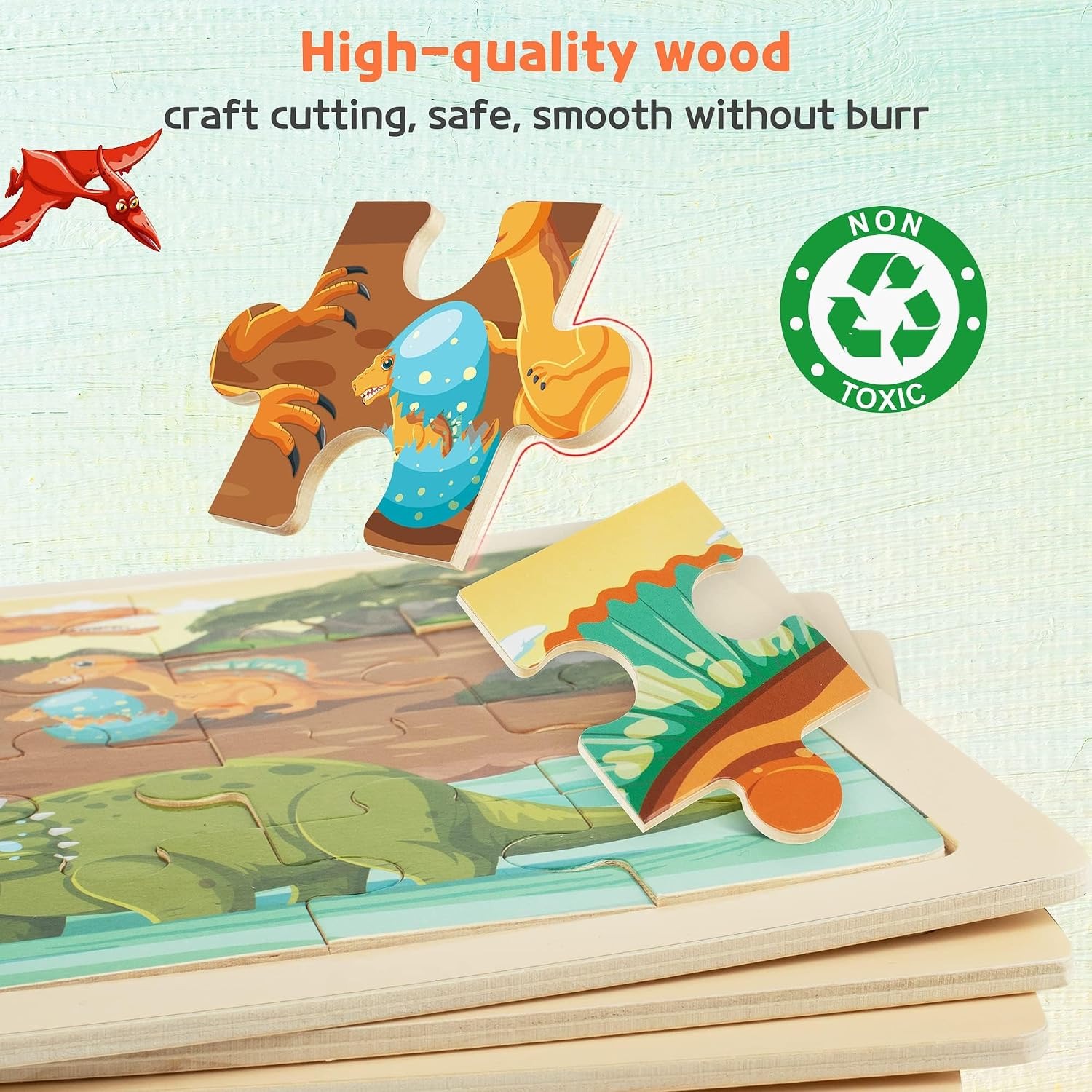
The edges on this set are polished, which is the detail worth checking on any wooden toy. Unfinished cut wood can leave splinters, and a splinter is the fastest way to end a child's interest in a toy permanently. Smooth edges also make pieces easier to grip, which helps the youngest builders in the recommended age bracket.
The practical trade-off is weight. The full set is 0.74 kg. That is nothing to carry to the car and it is more than a cardboard set would be if you were trying to post it somewhere cheaply.
The frame and the guide sheet
Each puzzle sits inside its own wooden frame. That sounds like a minor detail and it is one of the most useful features here. The frame gives the child a hard boundary to work inside, which makes the task much clearer than building loose on a tabletop. It also holds completed sections in place, so a bumped table does not cost twenty minutes of work.
Under the pieces there is a removable paper illustration of the finished scene. For a younger child, that picture is a lifeline. When they are stuck, they lift a piece, look at the sheet, and get a clue instead of a dead end. It is the difference between a child asking you for help every forty seconds and a child working on their own.
Then, when the puzzle has become too easy, you take the sheet out. Now the frame is blank underneath and the child is building from memory and shape alone. Same box, harder game, no extra cost. That trick stretches the useful life of the set by a year or more for most kids.
Who this set suits
It suits a child aged three and up who has already finished a few simpler puzzles and is ready for something with more pieces. It suits households with two children close in age, because four trays means two can build at once without sharing a pile. And it suits anyone looking for a quiet time activity for kids that does not need charging, supervision, or a flat surface bigger than a dinner tray.
It also works well as a gift. Four puzzles in one box has visible value when it is opened, and the dinosaur theme covers a broad age range and both genders. Dinosaurs are one of the few interests that reliably survive from three to eight.
It does not suit children under three. The 36-month minimum is there for a reason, and smaller puzzle pieces are not appropriate for a child still mouthing toys. It is also not the right choice for a nine or ten-year-old who wants a real challenge, since they will finish all four scenes in an afternoon.
Getting the first session right
The first attempt sets the tone, so it is worth a bit of effort. Clear a flat surface and work on one puzzle only, with the other three still in the box. Four open trays at once is overwhelming for a small child.
Start by tipping the pieces out next to the frame rather than inside it, so there is a clear working area. Then let your child look at the guide sheet for a moment before you lift it out of the way or leave it in place, depending on how much help they need.
Resist the urge to place pieces for them. The useful part of a puzzle is the trial and error, not the finished picture. If they are stuck and getting cross, point at a region of the guide rather than at a specific piece. That keeps the problem theirs to solve.
When it is done, let them break it up and do it again if they want. Repetition is not a waste. It is how the pattern recognition gets built.
Looking after wooden puzzles
The care routine is short. Wipe pieces with a slightly damp cloth and dry them straight away. Never soak them and never put them anywhere near a dishwasher, because wood swells and warps when it takes on water, and a swollen piece will not go back into its slot.
Store the set flat and dry, with the pieces in their frames. Stacking the trays in a cupboard works well. Avoid damp rooms and hot cars left in the sun, since big swings in humidity are what loosens the finish over time.
Check pieces occasionally for cracks or chips, especially if a younger sibling has got hold of them. Any piece that has been chewed or damaged should be taken out of the set.
The short version
This is a four-pack of wooden dinosaur puzzles, 24 pieces each, with framed trays and removable picture guides, recommended for ages three and up. The piece count hits the gap between preschooler boards and serious jigsaws, the wood survives real use, and four different scenes mean it does not get solved and shelved after one sitting.
If you need a screen-free activity that a three to eight-year-old can finish on their own, that travels, and that two children can use at the same time, this covers all four. Take the guide sheets out when it gets easy and you get a second life out of the same box.