
The complete guide
Choosing a Big Building Block Set for Kids, A Practical Buyer's Guide
The problem with most toys bought for a four year old
You buy something bright. It makes a noise. It gets played with hard for a week, then it migrates to the bottom of the toy box and stays there. The issue is usually that the toy has one job, and once a child has done that job twenty times, there is nowhere left to go.
Building blocks avoid that trap because the child supplies the idea, not the manufacturer. A pile of bricks can be a castle on Monday and a bus depot on Thursday. Nothing has to be reset or recharged. This is the main reason block sets stay in circulation for years while other toys rotate out after a few months.
The catch is that not all block sets suit all ages. Buy the wrong size and a three year old will give up in frustration, or a seven year old will find it too simple. Getting the size and piece count right is most of the decision.
Why brick size matters more than piece count
Small standard bricks need a surprising amount of pinch strength. An adult barely notices. A three or four year old notices immediately, because pressing two small bricks together and then levering them apart again is genuinely hard work for developing hands. What tends to happen is the child builds for five minutes, hits a brick they cannot separate, and hands the whole thing to a parent.
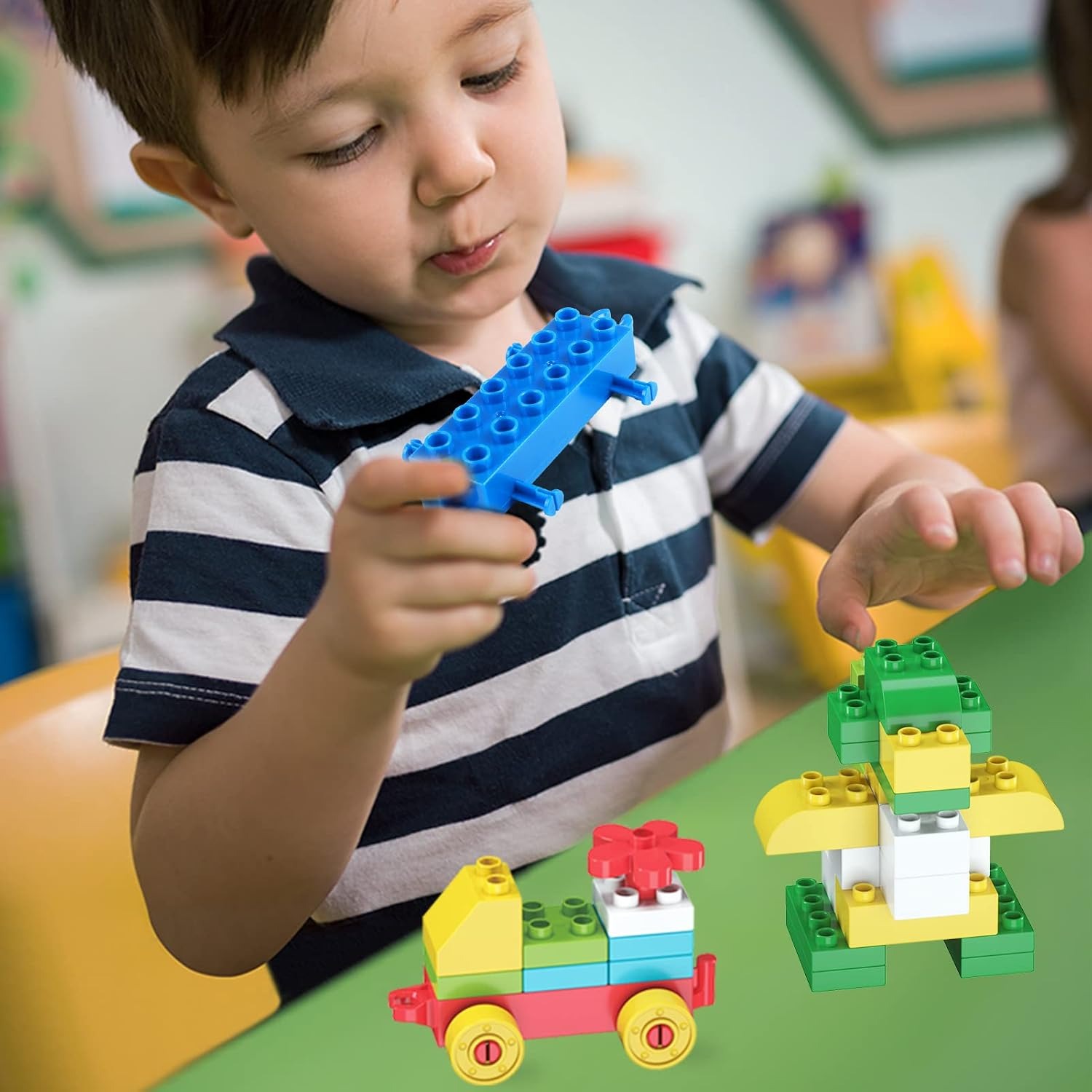
Large bricks solve that. They have more surface area, so the connection is easier to make and easier to break. A child can work independently, which is the whole point. Independent play is what you are actually buying when you buy a construction toy.
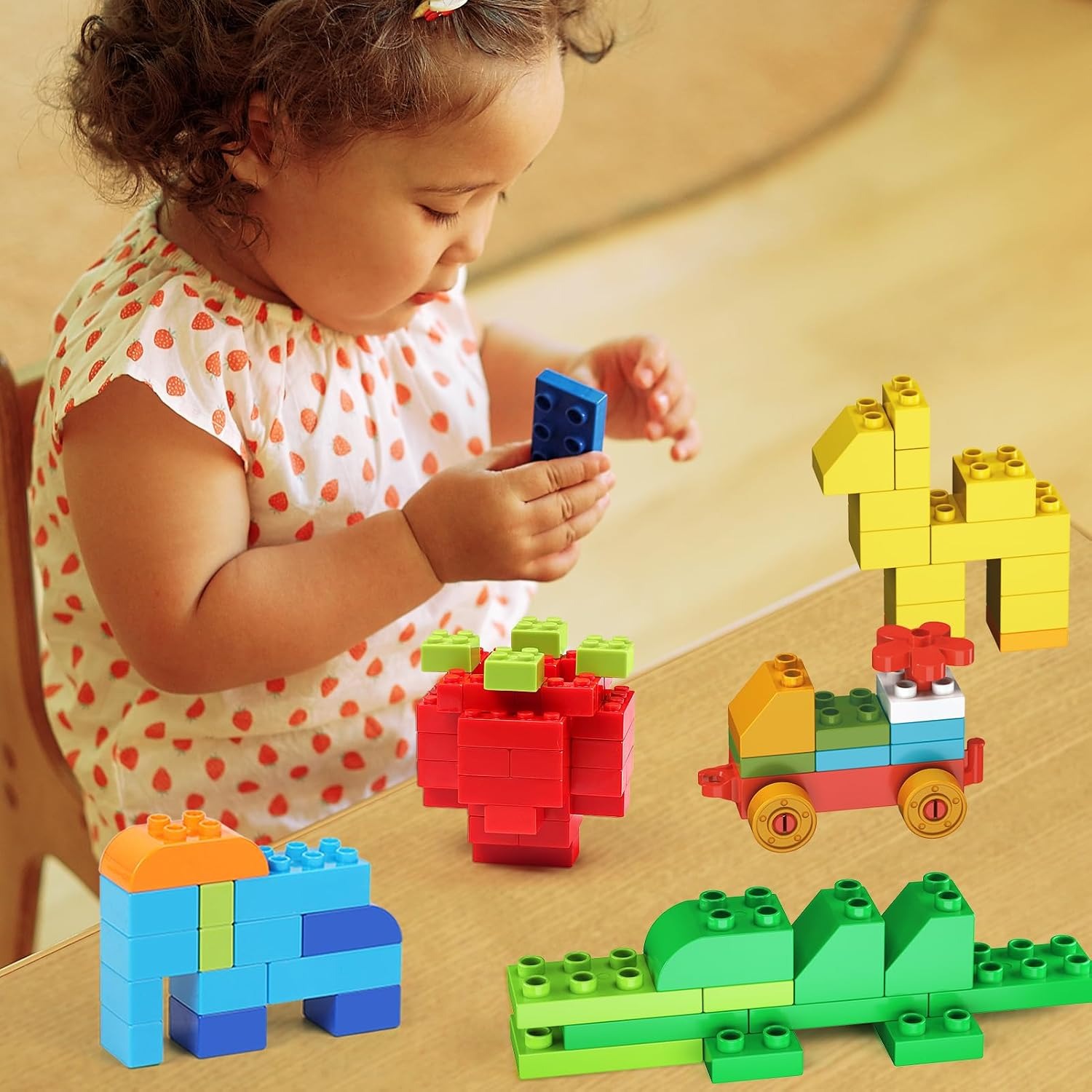
This set uses the large format and is listed for ages 3 to 8, with a minimum of 36 months. That age band is wide, and it works because what a child does with blocks changes as they grow. A three year old sorts, stacks, and knocks down. A five year old builds recognisable things. A seven year old starts planning before they build and gets annoyed when a wall is not straight. The same bricks serve all three.
What 258 pieces actually gets you
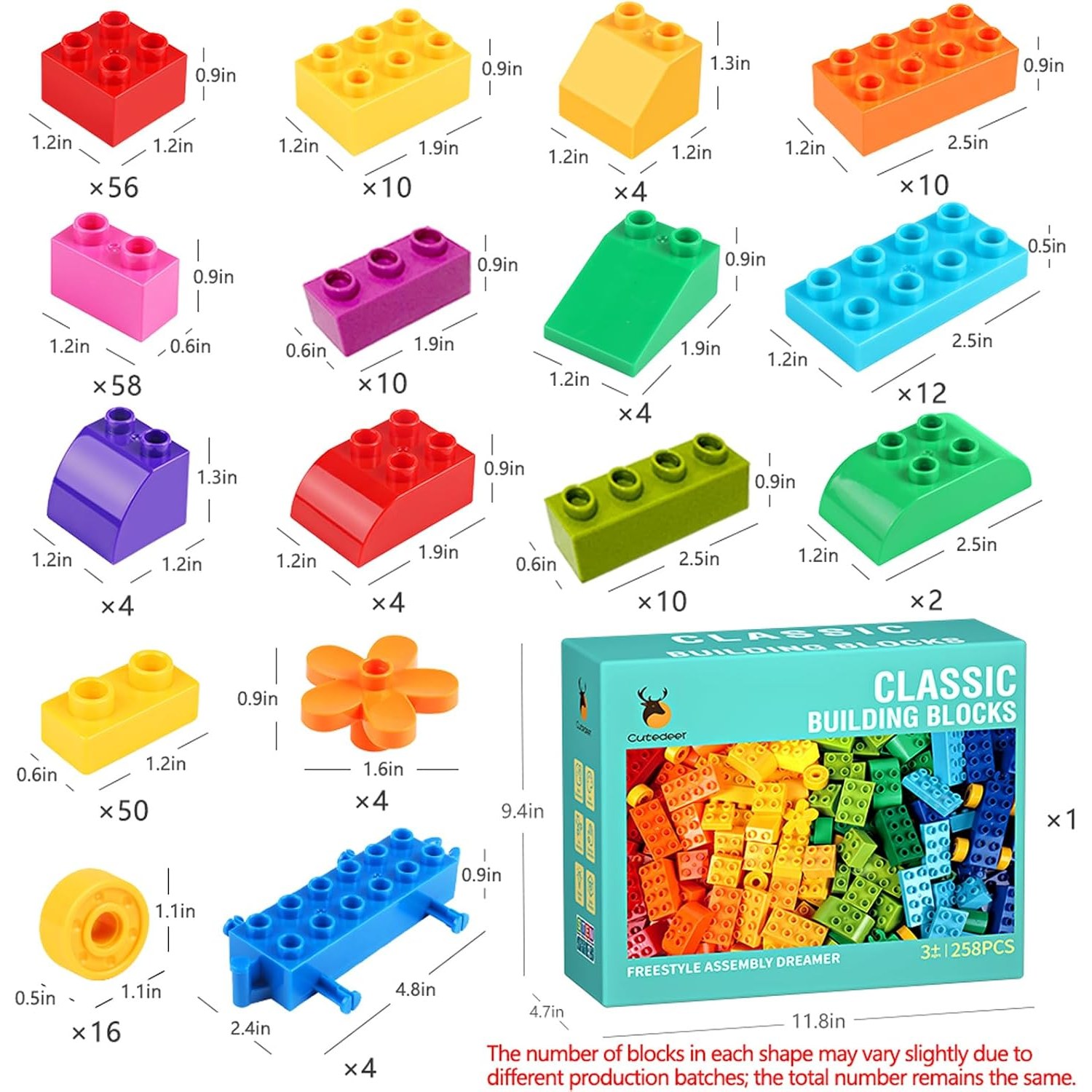
Piece count is one of those numbers that sounds impressive and means nothing until you picture it in use. Here is a rough guide. A small set of 50 to 80 pieces makes one modest model and then runs out. Around 150 you can build a decent structure. At 258 pieces, a child can build something sizeable and still have bricks spare, or two children can build separately without a fight breaking out every thirty seconds.
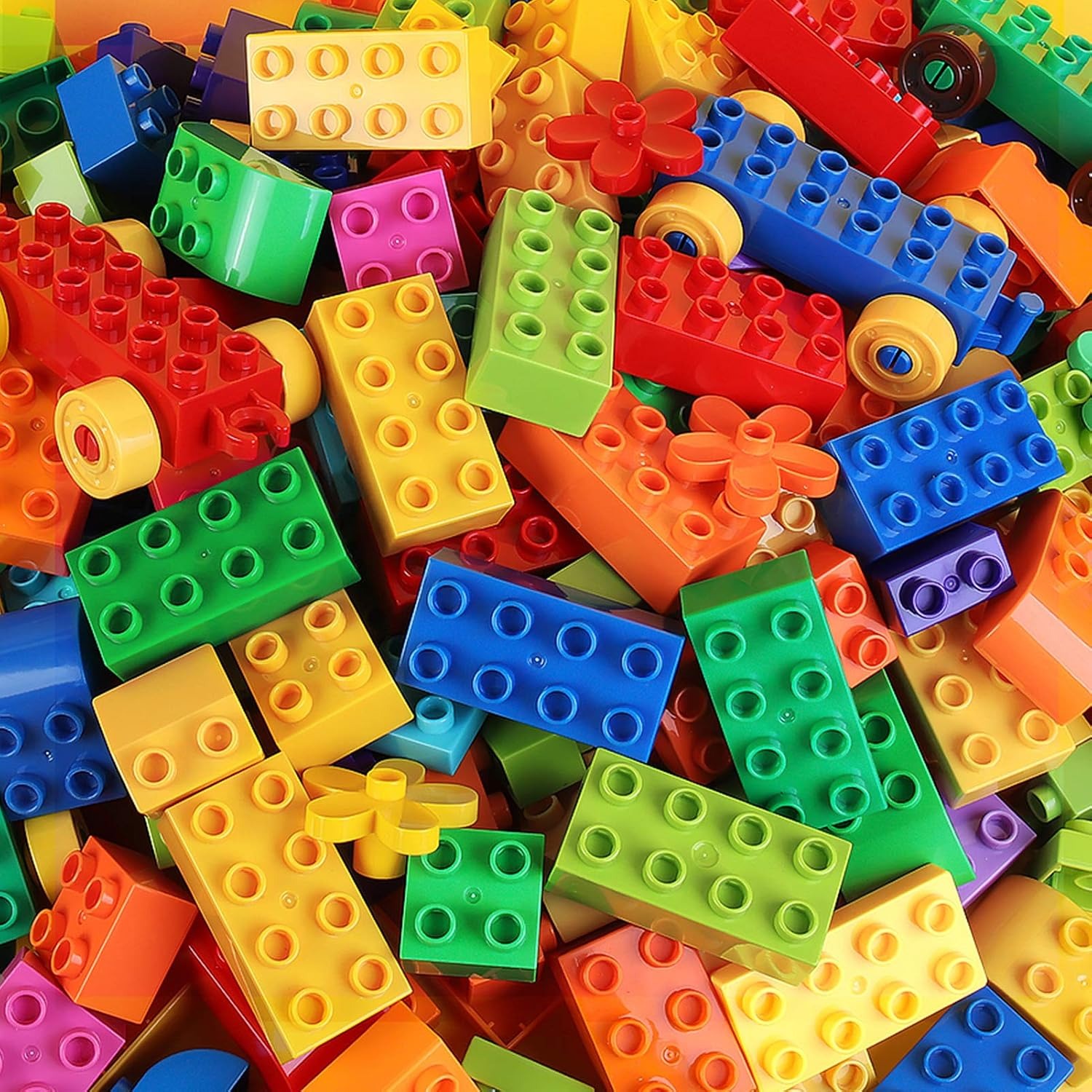
That spare capacity matters more than people expect. The most common reason block play ends early is running out of a particular shape halfway through. With more than ten shapes across 258 pieces, that happens less often.
If you have three or more children who all build at once, think about adding a second set later. Since these are described as compatible with other major large-brick ranges, you are not locked into one brand when you expand.
Materials, safety, and what the listing actually says
The bricks are ABS plastic. That is the standard material for interlocking blocks and it is used because it moulds to a precise shape, holds the stud dimensions that make bricks grip properly, and does not chip easily when dropped on a hard floor. A brick that softens or deforms stops clipping together, and that is when a set gets thrown out.
The manufacturer lists the set as non-toxic. Beyond that, the maker does not specify a country of origin or a particular certification, so we are not going to claim one. If a specific safety mark matters for your household or your setting, ask us before you order and we will check what documentation is available.
The practical safety point is the age rating. Thirty six months is the stated minimum, and that exists because younger preschoolers mouth everything. Follow the printed guidance on the box rather than judging by eye.
Compatibility, and why it is worth checking
One of the quieter frustrations in a family toy box is having two block systems that do not talk to each other. You end up with two tubs, two piles on the floor, and half the bricks sitting unused because they do not fit the current project.
This set is described as compatible with all major brands of large blocks. That means if you already own a tub of chunky bricks, these can be poured straight in. The child gets one bigger pile instead of two smaller ones, which directly increases what they can build.
Do check you are comparing like with like. Large bricks and standard small bricks are different systems and will not connect, no matter the brand. If your existing collection is the small kind, this set will live separately.
How to choose between sets
A few questions sort it out quickly.
How old is the child right now, and who else will play with these? If the answer includes anyone under four, large bricks are the right call. If the main user is eight or older and already comfortable with fine detail, small bricks may suit them better.
Do you already own compatible bricks? If yes, prioritise piece count over presentation, because you are topping up a pile. If no, a set with a decent variety of shapes gets you further than a set that is mostly rectangles.
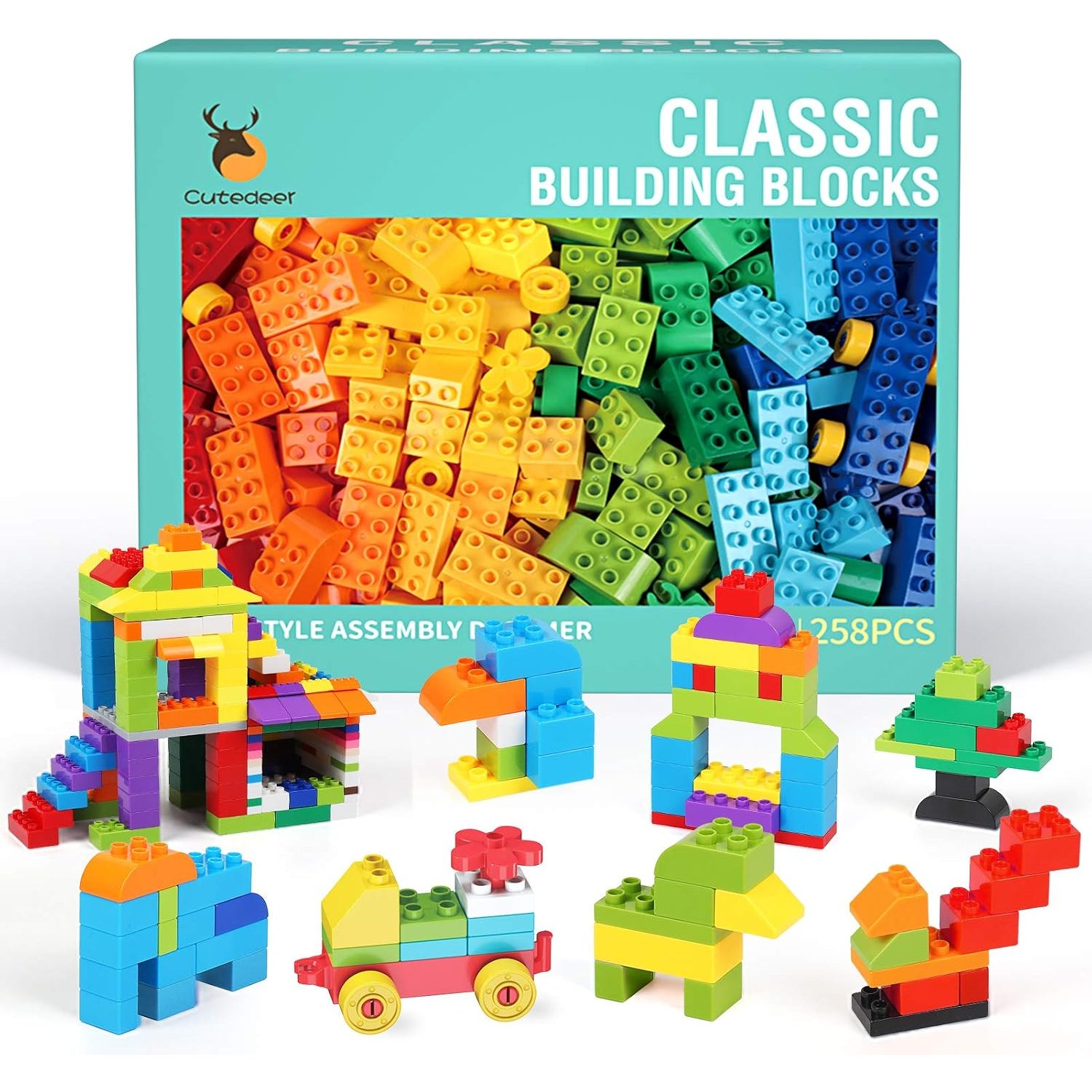
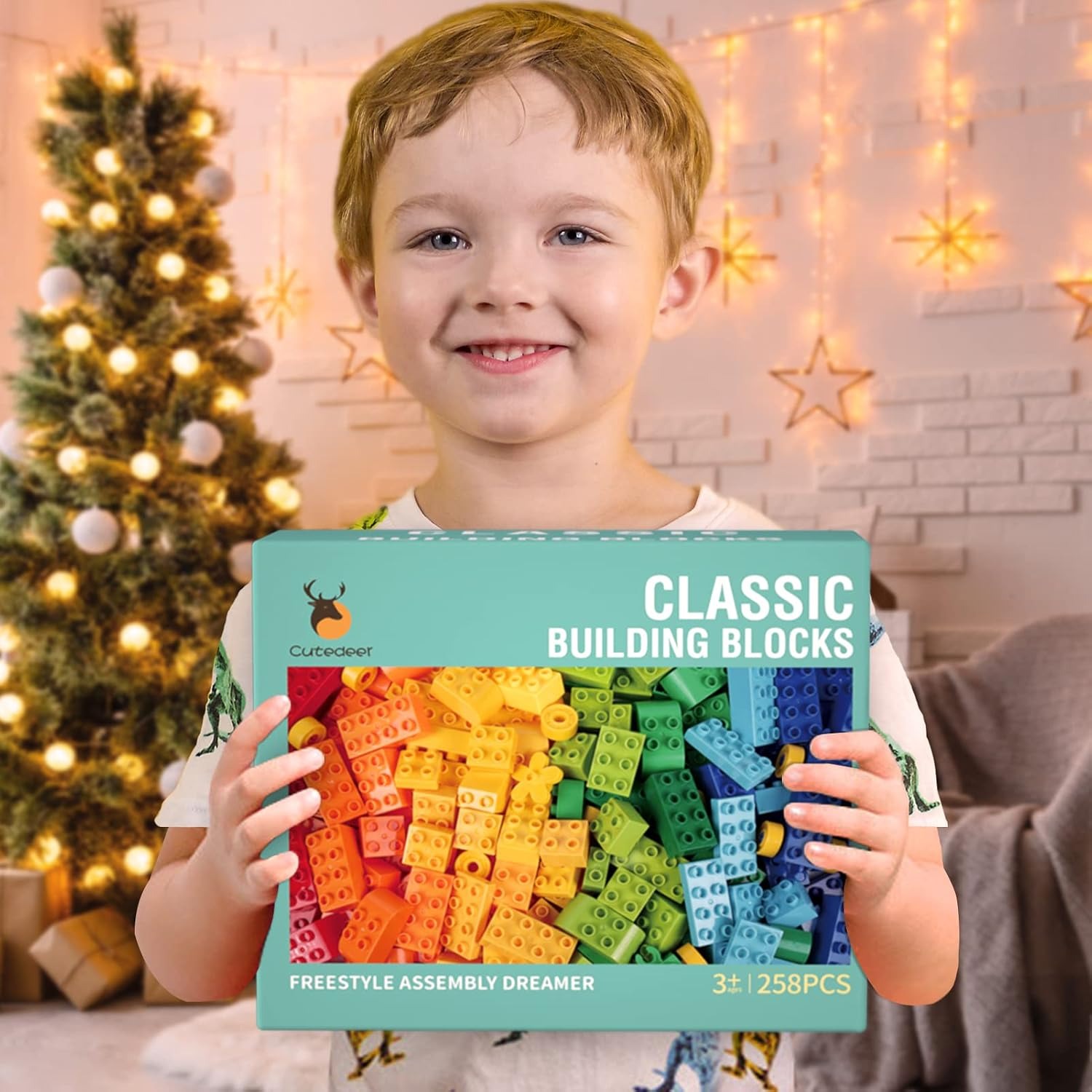
Is this a gift? A boxed set with a manual presents better and gives the child somewhere to start on day one. This one comes in a colour box with a manual included.
How much floor space and storage do you have? 258 pieces of large brick takes up more room than the same count in small bricks. A lidded tub sorts it, but it needs a home.
Looking after them
Blocks are low maintenance, which is part of their appeal. A wipe with a damp cloth and a bit of mild soap handles the usual grubbiness. Dry them properly before they go back in the tub, because damp bricks in a sealed box get musty.
Keep them out of the dishwasher and the washing machine. The heat can warp the studs, and once a stud loses its shape the brick stops gripping. Same goes for leaving them on a sunny windowsill for weeks.
Every so often, tip the lot out and look for cracked pieces or sharp edges. Damaged bricks should come out of play. With 258 pieces, losing a handful over the years makes no real difference to what can be built.
Storage is worth five minutes of thought. A lidded tub or a drawstring play mat keeps the set together and stops bricks scattering under furniture, which is how sets slowly disappear.
Where this set fits
This is a mid-sized, large-format set aimed squarely at the preschool and early primary years. It is not a themed kit with a single finished model on the lid, and it is not a tiny starter pack. It is a general pile of bricks with enough variety and volume to support free building, which is the thing that keeps children coming back.
The education theme and the creative thinking objective listed by the maker describe what happens naturally during block play rather than any structured programme. There are no worksheets and no app.
The short version
If you need a building block set for kids aged roughly 3 to 8, and especially if the child is at the younger end, large bricks beat small ones for ease of use and independent play. 258 pieces is enough for real builds and for two children to share. ABS plastic holds its shape, the set is listed as non-toxic, and compatibility with other major large-brick ranges means you can grow the collection later without starting again.
Colours arrive at random and the box measures 30 x 24.1 x 12.2 cm at about 1.7 kg, so it wraps and posts easily. No batteries, no assembly, no setup. Open it and build.