
The complete guide
Choosing a Wooden Doll Family Set, A Parent's Buying Guide
The empty dollhouse problem
Most dollhouses are sold without people in them. A child unwraps a beautiful three storey house with a staircase and tiny windows, plays with it for an afternoon, and then slowly stops. Not because the house is bad, but because there is nobody living in it. Furniture alone does not generate a story. A figure does.
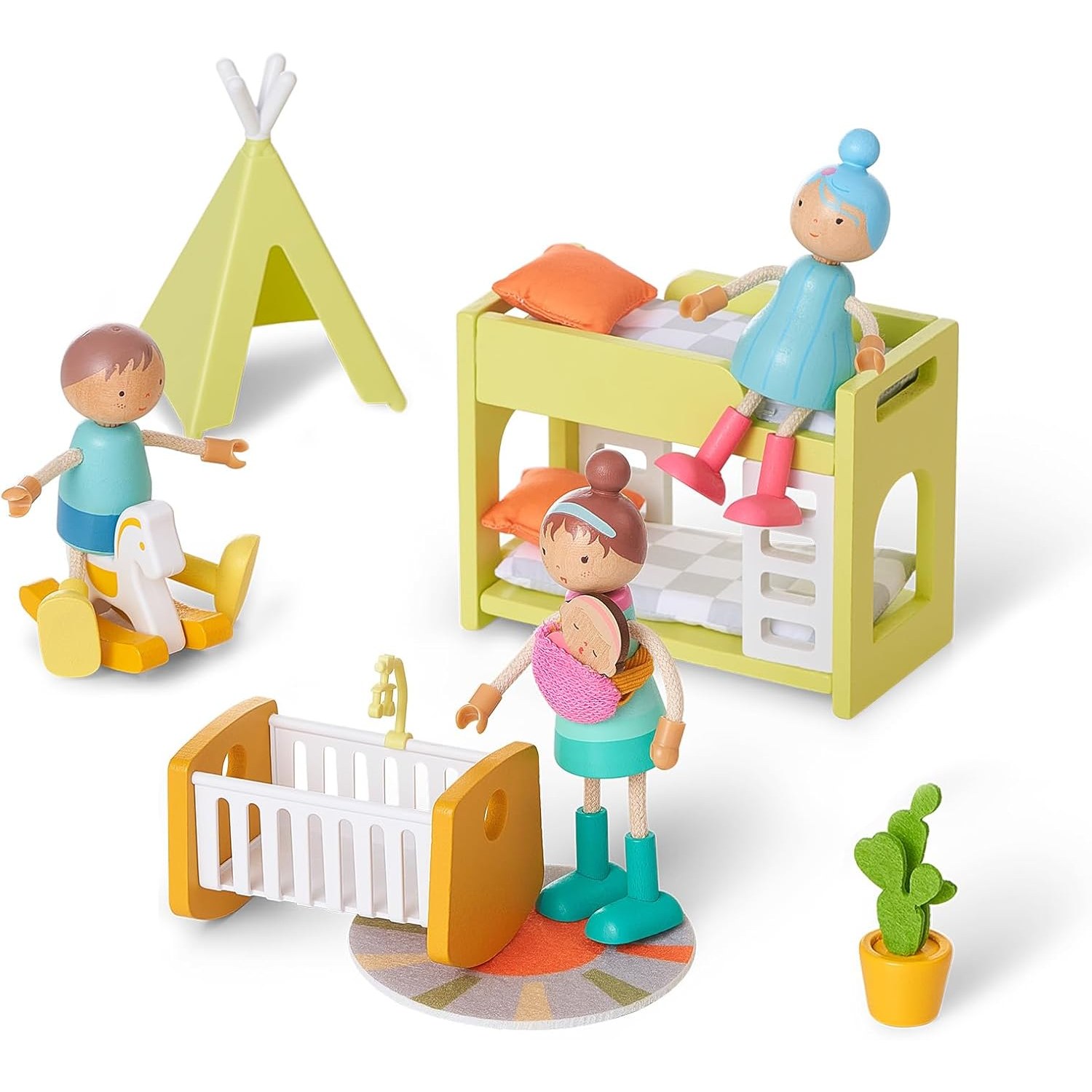
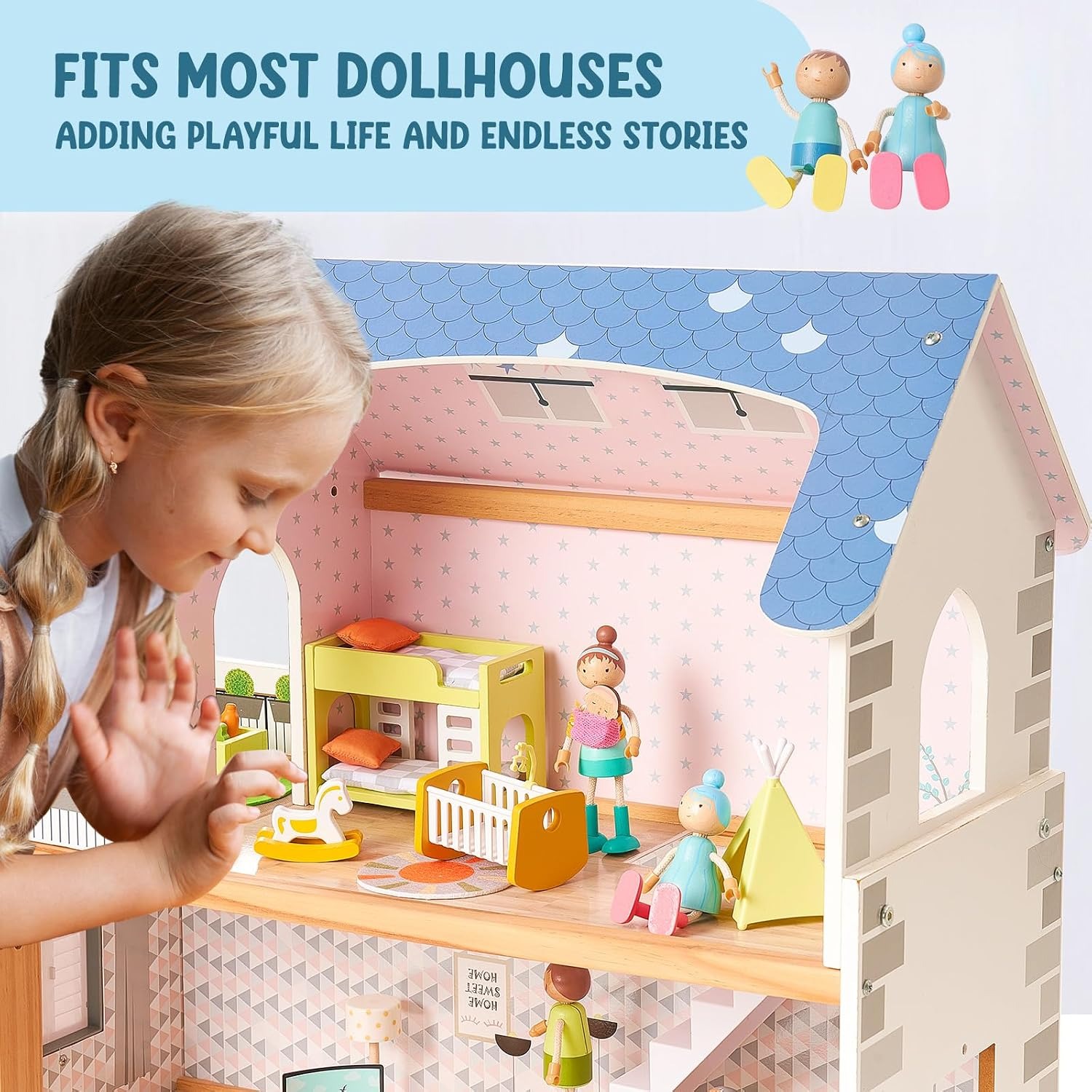
That is the gap a wooden doll family set fills. The moment you put seven small people into a house, the play changes shape. The child stops arranging objects and starts running scenes. Someone has to cook dinner. Someone is hiding upstairs. The baby will not go to sleep. Within minutes there is dialogue, conflict and a plot, all generated by a child who was quietly bored ten minutes earlier.
This guide covers what to look for in dollhouse people, why scale and posability matter more than most parents expect, and how to keep a wooden set in good shape for years.
Why wood instead of plastic
Plastic figures are cheap and plentiful. They also tend to be light, which sounds like a small point until you watch a child try to stand one up on a carpeted floor. Light figures tip over. They skate across smooth surfaces. They feel disposable in the hand, and children treat them accordingly.
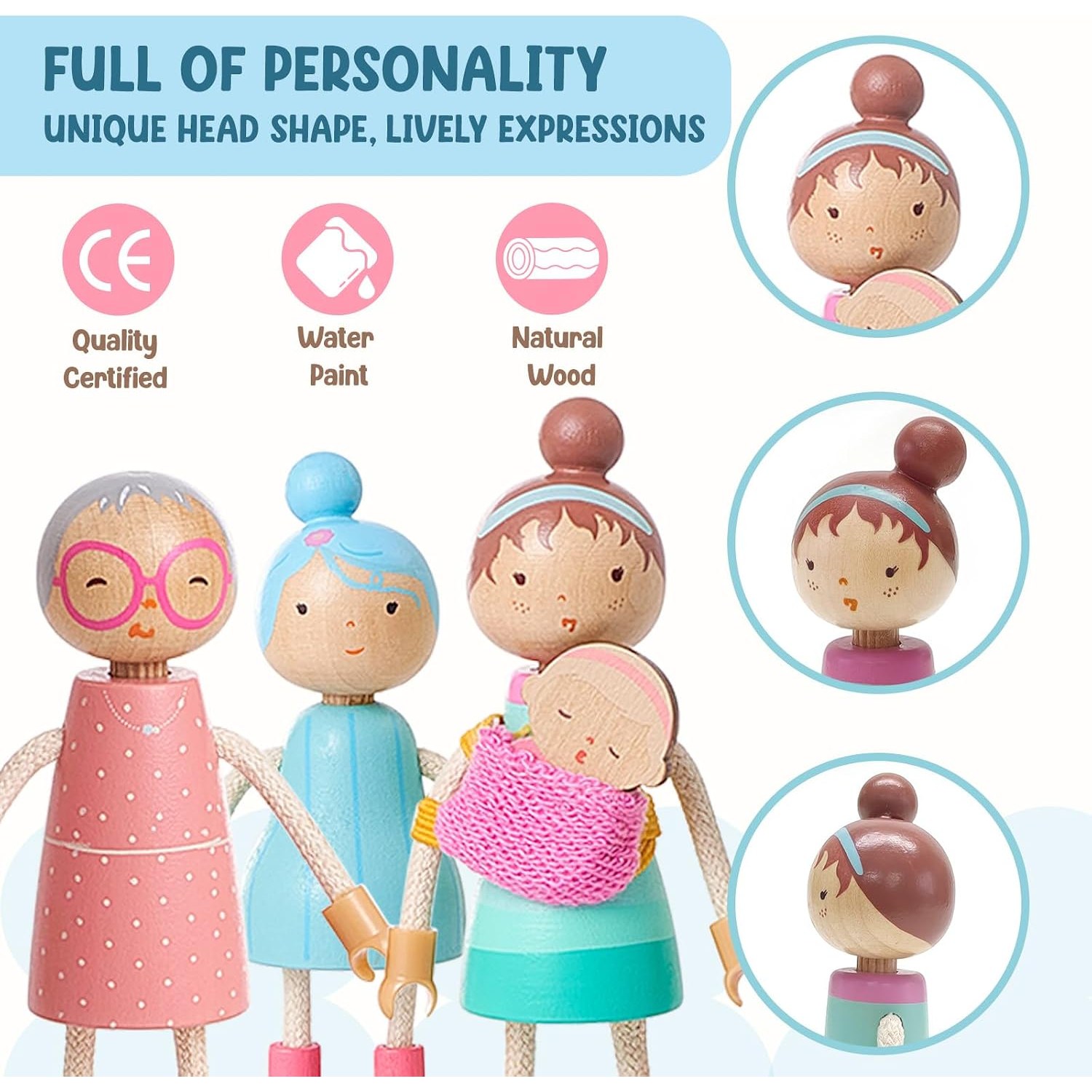
Wood has weight. A wooden doll sits where you put it, and when a child picks one up there is a solid feel that makes it worth holding. Wood also ages differently. Plastic that cracks is finished, while a wooden toy that picks up a scuff just looks like it has been loved. Families often pass wooden toys down to younger siblings for exactly that reason.
The trade off is water. Wood does not want to be soaked, left outside, or run through a dishwasher. If your household plays rough and wet, that is worth knowing before you buy. For normal indoor play it is a non issue.
Scale is the thing people get wrong
The single most common mistake when buying dollhouse people is ignoring scale. A figure that is too tall cannot walk through the doorway. A figure that is too small looks like a pet next to the furniture. Neither problem can be fixed after the fact.
This set is built at 1:12 scale, which is the standard for dollhouses. One centimetre on the model equals twelve centimetres in real life. Most mass market dollhouses, most miniature furniture sets and most dollhouse accessories are made to this scale, so figures built to it tend to drop straight into an existing collection.
If you are buying for a house you already own, do a quick sanity check before ordering. Measure the height of an interior doorway and the seat height of a chair. In 1:12 scale a doorway is usually around 16 to 17 cm tall and an adult figure is roughly 12 to 15 cm. If your house was handmade or came from a specialty maker, confirm its scale first, because some houses are built at 1:16 or 1:24.
Posability changes what children can do
A rigid figure can stand. That is all. It cannot sit at the dinner table, lie in a bed, or climb a ladder. The child has to imagine those things happening while the doll stays stubbornly upright, and for younger children that is a bigger ask than it sounds.
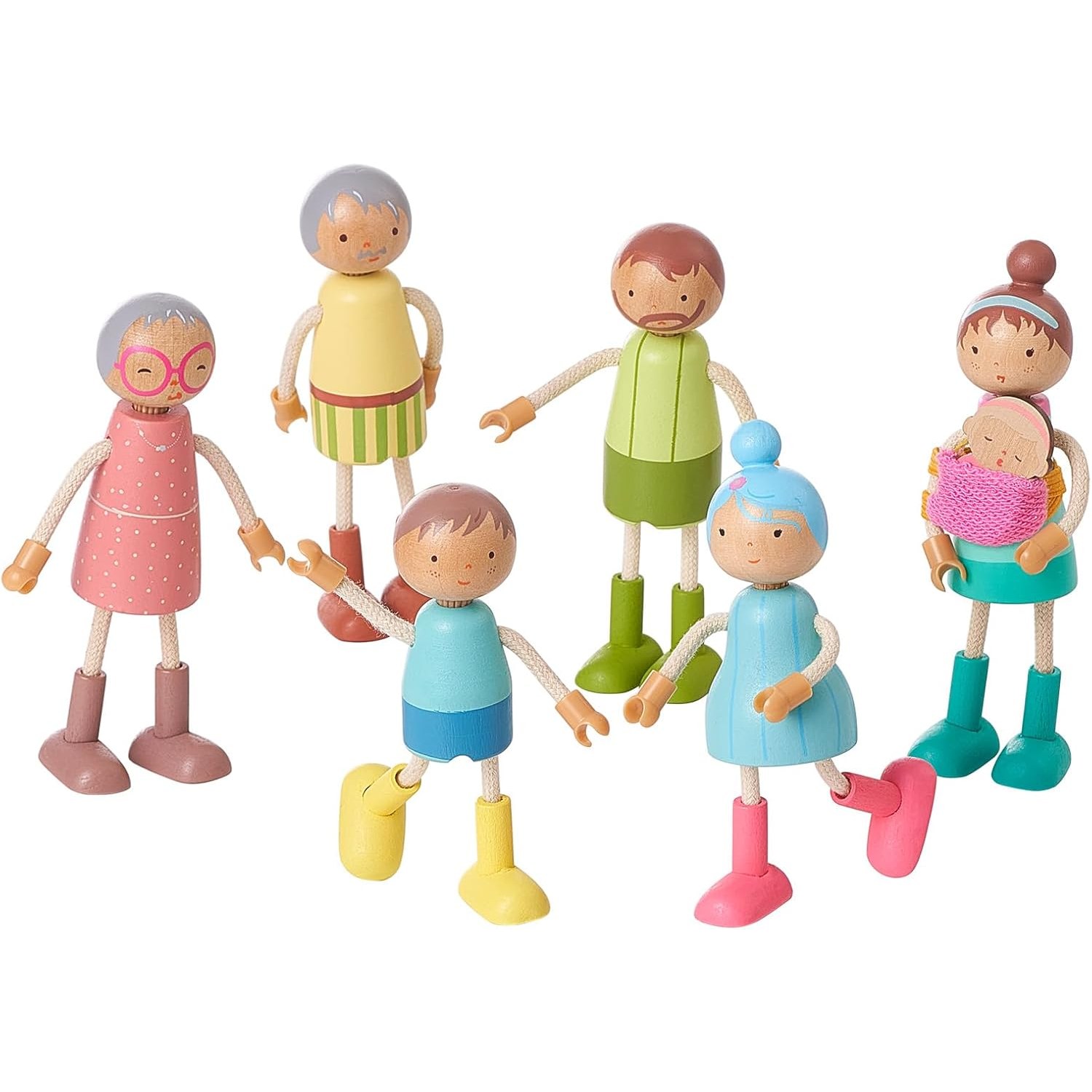
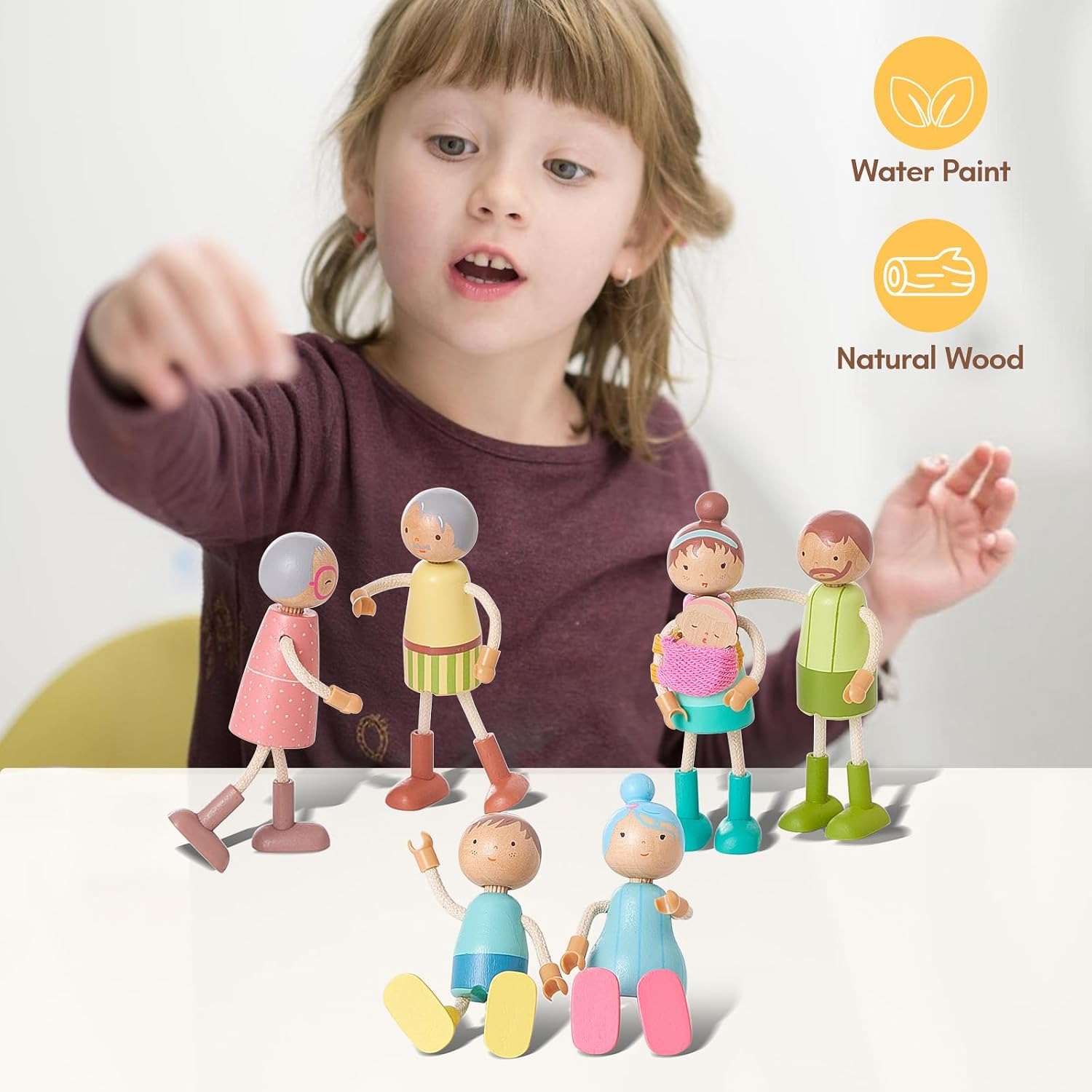
Bendable arms and legs solve this. The dolls in this set can be posed, which means a child can physically place one in a chair and see it sitting there. That small bit of realism does a lot of work. It is the difference between describing a scene and acting one out, and it is why experienced buyers rate posable figures among the best bendable dollhouse figures for serious pretend play.
Posable joints do need a little respect. They are designed to flex, not to spin endlessly or be pushed past their natural range. Showing a child how far a limb is meant to go, once, early on, saves a lot of trouble later.
Why seven figures and not two
Sets of one or two dolls look economical. In practice they create a frustrating kind of play. A child wants a household, and a household needs enough people for roles to exist. Someone has to be the one in trouble. Someone has to be the one who finds them.
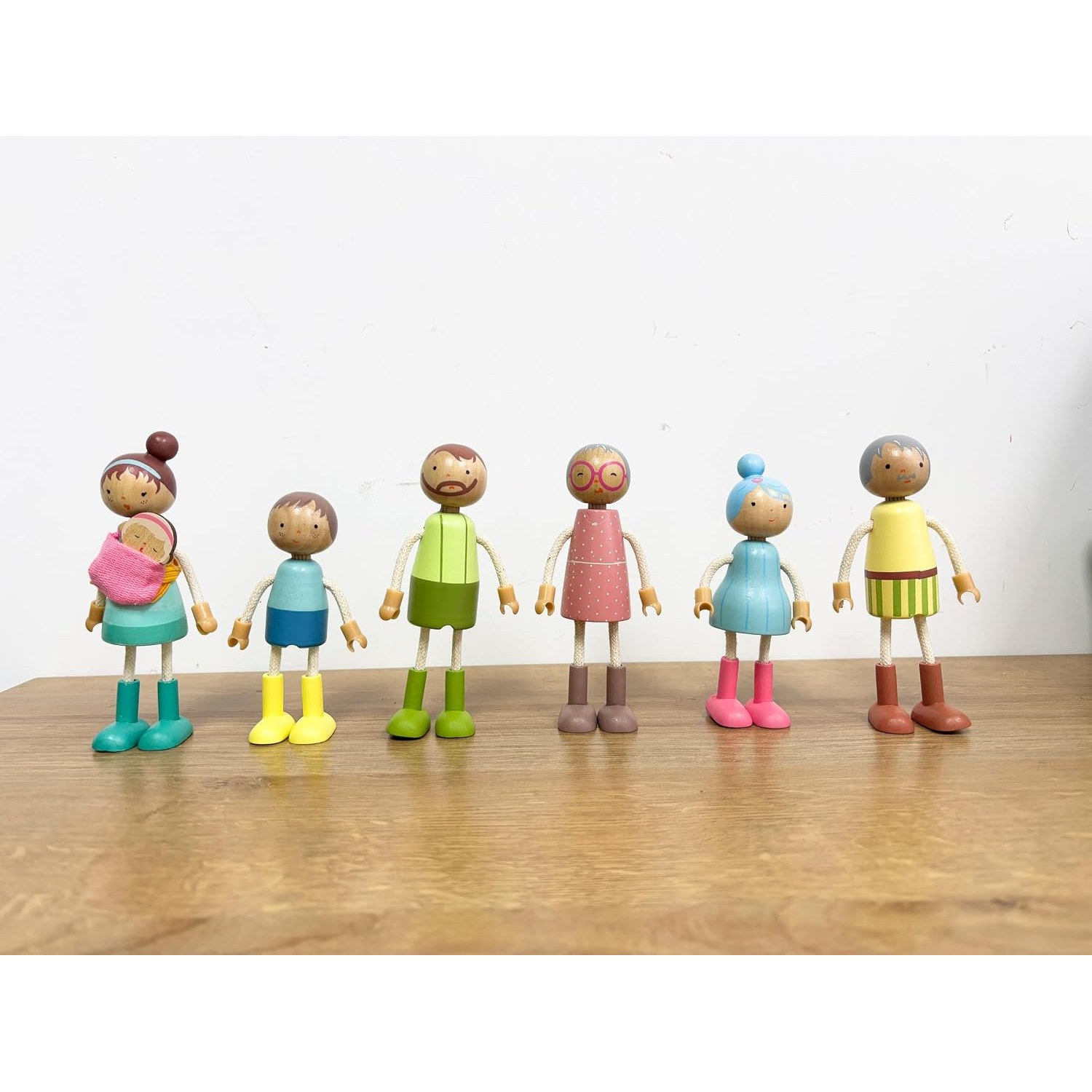
Seven figures covers a family across generations, which is why this one is called the Family Edition. It gives a child enough characters to assign relationships, run parallel storylines in different rooms, and swap roles when the story gets boring. It also means two children can play together without arguing over who gets the only doll, which is worth the price on its own.
Matching the set to your child's age
The manufacturer recommends ages 36 months to 10 years, and that span is not marketing. Children use the same figures very differently at each end of it.
At three, play is mostly physical. The child carries the dolls around, names them, puts them in and out of things, and narrates in short bursts. The figures spend as much time in a handbag or a shoe as in the dollhouse. That is fine and completely normal.
By five or six, stories get structure. There are mornings and bedtimes, visitors, arguments and resolutions. This is the stage where family figures do the most developmental work, because the child is rehearsing social situations they are still figuring out in real life.
From seven upward, play often gets more elaborate and more private. Scenes run across days. Furniture gets rearranged into whole fictional towns. Some children at this age combine the figures with building blocks, animal sets or craft materials, which is a sign the toy is working.
Below three, hold off. Small figures and small painted parts are a choking risk for children who still put things in their mouths, and no amount of supervision removes that risk every single second.
Looking after wooden dolls
Wooden toys are easy to maintain as long as you keep them dry. Wipe the figures with a barely damp cloth when they get grubby and dry them straight away. Skip soaking, dishwashers, bleach and strong household cleaners, all of which attack either the wood or the paint.
Store them together. A small basket, a shallow box or a drawstring bag keeps the set complete, and a complete set is far more likely to stay in the play rotation. Loose figures scattered through a toy box have a way of disappearing permanently.
Keep them out of direct sun on a windowsill, since strong light fades paint over time, and keep them away from heat sources, because dry heat is hard on wood. Check the bendable joints occasionally. If one becomes loose or a part looks like it could separate, retire that figure rather than hoping for the best.
Using them beyond the dollhouse
A set like this does not have to live in a house. Plenty of children use 1:12 figures on a play mat, inside a cardboard box converted into rooms, or alongside wooden blocks that become shops and schools. Teachers and therapists often use family figures for small world play because the dolls prompt children to talk about situations they would not raise directly.
If you already collect miniatures, the figures slot into room boxes and shelf displays as well. At this scale, the best dollhouse accessories and the best miniature dolls for dollhouse builds generally play nicely together.
The short version
Buy a wooden doll family set if you have a dollhouse with nobody living in it, or if you have a child who tells stories and needs characters to tell them with. Check that your house is 1:12 scale before ordering. Favour posable limbs over rigid bodies, because sitting down is half of what dolls do. Seven figures is the right number for a family, and wood holds up better than thin plastic over several years and several children.
Keep them dry, keep them together in a box, and expect them to end up in places no dollhouse designer ever imagined.