
The complete guide
The Honest Buyer's Guide to Marble Runs for Kids
The problem with most "educational" toys
Plenty of toys claim to teach something. Most of them teach it once. The child completes the puzzle, finishes the model, presses the button that says the alphabet, and then the thing sits on a shelf because there is nothing left to do with it.
A marble run is different, and the reason is simple. The toy has no finished state. A child builds a track, drops a marble, and immediately gets feedback. The marble either makes it to the bottom or it does not. If it stalls, something about the build was wrong, and the only way forward is to change it. That is a genuine problem-solving loop, and kids run it dozens of times an afternoon without anyone telling them to.
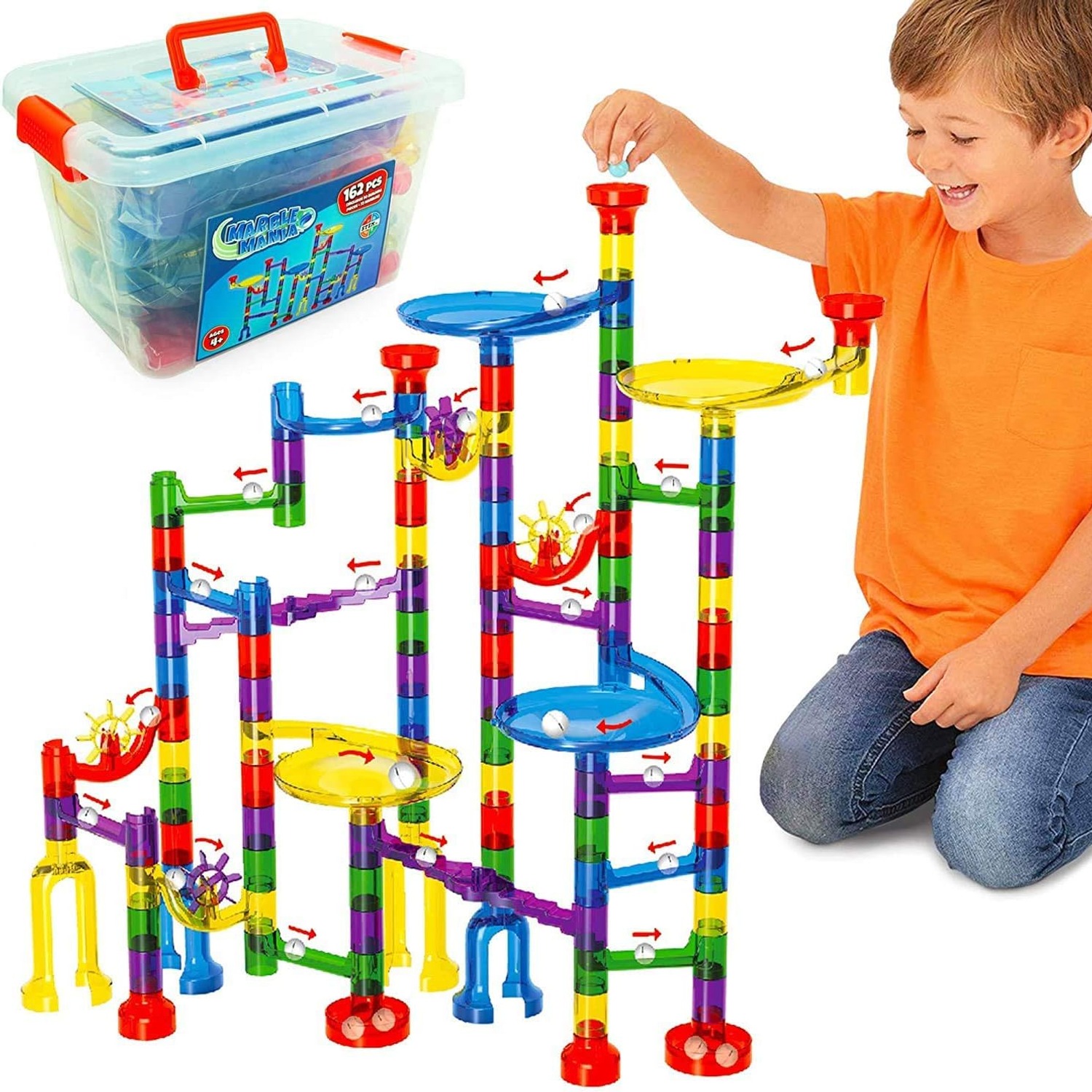
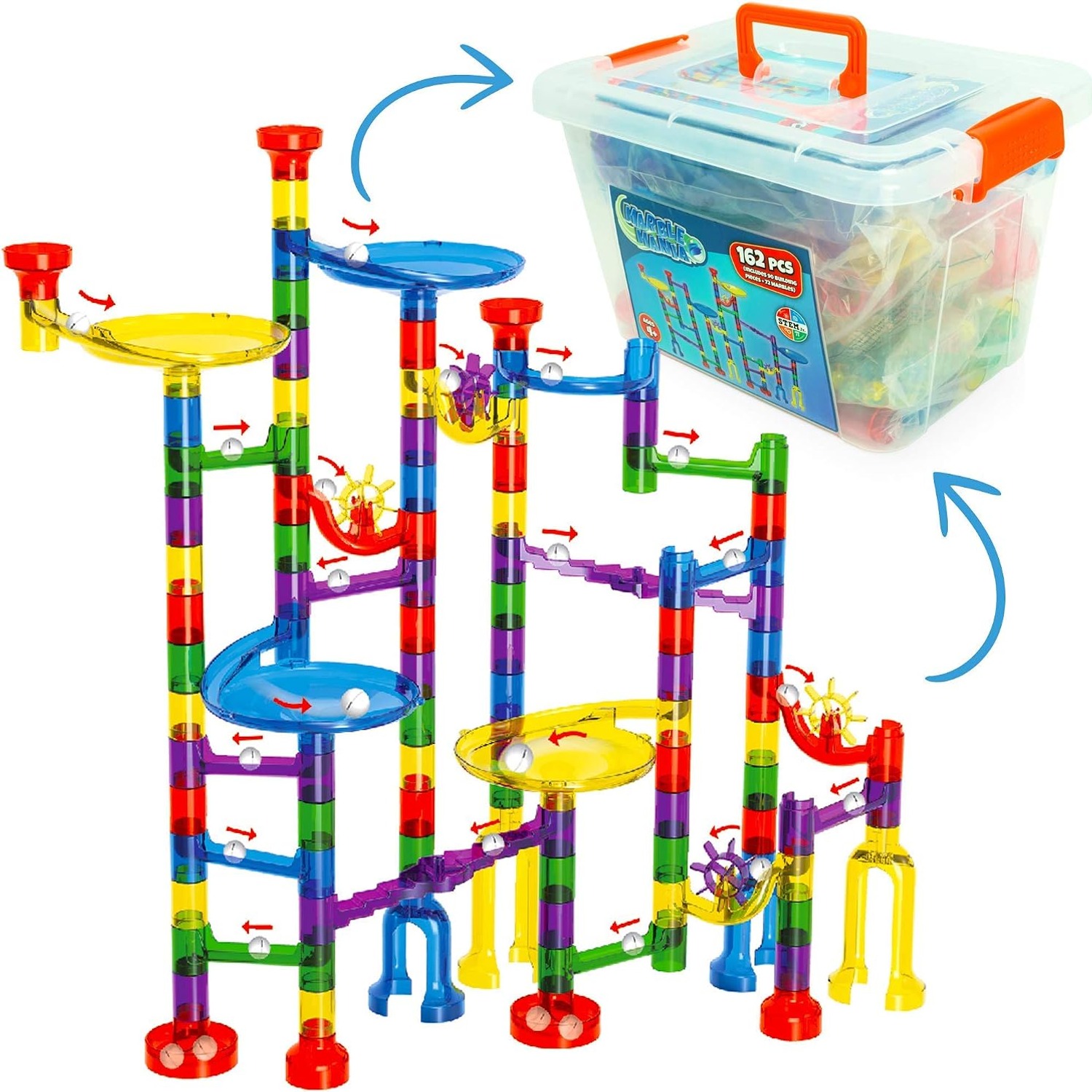
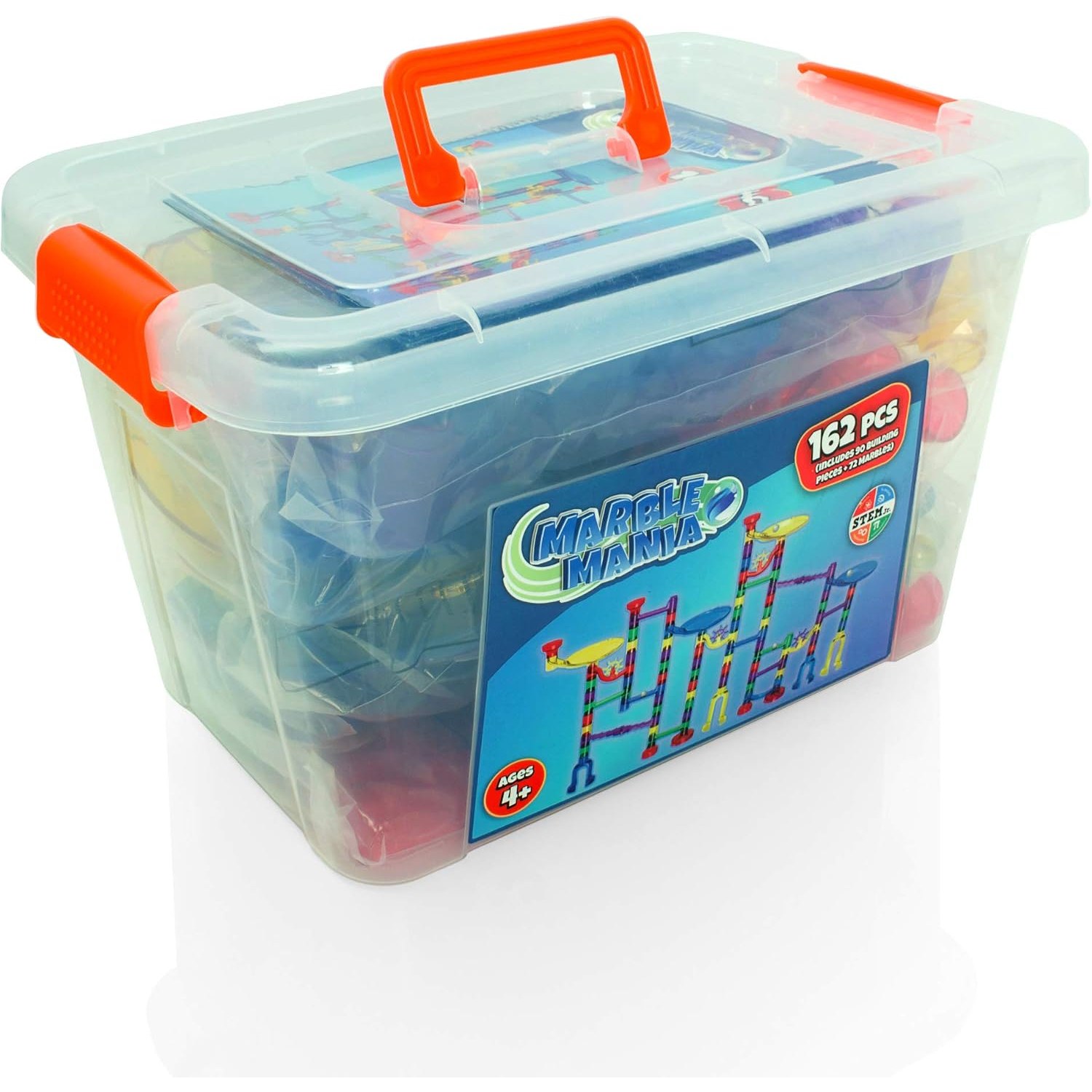
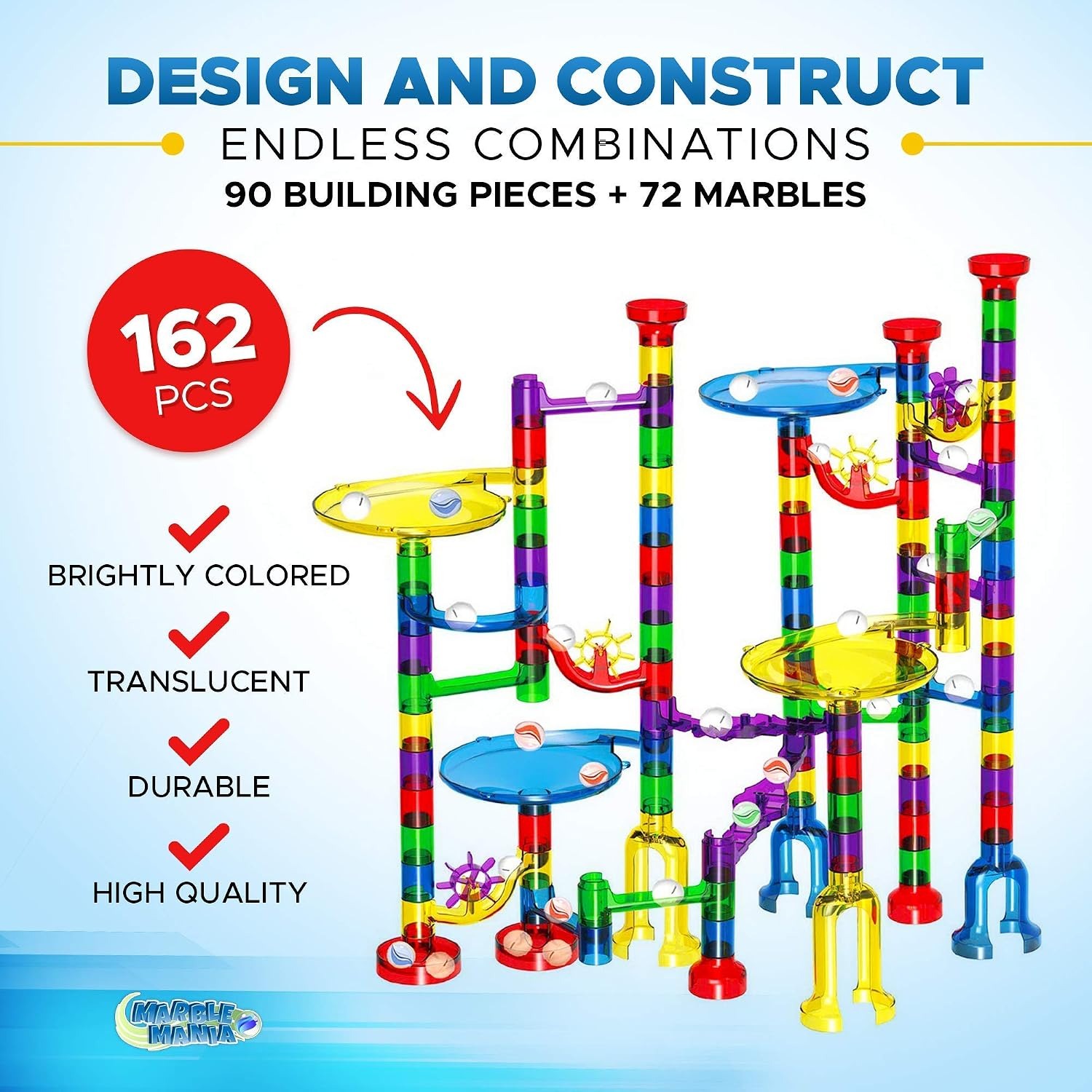
This 162 piece set gives them the parts to keep that loop going. Ninety construction pieces and 72 marbles is enough for real variety, not just one fixed layout dressed up as a toy.
How a marble run actually works
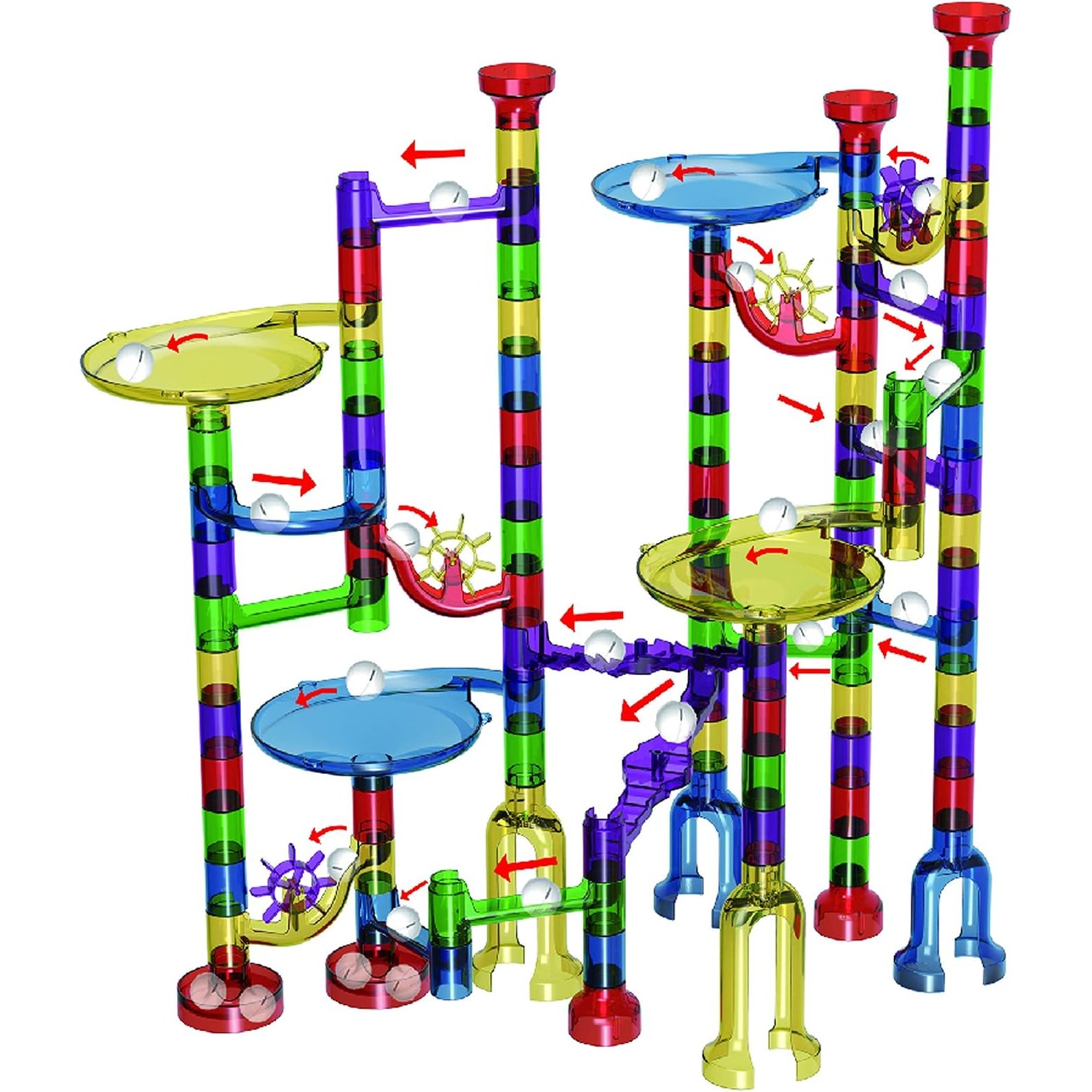
The physics is honest and visible, which is exactly what makes it useful for a young builder. A marble at the top of a track has height. Release it, and that height turns into speed. Steeper slopes mean faster marbles. Longer flat sections slow them down. Too flat, and the marble stops dead.
Children do not need any of those words to understand the idea. They just notice that the marble gets stuck on the gentle bit and rolls fine on the steep bit, and they adjust. Over a few sessions they start predicting it before they test it, which is the point at which the toy has actually taught something.
The translucent pieces matter here more than you would expect. In an opaque track, a marble vanishes at the top and reappears at the bottom, or it does not reappear at all and the child has no idea why. With see-through sections, they watch the whole journey. A jam is visible. A slow section is visible. Troubleshooting stops being guesswork.
Who this set suits
The listed age range is 4 to 8 years, with a manufacturer recommended age of 3 years and up. In practice that covers two fairly different kinds of play.
At the younger end, around four, a child will mostly copy. They will follow a picture from the included guidebook, get help with the trickier joins, and then spend a long, happy stretch dropping marbles through what they built. The building is a means to the marble-dropping. That is fine and completely normal.
By six or seven, the building becomes the main event. Kids start asking what happens if the tower goes higher, or if two paths merge into one, or if the track runs off the table edge onto a chair. This is where a marble run for 5 year olds grows naturally into something a nine year old still enjoys. The pieces have not changed. The ambitions have.
Because the set has 90 building pieces, it also splits reasonably well between two children. Two smaller runs racing side by side is a popular arrangement in houses with siblings, and it avoids the standard argument about whose turn it is to place the next piece.
One thing to be clear about: the set includes 36 glass marbles. Glass marbles are small and hard. They are not appropriate around children who still put objects in their mouths, and they should be supervised with young children generally. Keep the tub out of reach of children under 3.
What to look for when choosing a marble track building set
If you are comparing options, a few things genuinely separate a good set from a frustrating one.
Piece count that means something. Headline numbers can be misleading, because some sets count every marble to inflate the total. Here the split is clear: 90 construction pieces and 72 marbles. The construction count is the number that controls how big and how varied the builds can be.
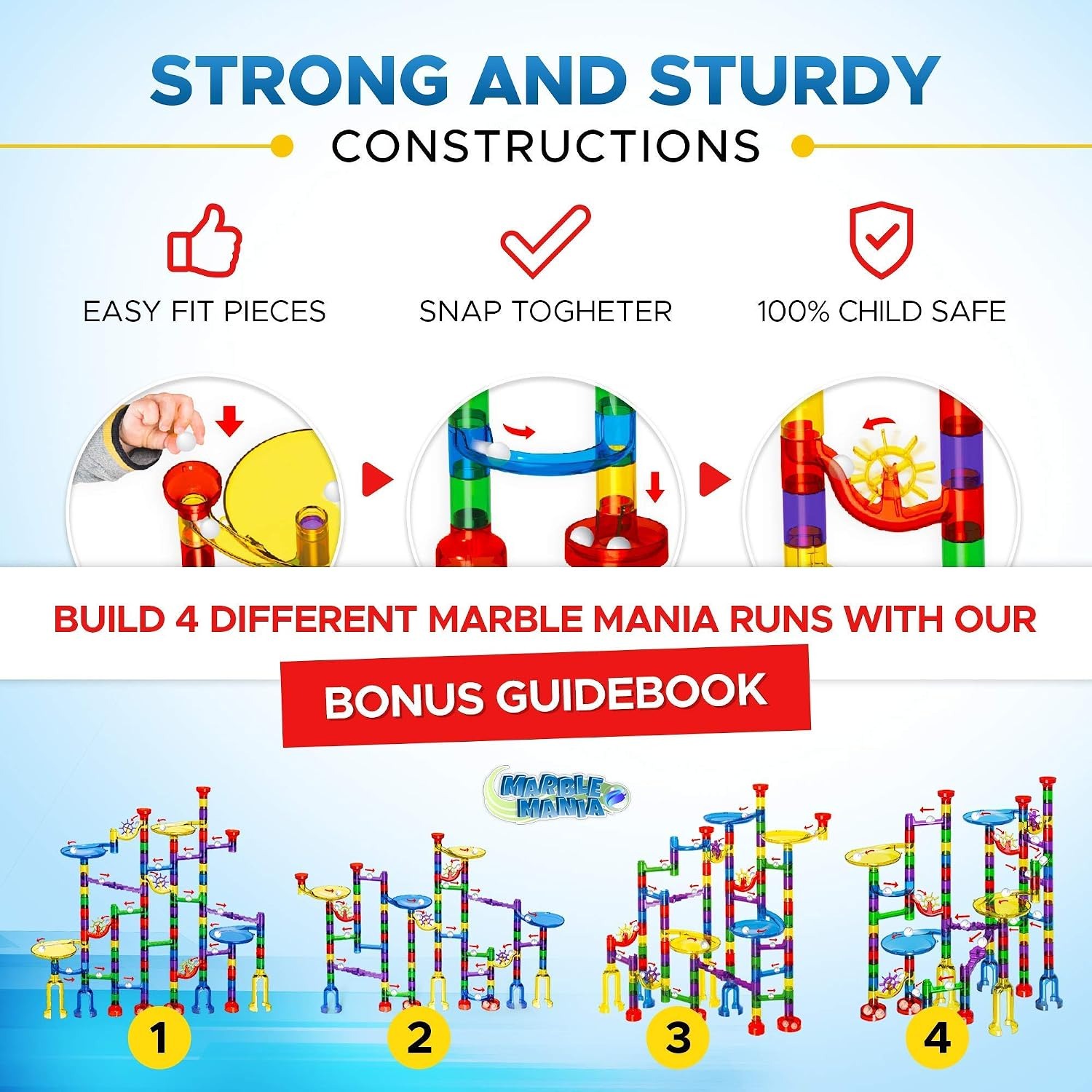
Connections a child can manage. If an adult has to assemble it, the child is not learning construction, they are watching. These pieces push together and pull apart by hand. Small hands can make changes without asking permission, and that single detail is the difference between a toy played with weekly and one played with twice.
Something to start from. A completely blank set can stall a younger child who does not yet know what is possible. The included full-colour guide shows four runs, which gives them a working model before they improvise. Most kids abandon the guide within a week, and that is a sign it did its job.
Somewhere to put it. Loose marbles are a hazard and a nuisance. A set that comes with its own tub keeps the pieces together, keeps the count complete, and makes tidying up a two-minute task rather than a search party. It also means the set still works in two years instead of being half-lost under the sofa.
Setting it up well
A flat, firm surface makes a real difference. A hard floor, a low table or a large tray all work. Deep carpet makes the base uneven, so tall towers lean and fall more often than they should, and a toppling build discourages a young child fast.
Give the run a bit of clear space around it too. Marbles that escape a track need somewhere to roll to, and chasing them under furniture gets old. Some families build on a tray or inside a shallow box lid for exactly this reason.
If you have hard floors and noise-sensitive neighbours, a rug under the build dampens the rattle. The sound is part of the fun for the child, less so for everyone else in the room.
Looking after it
Care is straightforward. Wipe the plastic pieces with a damp cloth and a little mild soap when they get grubby, then dry them fully before packing them away. Do not put pieces in a dishwasher, a washing machine or anywhere near direct heat, because plastic can warp and a warped connector stops gripping properly.
Every so often, check the marbles. A chipped glass marble should go in the bin rather than back in the tub. Also check track pieces for cracks, especially after a big tower collapse, and retire anything that has split.
The most useful habit, though, is just using the tub every time. Marbles that live in the tub do not get lost, do not end up underfoot, and do not disappear into the vacuum cleaner. A complete set stays interesting. A set missing a third of its pieces stops getting built.
The short version
This is a complete marble run with 90 push-together construction pieces, 72 marbles (36 glass, 36 plastic), a four-build colour guide and a plastic storage tub, measuring 34 x 23.5 x 20 cm packed. It is listed for ages 4 to 8, with a manufacturer recommended age of 3 and up.
What you are really buying is a toy that does not finish. Kids build, test, fail, fix and build again, and the translucent track means they can actually see what went wrong. It is quiet work in the best sense, the kind of absorbed play where a child forgets to ask what is next.
If your child likes making things and watching them work, this is an easy yes. If they prefer a toy that does the entertaining for them, look elsewhere. This one hands them the pieces and gets out of the way.