
The complete guide
Pull Back Cars Buyer's Guide, Choosing a 30-Pack That Actually Gets Played With
The problem with small toys
Most cheap toy cars have one of two problems. Either they need batteries, which means a screwdriver, a trip to the shops and a toy that dies mid-party. Or they are just lumps of plastic that roll half a metre and stop, which holds a child's attention for about ninety seconds.
Pull back cars sit in a useful middle ground. They do something, they move on their own, they travel far enough to feel exciting, and they never need power. A child does the work with their hand, the car does the rest. That loop of pull, release, chase is simple enough for a three year old and repeatable enough that it does not get boring after one go.
The other problem is quantity. Buying cars one at a time is slow and expensive, and it only ever covers one child. If you are filling party bags, stocking a prize tin or trying to keep two siblings from fighting, you need volume. That is what a thirty pack solves.
How friction powered cars work
There is no battery, no motor and no electronics. Inside each car is a small spring and a gear train. When you press the car down and drag it backwards, the wheels turn the gears and wind the spring. Let go, and the spring unwinds, driving the wheels forward.
That is the whole mechanism. It is why these are called friction powered or pull-back cars, and it is why they last. There is nothing to charge, nothing to corrode and no battery compartment to lose the little door from. The energy comes from the child.
The practical result is that the car works on day one and still works in a year, as long as the wheels stay clear. Hair and carpet fibres wrapping round the axles is the number one reason a pull back car "breaks". Nine times out of ten it just needs a clean.
How far a car runs depends on three things. The surface, how far you pull it back, and how clean the wheels are. Floorboards, tiles and tables give the best runs. Thick carpet eats most of the distance. A firm, full-length pull back stores more spring energy than a half-hearted tug, which is a small lesson children work out quickly on their own.
Who this set suits
The Vileafy set is listed for ages 36 months to 10 years, with the age range described as Little Kid. That is a wide span, and different ages use them differently.
Three and four year olds mostly enjoy the cause and effect. Pull, let go, watch it go, chase it, repeat. There is real fine motor work in that, which is why the manufacturer lists motor skills development and hand-eye coordination among the educational aims.
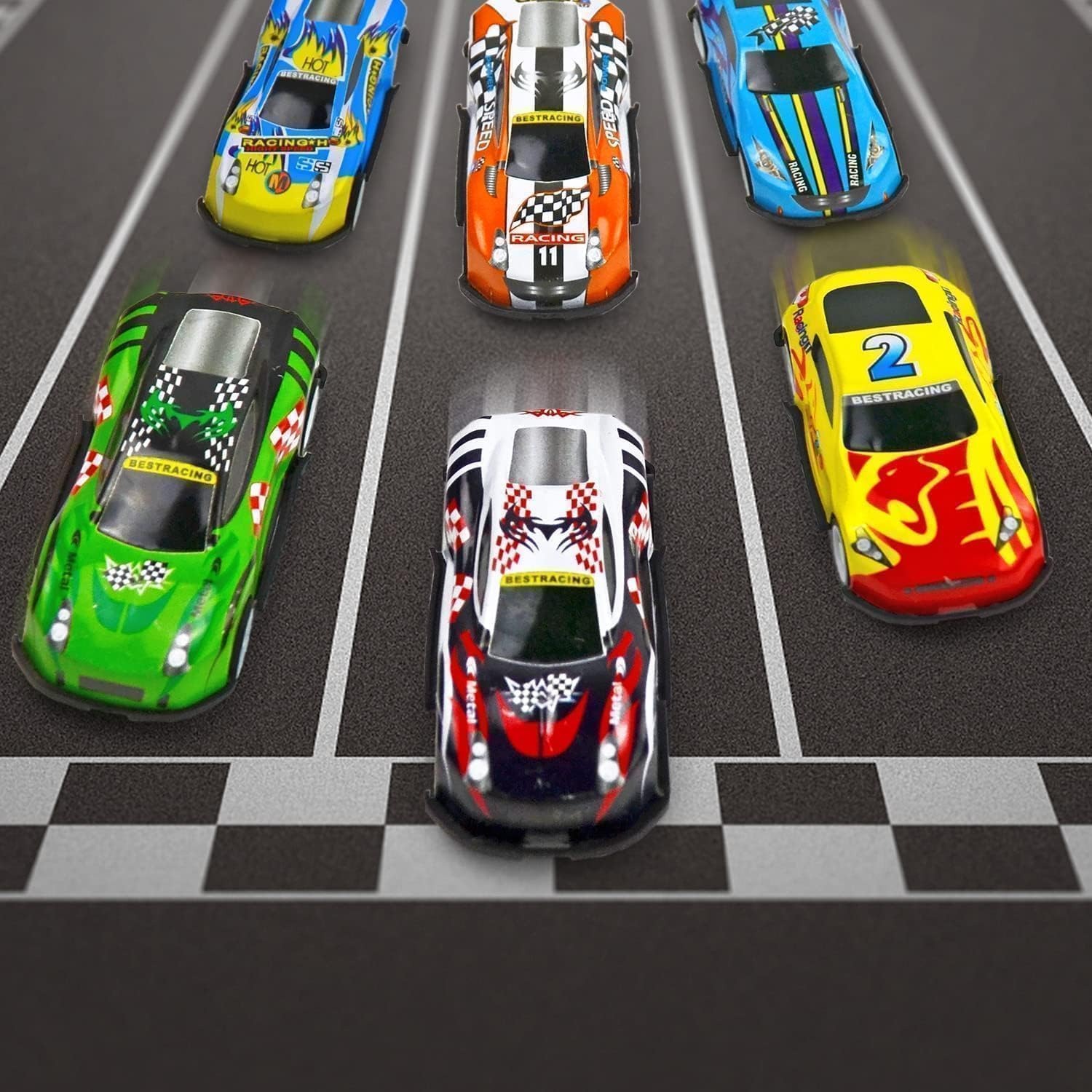
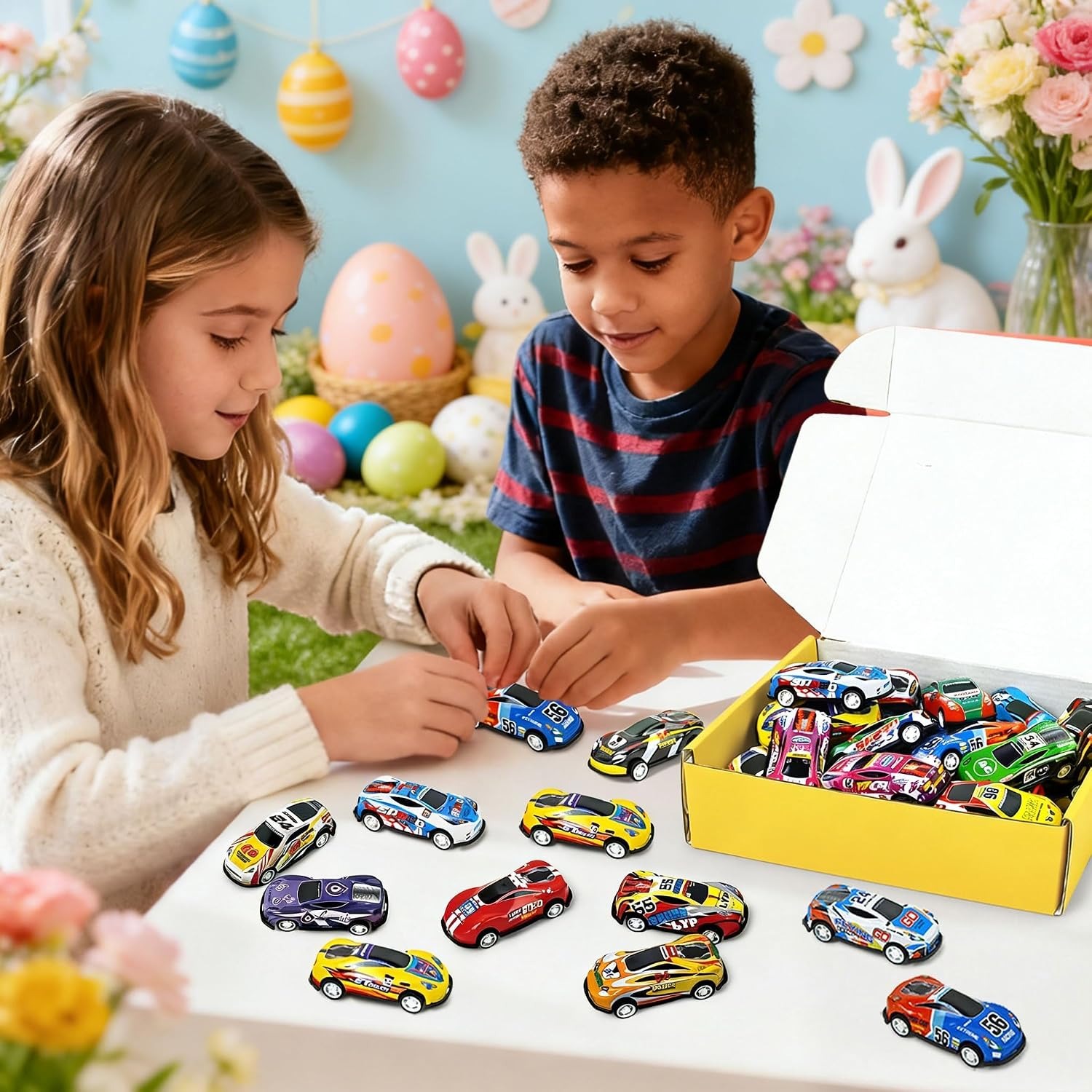
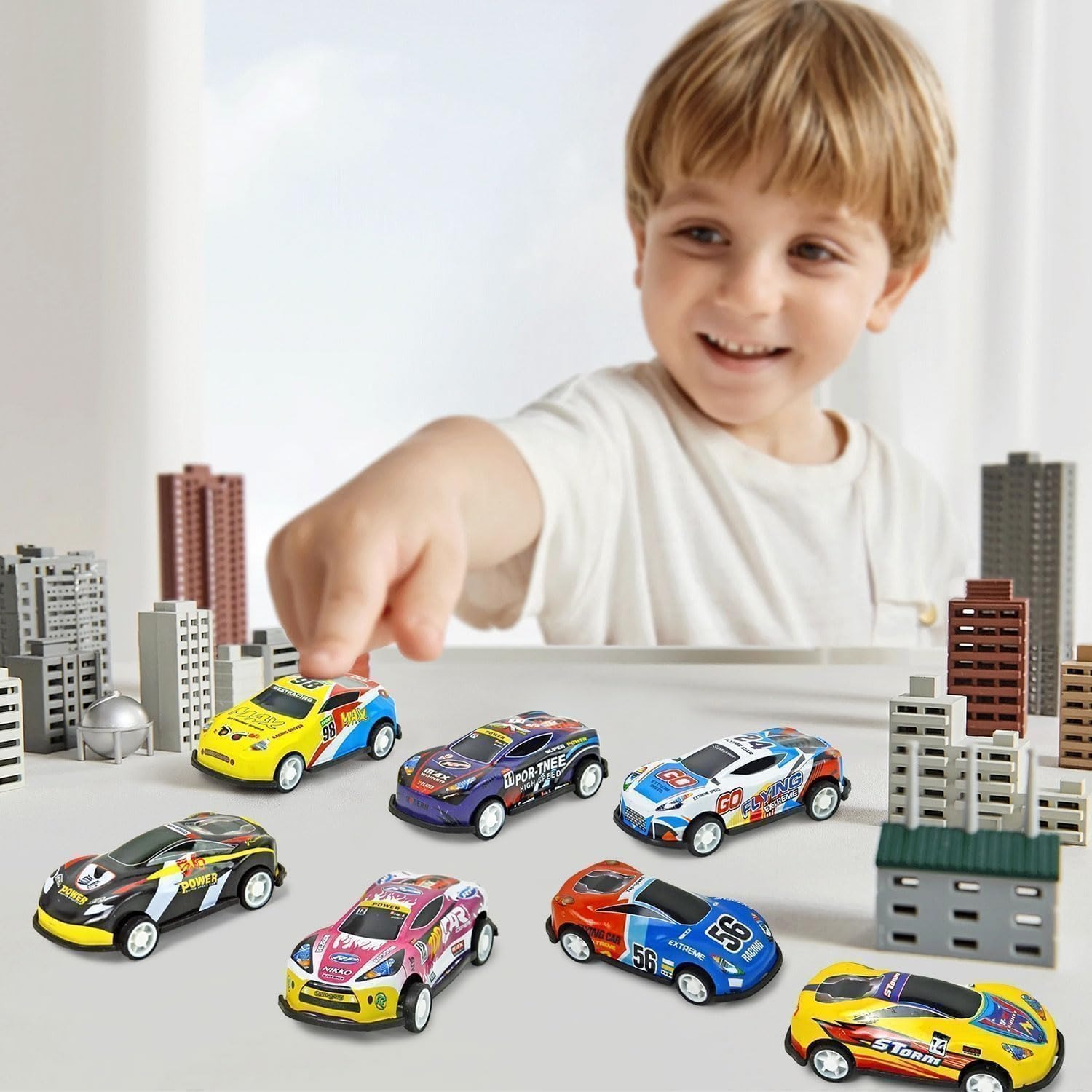
Five to seven year olds start inventing games. Races between two cars. Ramps made from books or a folded cereal box. Knocking down block towers. Lining the whole thing up as a traffic jam. Thirty cars is enough to build a scene rather than just play with one object.
Eight to ten year olds treat them more like equipment. They test which car is fastest, build longer ramp runs, set up courses and compare distances. A bulk mini vehicles pack is more interesting to that age group than a single detailed model, because experimenting needs spares.
Below three years, skip them. Small parts and a 6.7 cm body are a choking risk for children who still put things in their mouths. There are better toys for that age.
Choosing the right pack
If you are comparing sets, a few things matter more than the photos suggest.
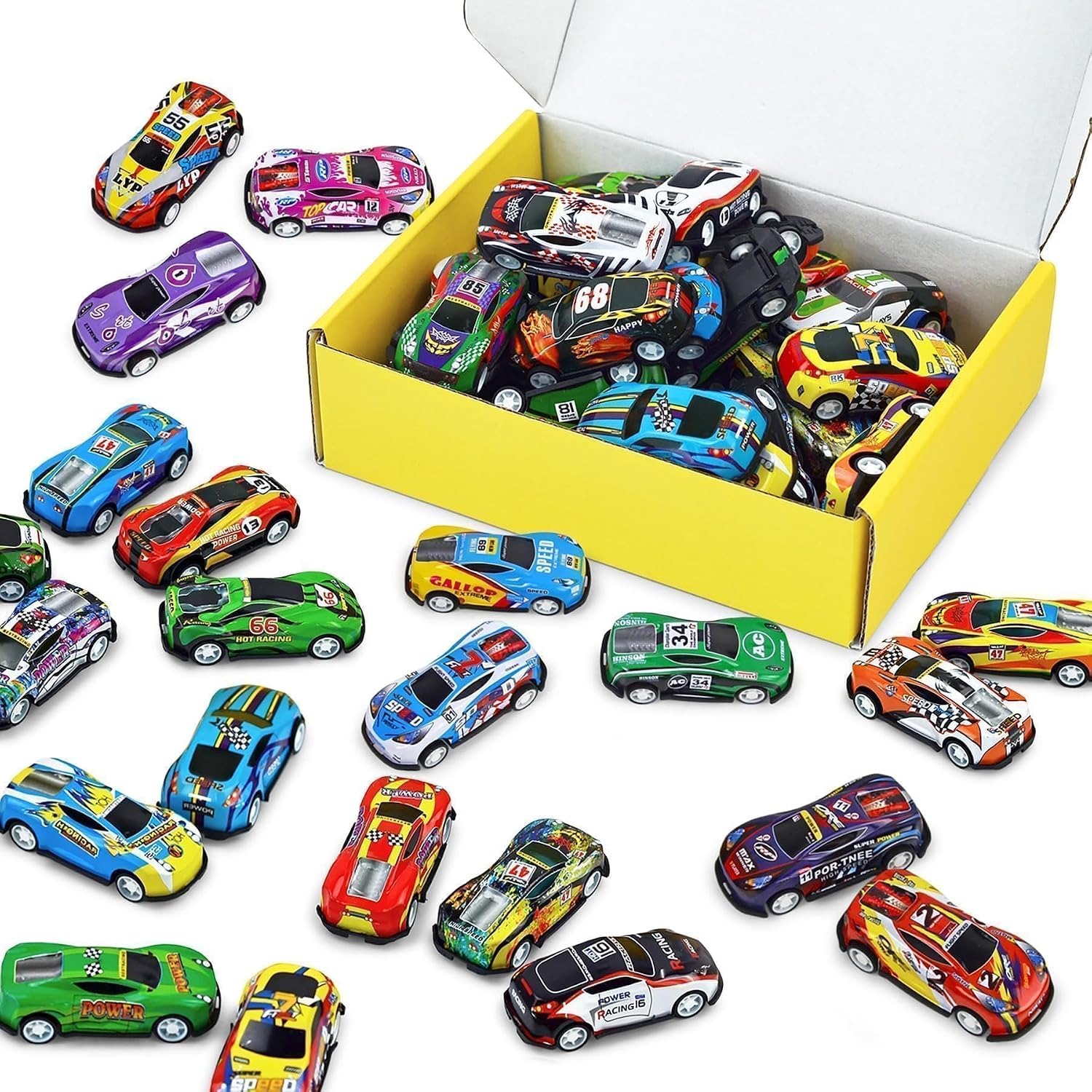
Count first. Thirty is the sweet spot for party bags and prize boxes, because most class parties land somewhere between fifteen and twenty-five children. Buying a twelve pack and then a second twelve pack costs more and usually arrives in two deliveries.
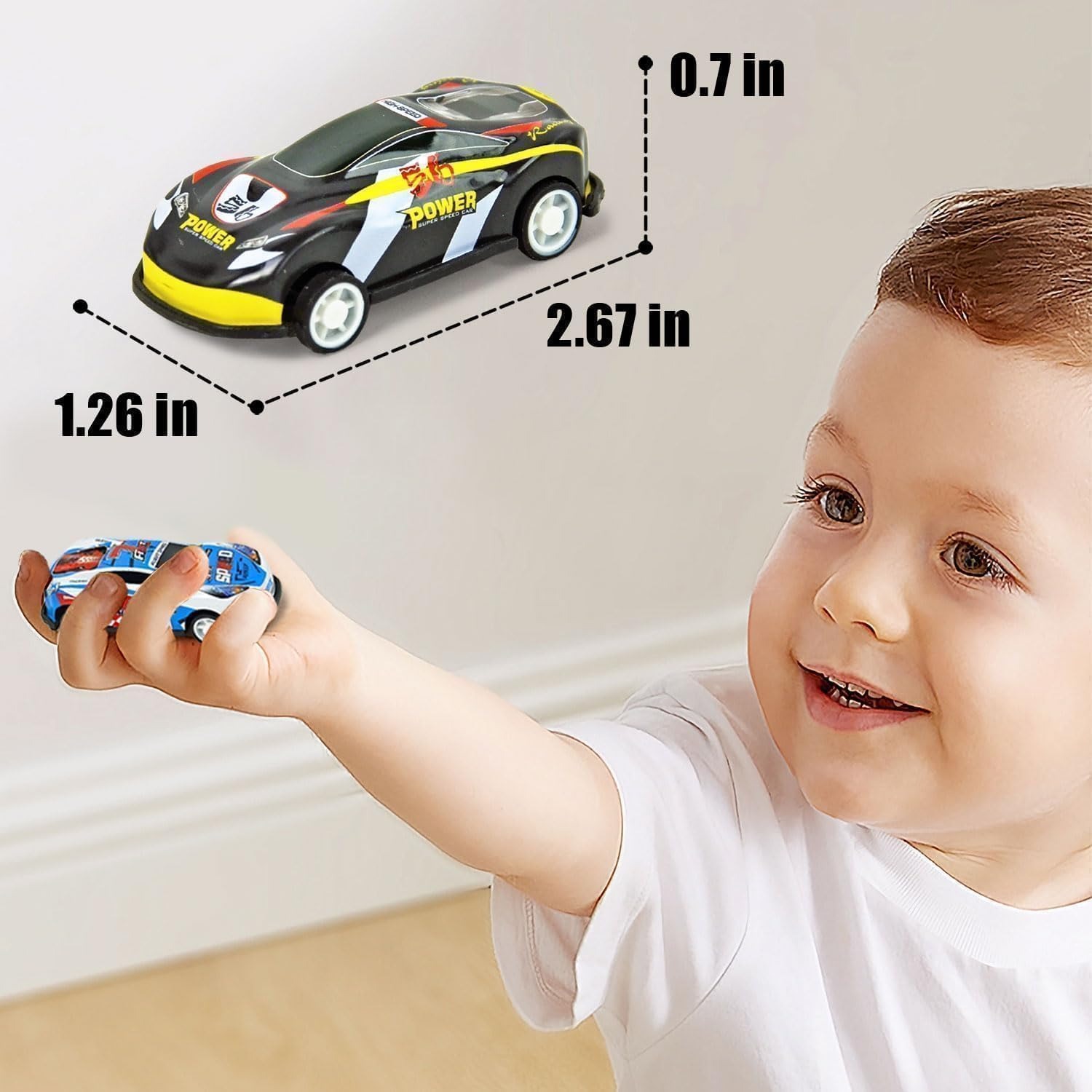
Size second. These cars are about 6.7 x 3.2 x 2.5 cm. That is small enough to pocket and big enough to grip properly. Much smaller and little fingers struggle to pull them back with enough force. Much larger and you lose the carry-anywhere advantage.
Power third. Battery toys look more impressive in a listing and are more annoying in real life. For party favours in particular, no-battery toys are the kinder choice, because you are not handing twenty-five other parents a job.
Material fourth. This set is listed as metal and plastic. Mixed construction tends to feel better in the hand than all-plastic, and the maker does not break down which parts are which, so we are not going to pretend otherwise.
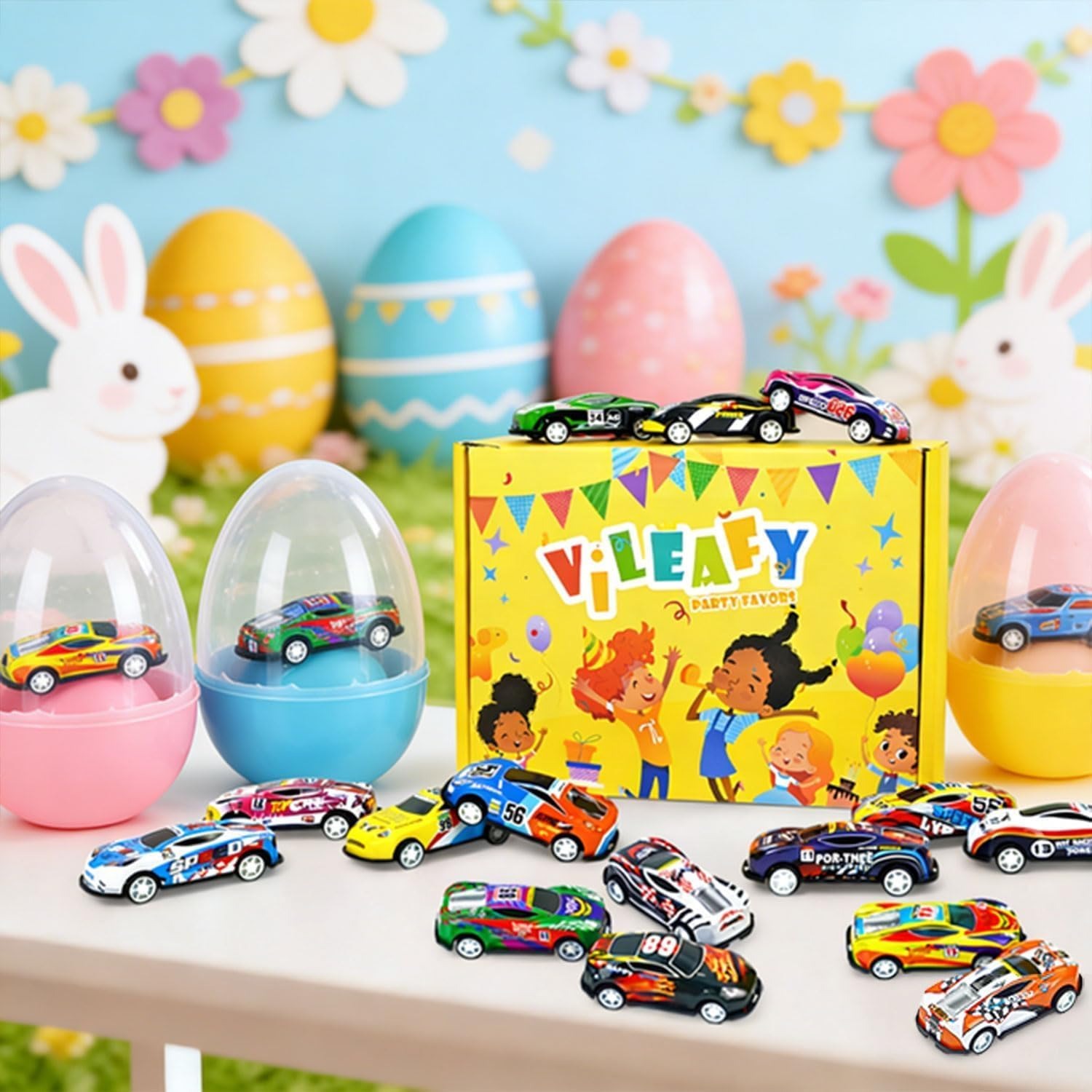
Variety fifth. The colours and styles in this pack are random, which sounds like a downside and usually is not. Children sort, swap and claim favourites. Thirty identical cars gets boring fast. Thirty different ones becomes a collection.
Where they get used most
Birthday parties are the obvious one. One car per guest, straight into the bag, done. No batteries to explain, no age-mismatched toy, no sugar.
Classrooms are the other big use. A prize box that lasts most of a term is worth a lot to a teacher, and quiet toys are the only kind that survive a classroom. Pull back cars make no sound beyond wheels on lino.
Then there is travel. A few cars in a side pocket covers a delayed flight, a long wait at a clinic or the stretch between ordering and the food arriving. They need no screen, no power and about 30 cm of flat surface. A table top is enough.
Home play is where the whole thirty come out. Ramps, races, pile-ups, car parks drawn in chalk on a hard floor. The set is listed for indoor use, which fits how most of this goes anyway.
Looking after them
Care is light but it does make a difference.
Wipe them with a dry or barely damp cloth. Let them dry fully before they go back in the box. Water inside the wheel housing is the enemy of a spring mechanism.
Keep them away from sand and grit. A sandpit will kill the gears faster than anything else. Same goes for puddles and wet grass.
Check the axles every so often. If a car has slowed down, flip it over and look for hair or carpet fibre wound round the wheels. Pull it clear with fingers or tweezers and it usually runs like new.
Store them together. A shoebox, a zip pouch or a tub keeps the set intact and makes clean-up a one-minute job instead of a floor search. These cars are not serviceable, so if one does genuinely break, take it out of play rather than trying to open it.
The short version
Thirty mini pull back race cars, no batteries, no assembly, about 6.7 x 3.2 x 2.5 cm each, in mixed colours with a race car theme. Made of metal and plastic, recommended by Vileafy for ages 36 months to 10 years, listed for indoor use.
They suit party bags, prize boxes, travel bags and ordinary floor play. They work best on hard smooth surfaces. They keep working as long as you keep hair out of the wheels.
If you need a quantity of small, quiet, instantly playable toys and you do not want to think about batteries, this is a sensible box to have in the cupboard.