

The complete guide
The Honest Buyer's Guide to a DIY Kite Making Kit
The problem with most kids' craft kits
A lot of craft kits end the same way. The child makes the thing, admires it for about four minutes, and then it sits on a shelf collecting dust until someone quietly bins it. The making was fine. The after was nothing.
A kite is different because there is a second act. You draw on it, and then it does something. It goes up. It pulls on the string. It becomes the reason seven people walk down to the beach together on a Sunday. That gap between the craft table and the open field is exactly where a DIY kite making kit earns its place over another box of beads.
The catch is that plenty of decorate-your-own kites fly badly. A blank sail is easy to produce. A blank sail that also holds a line in a light breeze takes a bit more thought. So the real question when you are choosing one is not whether children will enjoy colouring it in. Of course they will. It is whether the thing gets off the ground afterwards.
What you are actually getting
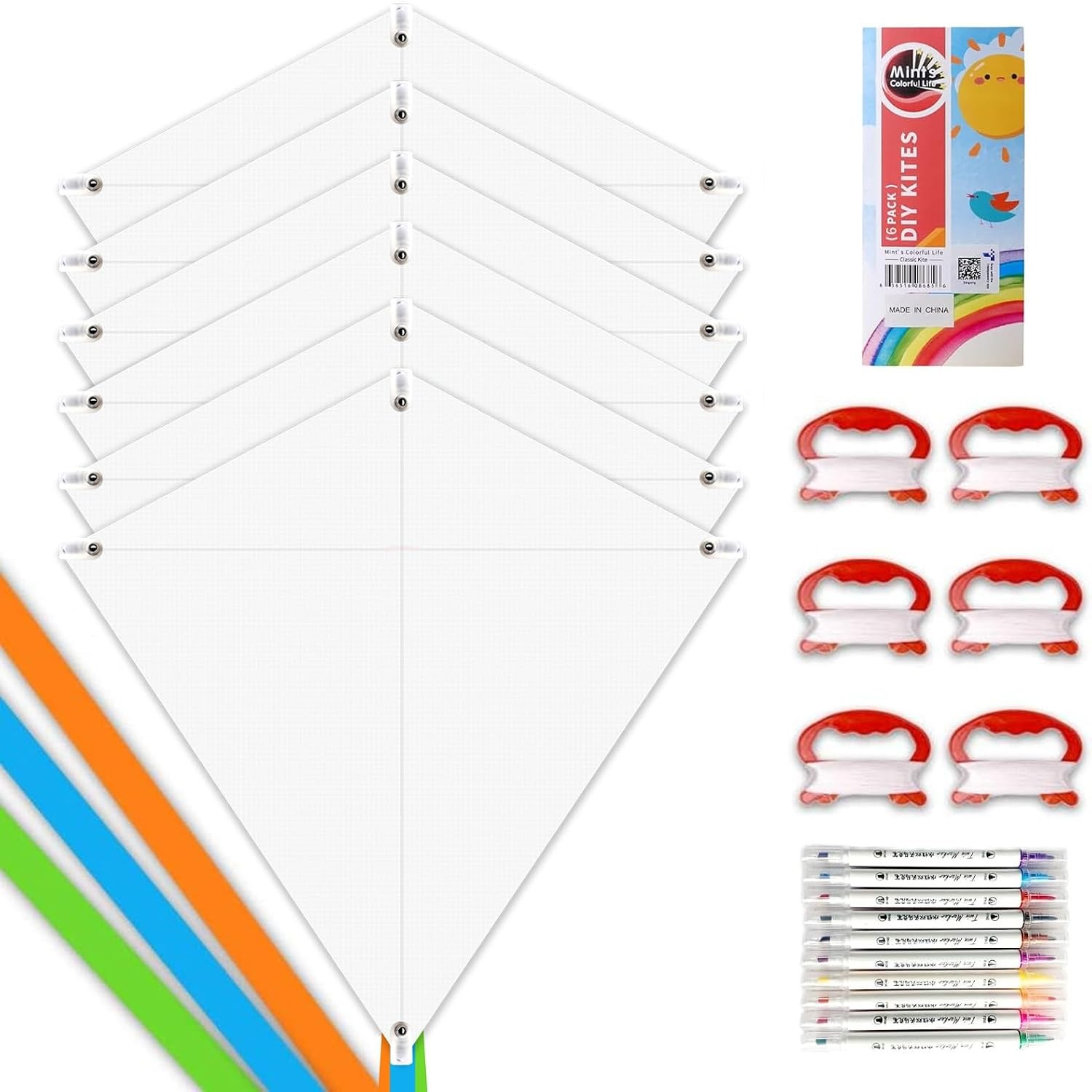
This set is six blank white diamond kites, each about 63.5 cm across. The sails arrive plain. There is no printed cartoon, no pre-set design, nothing already decided. The only shape reference in the product details is geometric, which is just the diamond outline itself.
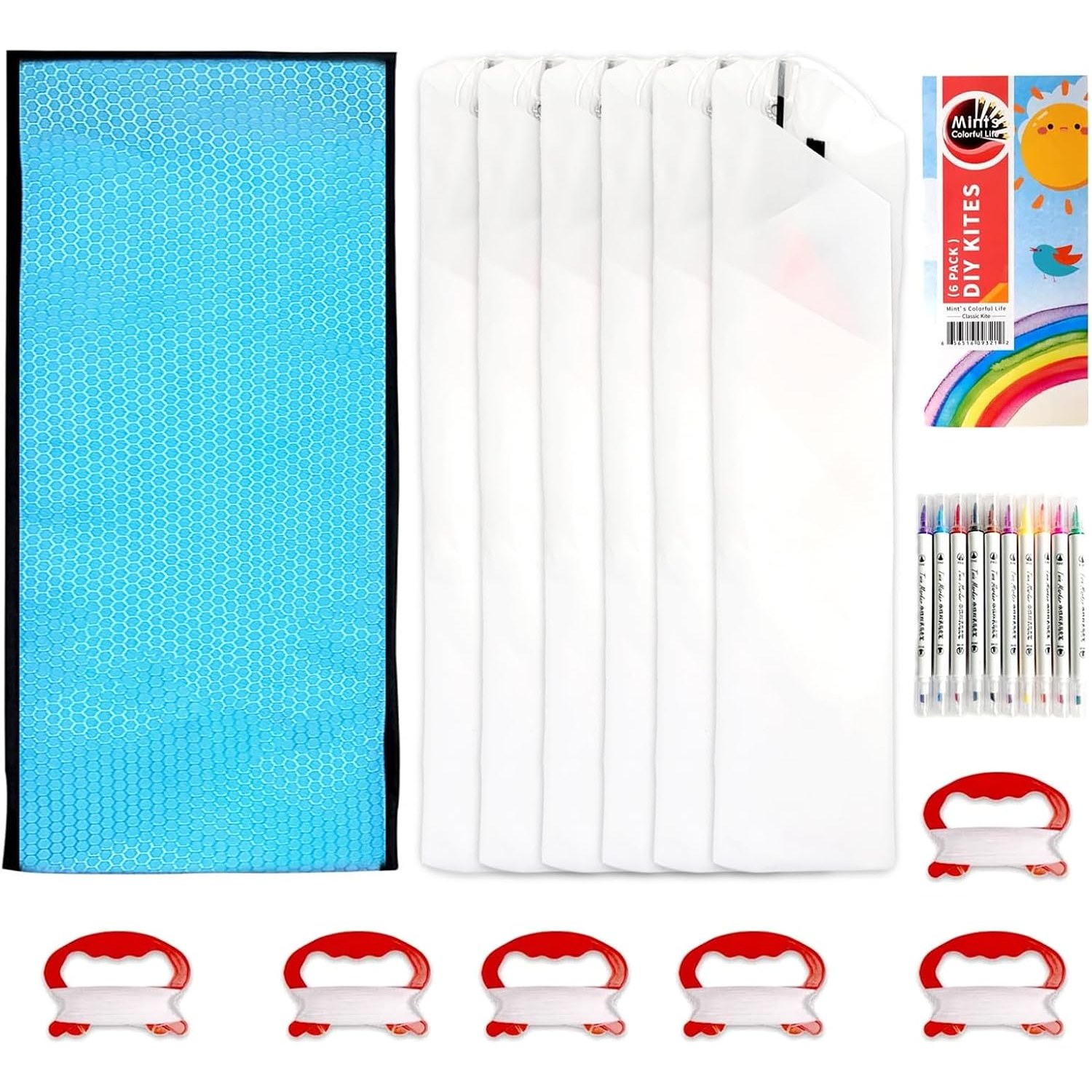
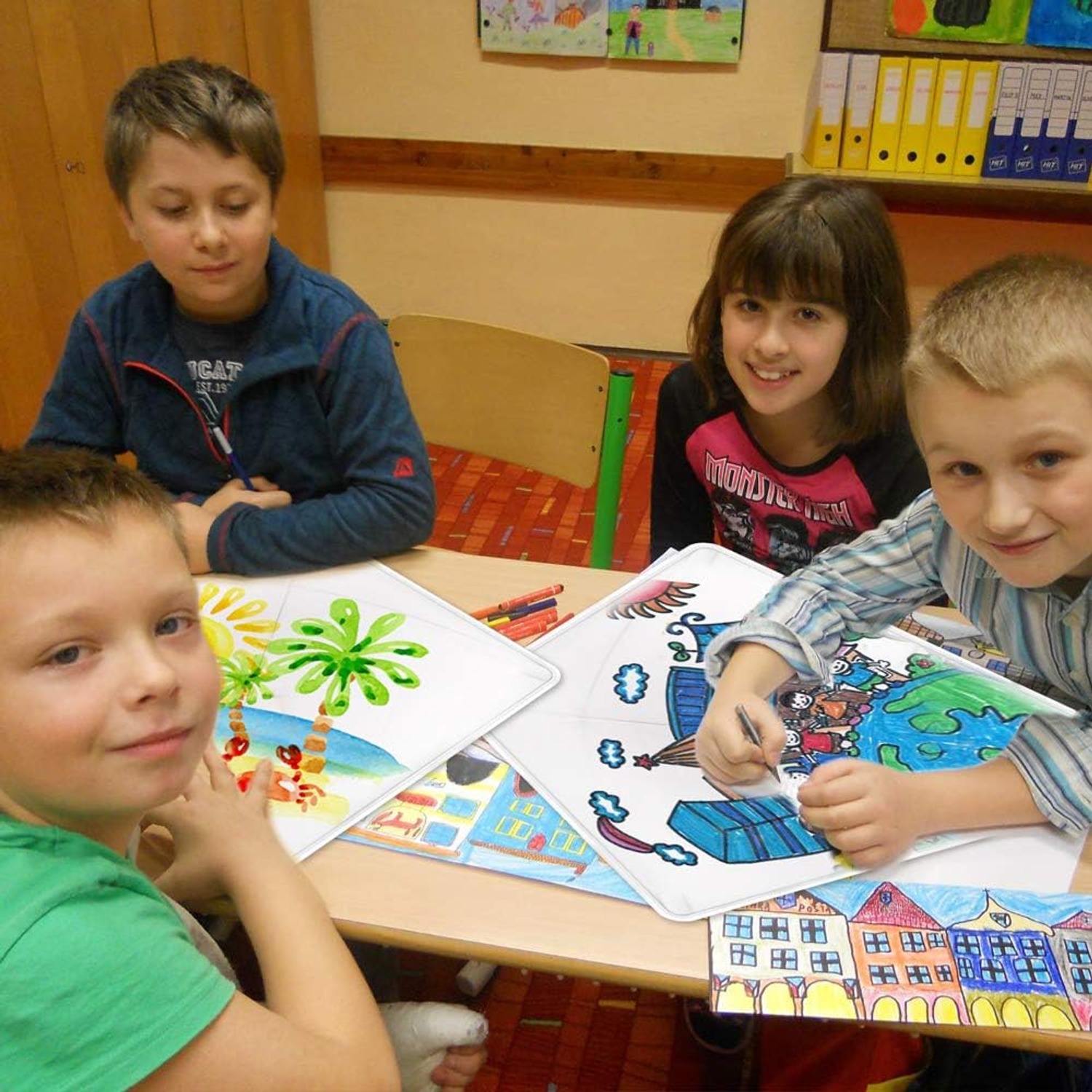
Along with the kites come self-adhesive stickers and markers. That is a useful pairing because children approach decorating very differently. A four year old wants stickers and wants them now. An eight year old wants to draw a whole scene and will be annoyed if you rush them. Having both in the box means you are not running to a shop mid-activity.
The whole pack weighs 0.3 kg and measures 63.5 x 63.5 x 0.3 cm flat. That last number is the one worth noticing. Three millimetres thick means it slides into a suitcase lining, a backpack, or the gap beside the cooler in the car boot.
Some details are simply not stated by the maker. The sail fabric and frame material are not specified, and neither is a country of origin or a precise minimum age. The listing records the material as diamond, which describes shape, not fabric. It is better to tell you that than to guess.
Why six kites changes things
One kite is a toy for one child. Six is an event.
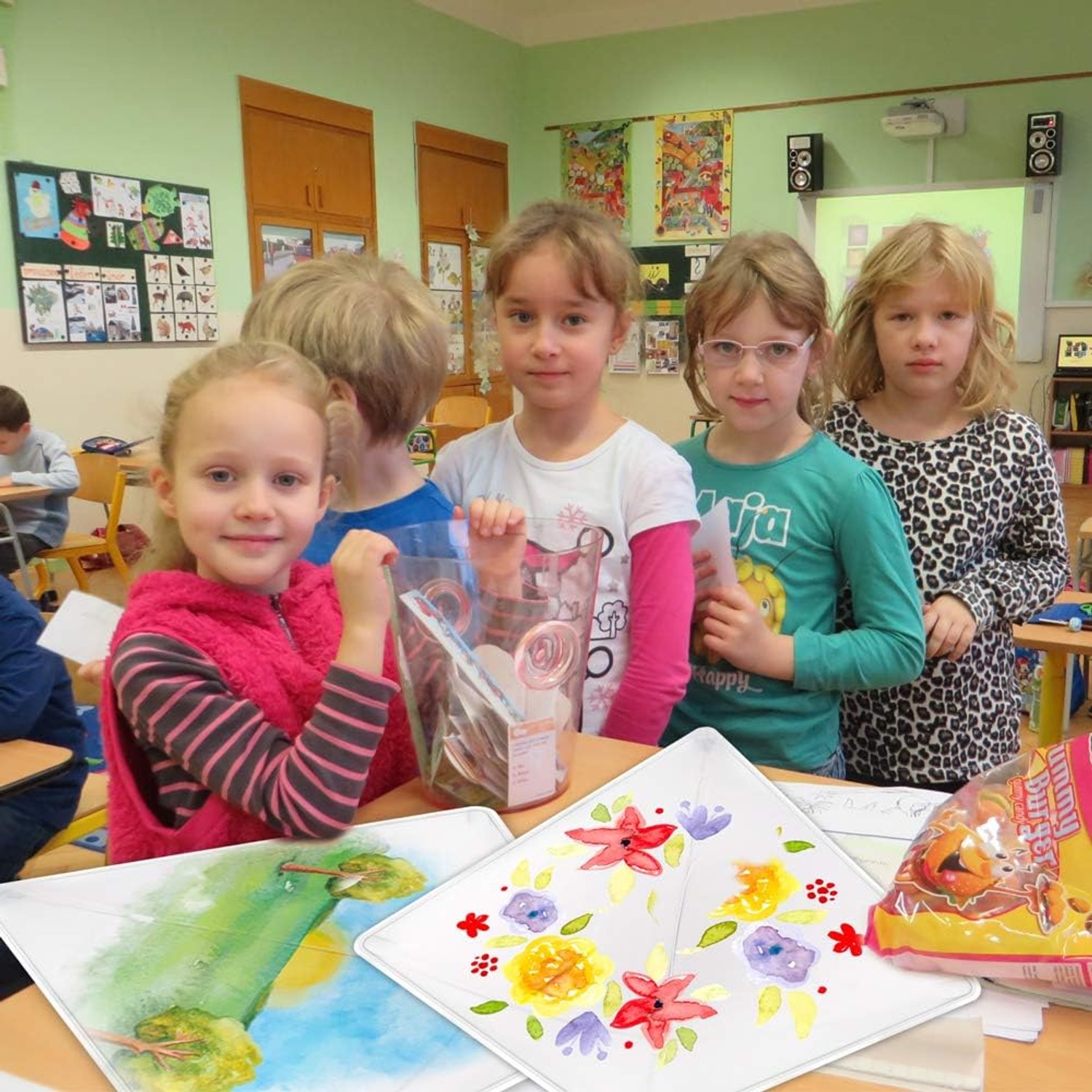
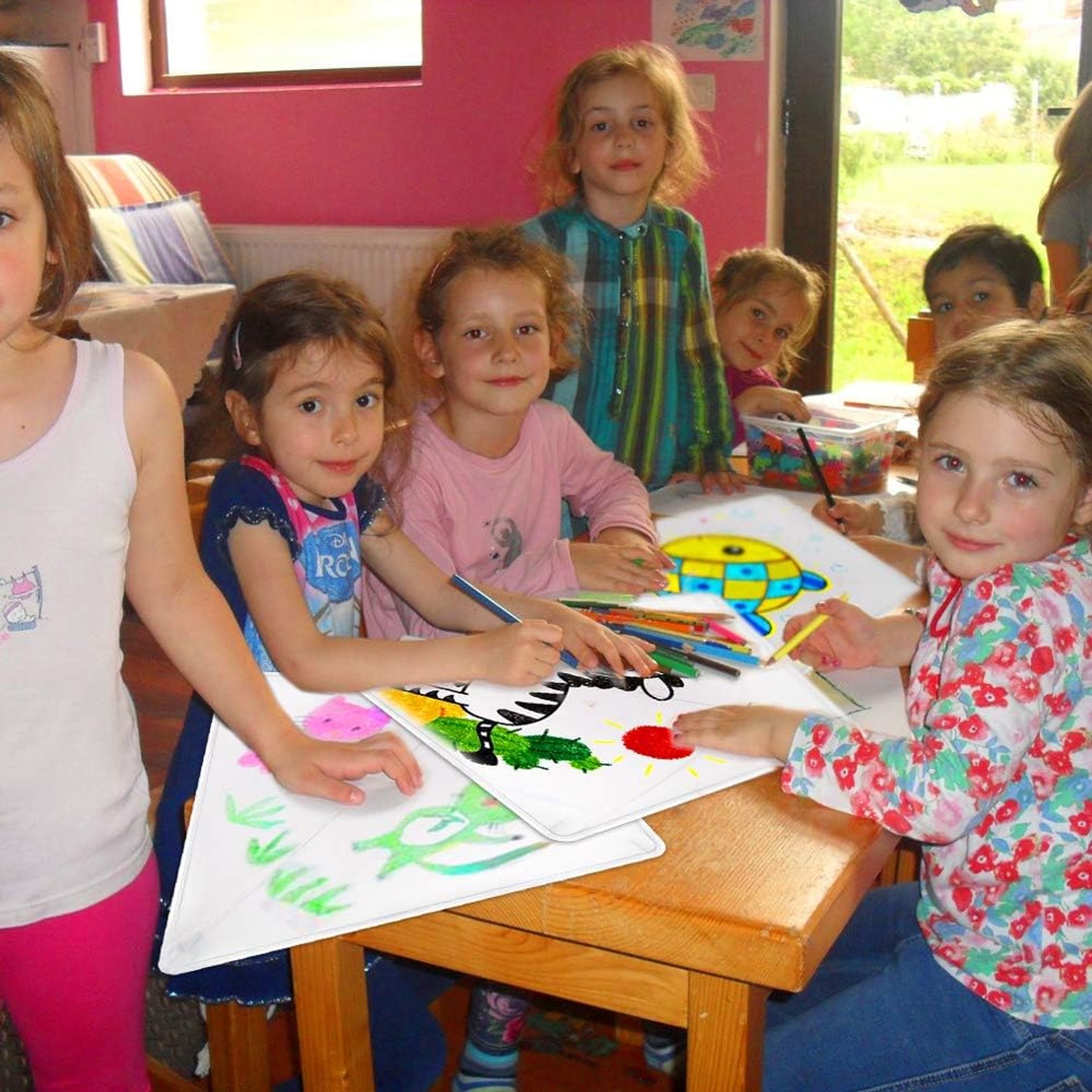
Think about how children behave around a single shared craft. One of them gets the good bit, the others hover, somebody cries. Six blank sails removes all of that. Every child at a party gets their own. A class table can run a kite craft kit session without a roster. Cousins visiting over the holidays each get one, and nobody has to negotiate.
It also builds in a margin for disaster. Kites meet trees. Kites meet wet sand. A six-pack means the first mishap is a shrug rather than the end of the afternoon.
For larger groups, people often buy two or three packs. Ordering in sixes keeps the maths simple when you are working out how many children are coming.
Getting it in the air
Diamond kites are the classic beginner shape for a reason. They are forgiving, they need no special launch technique, and they fly in moderate wind rather than demanding a gale.
The tails matter more than most people expect. This kit includes long ribbon tails, and they are not decoration. A light kite without enough tail will spin, tip over and dive. The tail adds drag at the bottom, which keeps the nose pointed up and the kite tracking steadily. If a child is struggling, the first fix is almost always more tail, not more running.
Assembly needs no tools. Fit the spars, make sure the sail is taut without being strained, and attach the line to the bridle. Once you have built the first one, the other five go quickly.
For wind, aim for something you can feel on your face with leaves moving in the trees. That is plenty for an easy fly kite for kids. Very strong gusts are the enemy here, not calm. Gusty conditions snap spars and shred sails, and they make the whole experience stressful for a child who just wants to see their drawing fly.
Pick open ground. Beaches, playing fields, wide parks. Keep well away from power lines, trees and roads. This should go without saying, but kite line and overhead cables are a genuinely dangerous combination.
Who this suits
Families heading somewhere with open space are the obvious fit. A travel friendly kite kit that lies flat in a suitcase and entertains both indoors and outdoors is a good use of packing space.
Teachers and activity leaders do well with it too. A classroom kite activity has a natural shape. Decorate inside, discuss how wind works, then go outside and test it. Children remember the day they flew something they made far longer than they remember a worksheet.
Party hosts get a double benefit. The decorating is a seated activity that burns real time, and the finished kites go home with the guests. That saves you buying separate party bags.
Grandparents often love this one. It gives them something to do with the children that is not a screen and not a hard physical game. Sitting at a table with markers works at any age.
It is less ideal if your only nearby outdoor space is small or lined with trees. A kite needs room, and no amount of good design fixes a flying field the size of a courtyard.
Choosing well and getting your money's worth
If you are comparing options, look at four things. How many kites you actually get. Whether decorating supplies are included or sold separately. Whether tails come in the box. And how the set packs down for storage.
This kit covers all four. Six kites, stickers and markers included, long ribbon tails, and a flat 0.3 cm profile.
A few practical tips. Spread newspaper under the kites before the markers come out, because enthusiastic drawing goes past the edges. Let the ink dry properly before you roll or assemble anything, or you will get smudges along the fold. Write each child's name on their sail, because six similar white diamonds in a pile become an argument within ten minutes.
Looking after them
Keep them dry. That is the whole of it, really. Wipe light dirt off with a barely damp cloth and let the kite air dry flat before packing it away.
Store flat or loosely rolled with the spars out, so you are not creasing the same line over and over. Check the spars and the bridle before every outing and retire anything cracked or badly frayed.
Small tears often patch with clear tape on both sides of the sail, which buys several more flights. Tears right at the spar pockets are harder to rescue, and that is where having five spares is quietly reassuring.
Keep loose line and small parts away from preschoolers, and supervise younger children while flying. A child staring upward at their own drawing is not watching the ground in front of them.
The short version
Six blank 63.5 cm diamond kites, with stickers, markers and ribbon tails in the box. The pack weighs 0.3 kg and lies 3 mm flat, so it travels anywhere. The sail fabric and frame material are not stated by the maker, and no minimum age is listed beyond kids.
What you are buying is an afternoon with two halves. First the table, the markers and the quiet concentration. Then the field, the wind and six very different kites in the air at once, each one obviously made by a particular person. That second half is the reason this beats a craft kit that ends on a shelf.