

The complete guide
Choosing a First Ukulele for a Child, a Practical Buyer's Guide
The problem with most first instruments
A child asks for an instrument. What usually happens next is that somebody buys something too big, too fiddly or too expensive, and it ends up behind a door for three years.
Full size guitars are the classic mistake. A seven year old cannot get their arm over the body, cannot reach the first fret without rolling their shoulder forward, and the steel strings hurt. Keyboards are better on the hands but worse on the room, and they need a plug, a stand and a corner nobody was using. Recorders are cheap and loud, which is why they get hidden.
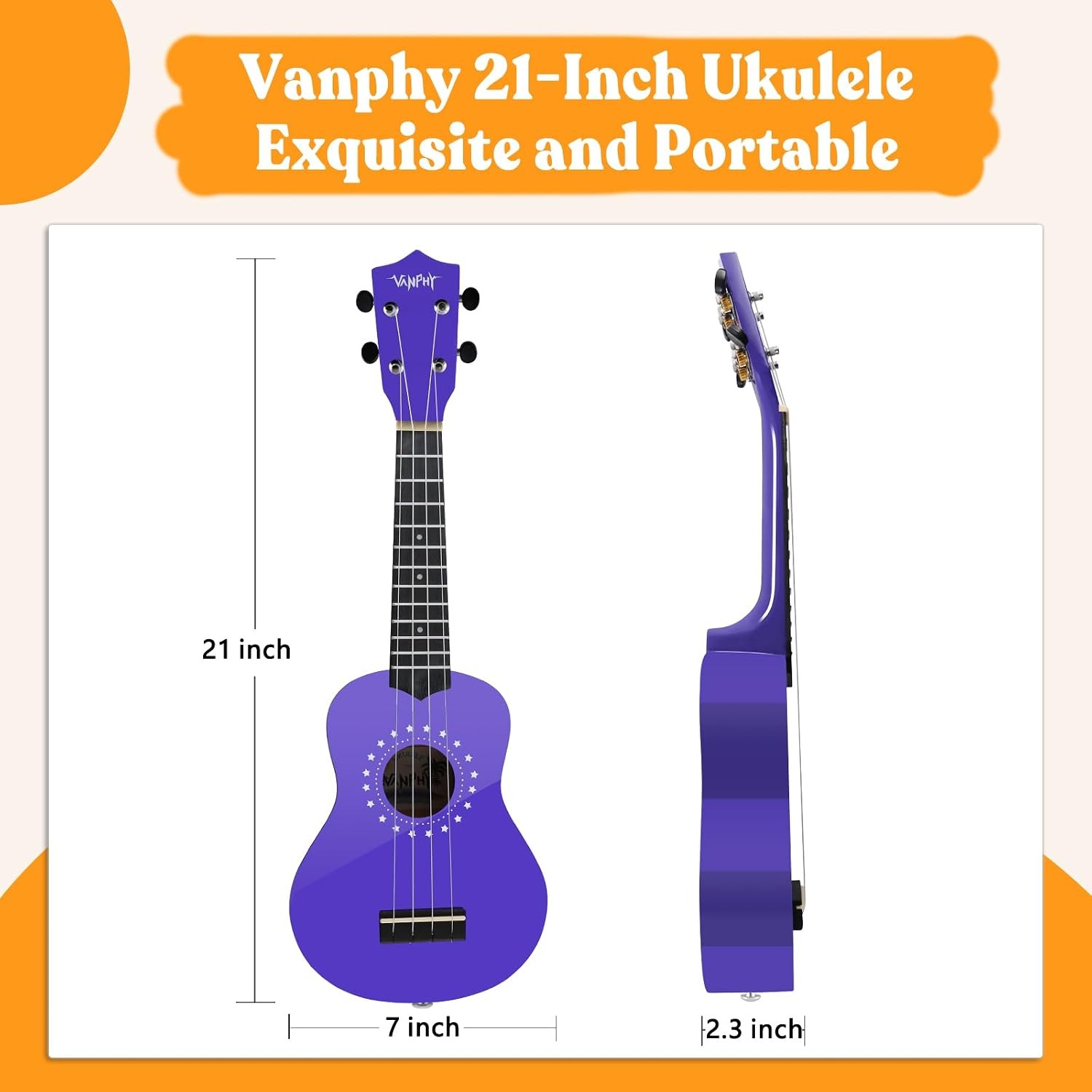
A 21 inch soprano ukulele sidesteps most of that. It is about 55 cm long, it weighs under a kilo, it has four strings instead of six, and nylon does not cut into a fingertip. A child can hold it, carry it, and make a recognisable sound within the first ten minutes. That first sound is the whole game. Nobody keeps practising something that only ever produces a thud.
How a soprano ukulele actually works
The soprano is the original and smallest of the standard ukulele sizes. The short string length means less tension, which means softer strings and easier fretting. It also gives the instrument its bright, slightly plinky voice, the sound most people picture when they hear the word ukulele.
Four strings tuned G, C, E and A do a lot of heavy lifting. Because the tuning is close together, the common chord shapes need only one or two fingers. A C major chord is a single finger. That is why the ukulele has become the standard classroom string instrument in a lot of countries. A child can play an actual song, with actual chord changes, in a week or two of casual practice.
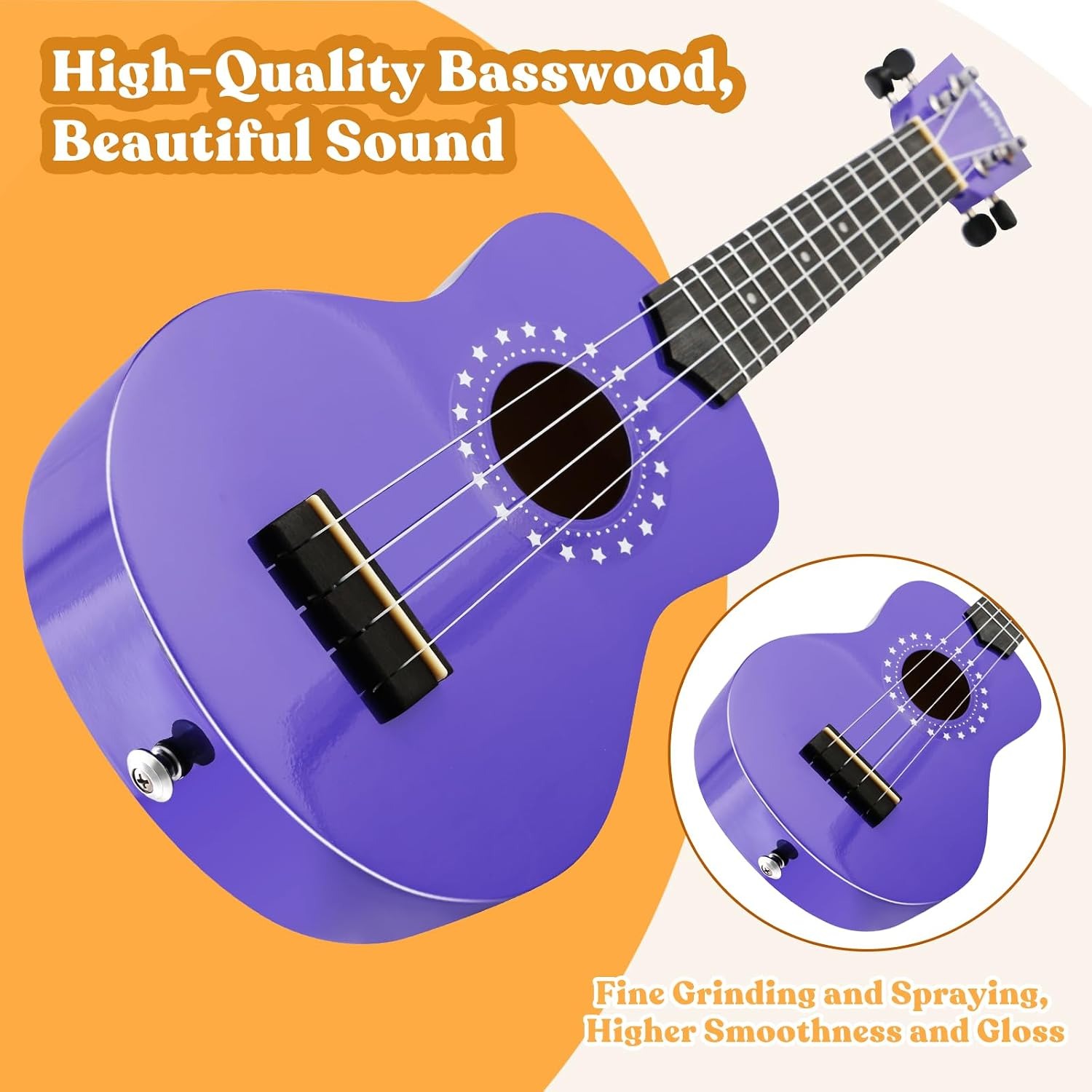
This particular model is built from basswood through the top, back and body. Basswood is light and even, which keeps the weight down and the tone consistent across the instrument. The manufacturer describes the sound as clear and soft, and that matches what basswood usually gives you, a warm tone without harsh high edges. For a beginner whose strumming hand is still finding its rhythm, forgiving is better than bright.
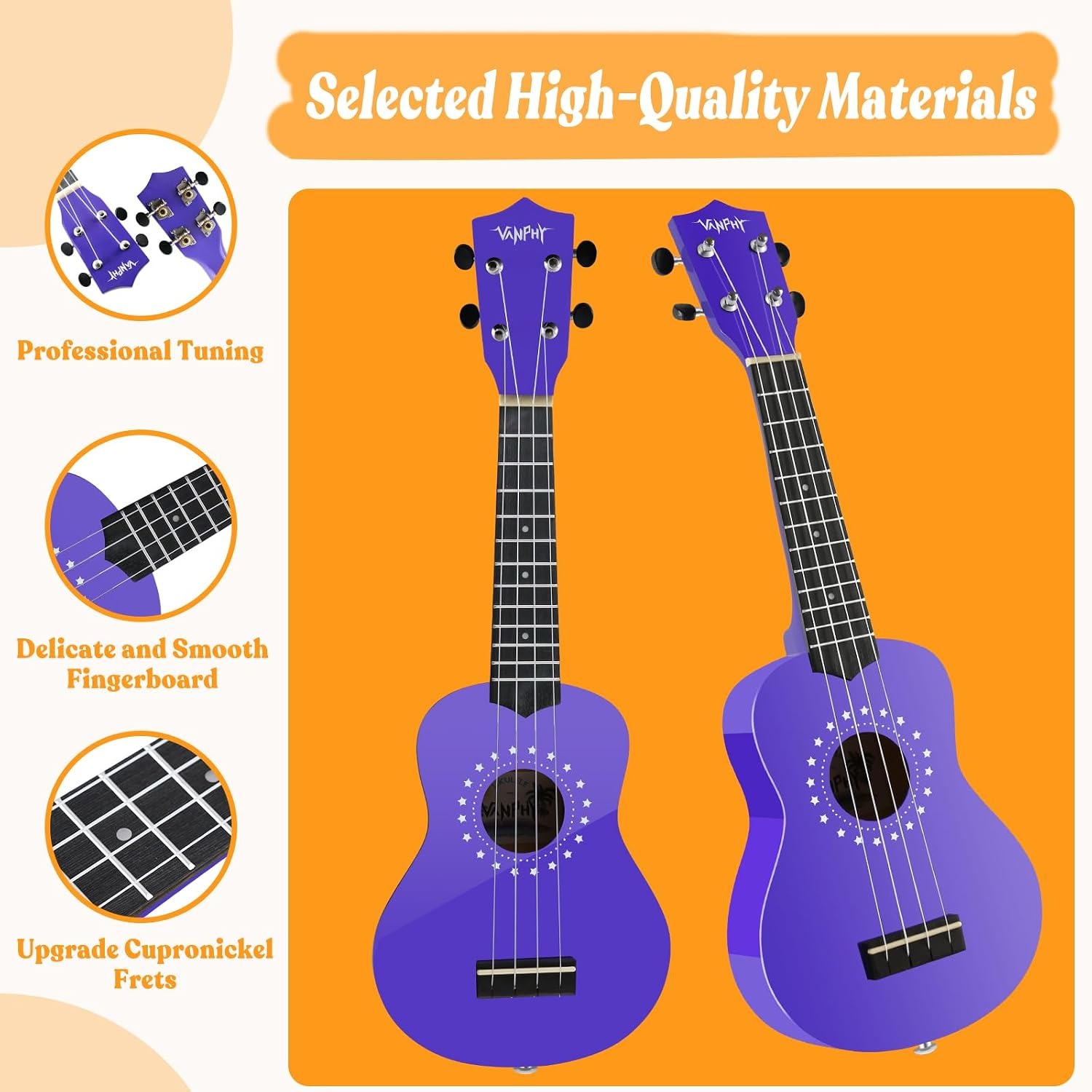
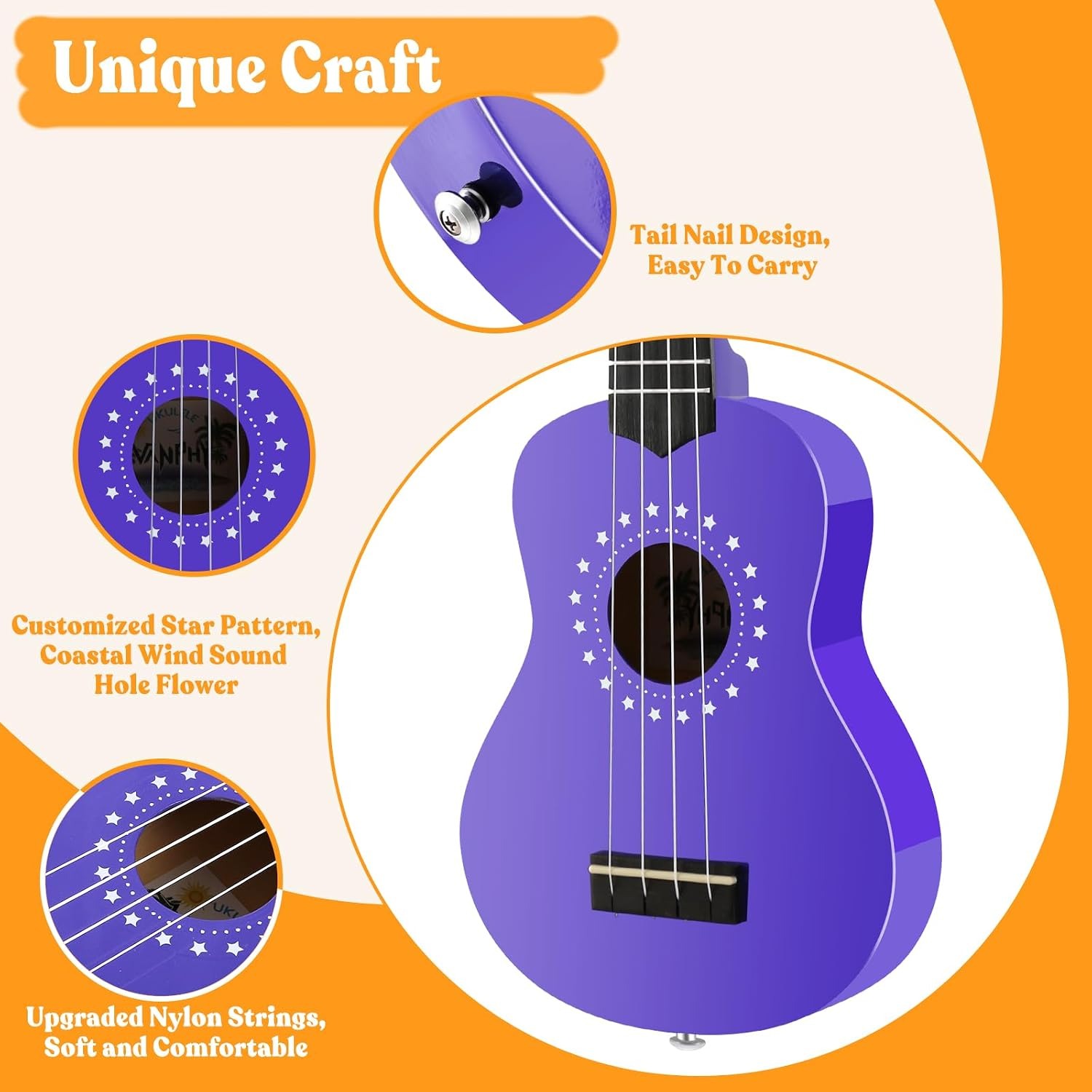
The body is polished rather than left bare. That does two useful things. It protects the timber from finger oils and spills, and it makes the instrument easy to wipe clean. The frets are a nickel alloy set into a smooth fingerboard, and the tuning pegs are adjusted before shipping so the strings can be brought up to pitch and held there. There is a tail pin at the base for a strap.
Who this suits
Children are the obvious answer, and the half size scale is aimed squarely at them. If a child can wrap an arm around the body and press a string to the fingerboard, they can play this.
It also suits a few other people. Adults with small hands often prefer a soprano. Travellers like the size, because a 55 cm instrument fits in a backpack or an overhead locker without negotiation. Anyone who wants an instrument to leave on the sofa for idle strumming will get more use out of something this light than out of a guitar that lives in a case.
Who it does not suit: an adult with large hands planning serious practice. The frets on a soprano sit close together and a big fingertip will mute the neighbouring string. For that player, a concert or tenor size gives the same tuning with more room. There is no shame in buying the child the soprano and yourself something larger.
What to look for when you compare
Size first. Soprano at 21 inches (about 53 cm), concert at 23, tenor at 26, baritone at 30. Only the first three share standard tuning. For a child, soprano is nearly always the right call.
String material. Nylon for beginners, every time. Steel strings belong on a guitar, and on a learner they end practice early and discourage the player.
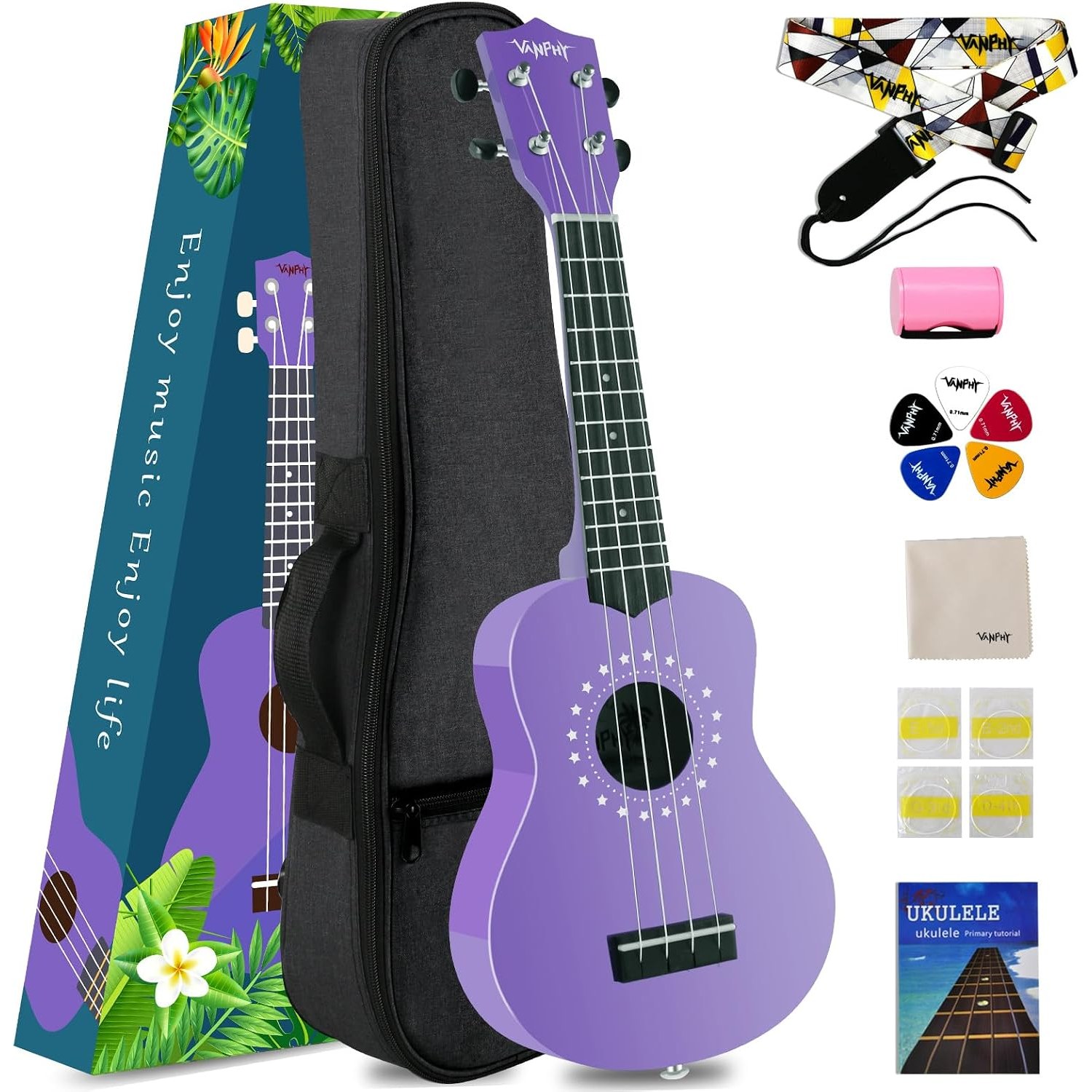
What is in the box. This is the part people skip, and it is the part that decides whether the instrument gets played. A set that includes a bag, a strap, picks, spare strings and a cloth means nothing stands between unwrapping and playing. The best ukulele starter kit is the one that does not send you back out shopping on day one. This set covers all of that, plus a pair of finger maracas for a second child to join in.
Build. Look for a timber body rather than moulded plastic, proper geared tuning pegs rather than friction pegs, and a fingerboard that feels smooth under a fingertip. Basswood with adjusted pegs, as here, is the standard specification for a good learner instrument.
Weight. Under a kilo is ideal for a child. At 0.88 kg this one is comfortably inside that.
Getting started in the first week
Tune it before anything else. New nylon strings stretch, so expect to retune daily for the first week or two, then less often. A clip-on tuner or a free phone app does the job in under a minute. Learning to tune is the most valuable early skill, and it stops the common beginner problem of a child deciding the instrument sounds wrong when it is simply flat.
Fit the strap. It takes the holding work away from the arms so both hands are free, and it makes a huge difference to how quickly chord shapes come together.
Then pick two chords and one song. C and Am is a good pair, since both are easy and they sound good together. A single song learned properly does more for motivation than twenty half-learned exercises.
Looking after it
Wipe the strings and body with the included cloth after each session. Finger oils dull strings faster than playing does, and a quick wipe adds weeks to their life.
Store it in the bag. Not next to a hot stove, not in a sunny window, not in a damp storeroom. Wood responds to temperature and humidity, and an instrument kept in normal living conditions will stay in tune better and last longer.
If it is going into storage for months, slacken the strings a little to take tension off the neck. Keep the spare strings with the instrument, in the bag pocket, so the day one snaps you are not hunting through drawers.
Nylon strings do wear. They go dull, they slip out of tune more often, and eventually they break. Changing them is a fifteen minute job once you have watched a video, and doing one string at a time keeps the neck tension even.
The short version
A half size soprano is the sensible starting point for a child, and this one covers the basics properly. Basswood top, back and body with a polished finish. Four nylon strings that are kind to new fingers. Nickel alloy frets, a smooth fingerboard and adjusted tuning pegs. About 55 cm long and 0.88 kg on the scale.
The complete set is what makes it work day one. Bag, strap, picks, spare strings, cleaning cloth and finger maracas all arrive together, so the gap between unwrapping and first chord is as short as it can be.
Tune it, fit the strap, learn two chords. That is the whole plan. If it turns into something bigger, you will know within a month, and a soprano will carry a learner comfortably through their first year of playing.