


The complete guide
Choosing a Kids Steel Tongue Drum, A Practical Buyer's Guide
The problem with most first instruments
Buy a child a recorder and you get screeching. Buy a keyboard and you get a demo button pressed four hundred times. Buy a guitar and you get a lovely object that lives under a bed because the first six weeks are all sore fingertips and no tune.
The pattern is the same every time. Most instruments punish beginners before they reward them. A child has to grind through an ugly phase to reach the part that feels good, and plenty of them quit during the ugly phase. That is not a failure of the child. It is a design problem.
A steel tongue drum sidesteps it. The instrument is built so that the first sound you make is already pleasant. You strike one of the eight tongues cut into the metal face, and it rings out warm and clear, then slowly fades. There is no embouchure, no finger position, no tuning, nothing to get wrong. A three year old banging about and an adult picking out a melody are both getting a nice sound out of the same drum.
How a tongue drum actually works
The drum is a sealed steel shell with slits cut into the top. Those cuts leave tongues of metal, and each tongue is shaped so that it vibrates at a particular pitch. Hit it and the whole body resonates, which is where the long bell-like sustain comes from.
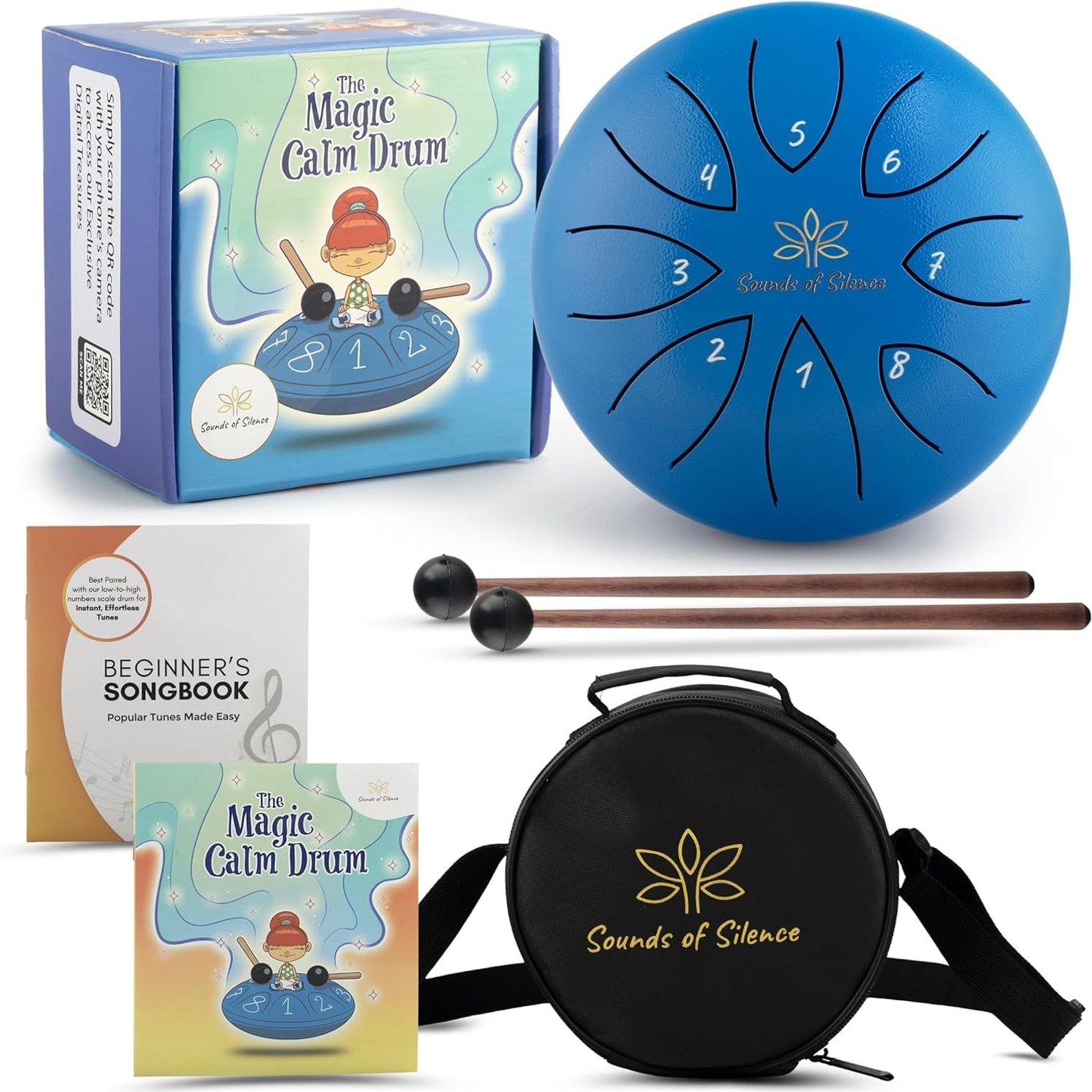
This one is a 15.2 cm face, 7.6 cm deep, made of alloy steel in blue. Eight notes. The important detail is how those eight are arranged. They run low to high around the face rather than being scattered. Walk your mallet around the drum and you are walking up or down a scale, which is why unplanned playing comes out sounding deliberate.
All eight notes belong to a single scale, so there is no wrong note on the instrument. That sounds like a small thing. It is not. It is the single biggest reason children stay with a tongue drum when they drifted away from other instruments. Every attempt sounds like music, so every attempt is encouraging.
The sound itself is soft. It is closer to a wind chime or a handpan than a drum kit. If you live in a flat or share walls with people, that matters, and it is a fair reason families pick the best mini steel tongue drum over louder percussion.
Who it suits
There are three groups who get the most from an instrument like this.
The first is the child who likes music but has not found an instrument yet. A tongue drum gives them immediate wins. They can sit down and produce something that sounds finished within a minute, and that feeling is often what keeps a kid coming back long enough to develop real interest.
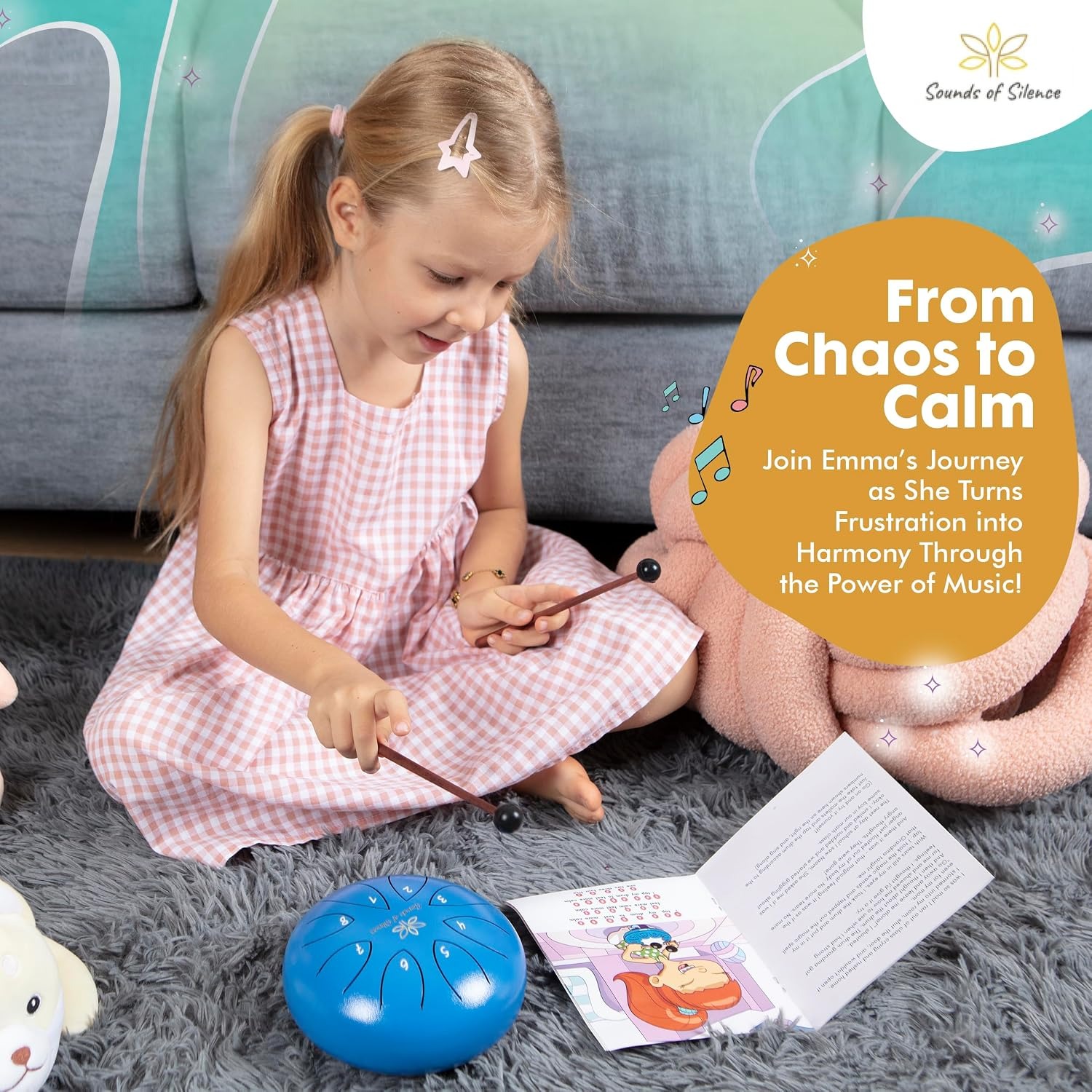
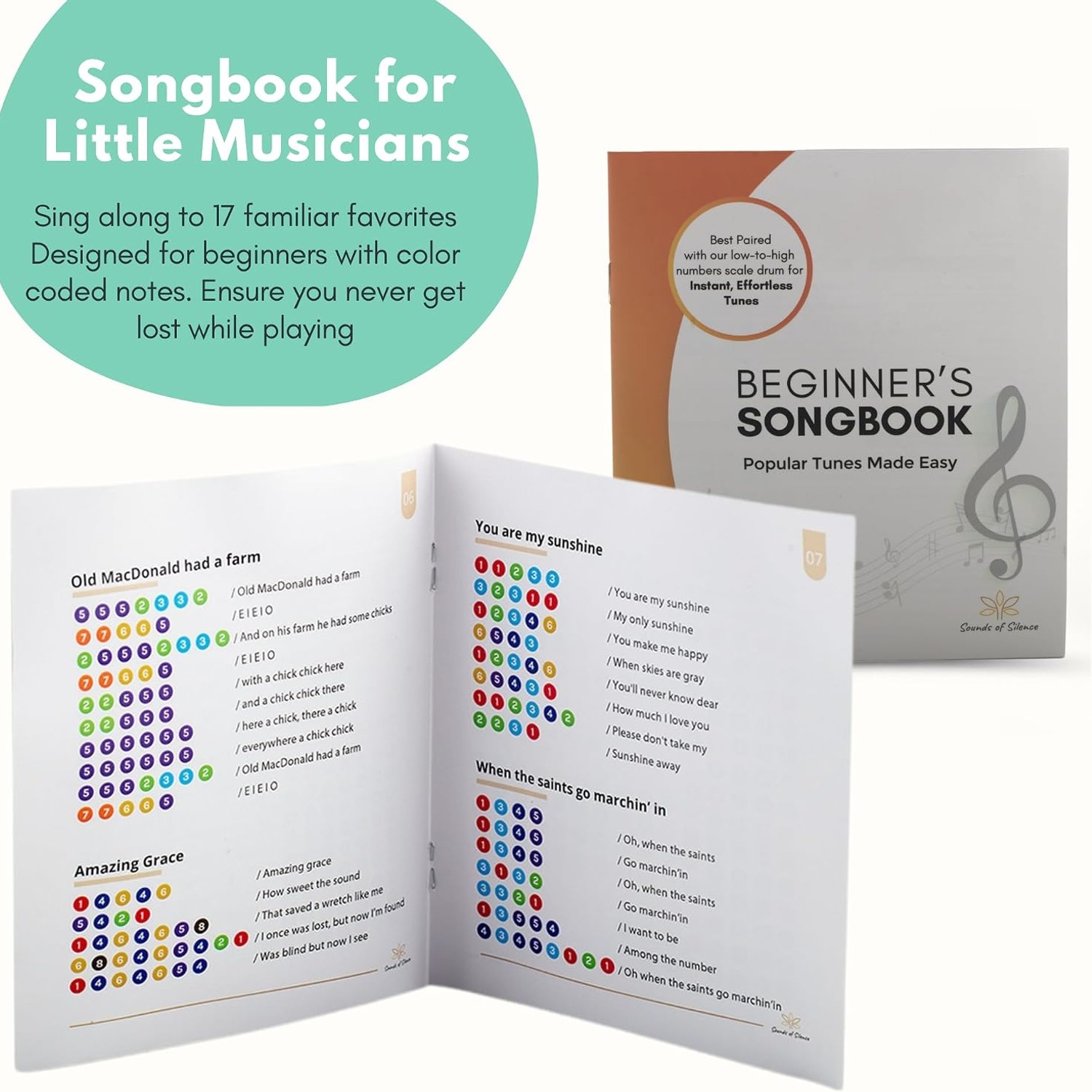
The second is the child who struggles with big feelings. The set includes a sing-along storybook following a character called Emma, who learns to use her drum when things get overwhelming, plus a songbook written for the eight tones on this model. The logic is simple. Hitting a soft note and listening to it fade out is a slow activity. It pulls attention into the present and gives a child something to do with their hands. Lots of parents, teachers and counsellors use instruments this way. It is worth being clear that this is a toy and a musical instrument, not a treatment, and it does not stand in for professional support where that is needed.
The third group is adults. Quite a few people buy one of these for a desk or a bedside table. Eight notes is limiting in the best way. You stop thinking about what to play and just play.
Where it is less of a fit: an older child who already reads music and wants to practise scales and repertoire will outgrow eight notes fairly quickly. They would be better served by a full instrument.
What to look at when comparing drums
Size. This is a 6 inch drum, 15.2 cm across. Small drums are lighter, quieter and easier for small hands to reach across. Bigger drums have deeper, longer-sustaining notes but become awkward on a child's lap. For a first instrument, small usually wins. If you want the best drum for small hands, this end of the range is where to look.
Note count. Eight is the standard beginner count and it is enough for a lot of simple tunes. More notes give more range but also more decisions, which cuts against the whole point for a young player.
Material and build. Alloy steel is the usual choice for tongue drums. It holds its tuning and takes everyday handling. The one thing to protect against is dents, because a deformed tongue can change how it rings.
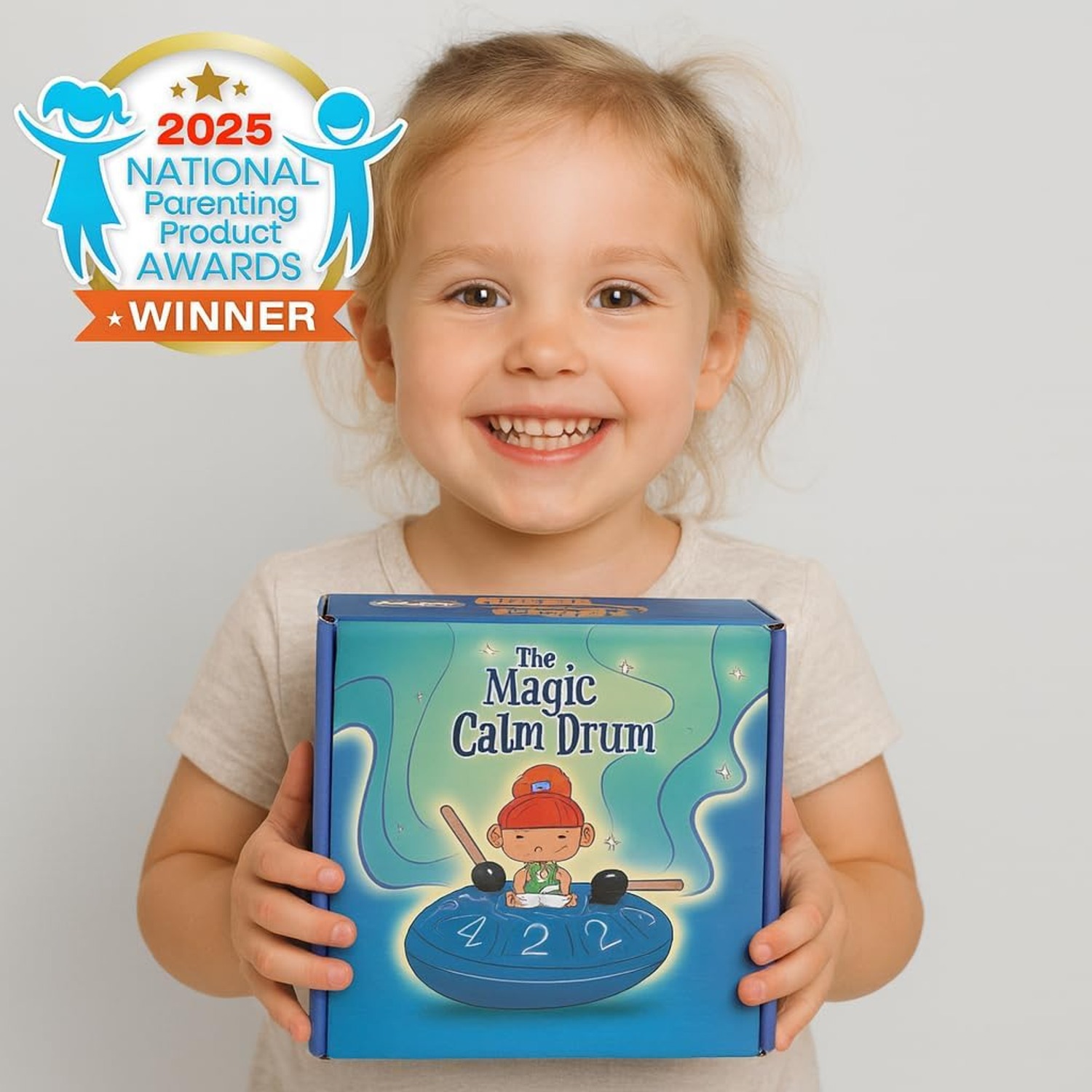
What is in the box. This is where sets differ a lot. Here you get the drum, two mallets, a padded shoulder bag, a songbook matched to the eight notes, a storybook and a gift box. Two mallets rather than one means two children can play together, and the matched songbook means nobody has to work out which tongue is which note.
Weight and portability. Shipping weight here is 0.16 kg. That is light enough to live in a school bag without anyone noticing it is there, which is relevant if you want something that actually gets used away from the house.
A couple of things we cannot tell you from the maker's details: the musical key is not stated, and neither is the country of origin or a manufacturer age rating. We would rather say that plainly than invent a figure.
Looking after it
Care is straightforward because there is very little to go wrong.
Wipe the surface down with a dry or lightly damp soft cloth after playing, especially if hands were sticky, then dry it. Avoid solvents, scouring pads and anything abrasive. Do not soak it, and keep it out of damp rooms.
Play it with the supplied mallets or with your fingertips. Nothing else. Pens, spoons and sticks can dent the steel, and a dent is the one kind of damage that affects the sound.
Use the padded shoulder bag for storage, not just travel. It keeps dust off the face and stops the mallets from rattling against the metal. Store it somewhere dry and away from direct sun or a hot car dashboard.
Put it on a cushion, a lap or a cloth rather than directly on a polished table, since metal can mark wood over time. Keep the two books flat and dry so they survive longer than the first month.
Getting the most out of it
A few habits help it stick. Leave it out where it can be seen, because instruments in cases get played far less than instruments on a shelf. Start with the songbook if your child likes structure, or let them wander around the notes freely if they do not. Try fingertips as well as mallets, since the tone is noticeably softer and works better near bedtime.
If you are using it as a settling tool, pairing it with the storybook at the same time each evening tends to work better than pulling it out only in a crisis. It becomes part of a routine rather than a reaction.
The short version
This is a small, light, 6 inch alloy steel tongue drum with eight notes laid out low to high, so beginners sound good immediately. It is quiet, it travels well at 0.16 kg, and it arrives as a complete set with two mallets, a padded bag, a songbook, a storybook and a gift box.
It suits children who have not found their instrument yet, children who need a calm thing to do with their hands, and adults who want eight notes and no decisions. It is not the right choice for an advancing music student who needs full range.
If you want a first instrument that a child can pick up and enjoy on day one, with nothing extra to buy, this one earns its place.