
The complete guide
The Parent's Guide To Choosing A Kids Tool Set
Why children want tools in the first place
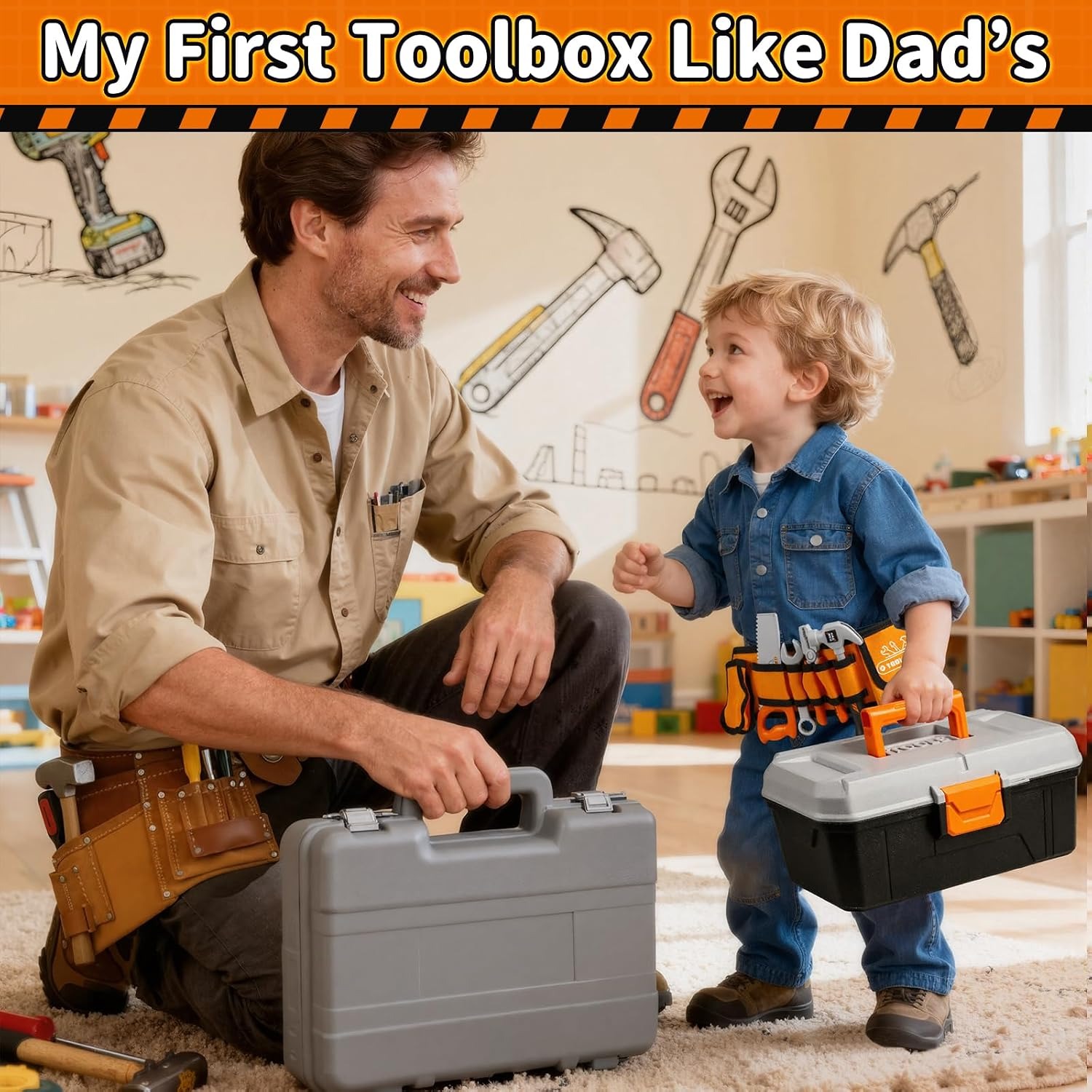
There is a stage, usually right around the third birthday, where a child stops watching what adults do and starts wanting to do it. Not a pretend version of it. The actual thing. If someone in the house has ever put up a shelf or tightened a chair leg, the drill has been noticed and quietly filed away as the most interesting object in the building.
The problem is obvious. Real tools are heavy, sharp and not something you hand to a preschooler. So the compromise most families land on is a toy set, and the quality of that compromise matters more than people expect. A bad tool set is six pieces of flimsy plastic that do nothing, get ignored by Thursday and end up in the bottom of a toy box. A good one gives a child something to actually do with their hands, and that keeps it in rotation for a couple of years.
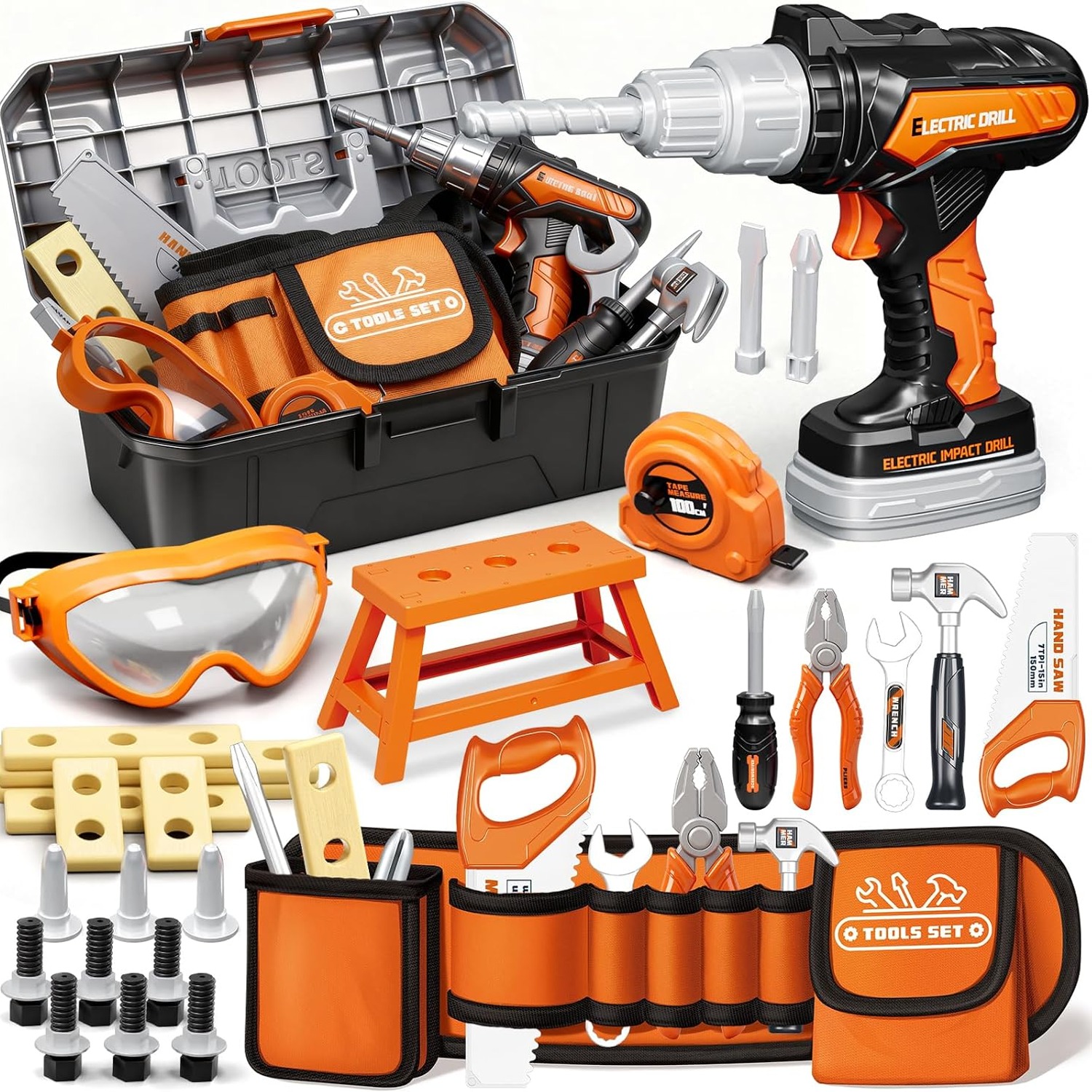
This 50-piece set sits in the second group, mostly because of three things. The drill makes a noise and spins in both directions. The belt is wearable, so the tools go where the child goes. And there are parts that genuinely join together, which means there is a point to picking the tools up.
How the set actually works
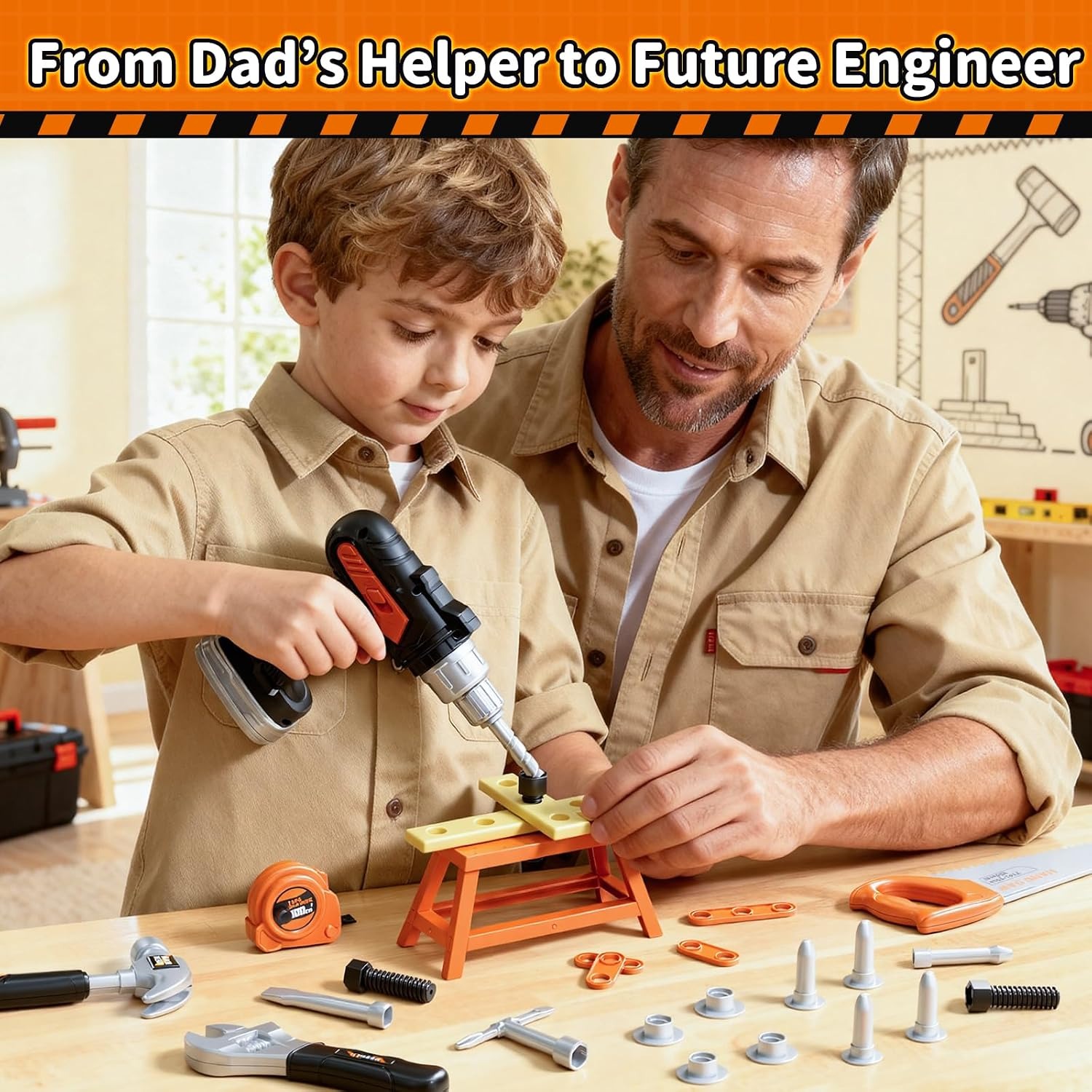
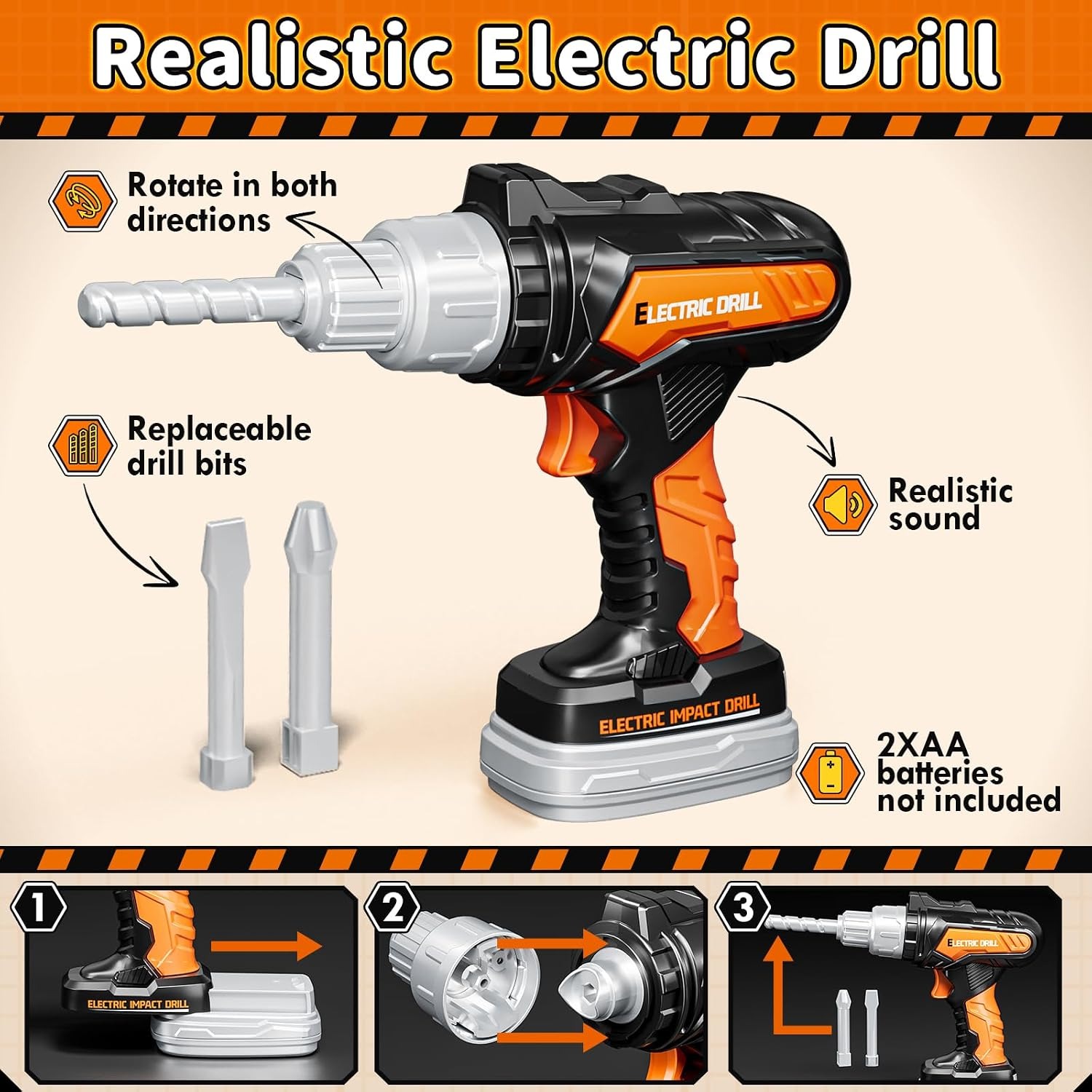
Start with the drill, because that is what every child reaches for first. It spins, it makes a working sound and the direction of rotation reverses, which is the detail that makes it feel like the thing dad or mum uses rather than a rattle shaped like a drill. It takes three interchangeable bits and has a removable base. Batteries are not included, which is worth knowing before a birthday morning.
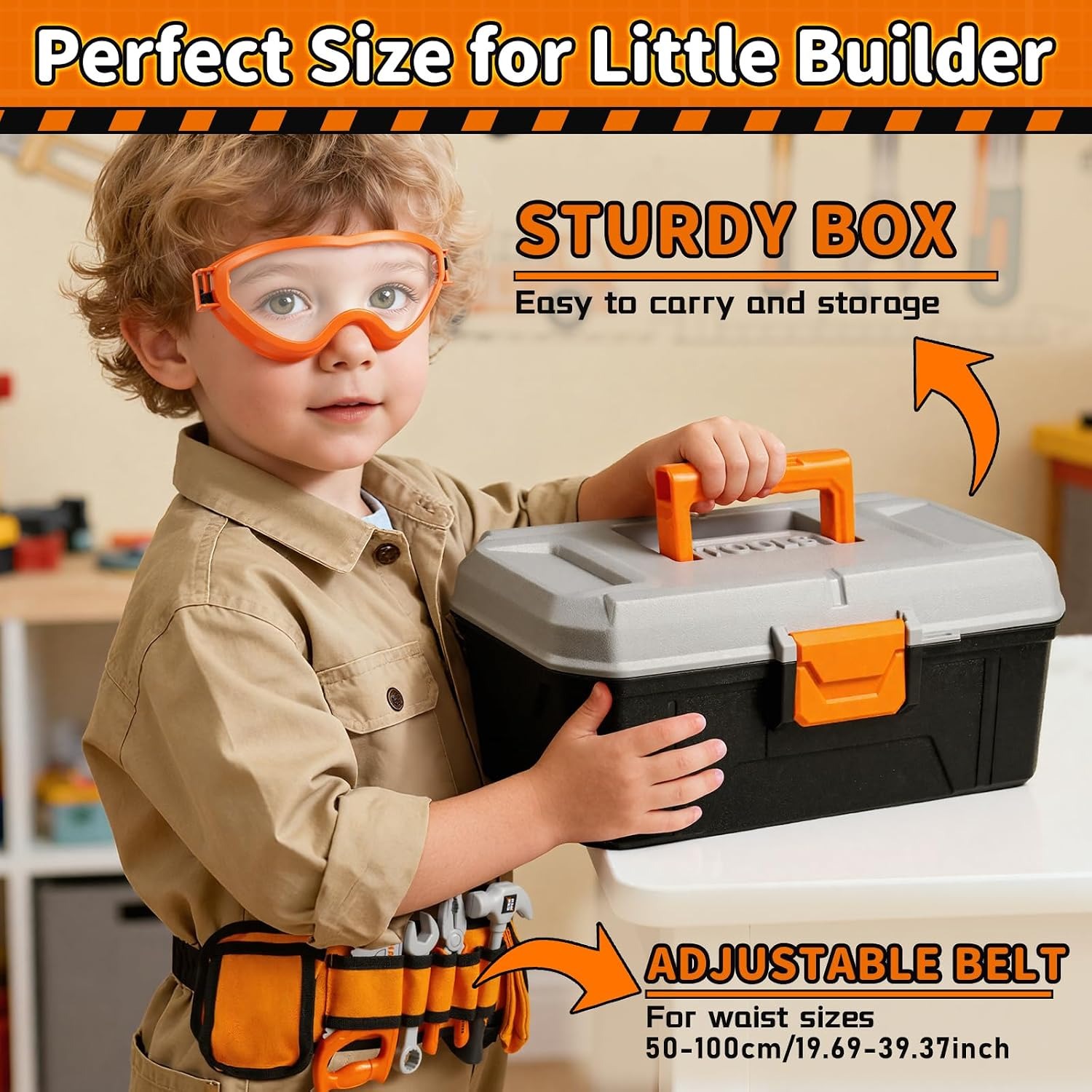
Next comes the belt. It is elastic, so it stretches across a wide range of waist sizes and will still fit a child who has grown a fair bit since you bought it. There are two larger pockets and several slip slots. This sounds minor and is not. A child wearing a tool belt behaves differently from a child with tools in a pile. They patrol. They go and check on things. They come and fix your chair while you are sitting in it.
Then there are the hand tools. A hammer, a wrench, pliers, a hand saw, a tape measure, safety glasses and a screwdriver with two removable attachments. These are the pieces that teach vocabulary. Within a few weeks most children can name all of them and tell you roughly what each one is supposed to do, which is more than some adults manage.
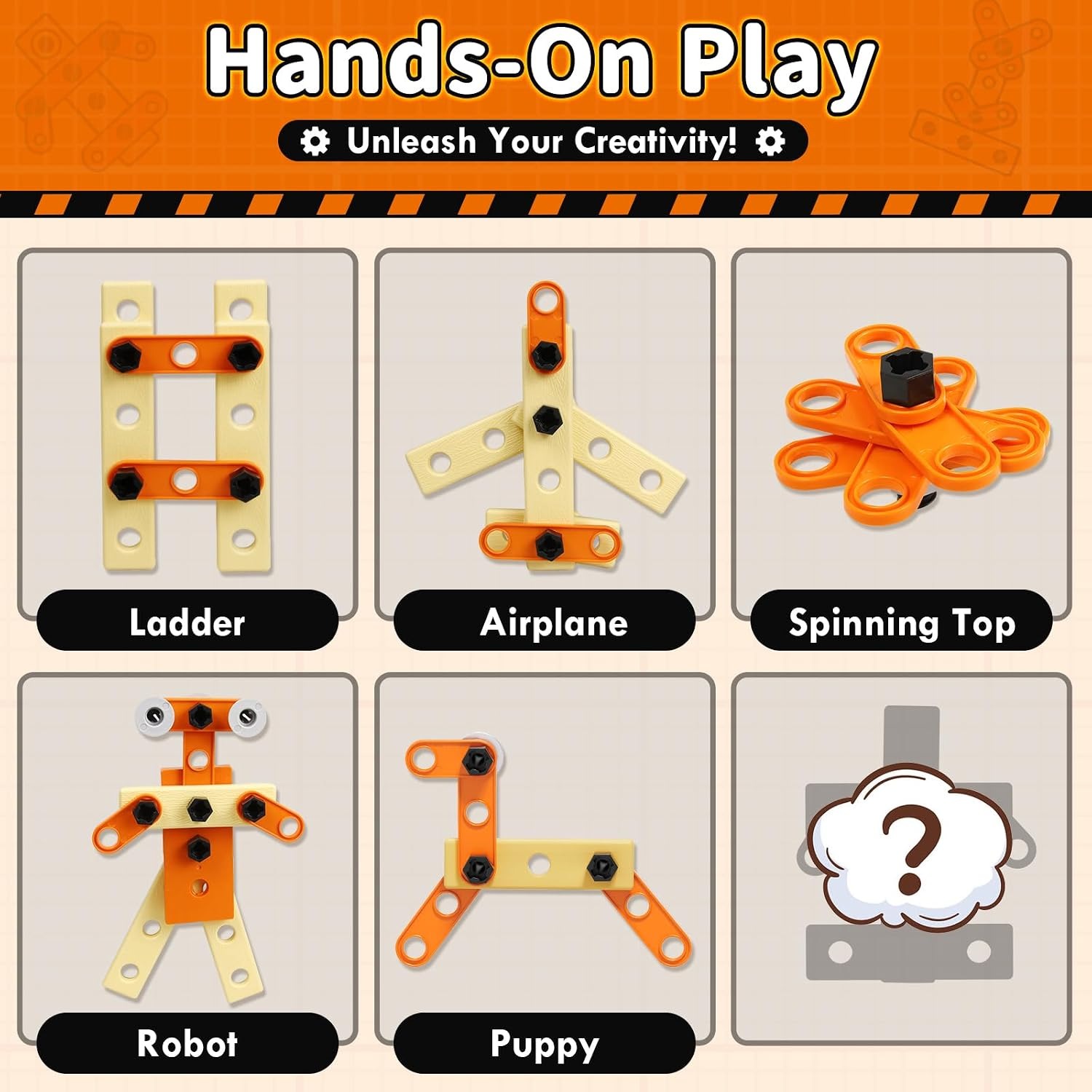
Finally the building parts. Six screws, six nuts, three nails, six plain plastic strips and six strips with pre-drilled holes. Plus a small chair that comes apart and goes back together. That last piece is the quiet hero of the set, because it gives a beginner a project with a clear finish line. Take the chair apart, put it back together, stand it on the floor and see if it holds. A child who manages that once will do it fifty more times.
Everything packs into a plastic tool box measuring 30 x 15 x 12 cm with a carry handle. The whole lot weighs 0.9 kg.
Who this suits
The recommended age is 3 and up. That is a fair call. A two-year-old will enjoy the drill noise and will chew on the nuts, neither of which is what you want. From three, children have enough grip strength and enough patience to line a screw up with a hole, and that is the skill the whole set is built around.
The upper end is less fixed. Plenty of five and six-year-olds still use a set like this, often in more complicated ways, building structures that were not in anyone's instructions. By seven most children have usually moved on to construction kits with more pieces and more rules.
It suits children who like to be busy with their hands. It suits children who shadow adults around the house. It also suits families who want a toy that works on a wet afternoon without a screen, because it spreads out across a floor and occupies a child for a decent stretch.
It is less suited to a household with a baby crawling about, at least without supervision. The screws and nuts are small by design, and they need to go back in the box when play finishes.
What to look for when you compare sets
A few things separate the good sets from the ones that disappoint.
Piece count is not the whole story, but it does matter. A set with a dozen pieces runs out of ideas quickly. Fifty gives a child enough to take something apart fully and put it back together without running short of screws.
Storage is the thing people forget. A toy that arrives on a card with no box ends up scattered within a week and then half lost. A carry-handle box changes the pattern, because a child can be asked to pack up and will usually do it if the destination is obvious and reachable.
Check whether the tools actually interact with the building parts. Plenty of sets include a screwdriver and no screws, or screws sized for an adult hand. Here the strips have pre-drilled holes and the screws and nuts match them, which is the whole reason the set holds a child's attention.
Look at the edges and the grips. These pieces are moulded plastic with rounded edges and no sharp points, sized for small hands. That is what makes independent play possible, because you are not hovering over every swing of the hammer.
And think about noise honestly. The drill sound is a feature for the child. If you work from home, you may want to know that pulling the batteries turns it into a quiet spinning drill without ruining the toy.
Making it last
Plastic toys survive longer than people expect if you treat them reasonably. Wipe the parts down with a damp cloth and a bit of mild soap, then dry them before putting them away. Skip the dishwasher entirely, because heat warps moulded plastic and will destroy the drill mechanism.
Take the batteries out if the set is going into storage for a few months. Leaking batteries have ruined more toys than rough play ever has.
Outdoor use is fine on a dry day. Just bring it in afterwards. Long periods in direct sun will make plastic brittle, and a hammer that has sat on a sunny balcony for months is more likely to crack.
Every so often, tip the box out and count the screws and nuts. Losing a couple is normal. Losing most of them is what makes a set stop being used, so a quick sweep under the sofa once a month keeps the kit complete.
Getting more out of it
The set gets a lot more interesting when an adult joins in occasionally. Not all the time, but now and then. Build the chair together and name each tool as it gets used. Ask your child to measure the coffee table with the tape and tell you the number, whatever number they come up with.
Give them jobs. A wobbly toy shelf that needs fixing, a cardboard box that needs a door, a teddy bear whose chair has broken. Children build far more when there is a reason to build, and inventing reasons costs you nothing.
Rotate it. If interest dips, put the box away for three weeks and bring it back out. It comes back fresh almost every time.
The short version
Fifty pieces, a drill that spins both ways and makes a noise, a stretchy belt with pockets, hand tools sized for a small grip and enough screws, nuts and strips to build something real. It packs into a 30 x 15 x 12 cm box with a handle and weighs 0.9 kg.
Recommended from age 3. Plastic throughout with rounded edges. Batteries for the drill are not included, so buy a pack before you wrap it.
If you have a child who keeps eyeing up the real toolbox, this is the sensible answer. It gives them something of their own, it teaches tool names and simple problem solving without feeling like a lesson, and it packs away in one go when the job is done.