
The complete guide
The Honest Buyer's Guide to Wooden Building Blocks
The toy problem nobody talks about
Walk past most children's toy boxes and you will find the same sad layering. A few broken plastic things at the bottom, a game with missing pieces in the middle, and one or two favourites on top. The reason is rarely that the toys were cheap. It is that most toys only do one thing, and once a child has done that thing twenty times, there is nothing left to discover.
Blocks are the exception, and they have been the exception for a very long time. A hundred plain wooden planks have no instructions, no correct answer and no end state. A child can use them badly, brilliantly, or in a way nobody has thought of, and all three are fine. That is why block sets tend to survive clear-outs that wipe out half the toy shelf.
What this set actually is
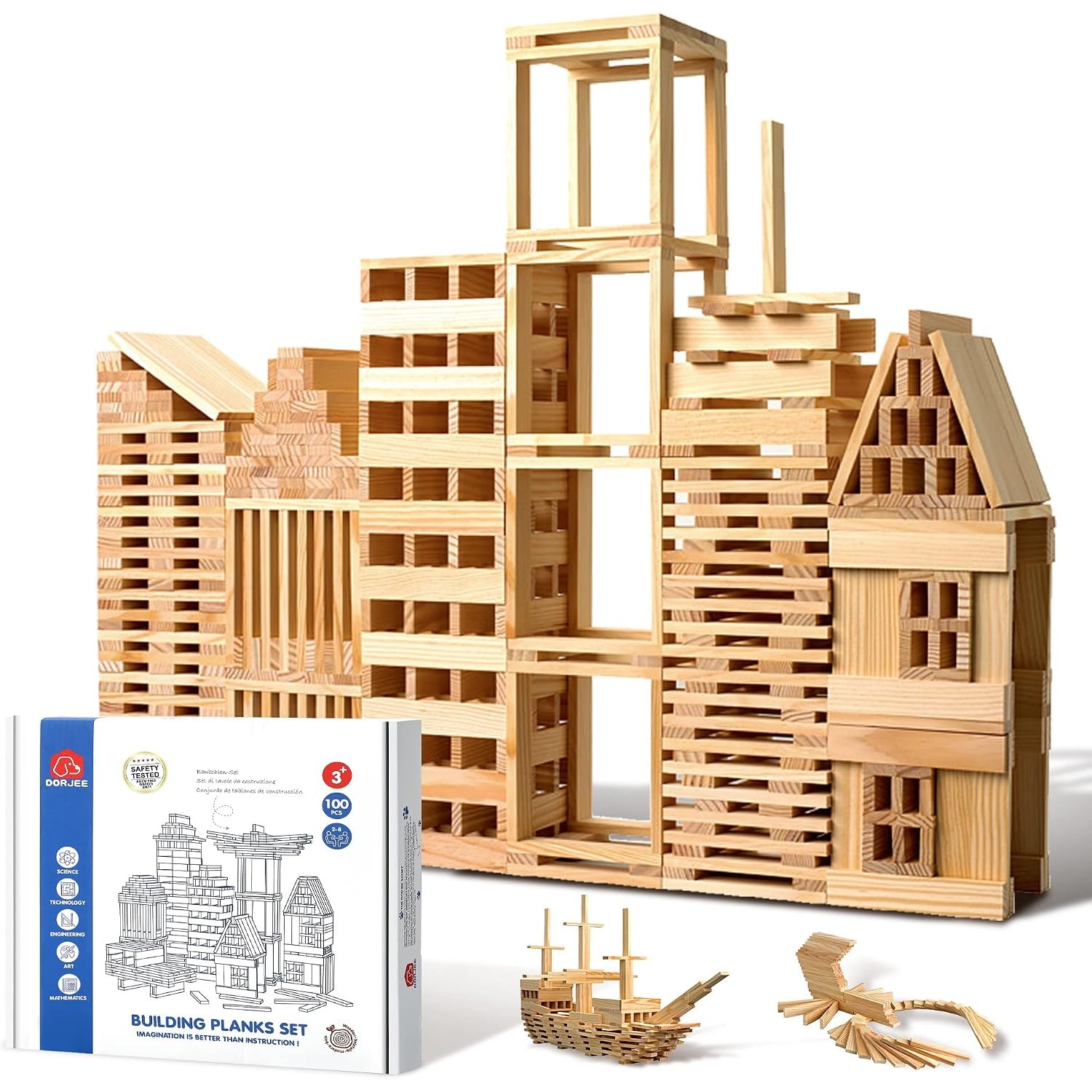
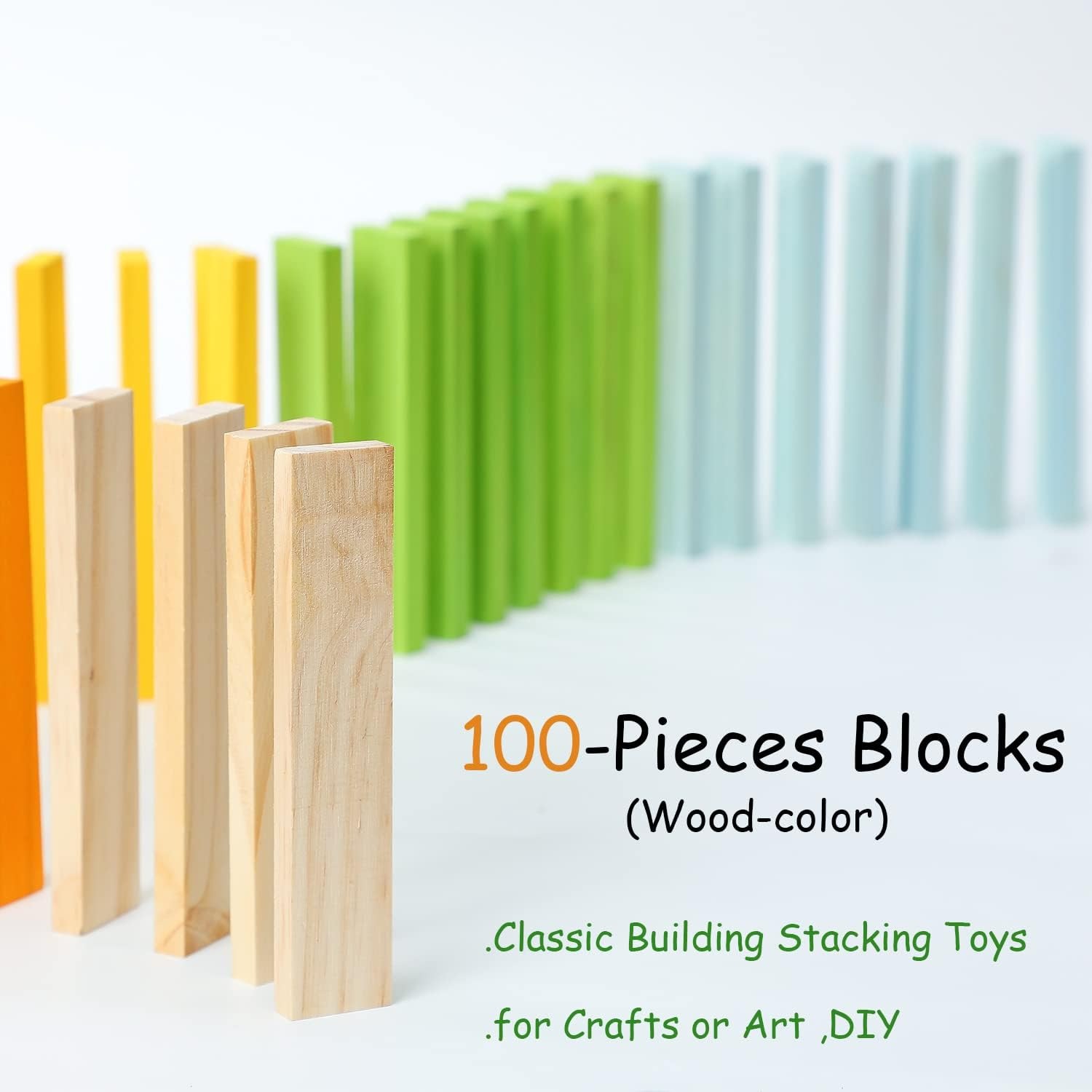
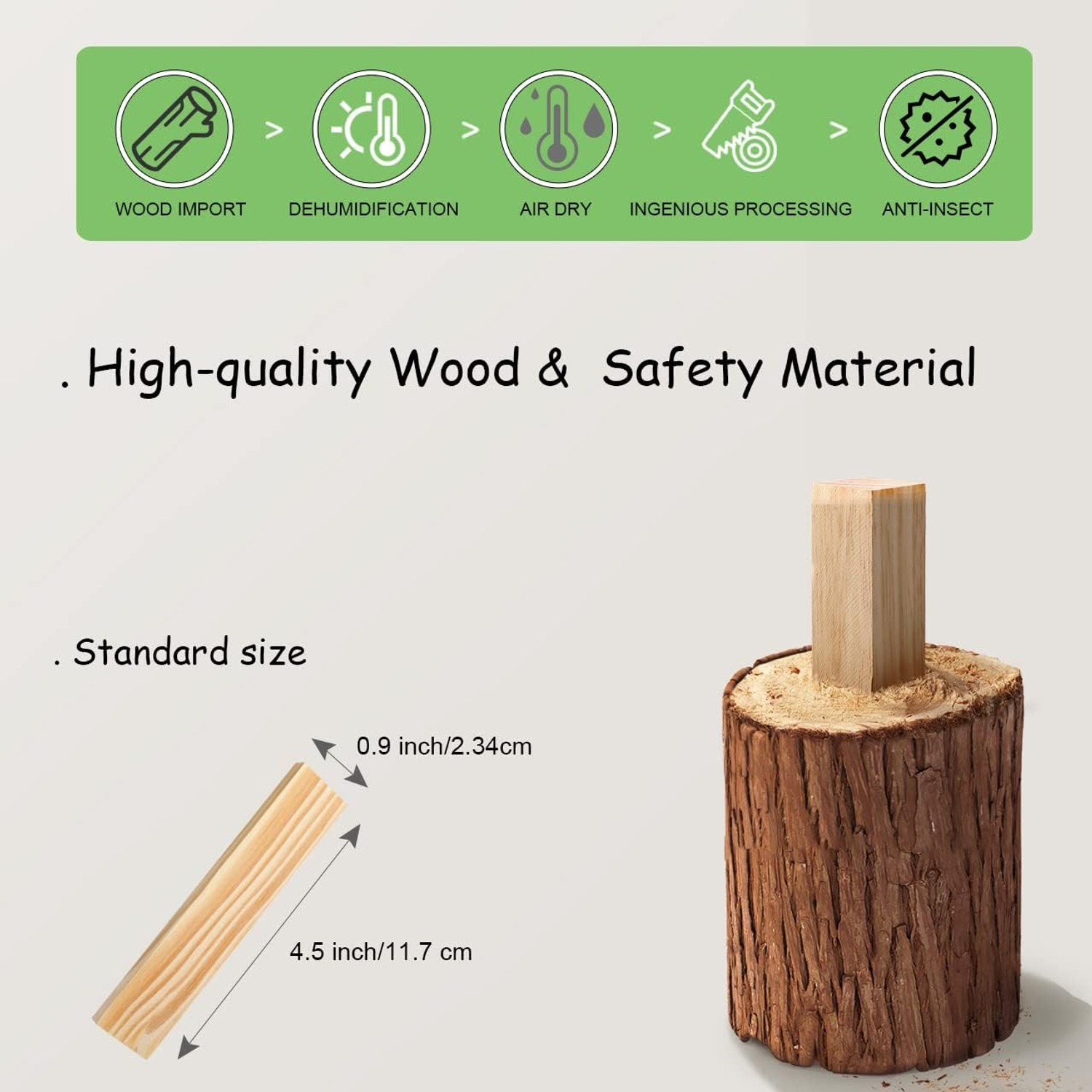
This is a 100 piece set of natural wooden blocks from ICEKO KN, part number DT26025, listed with an architecture theme and a recommended age of 3 years and up. The target audience is given as children aged roughly 3 to 8, unisex. The blocks are plain wood in a natural log colour, described as non toxic, with no paint or printed pictures. Nothing needs assembling and nothing needs batteries.
That box is not just transport. It becomes the storage bin, which is worth more than it sounds at eight o'clock on a school night.
Individual block dimensions, product weight and country of origin are not specified in the maker's details, so we have not listed them. We would rather leave a field blank than guess at a number you might rely on.
Why uniform planks work so well
The quiet genius of a plank-style block set is that every piece is the same. That sounds limiting. It is the opposite.
When blocks match, a child can trust them. Two laid side by side will always equal the same width. A tower built carefully will go straight up rather than drifting sideways for mysterious reasons. The child stops fighting the materials and starts thinking about the structure, and that is the moment real learning happens.
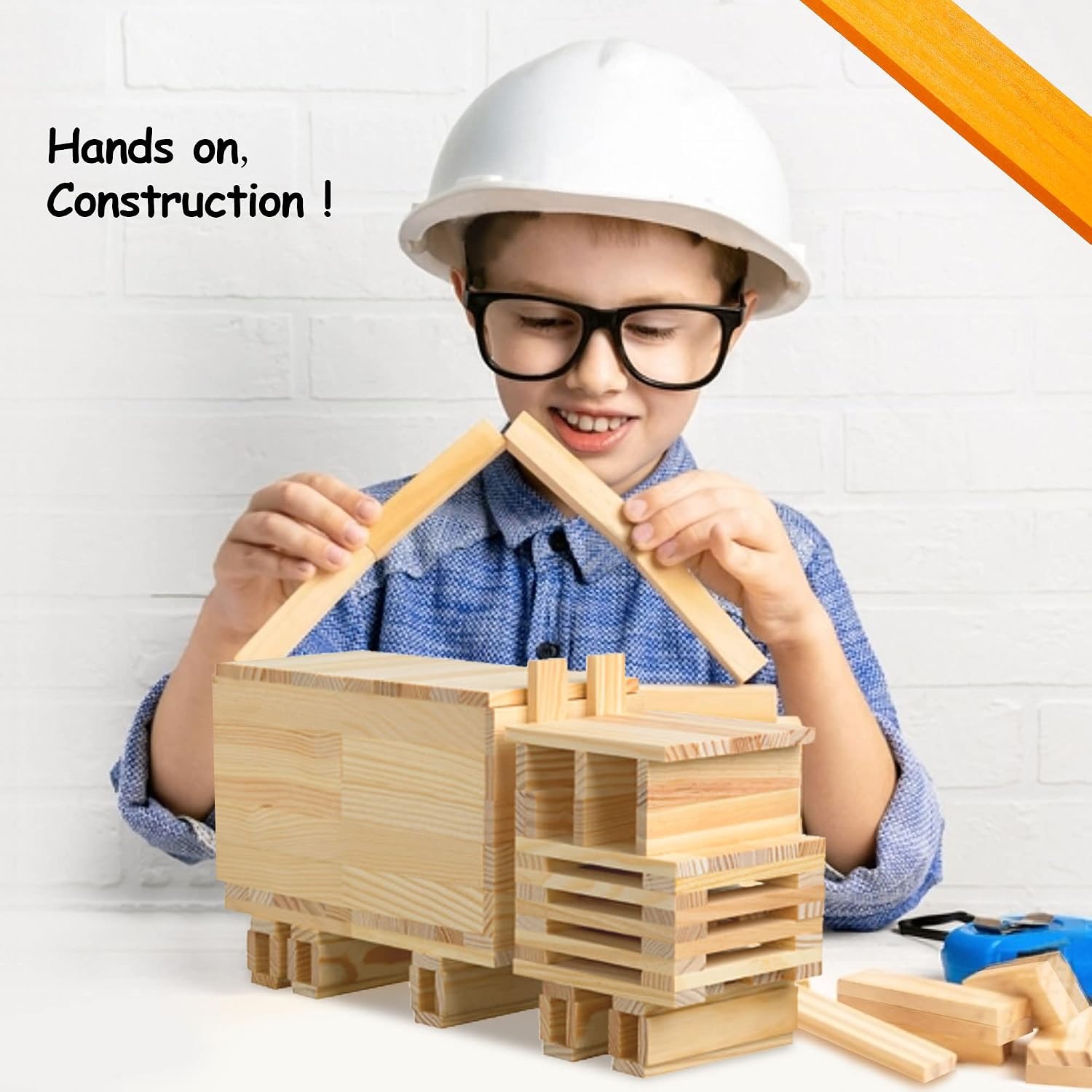
Uniform pieces also teach maths without anybody mentioning maths. Children work out that three short spans equal one long one, that a wide base takes more height, that a gap needs something across the top to hold the next layer. These are the same ideas a bridge engineer works with, just at carpet scale.
The case for plain, unpainted wood
Painted blocks look lovely in photos. Plain ones tend to play better, for two reasons.
The first is grip. A sanded natural surface has a very slight roughness to it, so stacked pieces stay where they are put. Glossy painted or varnished surfaces slip, and a tower that slides apart for no visible reason is a fast route to a frustrated child.
The second is imagination. A block with a letter or a picture on it is already something. A blank block is whatever the child says it is. This morning it is a loaf of bread for the toy shop, this afternoon it is a runway. Parents searching for the best unpainted wooden blocks are usually chasing exactly this, the freedom that comes from a toy that refuses to tell the child what it is.
Who this suits, and who it does not
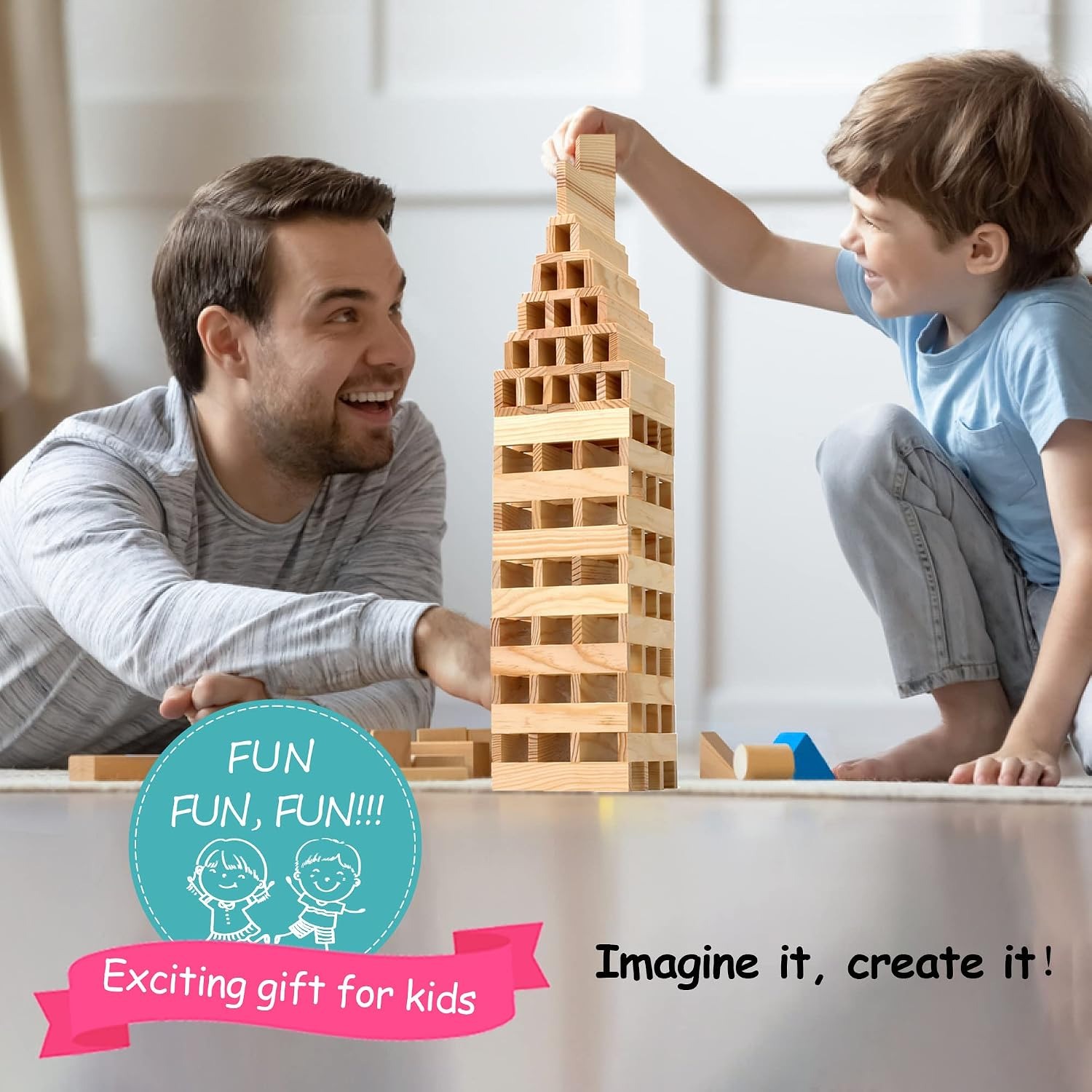
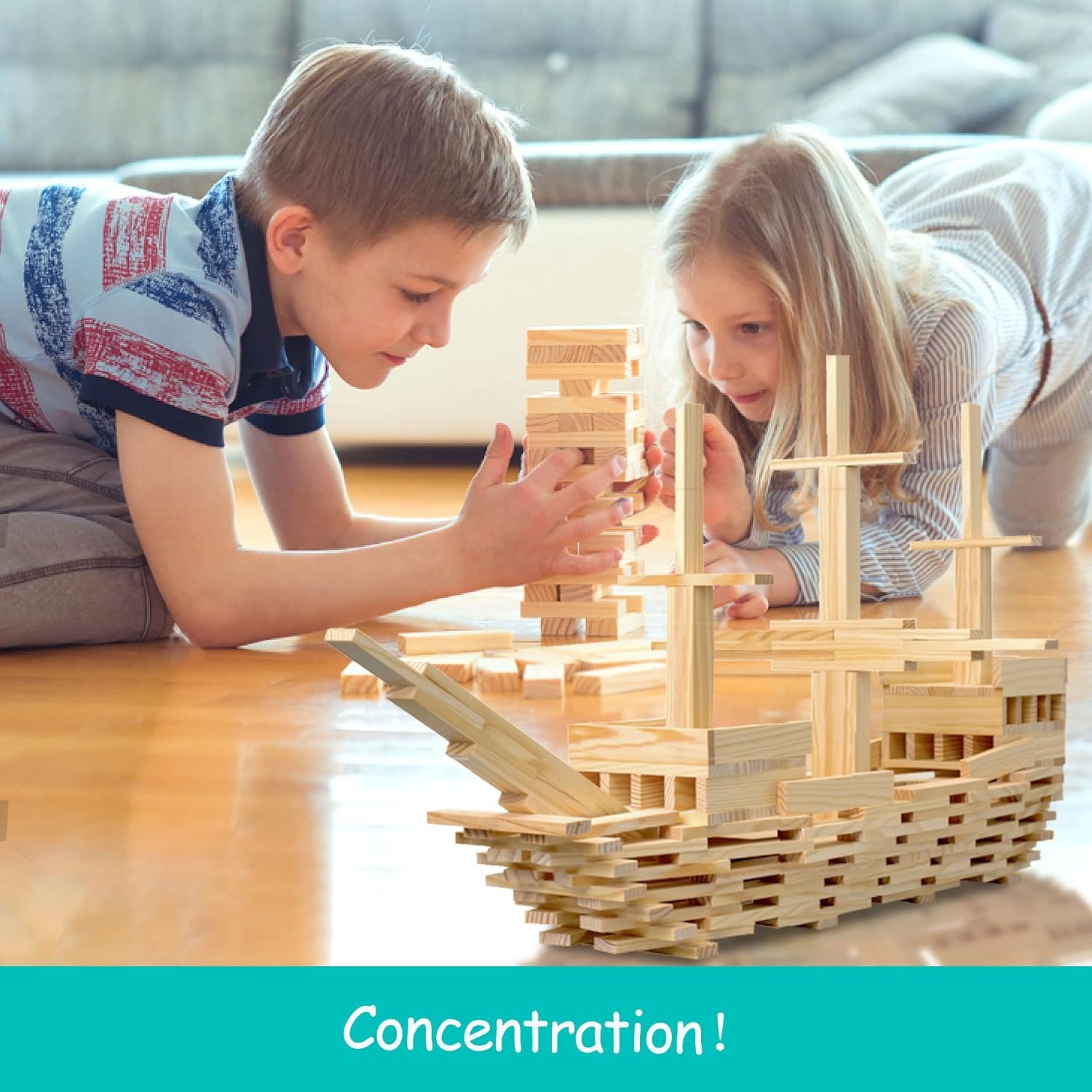
It suits a three year old who has outgrown simple shape sorters and wants to build upward. It suits a five or six year old who is starting to plan before they build. It suits an eight year old who wants to attempt an arch, a cantilever or a domino run that goes right across the hallway. One set, three very different kinds of play.
It also suits households with more than one child, because a hundred pieces is enough for two or three builders at once. That shared building is where the team building side of the stated educational objective shows up in real life, in negotiating who gets the long wall and who builds the roof.
It does not suit babies or children under three, since the listed minimum age is 36 months. It is not a teething toy and should not be treated as one. It is also not an interlocking system, so if your child specifically wants pieces that clip together and stay clipped, this is not that toy.
How to choose a block set
A few things actually matter when comparing sets, and a few things do not.
Piece count matters more than people expect. Thirty blocks is a tower. A hundred is a town. If a child runs out of pieces halfway through an idea, the idea dies, and they learn that building is frustrating. A larger count is also what makes domino runs and long bridges possible.
Consistency matters. Mixed-shape sets look generous in the photo but often build worse, because the odd shapes get used once and then sit unused. Matching planks get used constantly.
Finish matters. Look for sanded wood without paint if you want grip and flexibility. Look for a clear safety age rating, and follow it.
Storage matters more than any catalogue admits. A set with its own box gets put away. A set in a loose bag ends up under furniture, gets stepped on, and slowly loses pieces until it is not a set any more.
What matters less is theme branding, printed characters and clever marketing names. A block is a block. The best wooden building blocks are usually the plainest ones.
Getting the most out of them
Build on a hard flat floor rather than thick carpet. Deep pile soaks up the base of the tower and makes everything wobble, which reads to a child as failure when it is really just the rug.
Give the play a prompt now and then if interest dips. Build the tallest tower that survives a gentle table tap. Build a bridge wide enough for a toy car. Build something symmetrical, then knock it down on purpose, which is half the appeal anyway.
Mix the blocks with what you already own. Toy animals, cars, small figures and train track all work well alongside plain planks, because blocks make the world those toys live in. This is where the best open-ended toys quietly multiply the value of the rest of the toy box.
Looking after them
Wood is easy to keep well and easy to ruin. The whole of the care routine is this. Wipe with a barely damp cloth, dry straight away, store in the box somewhere dry. No soaking, no dishwasher, no leaving the set outdoors overnight.
If a block ever feels rough along an edge, a quick pass with fine sandpaper fixes it and you wipe the dust off. Being able to repair a toy at home is a small thing, but it is one reason plain wooden sets often get handed down to a younger sibling or a cousin in decent shape.
Keep the set away from heat and direct sunlight. Heat and damp are what warp wood, not normal play.
As a gift
Blocks make an unusually safe gift because they do not depend on knowing the child's current obsession. They suit a wide age band, they work for boys and girls, they need no batteries, and they will not clash with whatever the parents already own. The set arrives in its own box, so wrapping takes about a minute.
If you are buying for a birthday or a new-house-full-of-cousins situation, a hundred pieces is also a practical quantity. There is enough to go round.
The short version
A hundred matching plain wooden planks, rated for ages 3 and up, boxed for storage, with no paint, no batteries and no instructions. They teach balance and basic engineering without a single worksheet, they suit a wide age range, and they mix with almost every other toy in the house.
If you want one toy that is still getting played with in three years, a good wooden block set is a sensible bet. If you have a question about age suitability or delivery, just ask us before you order.