
The complete guide
Choosing a Play Food Set That Actually Gets Played With
The problem with most toy food
Walk into a lot of homes with a play kitchen and you will find the same scene. A nice wooden kitchen, a frying pan, and five pieces of fake food rattling around in a drawer. The child plays with it for a week, then stops. The kitchen becomes a shelf for books.
The reason is usually not the kitchen. It is the food. Five pieces give a child exactly one meal to make, and once they have made it they are done. Pretend play runs on variety, because the whole point is inventing something new each time. A child who has a tomato, an egg and a slice of bread can cook breakfast. A child who has fruit, vegetables, seafood, pizza, hot dogs, desserts and tins can run a restaurant, open a shop, pack a picnic and host a birthday party for a stuffed rabbit.
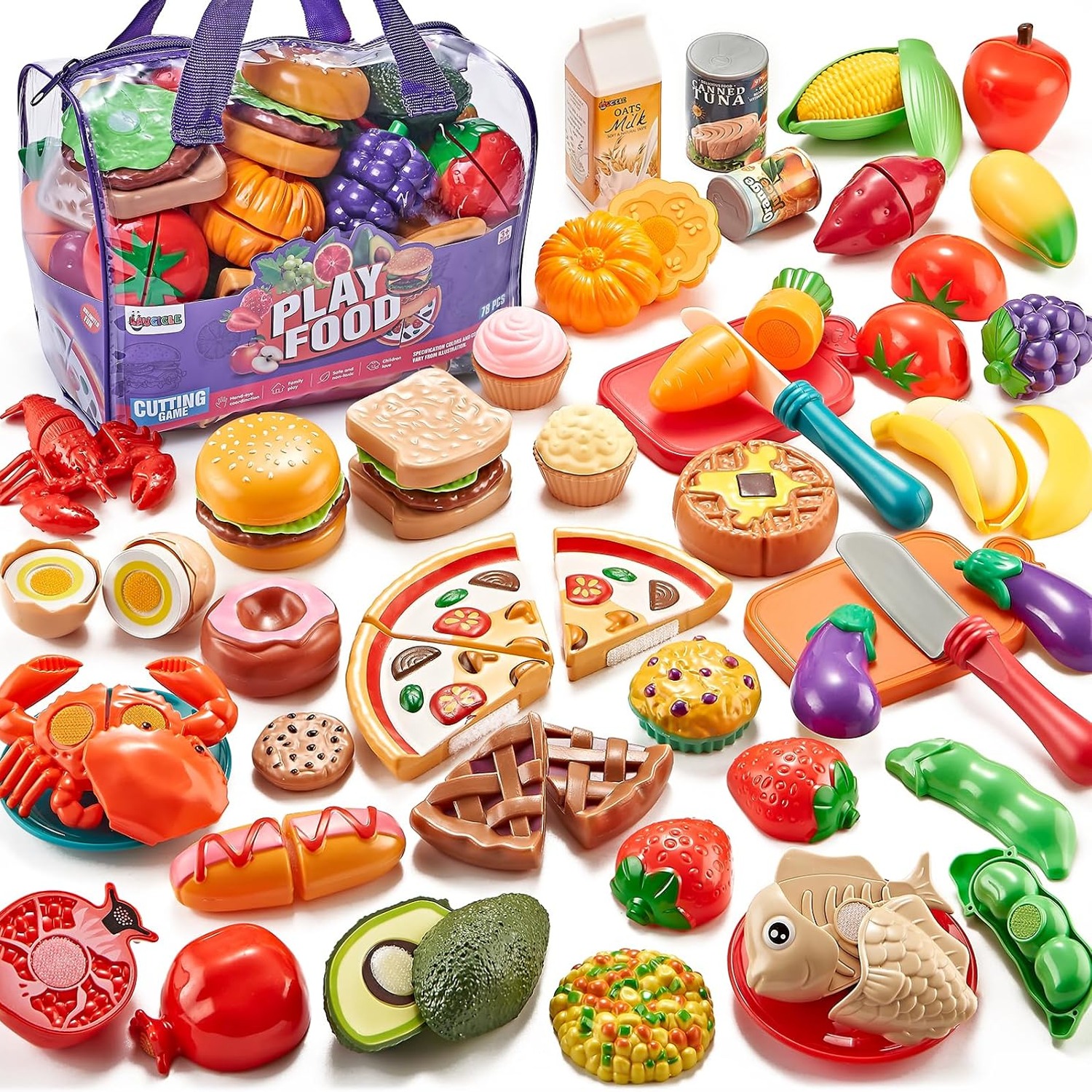
That is the thinking behind a 78 piece set. It is not about having more plastic in the house. It is about crossing the threshold where a child stops repeating one game and starts making up their own.
How a cutting food set works
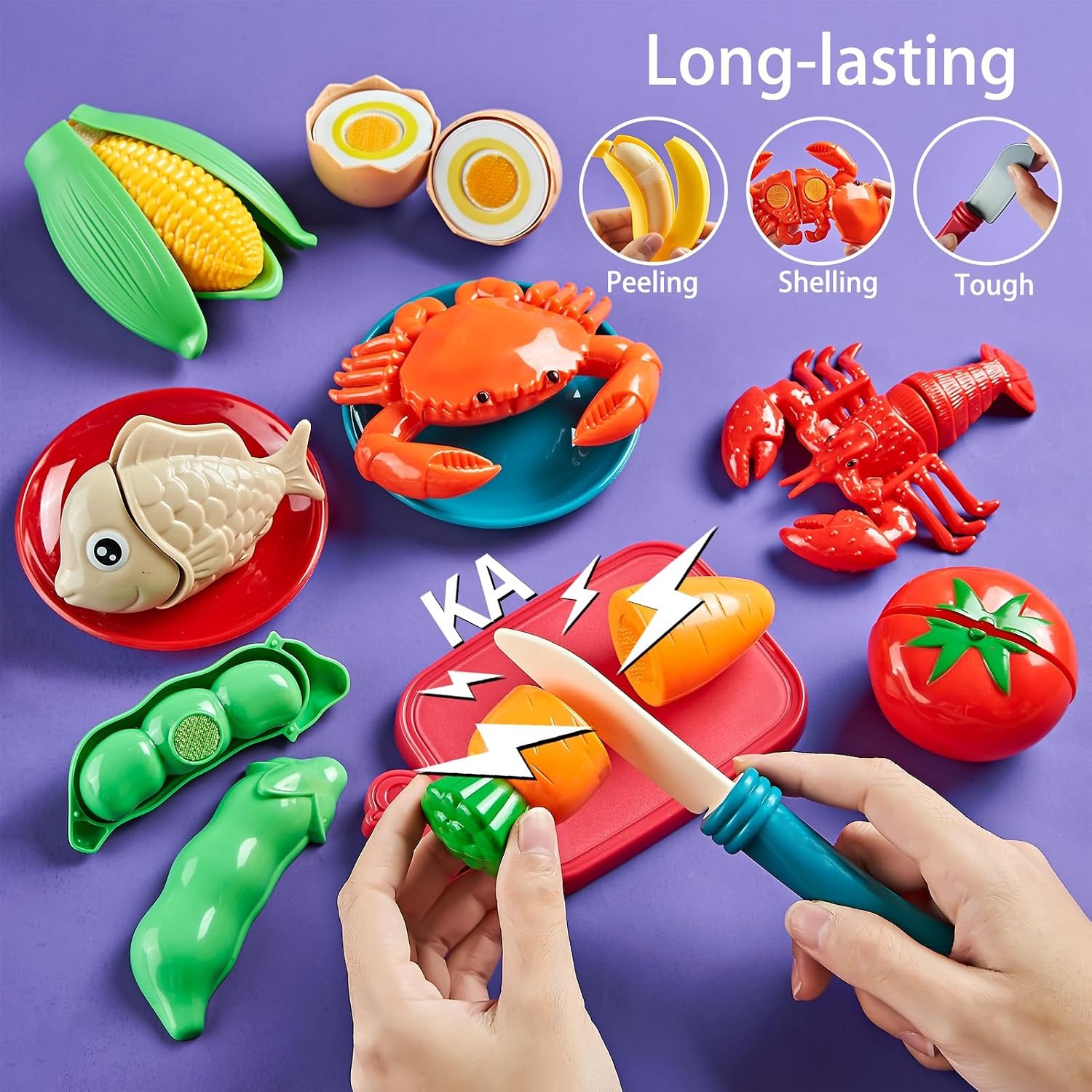
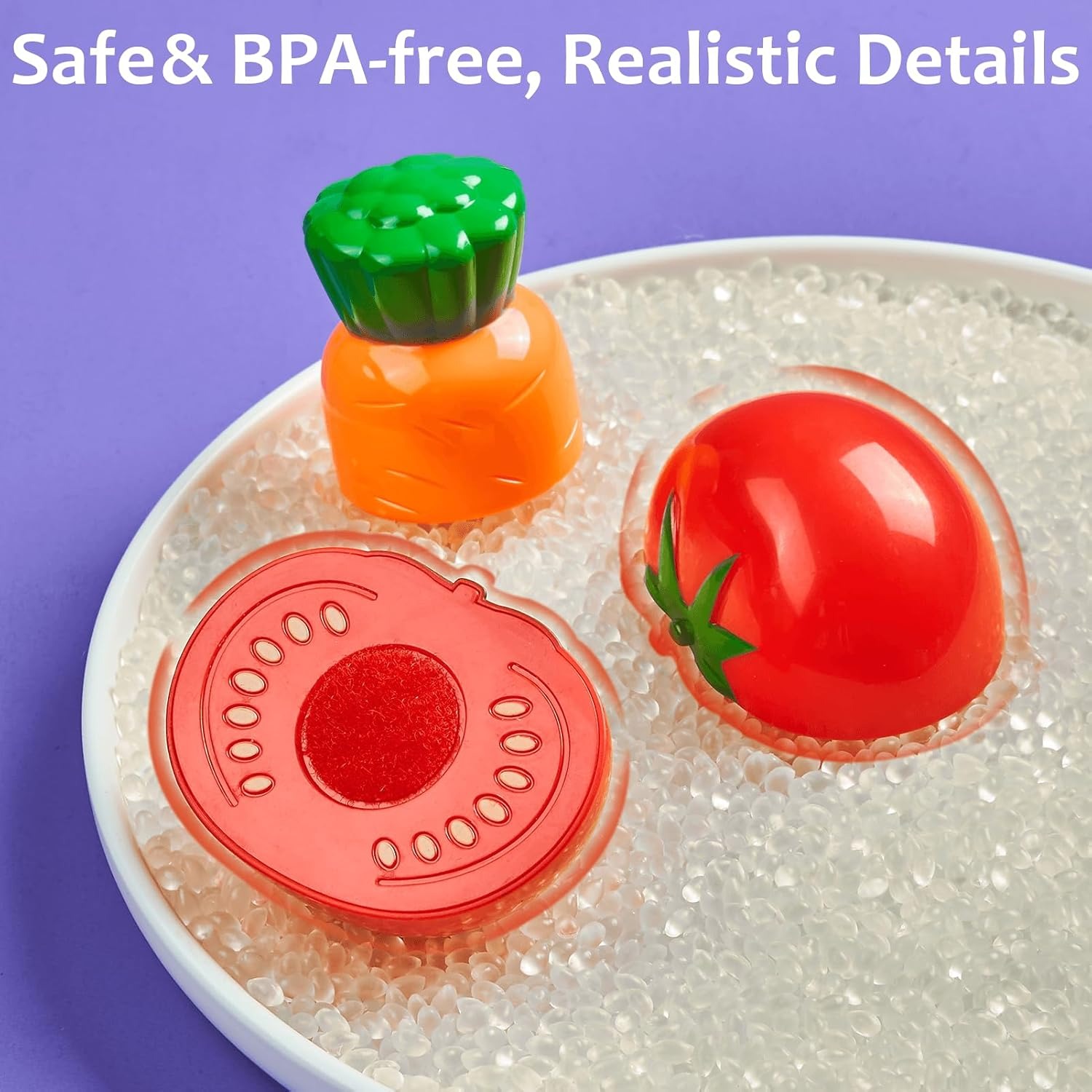
The food in this set uses hook and loop joins. Two halves of a tomato are stuck together with the same kind of fastener you find on shoes. A child slides a toy knife into the seam, pushes, and the halves come apart with a satisfying rip. Press them back and the tomato is whole again.
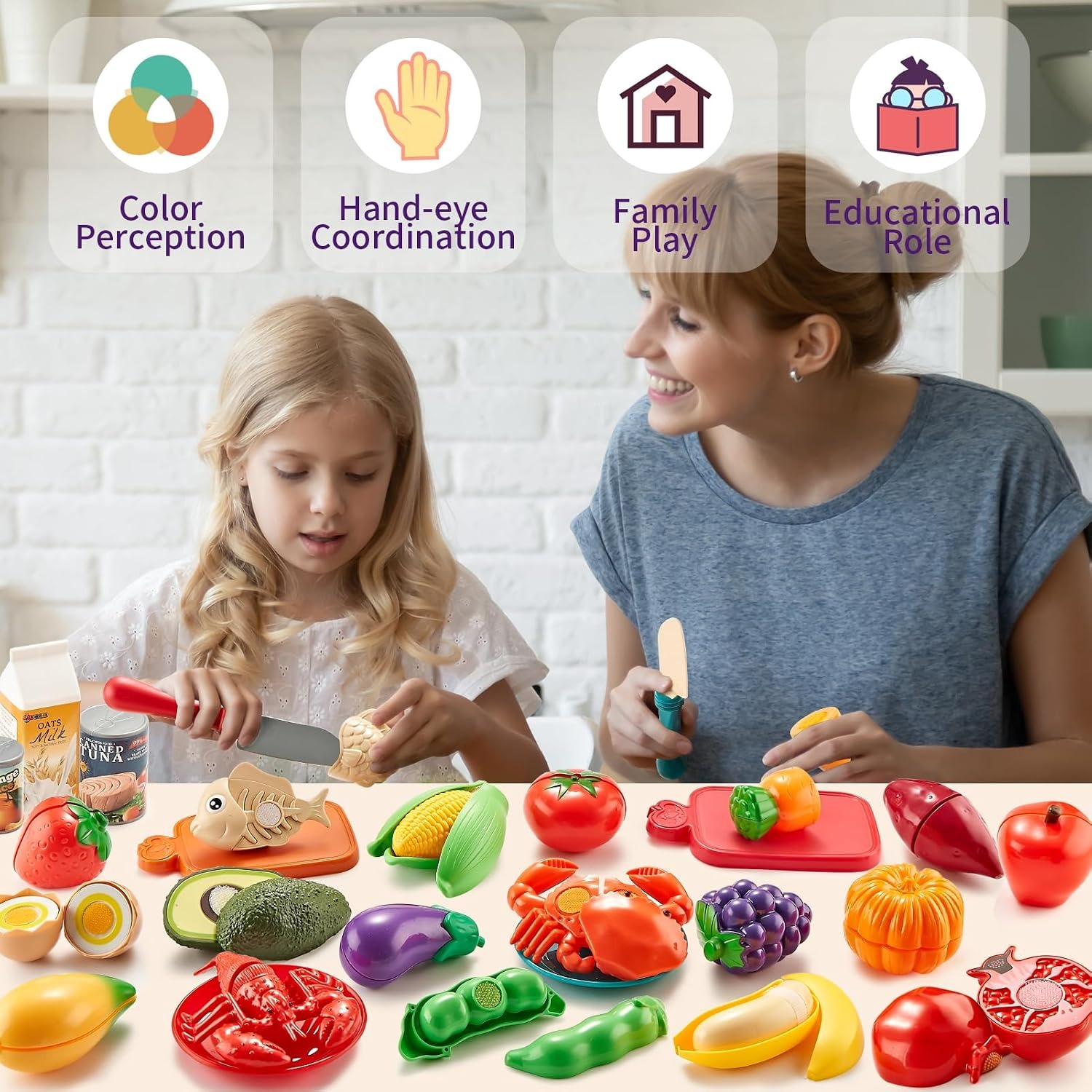
That sounds simple, and it is, but the action does a lot. It needs one hand to hold the food steady while the other works the knife, which is two hands doing different jobs at the same time. It needs enough grip strength to resist the pull. It needs the eyes to aim the knife at a seam that is only a few millimetres wide. All of that is fine motor development, and your child thinks they are just making lunch.
There is a second thing happening too. Cutting is a job children watch adults do constantly and are almost never allowed to try. Handing them a toy version of it is a small moment of status. A lot of the enthusiasm around the best cutting toy food comes from that feeling of being trusted with a grown-up task.
Who this suits
The recommended age is 36 months to 8 years, and in practice the set gets used differently across that span.
Three year olds focus on the cutting itself. The game is often just chop, rejoin, chop again, maybe twenty times in a row. That is not boring to them, it is practice, and it is worth letting it run. They will also need a hand with the stiffer joins at first.
Four and five year olds start to tell stories. The food becomes a meal, the meal has a customer, and the customer has opinions. This is where the pots and pans earn their place, because the play loop stretches to include cooking and serving rather than just slicing.
Six to eight year olds usually build systems. Menus, prices, shops with opening hours, a cafe with two staff. The food is a prop in a bigger game, and they want enough of it to fill a shop shelf. A smaller set falls apart at this stage, which is where piece count pays off.
It also works well for mixed-age households. A three year old and a seven year old can play the same game at different levels, which is harder to arrange than most parents would like.
What to look at when you compare sets
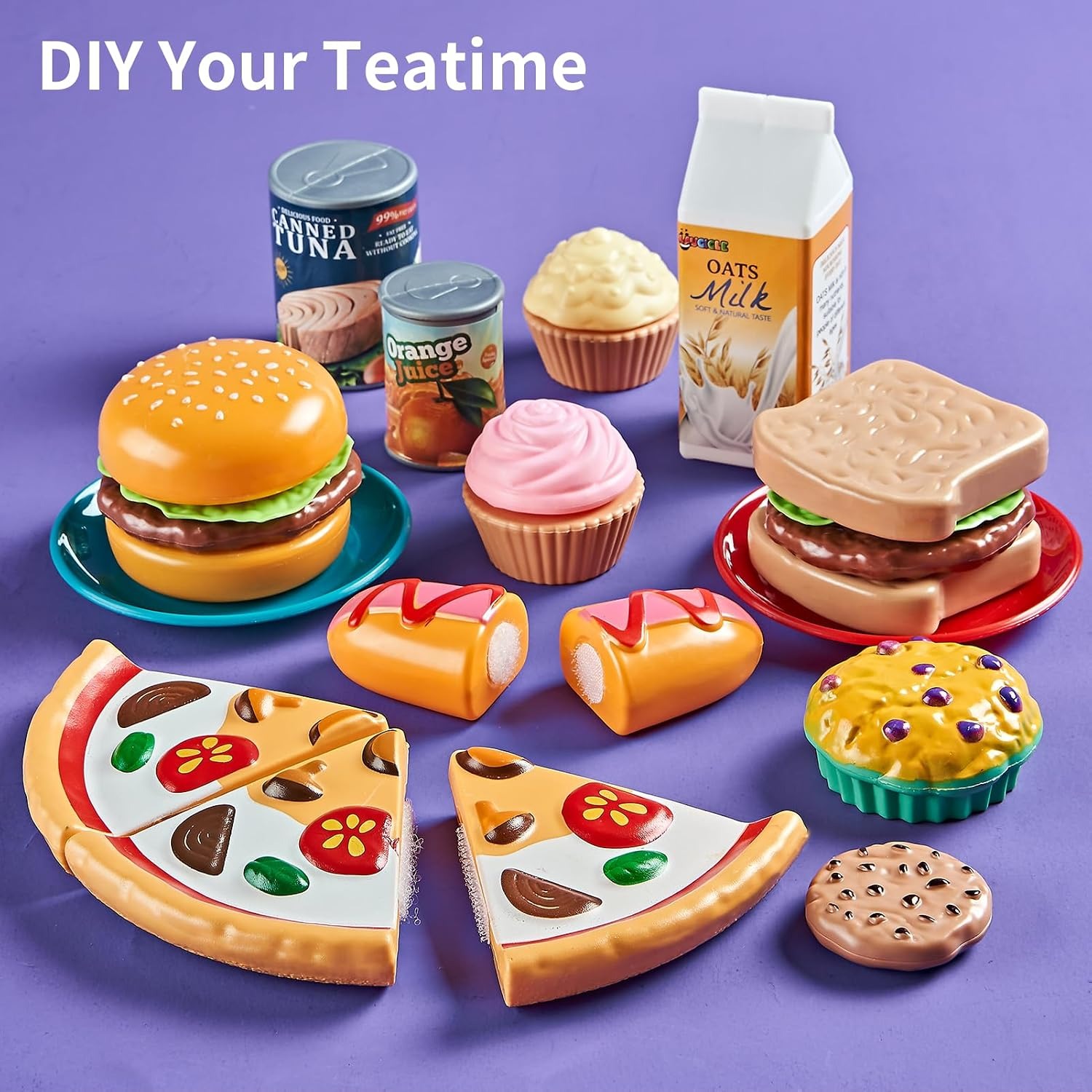
Piece count against actual variety. Some sets pad the number with twenty identical grapes. Look at the spread instead. A good pretend kitchen food range covers fruit, vegetables, protein, carbs and treats, because that is what makes a believable meal. This one spans fruit, veg, seafood, pizza, hot dogs, small desserts and grocery items.
Whether utensils are included. Food without tools is half a toy. This set includes pots, pans and utensils, so you are not hunting for a separate purchase on day one.
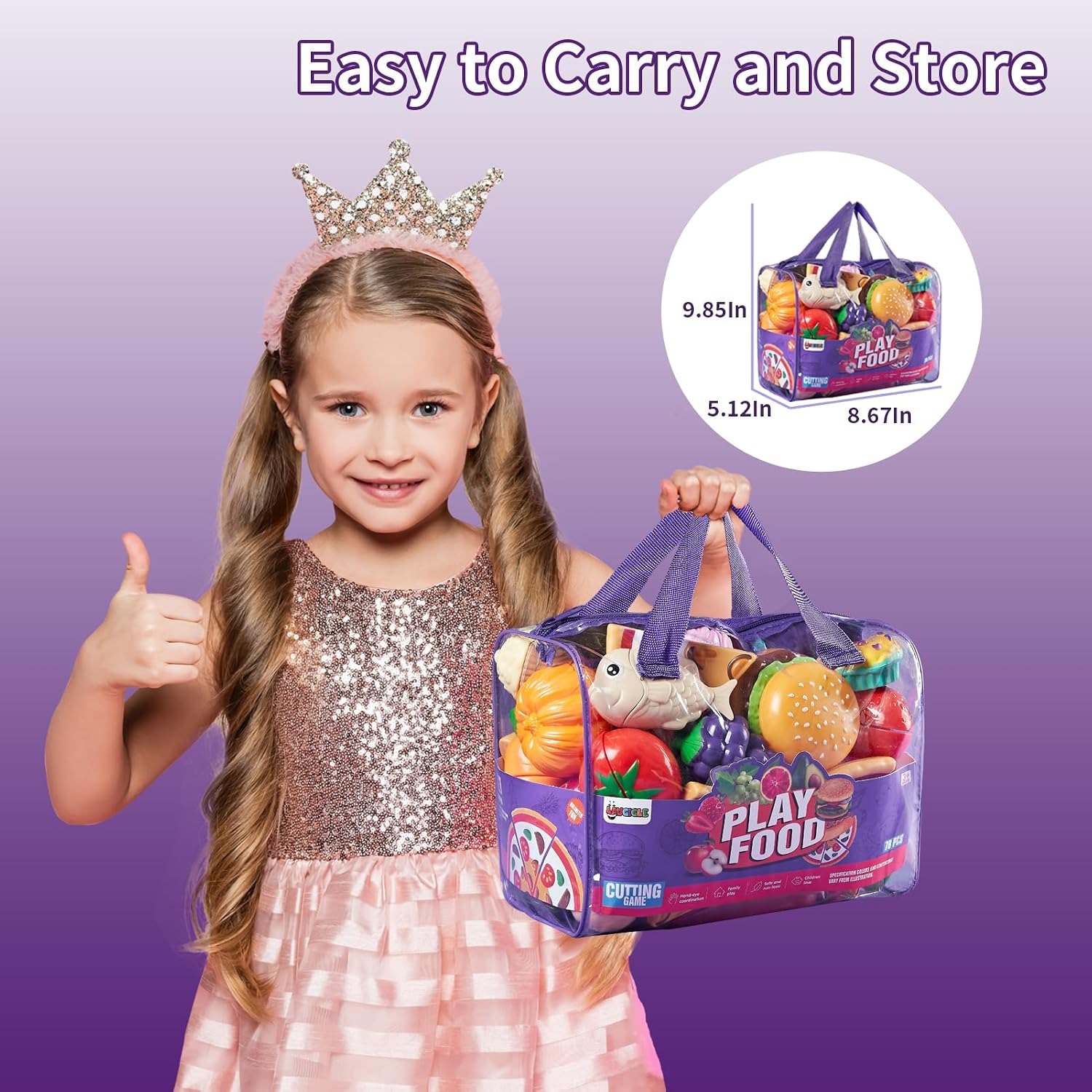
Storage. This is the quiet deciding factor and almost nobody thinks about it before buying. Loose play food migrates. It gets into sofa cushions, under beds, into the dog's bed. Once the set is scattered, nobody plays with it, because setting up means a ten minute hunt first. A set that comes with its own bag gets packed away in half a minute by a four year old and comes out again the next day. Portability is a bonus on top. The whole thing weighs 703 g and packs down to 23.5 x 15 x 16.5 cm, so it goes to grandma's house or in the car for a holiday.
Batteries. There are none here, and for this kind of toy that is a plus. Electronic food makes the decisions for the child. Plain plastic food lets them decide what it is and what happens to it.
Setting it up at home
You do not need a toy kitchen. A low table works. So does a rug with a tea towel on it, or a cardboard box with circles drawn on for hobs. Children are not fussy about set dressing, and in some ways a bare setup invites more imagination than a fully kitted one.
If you want to get more mileage, try giving the game a frame. Ask for a specific order. Pretend to be a customer who hates mushrooms. Set up a shop with the food on a shelf and a bag for the shopping. Small prompts like that can turn a ten minute session into an hour, and they cost nothing.
Sorting is another easy extension. Ask for all the red things, or all the things you would eat for breakfast, or four things to pack for a picnic. The counting and categorising goes down easily when it is part of a game rather than a task.
Looking after it
Plastic food lives on the floor, so it gets grubby. A wipe with a damp cloth and mild soap handles most of it. Dry the pieces fully before they go back in the bag, especially anything hollow.
Keep it out of the dishwasher, the microwave and boiling water. Heat warps plastic and can ruin the fit of the cutting joins. The same goes for leaving the bag on a sunny windowsill or in a hot car for long stretches.
The hook and loop joins deserve a little attention. They collect carpet fluff, hair and crumbs, and once clogged they stop gripping. Picking the fuzz out with your fingers every month or so keeps them working. Teaching a child to press the halves firmly back together, rather than balancing them, also extends the life of the join.
Finally, use the bag. It sounds obvious, but the single biggest predictor of whether a play food set is still in use a year later is whether it has a home to go back to each evening.
The short version
A play food set only works if there is enough of it. Small sets run out of ideas fast, and the child moves on. This one puts 78 pieces, pots, pans, utensils and a carry bag in one box, with cutting food that gives three year olds something to practise and older children enough stock to run a pretend shop.
It is plastic, it has no batteries, it weighs 703 g, and it packs into something the size of a shoebox. Recommended for 36 months to 8 years, which is five years of use for one purchase. If you are filling an empty play kitchen or buying a birthday present for a preschooler, it is a straightforward choice that tends to get played with rather than shelved.