
The complete guide
The Parent's Guide to Choosing a First Sewing Kit for Kids
The problem with most first craft kits
You buy a craft kit with good intentions. Twenty minutes later there is glitter in the carpet, a child in tears, and a half-finished something in the bin. The activity that was meant to fill an afternoon has filled it with stress instead.
The usual culprit is not the child. It is the kit. Too many beginner craft sets quietly assume adult skills. They give you a flat sheet of fabric and expect a five year old to cut a curve. They include a thin metal needle and a diagram with no explanation. They need glue that dries slowly, paint that needs water, or steps that only make sense if you already know how the finished thing should look.
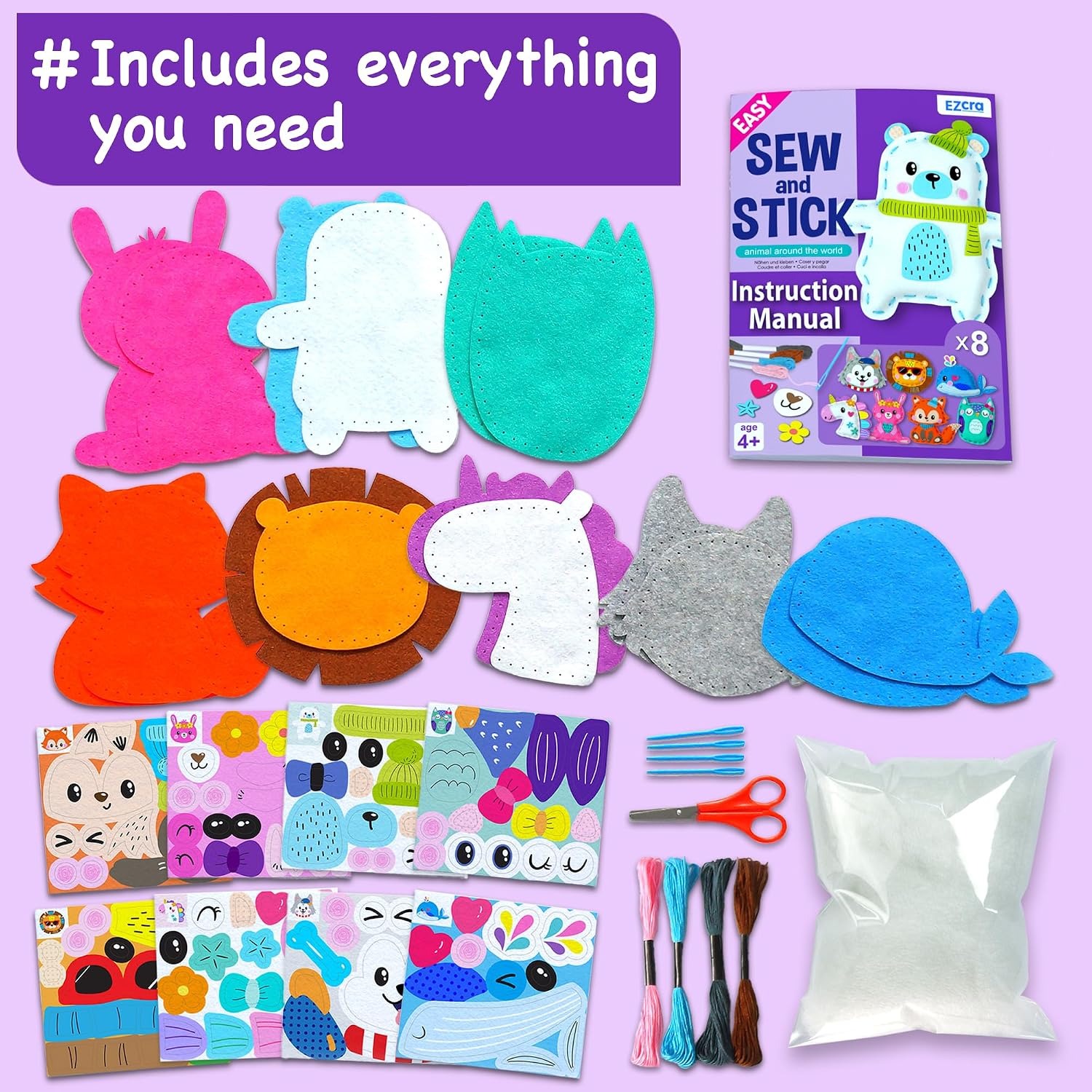
A good kids felt sewing kit removes those hurdles before the box is opened. The shapes are already cut. The holes are already punched. The tools are sized for small hands. What is left is the part a child actually wants to do, which is making something appear out of flat pieces.
How a pre-punched felt sewing kit works
Felt is the right fabric for this job because it does not fray. Cut an edge and it stays put, no hemming, no tidying, no unravelling after three stitches. That single property is why almost every beginner sewing craft for children uses it.
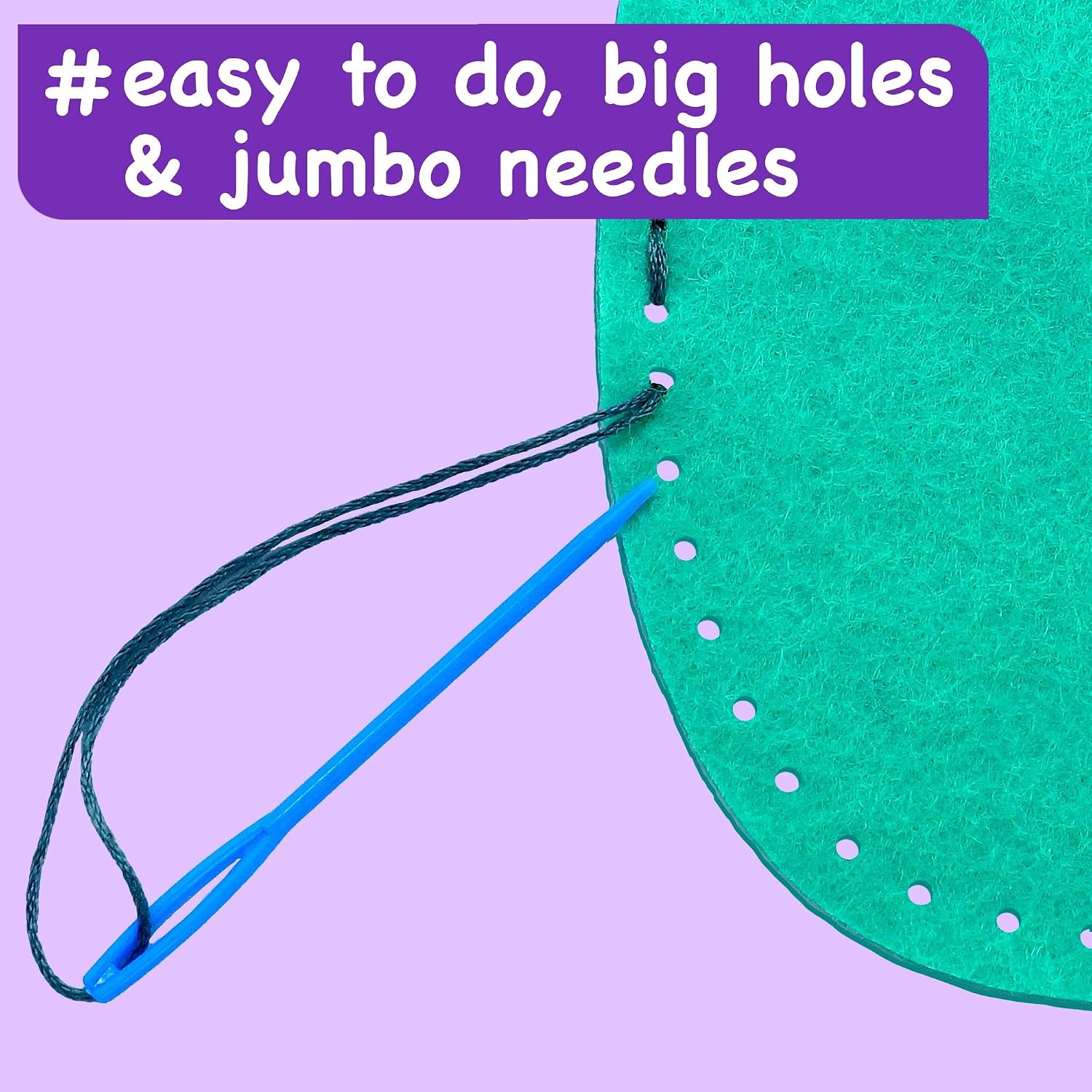
The stitch holes in this kit are punched in advance, evenly spaced around each shape. A child does not have to decide where the needle goes or judge how far apart stitches should be. They go hole to hole, and the spacing takes care of the neatness. It turns a skill that normally takes practice into something that works on the first try.
The needle is jumbo plastic rather than steel. It is thick enough for a four year old to hold like a pencil and blunt at the tip, so it passes through the punched holes rather than piercing fabric or fingers. You still supervise, but the anxiety level drops a long way compared with a sharp metal needle.
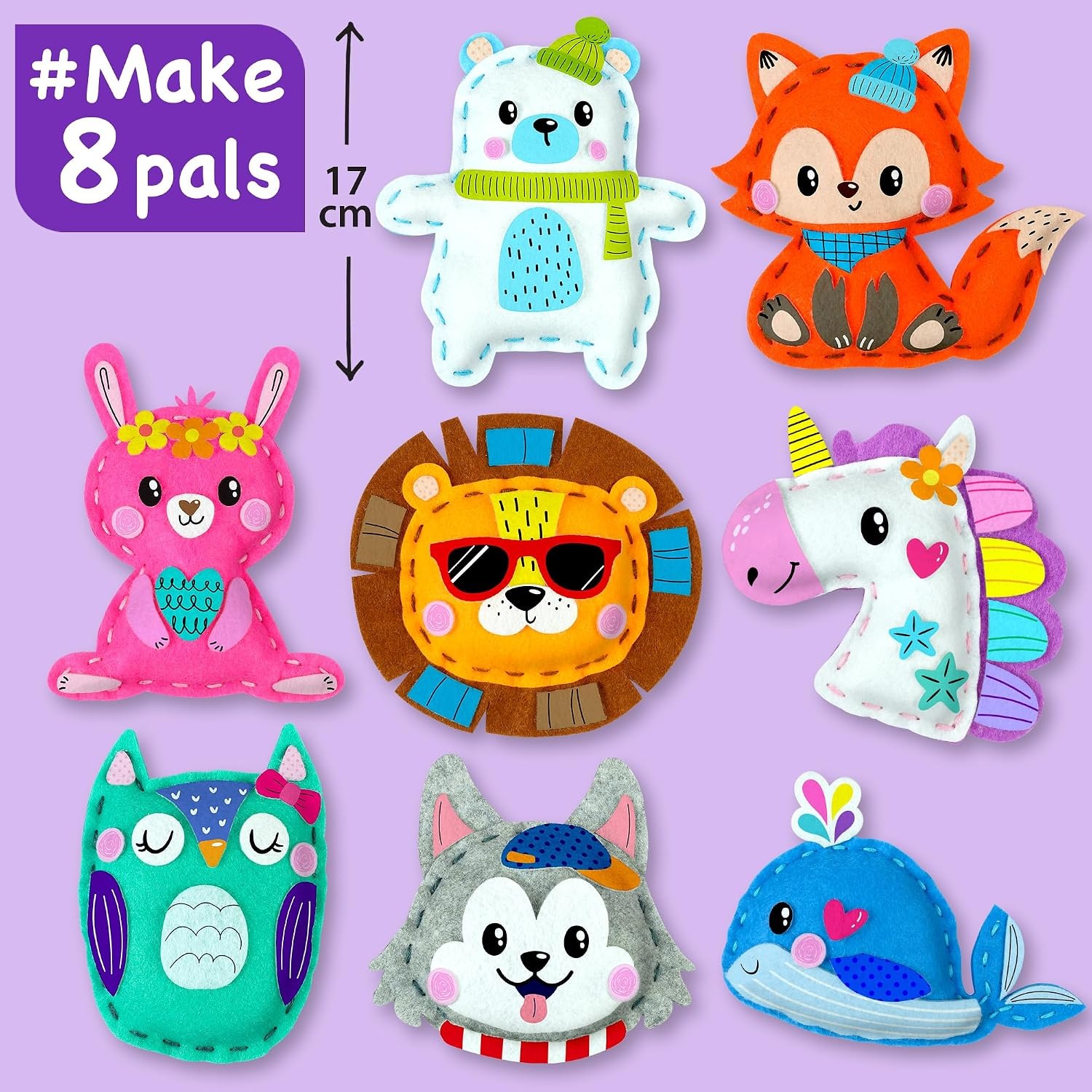
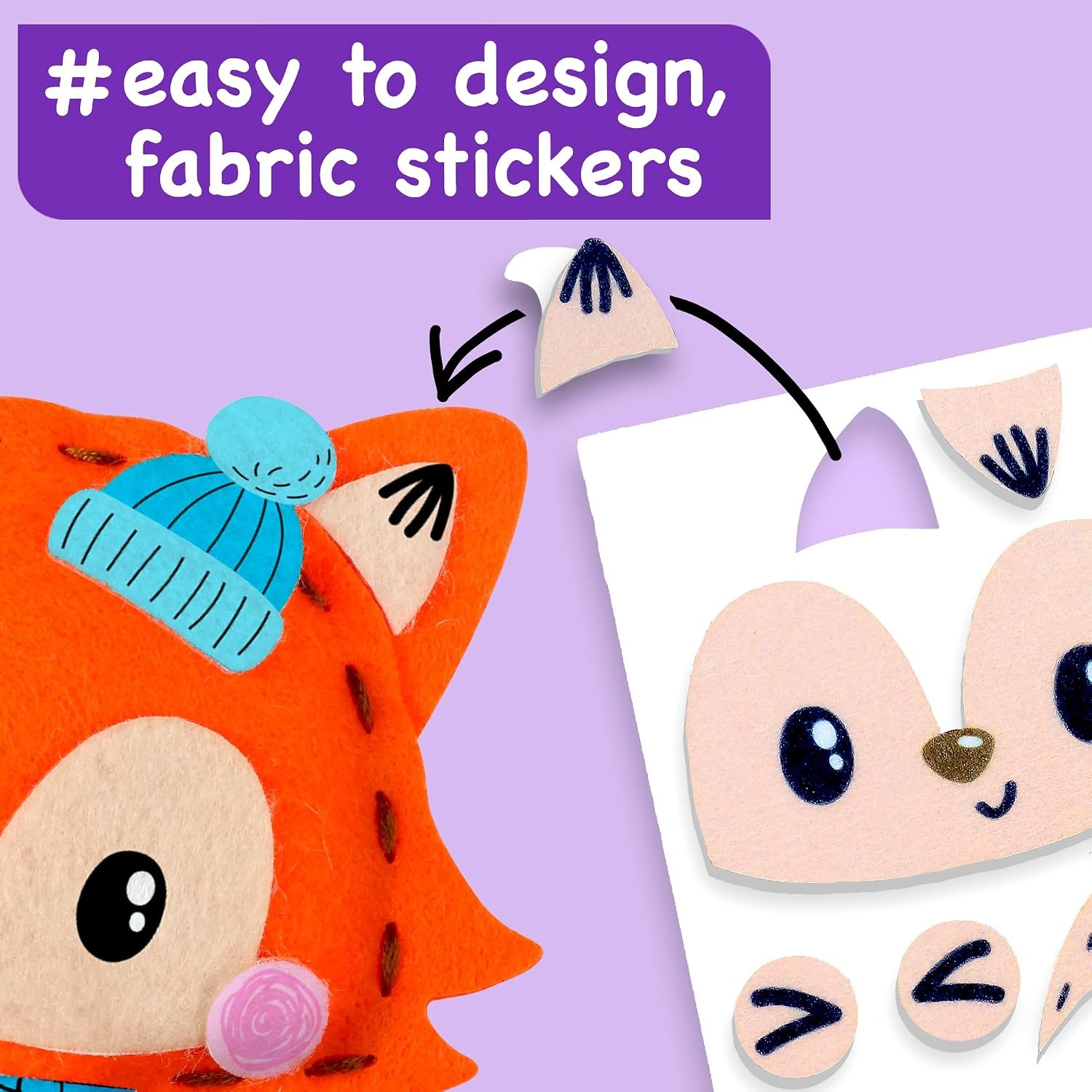
Then comes the part children tend to love most. Eight sets of decorative stickers are included, and once an animal is stitched together it gets decorated. This is where identical pieces turn into completely different characters. One unicorn ends up with a serious face and neat spots, another ends up covered edge to edge. Both are correct.
Who this kit suits
The manufacturer puts the age range at four to eight, and that feels about right in practice.
At four and five, expect to sit alongside. You will thread the needle, demonstrate the first few stitches, and offer encouragement when a thread tangles. The pre-punched holes mean the child is genuinely doing the sewing, not just watching, which is the difference between an activity and a demonstration.
At six and seven, most children can work through a project with occasional help. This is the sweet spot. The projects are short enough to finish, challenging enough to feel earned, and the stickers give a satisfying finish.
At eight, a confident child will fly through the animals and may want to improvise. That is fine. Some kids start combining stickers in odd ways or adding their own details, and that is a sign the kit has done its job.
It also suits particular situations more than others. If you need a quiet activity for a waiting room, a flight or a holiday rental, this is a strong pick. If you want a shared activity between a parent and a child, or a grandparent and a grandchild, the short project length makes that easy. And if screen time has crept up over a long school break, a box of physical pieces is a straightforward reset.
How to choose a sewing kit for a child
A few things separate a kit that gets finished from one that gets abandoned.
Check whether pieces are pre-cut. This is the single biggest factor for under-eights. Cutting felt accurately is harder than it looks, and a wonky cut at step one sets the tone for everything after it.
Check the needle type. Jumbo plastic needles are the standard for this age group. If a kit ships with metal needles, it is aimed at older children or at adult-supervised sewing only.
Count the projects. One project is a nice half hour. Eight projects is a school holiday. More projects also means siblings can each have their own without fighting over the same unicorn.
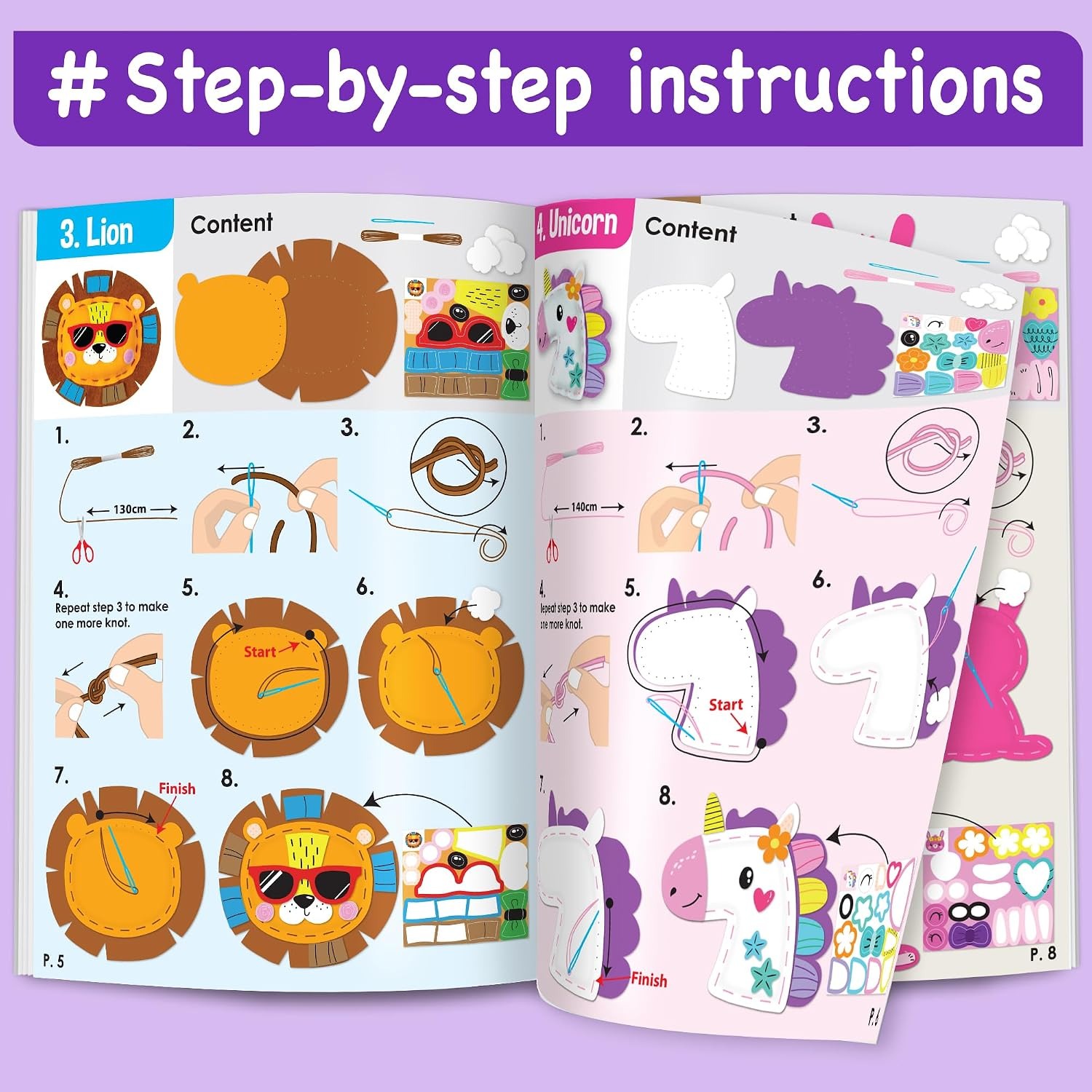
Look for how instructions are presented. Step-by-step pictures beat paragraphs for this age. A short brief on the basic stitch at the front is worth a lot, because a parent who has never sewn can learn it in two minutes and teach it in five.
Think about mess tolerance. Glue and paint kits make great things, but they need setup, cover and cleanup. A dry kit with felt, needles and stickers can be opened at a café table and shut again in thirty seconds.
Consider portability. This box measures 20.3 by 15.2 by 1.3 centimetres and weighs 0.27 kilograms. Thin and light matters when you are packing for a trip and every centimetre of case space is already spoken for.
Getting the first session right
Start with the simplest animal, not the most exciting one. The unicorn may be the one your child wants, but a success on an easy shape builds the confidence to tackle the one they really care about.
Thread the needle yourself the first few times and tie a decent knot at the end. Show one stitch slowly, then hand it over. Resist the urge to take it back and fix a crooked stitch. Crooked stitches are what a first project looks like, and a child who gets corrected five times stops wanting to try.
Set a comfortable spot with good light and a flat surface. A lap and a sofa make the thread tangle. A table makes everything easier.
If frustration shows up, stop. The box closes in seconds and the half-done animal waits happily until tomorrow. Short, positive sessions beat one long one that ends badly.
Looking after finished projects
Felt animals are durable but they are not laundry. Surface clean with a barely damp cloth and let them air dry flat. Skip the washing machine, the soaking and the tumble dryer, because felt can distort and stitching can loosen.
Keep unused pieces, stickers, needles and scissors in the original box so nothing wanders off. A small zip bag inside for the needles stops them rattling loose. Store somewhere dry and away from direct sunlight, which keeps the felt colours from fading.
Finished animals tend to end up on shelves, hooked onto school bags or given as gifts. If a stitch pulls loose over time, it is easy to re-sew through the same punched holes.
The short version
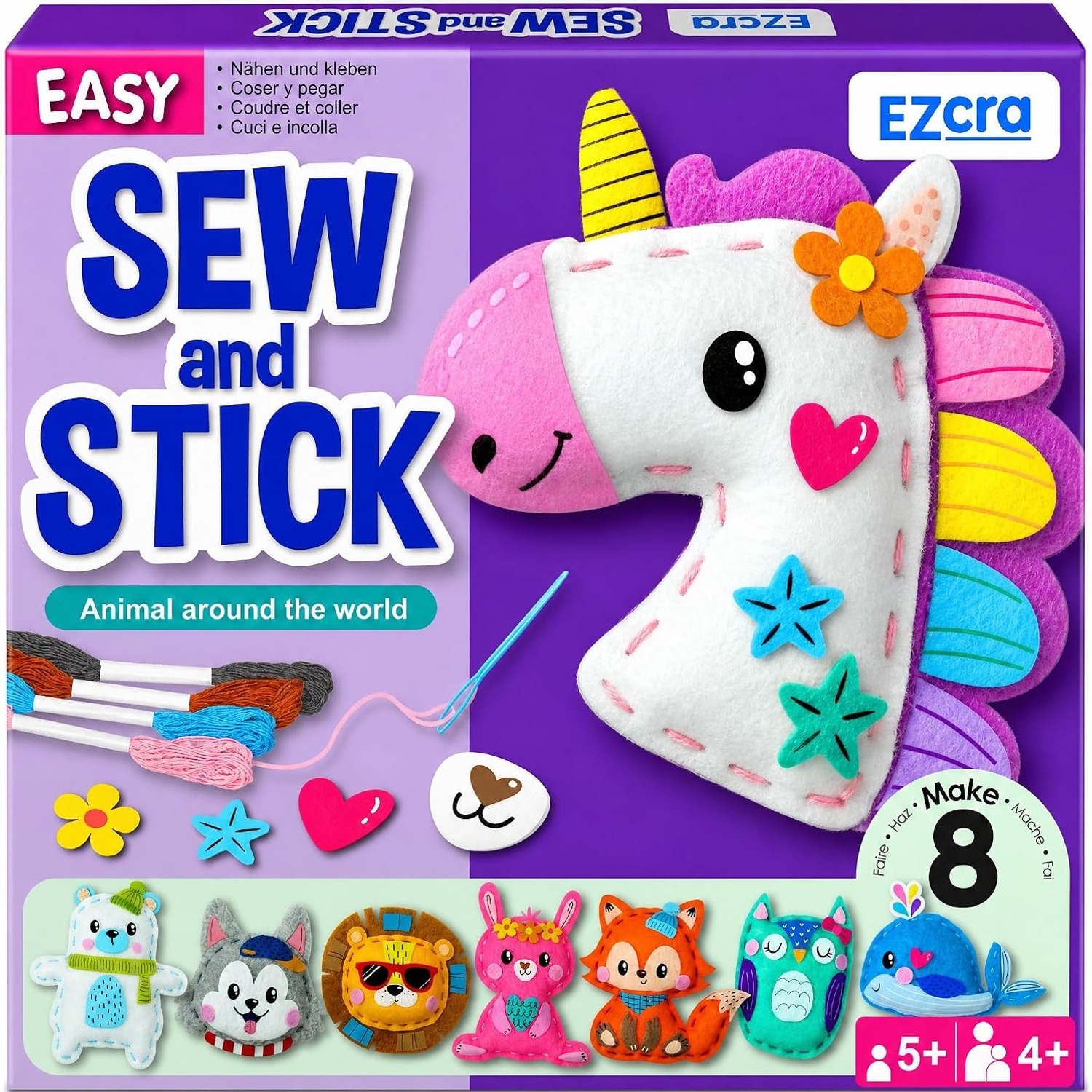
This unicorn sewing kit is built for children who have never sewn. The felt is pre-cut, the holes are pre-punched, the needles are jumbo plastic and the scissors are safety scissors. Eight animal projects, including a unicorn and a bunny, come with eight sets of decorative stickers and step-by-step instructions.
It is dry, quiet and compact, so it works at the kitchen table, in a classroom corner or on a tray table at 35,000 feet. The manufacturer states the materials are non-toxic and tested to safety standards.
For a child aged four to eight who likes making things, it is an easy yes. For a parent who wants an activity that ends with something finished rather than something abandoned, it is an easier one.