
The complete guide
How to Choose and Use a 3-in-1 Carnival Games Set
The problem with most party games
You buy a game for a birthday party. It gets opened, played twice, and then sits in a cupboard until the next clear-out. Part of that is the game itself. A lot of party kits do one thing, for one age group, under one set of conditions. If it rains, if the children are younger than expected, if there are ten kids instead of four, the game stops working.
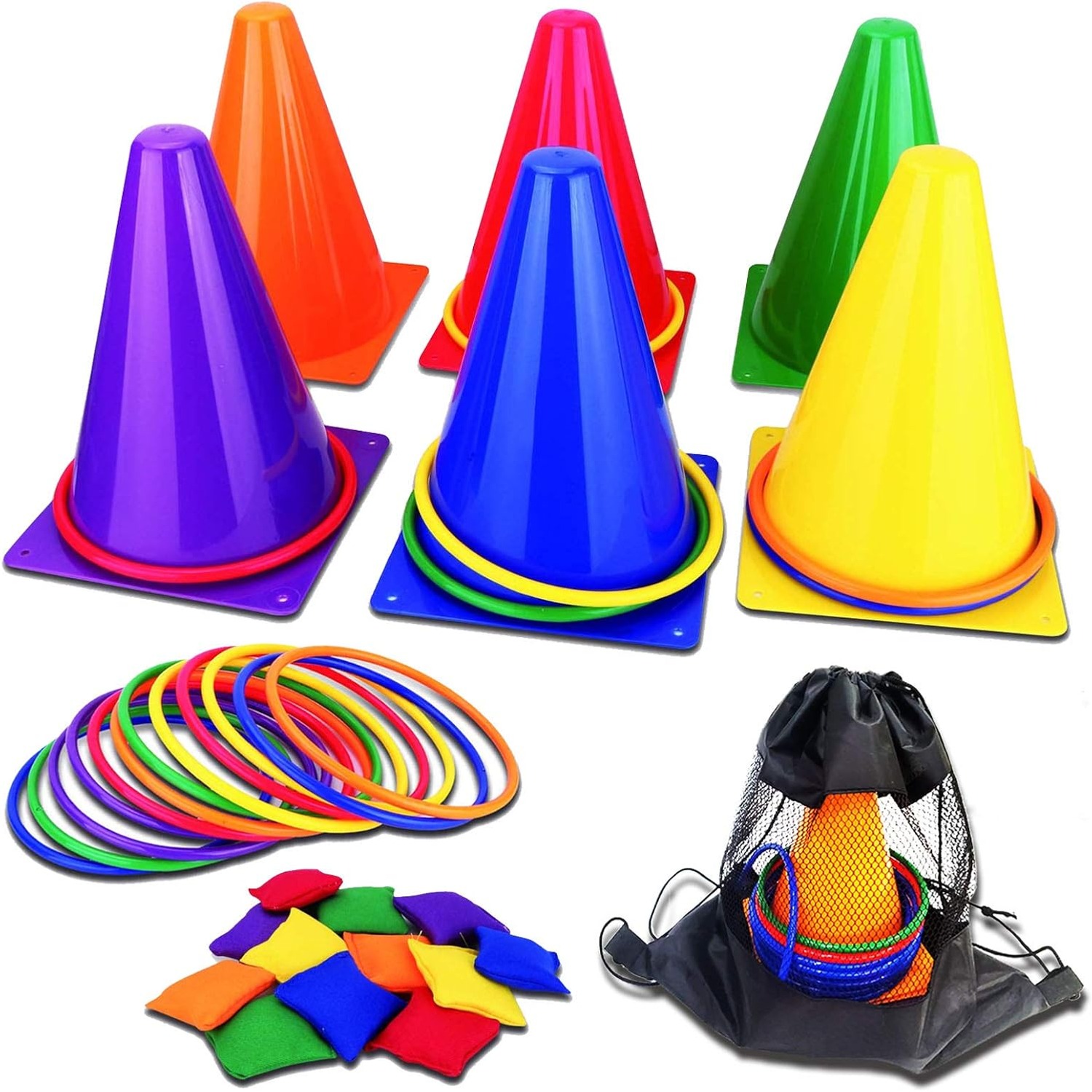
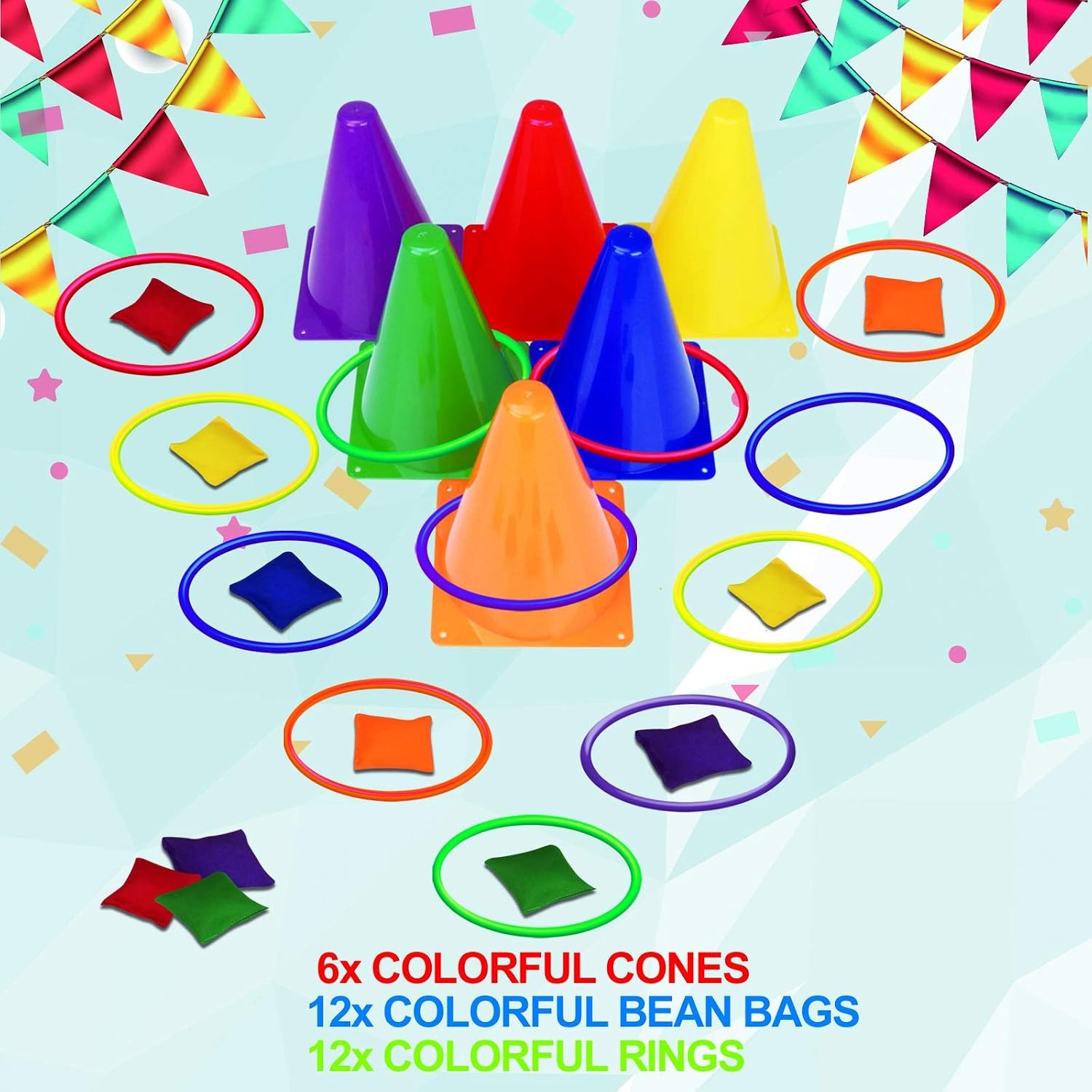
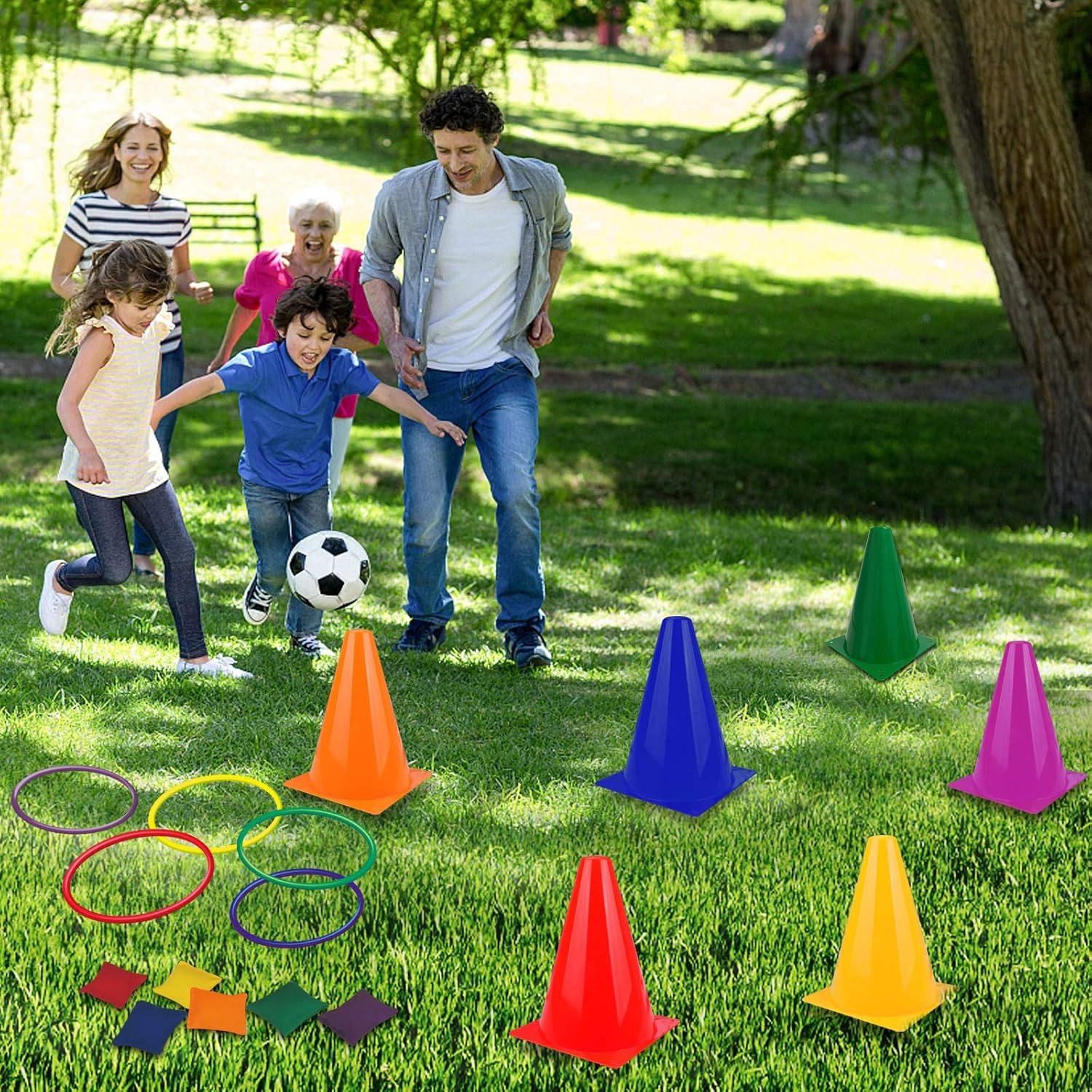
A carnival games set 3 in 1 works differently because it is not really one game. It is a box of parts. Twelve rings, twelve bean bags and six cones can be arranged in a dozen ways, which means the same purchase covers a quiet afternoon with two children and a loud birthday party with a dozen.
That flexibility is the whole point. You are not buying a fixed game with fixed rules. You are buying raw material for games you will invent on the spot.
What you actually get
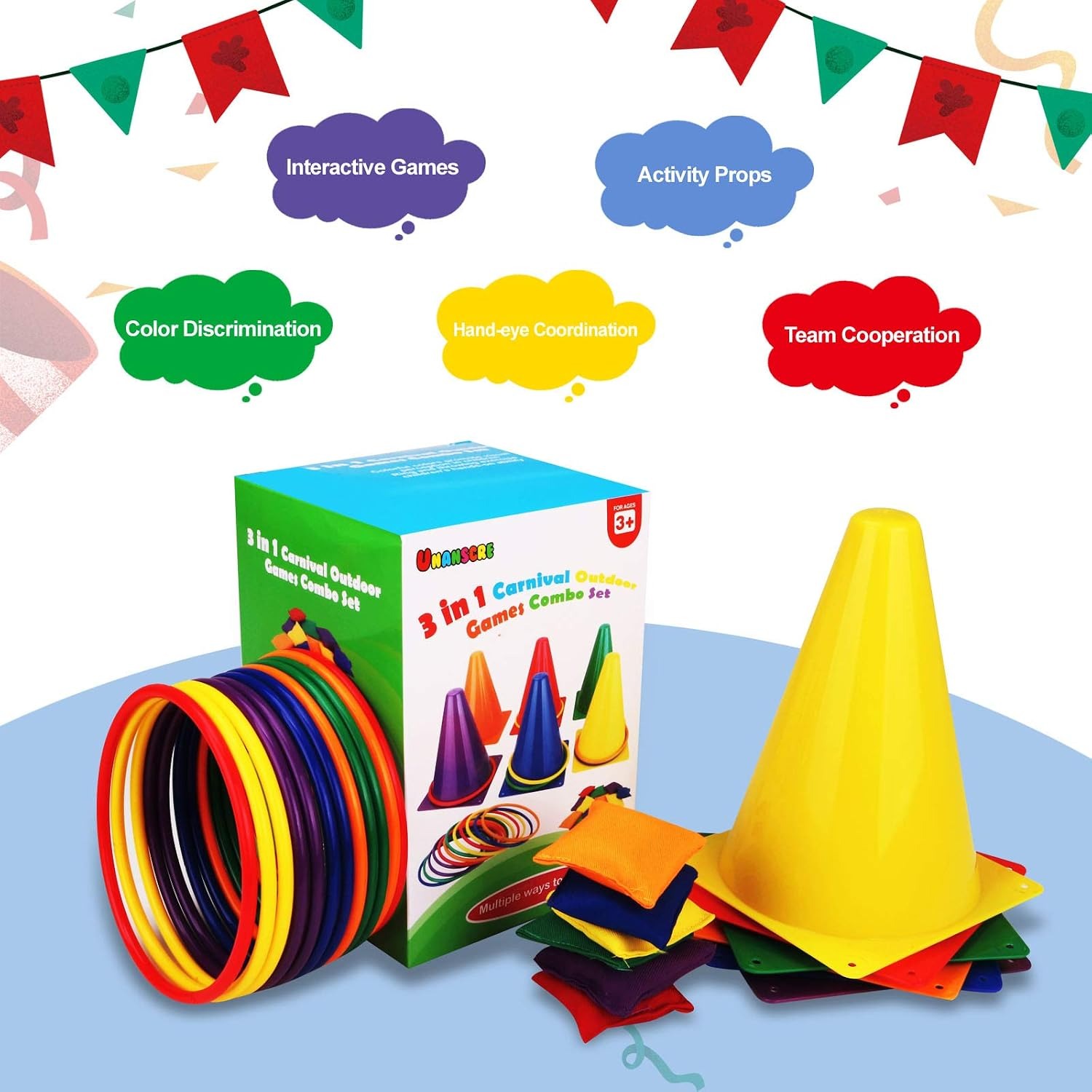
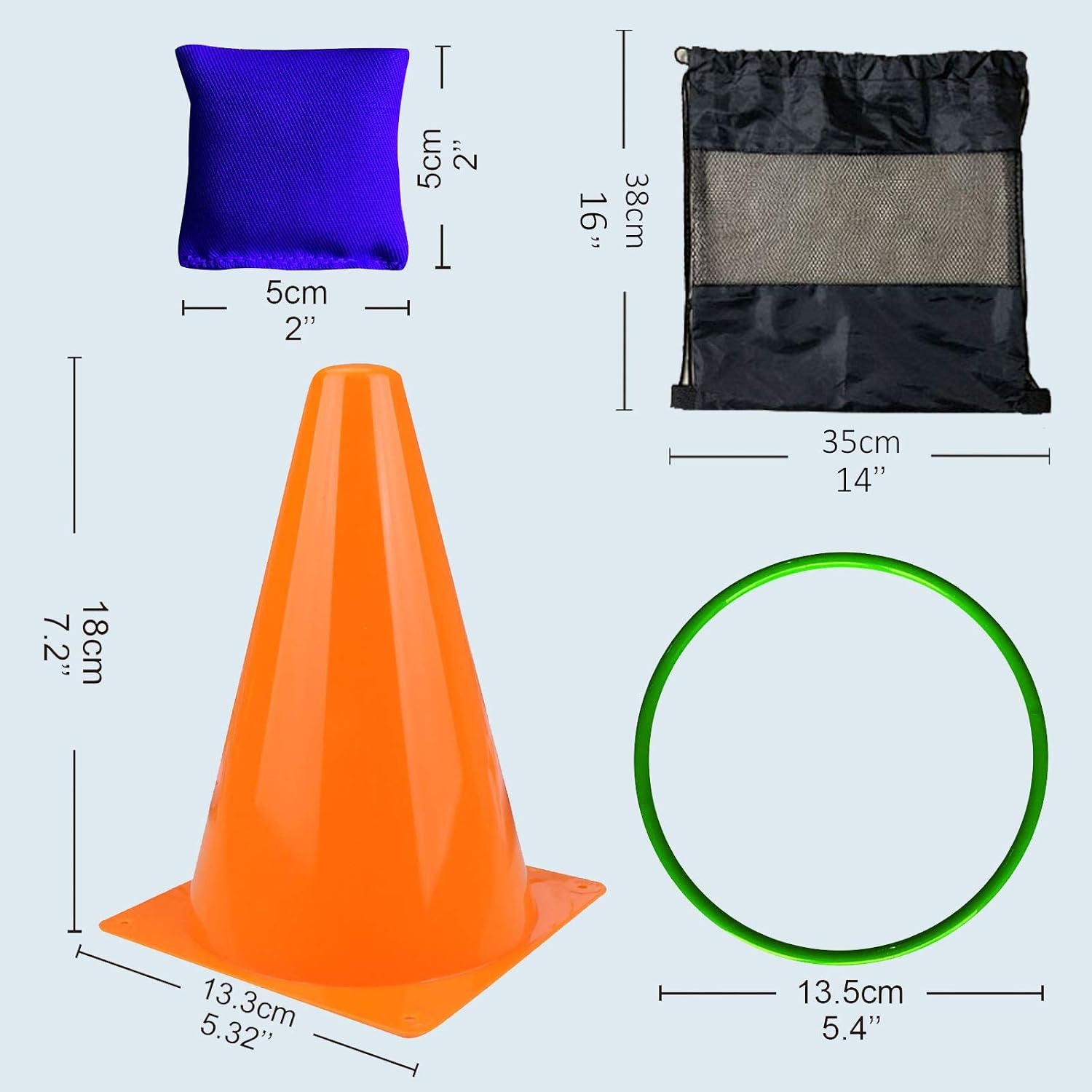
The set contains 31 pieces. There are 12 rings, 12 bean bags, 6 plastic cones and a packing box that holds the lot. The listed colour is red and the material is plastic. The brand is unanscre and the style is Classic.
Nothing needs assembling, inflating or charging. You open the box, stand the cones up, and start. That sounds small, but it changes who can set the game up. A seven-year-old can get this going without asking an adult, and a game a child can start themselves gets played far more often than one that needs supervision just to begin.
The packing box deserves a mention too. Loose party gear scatters. Rings end up under the sofa, bean bags end up in the car. Having a dedicated box means the set stays complete, which is the single biggest reason toys survive past their first few months.
The three core games
The ring toss game is the one most people think of first. Stand the cones up at varying distances, mark a line, and take turns throwing rings over them. Scoring can be as simple as a point per ring, or you can make the far cones worth more. If you want the best ring toss game experience across mixed ages, just move each player's throwing line to match their ability. Nobody minds a handicap when they are winning.
The bean bag toss game uses the same cones as targets, or you can add a bucket, a box or a chalk circle. Bean bags behave differently to rings. They do not roll away, so this version works better indoors and on hard surfaces. It is also gentler, which makes it the friendlier option for younger children.
The cone course is the one families discover later and then use most. Six cones lay out a slalom, a sprint lane, a dribbling drill or an obstacle route. Pair it with a stopwatch and you have an afternoon of children trying to beat their own time. For anyone after a cone agility set for kids without buying sports gear, this covers it.
Mixing the games up
Once children know all three, combinations start happening on their own. Run the cone course, then throw three bean bags at the end. Match ring colours to cone colours for extra points. Make a relay where each team member completes a different station.
Colour matching is particularly useful for pre-schoolers who cannot score yet. Ask them to put the red ring on the red cone and you have a game that teaches something without feeling like a lesson. As they get older, the same pieces graduate to real competition.
Who it suits
This set fits primary-school-aged children best, with younger siblings joining in on easier rules. The maker does not state official age grading, so use judgement with very small children and supervise throwing games as a matter of course.
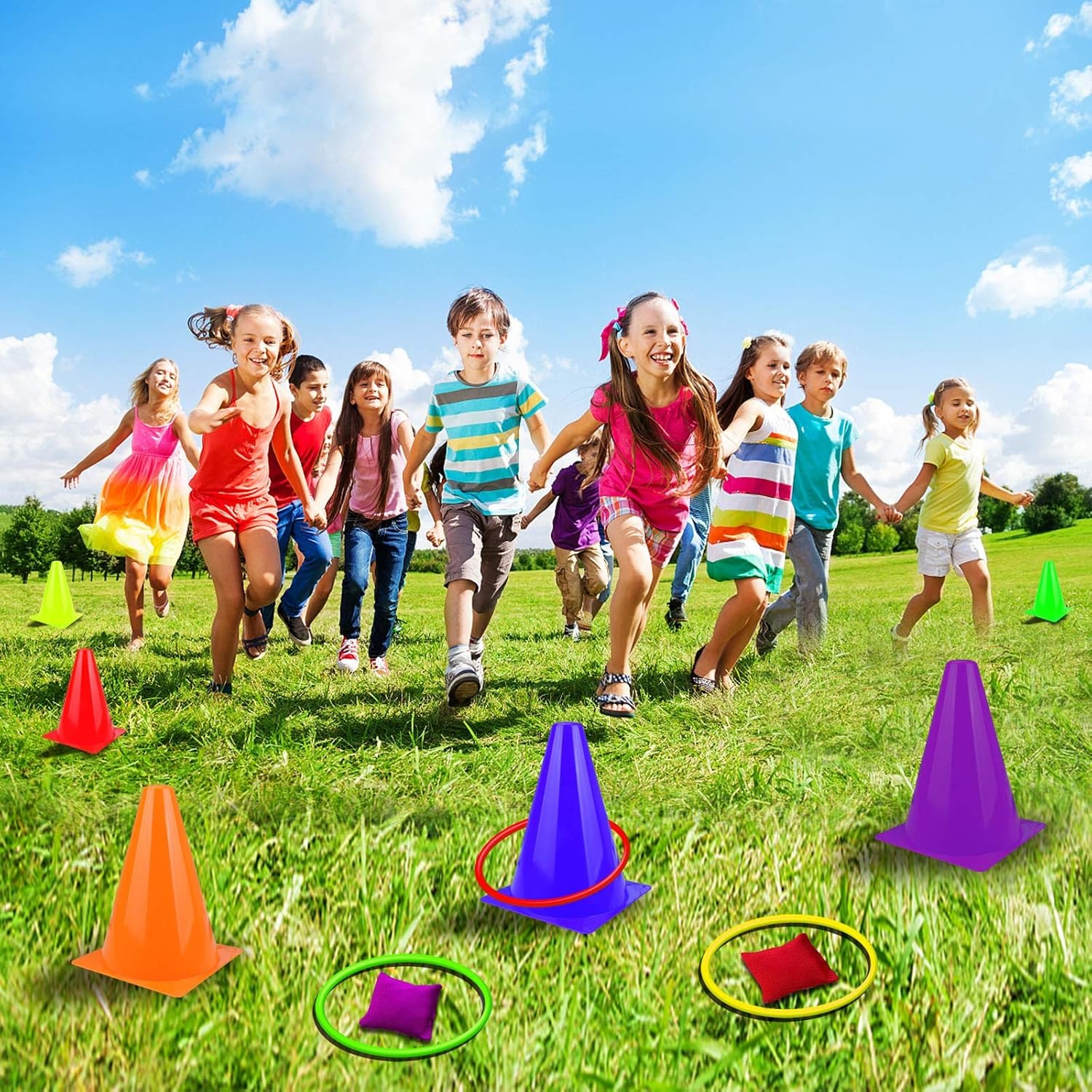
It suits parents organising birthdays, teachers running a sports day, grandparents who want something to pull out when the grandkids visit, and families who want the best outdoor games for kids that do not take up half the storeroom. It also works for anyone who needs a backup plan when the weather turns, since the whole thing moves indoors to a hallway floor.
Two players is the listed minimum. In practice, the piece count supports a lot more. Twelve rings means three children can each throw four times per round with no waiting, and that lack of queueing is what keeps a party game alive.
Choosing the right surface and space
Grass is ideal. Cones stand steady, bean bags land softly, and nothing rolls far. Pick a patch where the grass is short, or you will spend the afternoon hunting rings.
Hard ground like a paved court or a hall floor works fine, though rings bounce more. Shorten the throwing distance to compensate. Indoors, pick a room without breakables in the firing line and keep throws underarm.
Packed sand at the beach works if you push the cone bases in slightly. Soft dry sand does not, since cones tip at the first gust. Shake everything out before it goes back in the box.
Space-wise, you need surprisingly little. A throwing lane of three or four metres is plenty for younger children. For a full cone course you want more like ten metres, but you can loop it rather than run it straight.
Taking it out of the house
Because everything packs into one box, this travels well. It fits in a car boot, a holiday suitcase or a bag for the park. There is no power needed, no table required, no pieces that blow away in the wind the way card games do.
That makes it one of the best travel games for family holidays, and a reliable thing to bring to a campsite, a picnic or a family gathering where children outnumber the available entertainment. School fetes are another good fit. A ring toss stall with assigned point values and small prizes is a classic for a reason.
Keeping it in good shape
Care is straightforward. Wipe the plastic cones and rings with a damp cloth and mild soap, then dry them. Spot clean the bean bags with cool water and a little detergent, and let them air dry completely before packing away. Damp filling is the main thing that shortens a bean bag's life.
Store the set in its box, somewhere dry and out of direct sunlight. Long periods in the sun fade plastic. Check the bean bag stitching occasionally and the plastic for cracks, and retire any piece that has split.
If a ring or a bag goes missing, the games still work. Just reduce the number of throws per round so every player gets the same count.
The short version
A carnival games set 3 in 1 gives you three games for the price and storage space of one. The 31 pieces cover ring toss, bean bag toss and cone drills, and the combinations children invent go well beyond that.
It sets up in under a minute, packs down in the same, and works on grass, paving or a hallway floor. The piece count handles small groups without queueing, which is the difference between a party game that lasts and one that does not.
No batteries, no screen, no instructions to lose. Just a box of bright pieces that children can get going by themselves.