Toy Warehouse
Company
Shop By Category
T&Cs
Shop Online
  • Box contents listed
  • Free tracked delivery across Singapore over $150
  • 14-day returns

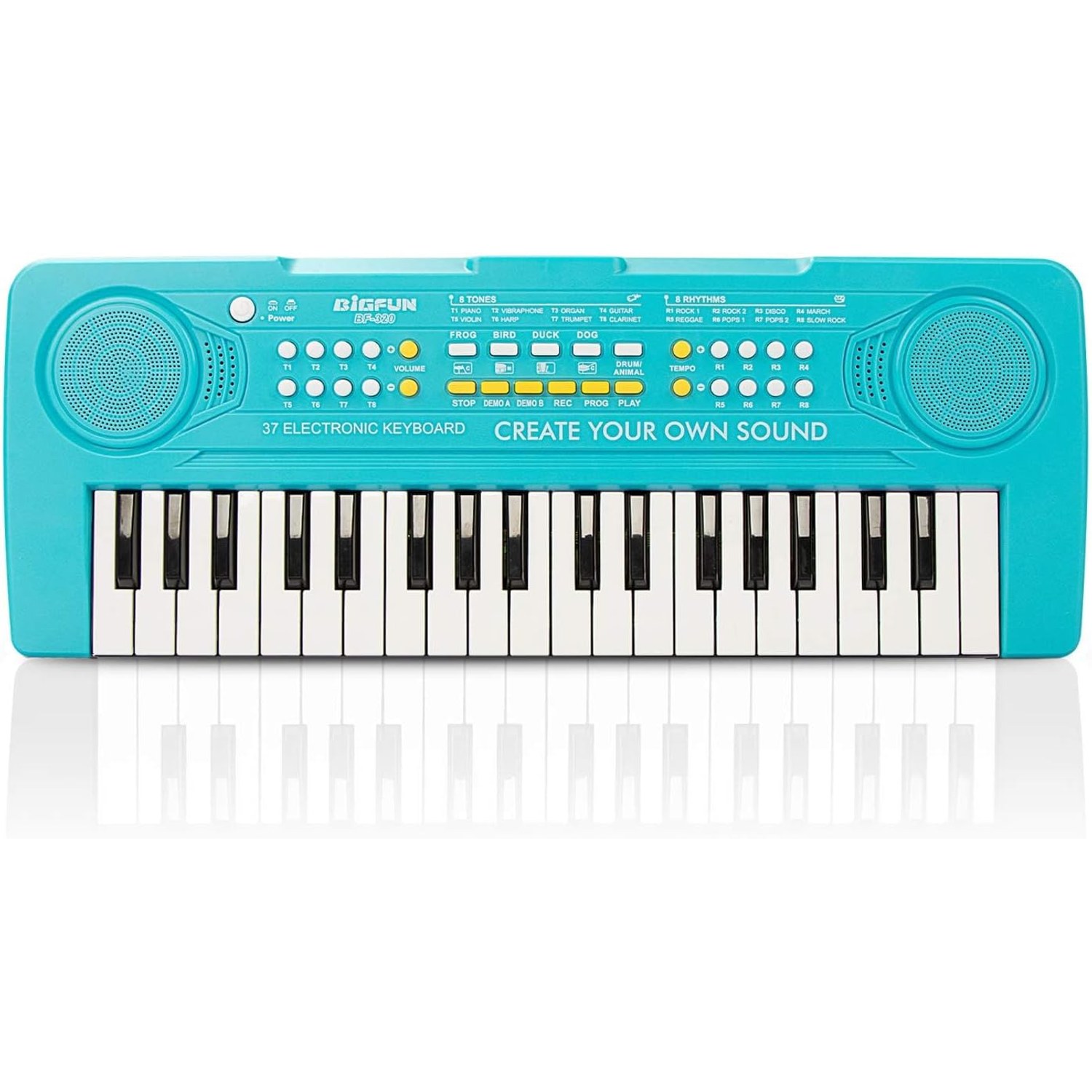
Kids Keyboard Piano 37 Key | Toy piano keyboard | Electronic keyboard for kids

37-Key Kids Keyboard Piano

$62.99 $75.99 Save $13
  • Thirty-Seven Keys
  • Tones And Rhythms
  • Record And Playback
  • USB Powered

Price: $62.99 $75.99

  • Free tracked delivery across Singapore on orders $150+, otherwise a flat $20
  • Pay by card or PayPal, handled by the payment provider
  • 14 days to change your mind, plus your statutory rights
Product specifications
BrandBIGFUN
Model NumberBlue
Manufacturer Part NumberBF-320-B
InstrumentPiano
Number Of Keys37
Number Of Settings26
Size37 Keys
ColourBlue
MaterialAcrylonitrile Butadiene Styrene (ABS), Plastic
ThemeMusic
Recommended Age3 years and up
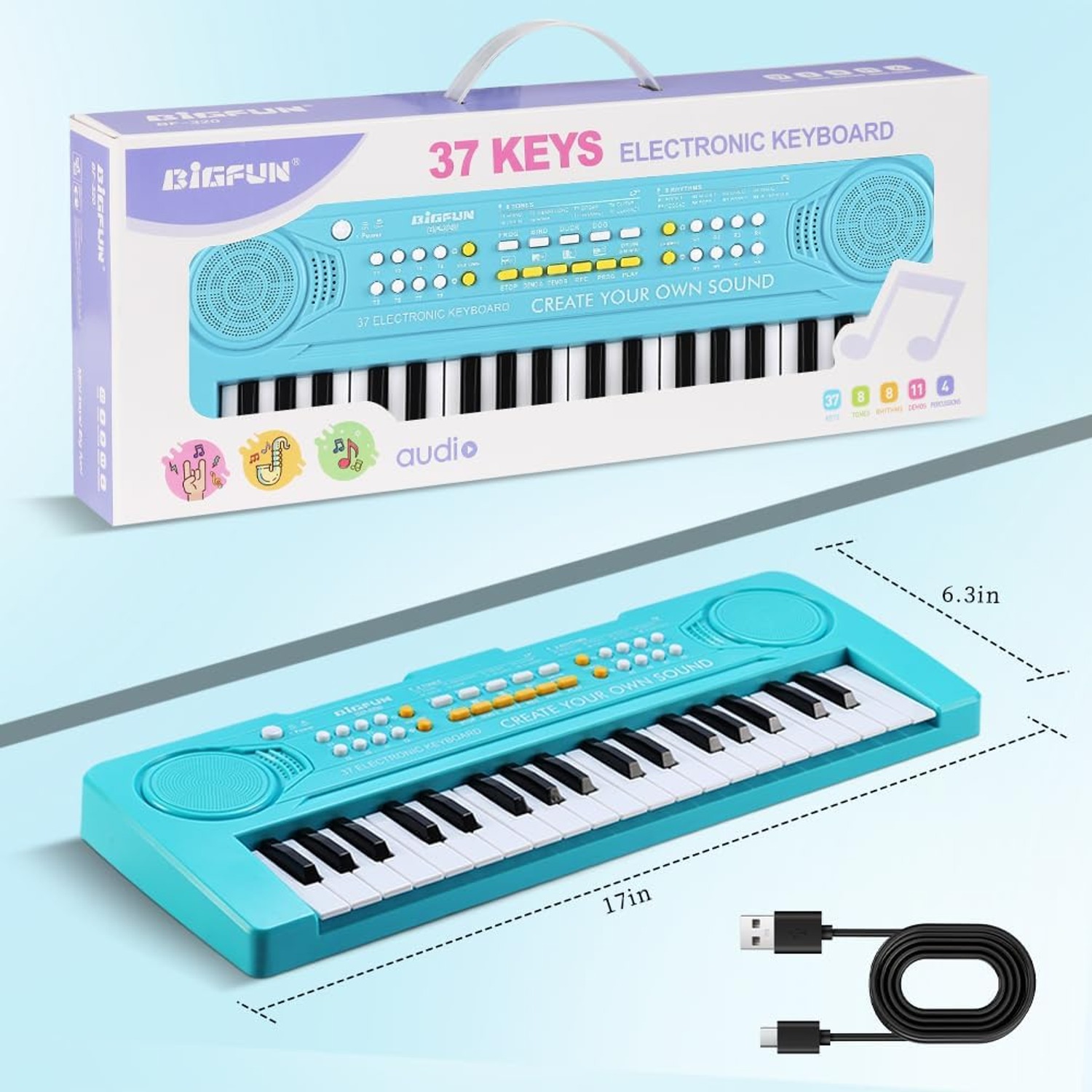
Item Dimensions (L x W x H)42.9 x 15.7 x 5.3 cm
Item Weight0.6 kg
Number Of Items1
Assembly RequiredNo
Weight0.6 kg
Shipping & returns

Tracked delivery anywhere in Singapore. It is free on orders of $150 or more, and a flat $20 below that.

If it is not right for you, send it back within 14 days of delivery in resaleable condition and we refund the price you paid, including standard delivery. That is a voluntary policy we offer on top of your legal rights. You cover the cost of returning it unless the item is faulty.

If it arrives faulty, damaged or not as described, we put it right at no cost to you, return postage included, and your protection under the Consumer Protection (Fair Trading) Act 2003 is unaffected.

Shipping details · Refunds and returns

Thirty-Seven KeysEnough range for real melodies, still small enough for little hands.
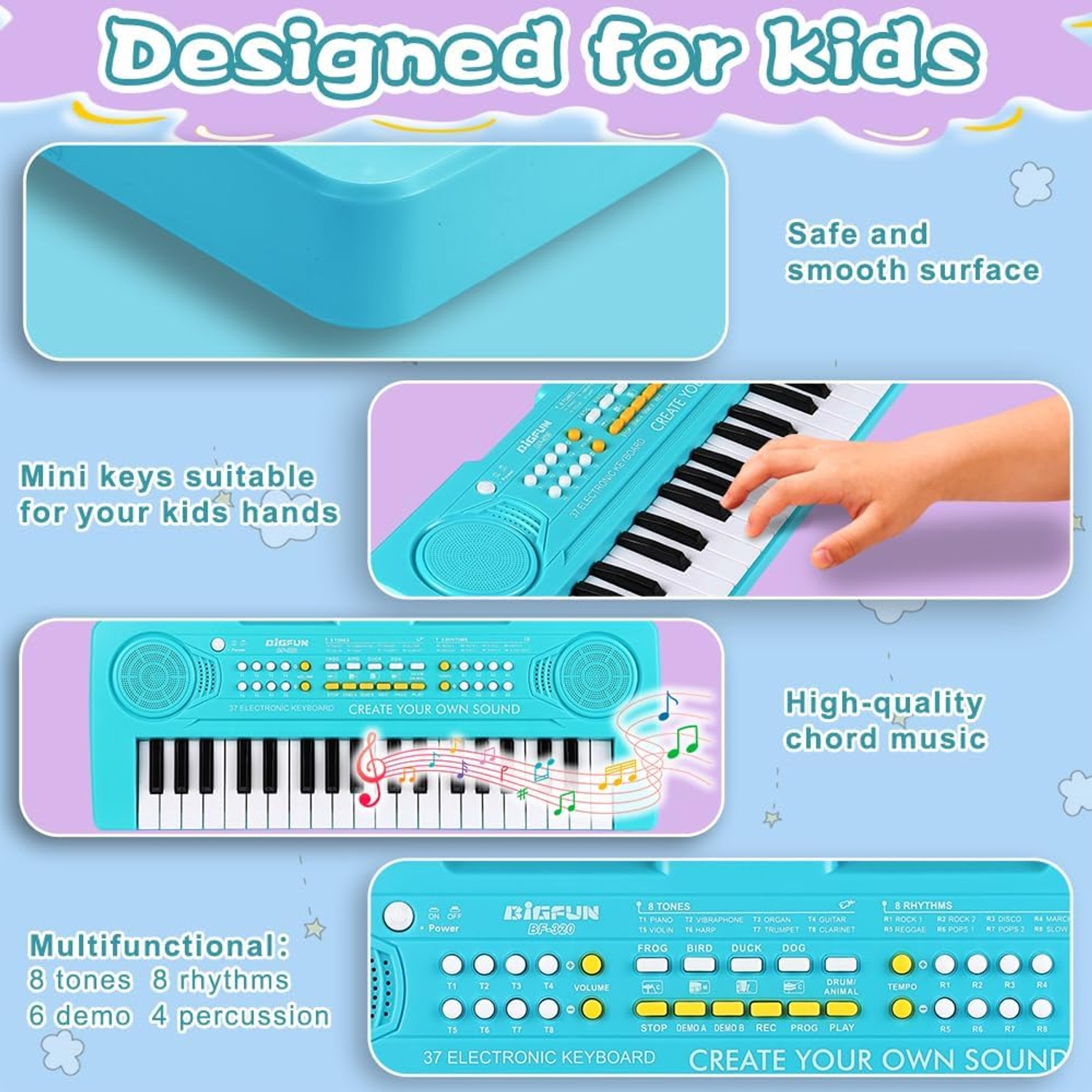
Tones And Rhythms8 tones, 8 rhythms, 6 demo songs and 4 percussion sounds to explore.
Record And PlaybackKids can capture a tune and hear it back, which keeps practice fun.
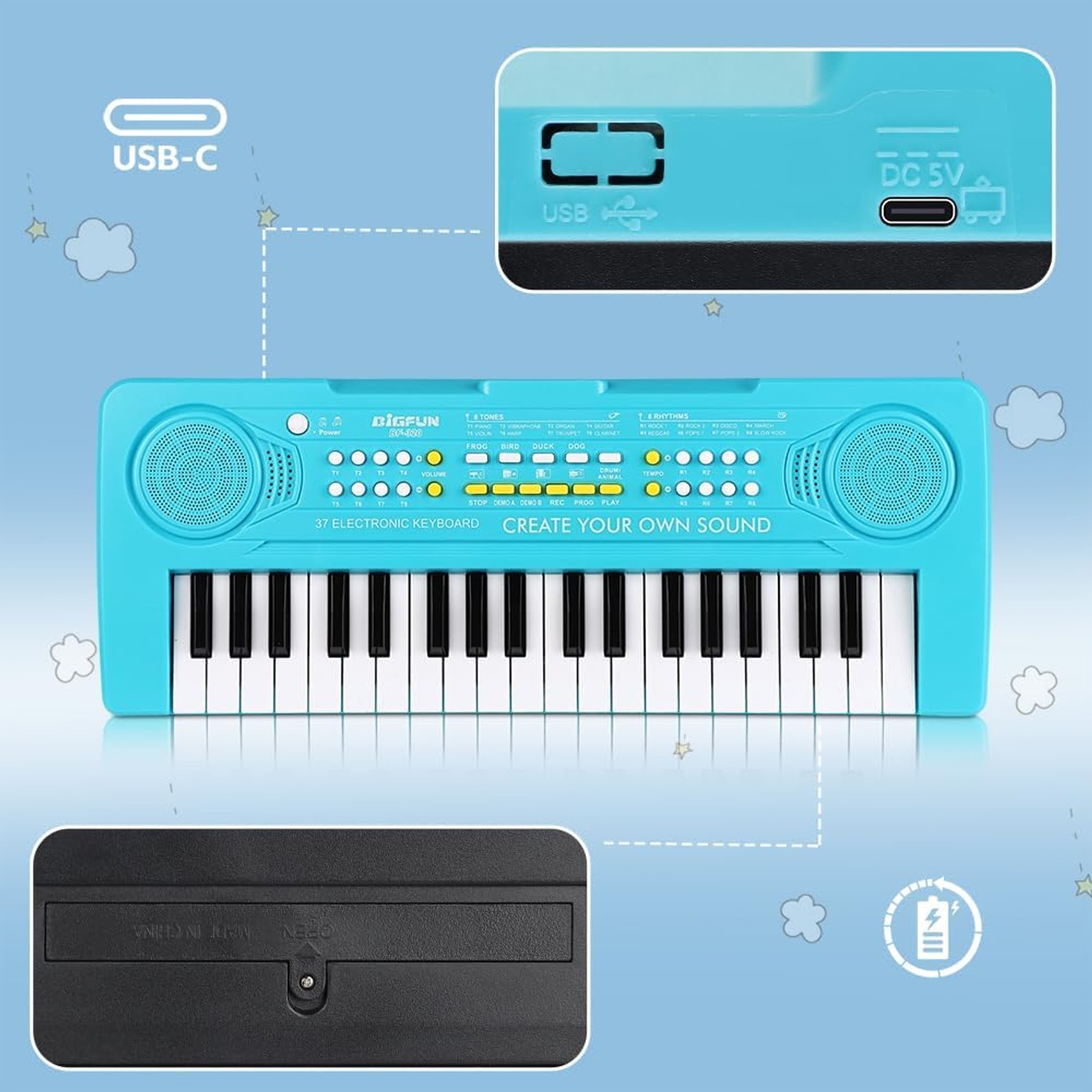
USB PoweredRuns from a USB power cord into a DC 5V-1A adapter, so no battery hunt.

Give a curious child their first real instrument with a kids keyboard piano 37 key set that turns a quiet afternoon into a concert.

Thirty-seven keys, 8 tones, 8 rhythms, 6 demo songs, 4 percussion sounds, twin speakers, ensemble mode, record and playback, an audio cable jack and USB power, all in a light 0.6 kg body that a three-year-old can carry.

A 37-key electronic keyboard for kids that looks and plays like a scaled-down version of the real thing.

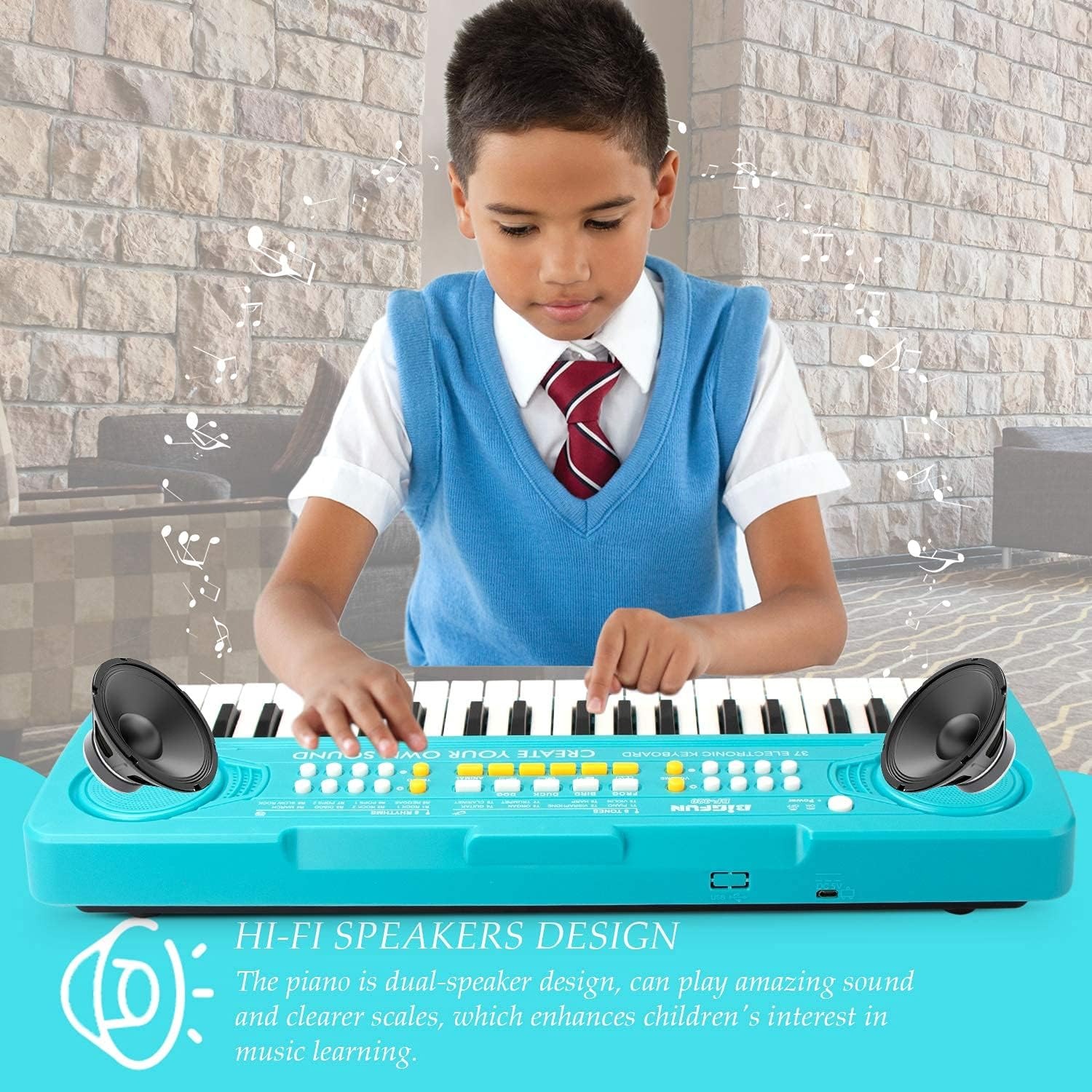
Built-in double speakers push the sound out clearly without needing any extra gear.

Eight tones, eight rhythms, six demo songs and four percussion sounds give children plenty to experiment with.

The record and playback function lets a child save a short piece and listen to it, which turns practice into a game.

At 0.6 kg with a 42.9 cm body and no assembly required, it moves easily between the playroom, the kitchen table and grandma's house.

37-Key Kids Keyboard Piano

Most children meet music through a plastic box with four buttons and a tinny speaker, and most of those boxes end up at the back of a cupboard within a month. A 37-key instrument is a different proposition. Thirty-seven keys cover three full octaves, which means a child can actually play recognisable songs instead of pressing pre-recorded buttons. That gap between "noise toy" and "instrument" is the whole reason this keyboard holds attention longer than the usual musical gift.

37-Key Kids Keyboard Piano

The layout is the familiar black-and-white arrangement, so anything a child learns here carries straight over to a full-size piano later. The keys are sized for small fingers, which matters more than people expect. On an adult keyboard a five-year-old has to stretch awkwardly between notes and gives up. On this one they can reach, press and hear the result, and that quick feedback loop is what builds confidence in the early weeks.

37-Key Kids Keyboard Piano

Beyond plain piano mode there are 8 tones and 8 rhythms to switch between, 6 demo songs to listen to and copy, and 4 percussion sounds for when a child wants to drum rather than play. Ensemble mode, twin speakers and a record and playback function round it out. Recording is usually the feature that hooks them. Playing a tune is fun, but hearing yourself played back is the moment a child decides they are a musician.

37-Key Kids Keyboard Piano

There is an audio cable jack on the unit and the keyboard runs from a USB power cord, with the DC connector going into the power jack at the back and the USB end into a 5V-1A adapter. No battery compartment to wrestle with on a birthday morning. An automatic standby sleep function means it powers down when it has been left alone, which saves both the adapter and your patience.

37-Key Kids Keyboard Piano

Physically it is 42.9 cm long, 15.7 cm wide and 5.3 cm tall, weighs 0.6 kg and needs no assembly. The casing is ABS plastic. It fits on a small table, a lap or the floor, and it is light enough for a three-year-old to carry to another room without help. The maker states that the keyboard holds a CPC children's product certificate and conforms to RoHS.

Not sure yet? That is fine.

A toy has to suit the child it is for, and you cannot always judge that from a photograph. If it is not right for you, send it back within 14 days of delivery in resaleable condition and we refund the price you paid, including standard delivery. That is a voluntary policy we offer on top of your legal rights.

If it turns up faulty, damaged or not as described, that is on us. We pay the return postage, with your protection under the Consumer Protection (Fair Trading) Act 2003 unaffected. Read the full detail on our refunds and returns page, or ask us anything before you order.

Frequently Asked Questions

What exactly is this product?

It is a 37-key electronic keyboard piano made for children aged three and up. It has a full black-and-white key layout, built-in double speakers and a set of tones, rhythms and demo songs. It is a toy in size and price but it plays like a small instrument.

How many keys does it have?

Thirty-seven. That covers three octaves, which is enough for most nursery songs, simple pop melodies and early piano exercises. Smaller toy pianos with 25 keys or fewer run out of notes quickly.

What age is it suitable for?

The manufacturer recommends 3 years and up. Younger preschoolers will still enjoy pressing keys and hearing sounds, but the demo and record features make more sense from around four or five. There is no upper age limit for a beginner learning their first notes.

Is this a good first keyboard for kids?

It is a sensible starting point. The key layout matches a real piano, so finger positions and note names transfer later. For many families the best first keyboard for kids is one that costs little enough to risk and offers enough range to grow into, which is the balance here.

How big is it?

The keyboard measures 42.9 cm long, 15.7 cm wide and 5.3 cm tall. It sits comfortably on a child's desk, a dining table or a lap. The low profile means it slides under a bed or onto a bookshelf when not in use.

How heavy is it?

It weighs 0.6 kg. A three-year-old can pick it up and carry it across the room without any trouble, which is part of what makes it useful for travel and visits to relatives.

What is it made from?

The listed materials are acrylonitrile butadiene styrene (ABS) and plastic. ABS is the same rigid plastic used in most children's toys because it resists knocks and does not splinter.

What colour is it?

Blue. The model number and colour are both listed as Blue, with the manufacturer part number BF-320-B.

Does it need batteries?

It runs from a USB power cord. The DC connector plugs into the power jack at the back of the keyboard and the USB end goes into a power adapter with a DC 5V-1A output. No batteries are specified for this model.

Is a power adapter included?

The maker lists the USB power cord as part of the design but does not confirm whether a wall adapter ships in the box. Most households already have a 5V-1A USB plug from a phone or tablet, which is all it needs.

What tones and sounds does it have?

There are 8 tones, 8 rhythms, 6 demo songs and 4 percussion sounds, with 26 settings in total. Children can switch from piano to other instrument voices and layer a rhythm underneath while they play.

What is ensemble mode?

Ensemble mode lets the keyboard play along with the child so the result sounds fuller than a single melody line. It is a common feature on starter keyboards and it makes simple playing feel more satisfying.

Can my child record what they play?

Yes. The keyboard has a record and playback function, so a child can capture a short piece and listen to it straight back. In practice this is the feature that turns casual banging into repeated practice.

What is the keyboard drum function?

It assigns percussion sounds to the keyboard so a child can tap out a beat instead of a melody. Combined with the four percussion sounds it gives kids who prefer rhythm to tune something to do.

Does it have a headphone socket?

There is an audio cable jack on the unit. The maker does not specify exactly which devices it is intended for, so check the jack type on arrival before buying a cable.

Does it turn itself off?

Yes, there is an automatic standby sleep function. If the keyboard is left untouched it goes to sleep rather than sitting powered on, which saves wear on the adapter.

Is assembly required?

No. It arrives ready to use. Plug in the USB power cord, switch it on and it is playable within a minute.

How loud is it?

It has double speakers, so it projects clearly in a room. The maker does not give a decibel figure or confirm a volume control, so if noise is a concern in your home, the audio jack may be the better route.

Is it suitable for young children?

The maker states that the piano holds a CPC children's product certificate and conforms to RoHS. As with any powered toy, keep the cable tidy and supervise very young children around it.

Will this teach my child to play piano properly?

It teaches the groundwork. Key layout, note recognition, rhythm and hand-eye coordination all transfer to a full-size piano. It is not weighted or touch-sensitive, so a serious student will eventually move up to a larger instrument.

Is it good for a child with no musical background?

Very much so. The demo songs give them something to copy before they can read music, and switching tones keeps curiosity going. For a household with no musician in it, the best beginner piano keyboard for children is simply the one that gets played daily.

Can two children share it?

Thirty-seven keys give enough width for two small children to sit side by side and each take a few octaves, at least for a while. Taking turns with the record function tends to work better than playing at once.

Does it work as a travel instrument?

It is light at 0.6 kg and slim at 5.3 cm tall, so it packs into a suitcase or car boot easily. The USB power requirement means you need a plug or a compatible power source wherever you go.

How do I clean it?

Unplug it first, then wipe the keys and casing with a soft cloth, lightly damp if needed. Keep water away from the speaker grilles and the power jack, and never use solvents or abrasive cleaners on the plastic.

How should I store it?

Flat, on a shelf or back in its box, with nothing heavy stacked on top. Keep it out of direct sunlight and away from damp, since heat and humidity are what age plastic and electronics fastest.

Does it make a good gift?

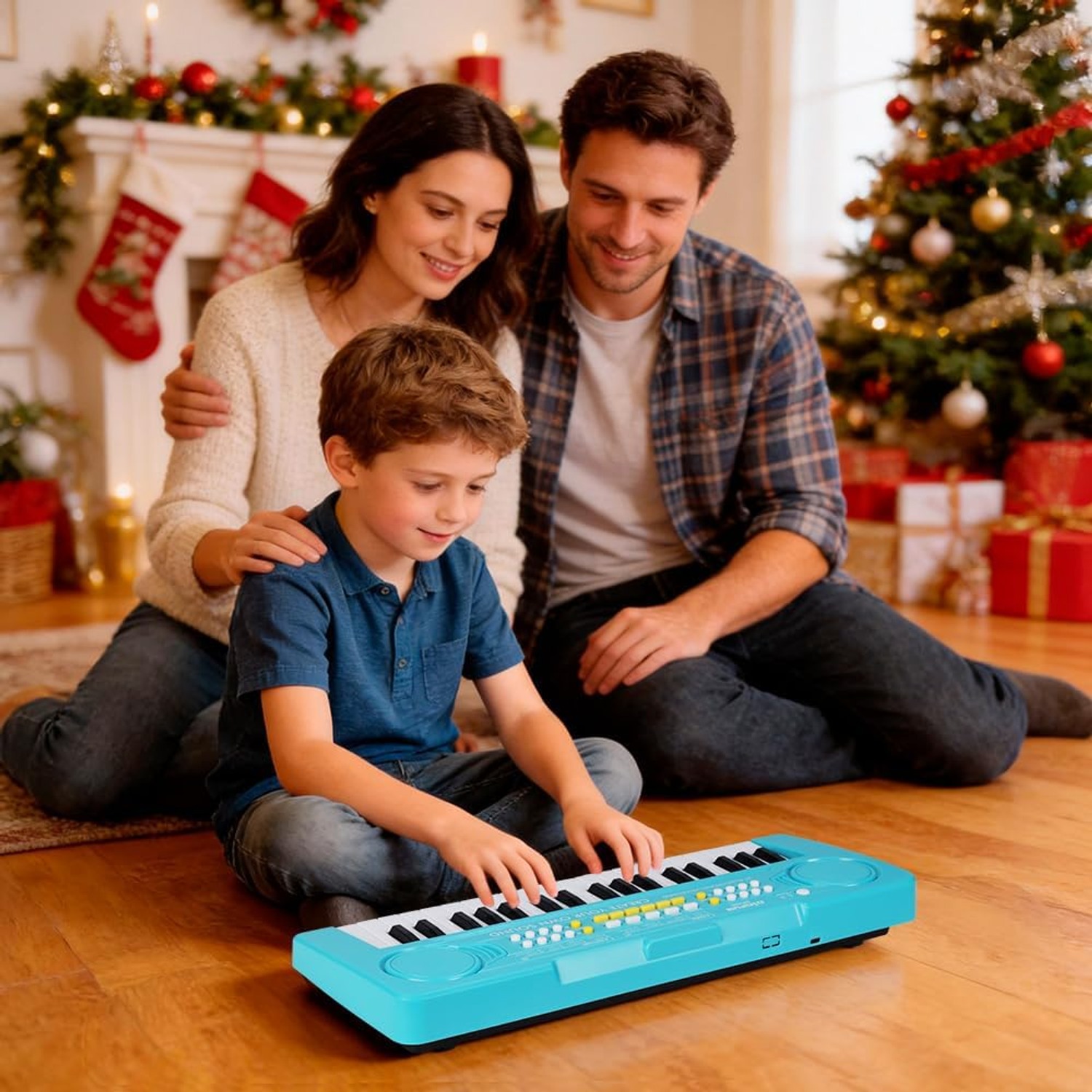
It ships in a printed cardboard box that is sturdy enough to wrap and reuse for storage. For a birthday or Christmas it reads as a proper present rather than a filler toy, and the best piano toy gift is usually one a child can actually make something with.

What comes in the box?

The listing records one item, the keyboard itself, with no assembly needed. Specific accessory contents beyond the USB power cord are not detailed in the maker's details.

What are the delivery options?

Most orders arrive within 7 to 12 working days of the order date. Our toys are sent from overseas warehouses, so allow for that if you are buying for a birthday. Delivery is to Singapore addresses only, free on orders of $150 or more and a flat $20 under that, and you get tracking by email once the parcel is on its way.

Can I return it if my child does not get on with it?

You have 14 days from delivery to return it for a change of mind, provided it is unused, complete and in its original packaging. Return postage is yours to pay. If it arrives faulty or damaged, tell us and we will put it right at no cost to you.

What if it arrives damaged or faulty?

Message us with your order number and a photo of the problem and we will sort out a replacement or a refund. Do not throw away the box until you are sure everything works, since the original packaging makes returns much simpler.

Choosing A Kids Keyboard Piano That Actually Gets Played

6 min read Toy Warehouse

The toy that goes quiet after a fortnight

Every house with children has one. A musical toy bought with good intentions, played loudly for about eleven days, then abandoned behind the sofa. The problem is rarely the child. It is usually the toy.

Most children's music toys are built around pressing a button and hearing a pre-recorded clip. There is nothing for a child to get better at. Once they have heard all four songs, the toy has given everything it has. Attention moves on, and the parent quietly concludes their kid is "not musical".

A keyboard with a real key layout works differently. The child makes the sound. If they press the wrong note, it sounds wrong, and they adjust. That tiny loop of attempt, feedback and correction is the thing that keeps a toy in use for months instead of weeks. It is also, incidentally, how learning works.

Why the number of keys matters more than the features list

Key count is the single spec worth paying attention to on a children's keyboard, and it is the one most parents skip past.

A 25-key toy covers two octaves. That sounds like plenty until a child tries to play anything beyond the simplest nursery rhyme and runs off the end of the keyboard. Songs need room. Thirty-seven keys give three full octaves, which handles the vast majority of children's songs, early piano method books and the pop melodies a six-year-old will inevitably try to work out by ear.

The second reason is posture. On a very short keyboard, a child's hands end up cramped in the middle. With more keys they learn to move their hands along the instrument, which is a real piano skill. When they eventually sit at a full-size piano, nothing feels foreign.

This model has 37 keys in a 42.9 cm body. That is a good ratio. The keys are narrow enough for small fingers to reach between notes but wide enough that a child can press one key cleanly without catching its neighbour.

What the extra functions are actually for

The spec sheet lists 8 tones, 8 rhythms, 6 demo songs, 4 percussion sounds and 26 settings in total, plus ensemble mode, a keyboard drum, double speakers and record and playback. Here is how those earn their place in real use.

The tones matter because they keep boredom away. A child who is tired of piano sound will keep playing the same melody if they can hear it as a different instrument. It is the same practice, dressed up.

The rhythms give a child a pulse to play against. Timing is the hardest thing to teach a beginner and the easiest to absorb by osmosis. A backing rhythm does that work quietly.

The demo songs are models to copy. Before a child can read music, listening and imitating is how they learn. Six songs is enough to work through slowly over a few months.

The record and playback function is the one I would single out. There is a specific moment when a child plays something, hears it back and realises it was them. That is the moment the keyboard stops being a toy. If you only use one feature, use this one.

Ensemble mode and the double speakers are about making modest playing sound good. A single melody from one small speaker sounds thin, and thin sound discourages children. Fuller sound encourages them.

Who this suits, and who it does not

This keyboard is a good fit for a child aged three to roughly eight who has shown any flicker of interest in music. It is also a good fit for a cautious parent, because it costs far less than a lesson-grade instrument and tells you quickly whether the interest is real.

It suits grandparents who want a present that does not duplicate what is already in the toy box. It suits families who move around, because at 0.6 kg it travels. It suits a household where a full-size piano is simply not going to fit.

It is not the right choice for a child already taking formal lessons who needs weighted, touch-sensitive keys. It is also not a professional instrument for an adult. Being honest about that saves disappointment. Think of this as the bike with stabilisers, not the road bike.

If your child is already a year into lessons, skip this and put the money toward a 61-key digital piano. If your child has never touched a keyboard, start here.

How to choose between models like this one

A few practical checks when comparing children's keyboards.

Key count. Anything under 32 keys limits what can be played. Thirty-seven is the sensible minimum for a child who might stick with it.

Power type. Battery-only keyboards are a slow drain on the household budget and die at the worst moments. This one uses a USB power cord into a 5V-1A adapter, the same kind of plug most people have spare. That is one fewer thing to buy.

Weight and footprint. At 42.9 x 15.7 x 5.3 cm and 0.6 kg, this fits on a child's table and stores on a shelf. If a keyboard needs a stand and its own corner of the room, it will get resented.

Build material. ABS plastic is standard for a reason. It takes drops and knocks that would crack cheaper plastics.

Safety marks. The maker states CPC children's certification and RoHS conformity for this keyboard.

Assembly. None here, which sounds minor until you have spent a birthday morning hunting for a screwdriver.

Getting a child started without turning it into a chore

Resist the urge to teach immediately. Give the keyboard to your child, show them where the power goes, and leave them alone with it for a week. Let them find the tones and the percussion sounds themselves. Curiosity does more early work than instruction.

After that, two gentle nudges help. First, show them the demo songs and ask if they can find one of the notes. Second, show them the record button. Children who record themselves tend to replay, notice the mistakes and fix them without anyone asking.

Keep sessions short. Ten minutes of happy playing beats half an hour of enforced practice, and at this age the goal is only to keep the instrument interesting. Put it somewhere visible. Instruments in cupboards do not get played.

If a child loses interest for a few weeks, that is normal. Leave it out. They often come back to it with a new idea.

Looking after it

Keyboards are fairly tough but they have two weaknesses, liquid and grit. Keep drinks off the table it sits on, and keep it away from the sandpit and the beach bag.

Wipe the keys with a soft, barely damp cloth every so often. Unplug it first. Avoid anything with solvents in it, which can dull or craze ABS plastic over time.

When it is not in use, store it flat without heavy things stacked on top. The original box is good for this, which is one reason it is worth keeping. Do not leave it in a hot car or in direct sun on a windowsill, as heat is harder on electronics and plastic than anything else in a normal home.

The automatic standby sleep function handles the rest. If the keyboard has been forgotten mid-play, it powers down on its own.

The short version

Thirty-seven keys, 26 settings, 8 tones, 8 rhythms, 6 demos, 4 percussion sounds, record and playback, twin speakers, USB power, 0.6 kg, no assembly, recommended from age three.

What that adds up to is a keyboard a small child can carry, switch on alone and actually learn something from. It has enough range for real songs and enough extras to stay interesting past the first fortnight. It is not a lesson-grade piano, and it is not pretending to be one. It is the instrument that tells you, cheaply and quickly, whether your child wants a real one.

If the answer turns out to be yes, you will know within a month. If it turns out to be no, you have lost very little and gained a child who had fun making noise for a while. Either outcome is a decent result.

Browse the shop

Ready to hear the first song?

Order the 37-key keyboard today and your child can be picking out a melody by the weekend.

Ask us a question

Page summary

The BIGFUN 37-key kids keyboard piano (model Blue, part number BF-320-B) is an electronic toy piano for children aged 3 and up. It has 37 keys, 26 settings, 8 tones, 8 rhythms, 6 demo songs and 4 percussion sounds, plus double speakers, ensemble mode, a keyboard drum, an audio cable jack, record and playback, and an automatic standby sleep function. It runs from a USB power cord connected to a DC 5V-1A adapter. The body measures 42.9 x 15.7 x 5.3 cm, weighs 0.6 kg, is made from ABS plastic and requires no assembly. Colour is blue. The maker states CPC children's certification and RoHS conformity. Country of origin is not specified by the maker.