
The complete guide
The Honest Buyer's Guide to Paddle Catch Ball Games
The toy that actually gets used
Every house with kids has the same shelf. The one holding a half-deflated football, a kite with a tangled string and a board game missing two pieces. The problem is rarely the toy itself. It is the friction. Something needs pumping, charging, setting up or explaining, and by the time that is done the moment has passed.
A paddle catch ball game sidesteps all of it. You hand someone a paddle, you stand a few metres apart, you throw. That is the entire instruction set. Within a minute kids are counting catches out loud and arguing about whose turn it was to drop it. That is the sound of a toy earning its space.
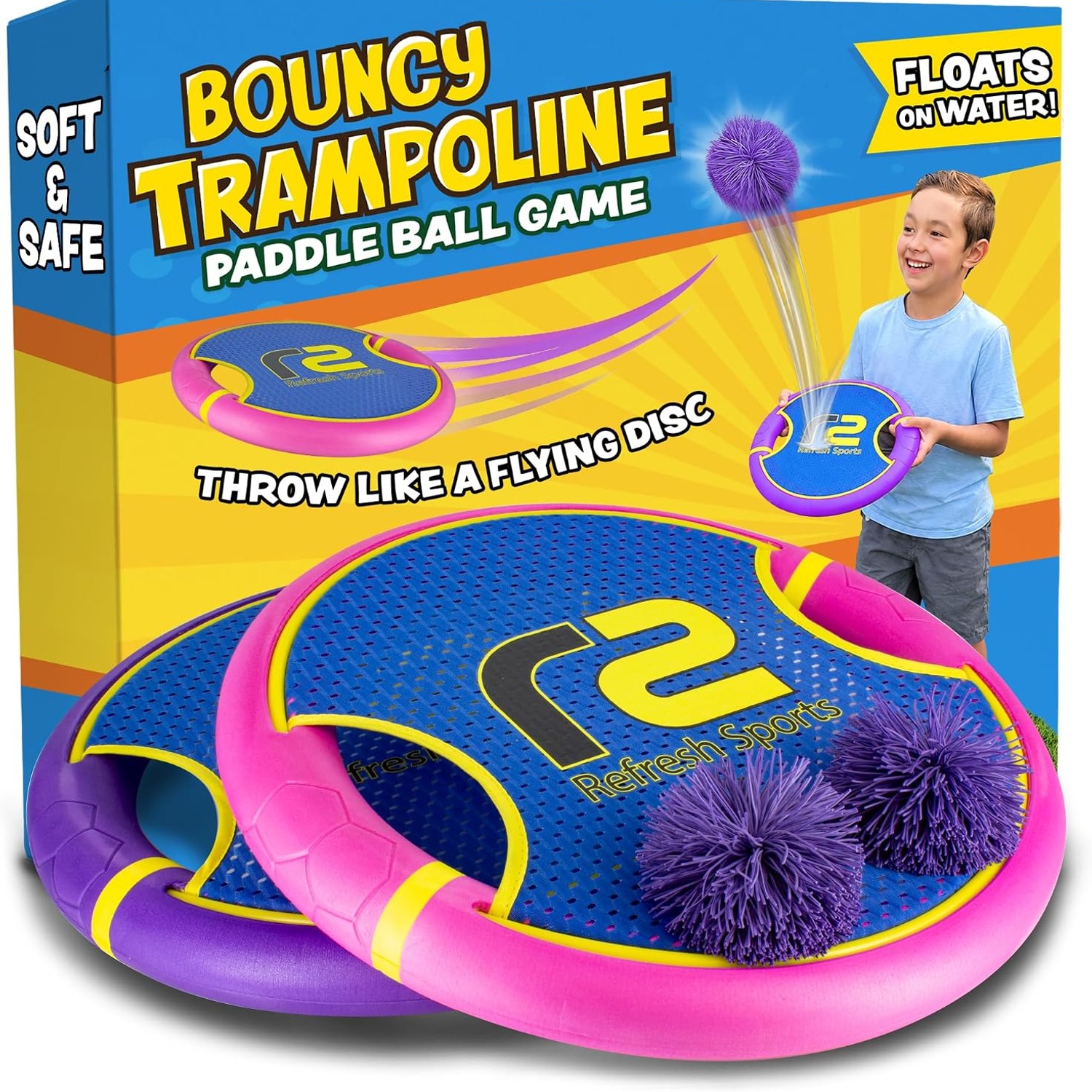
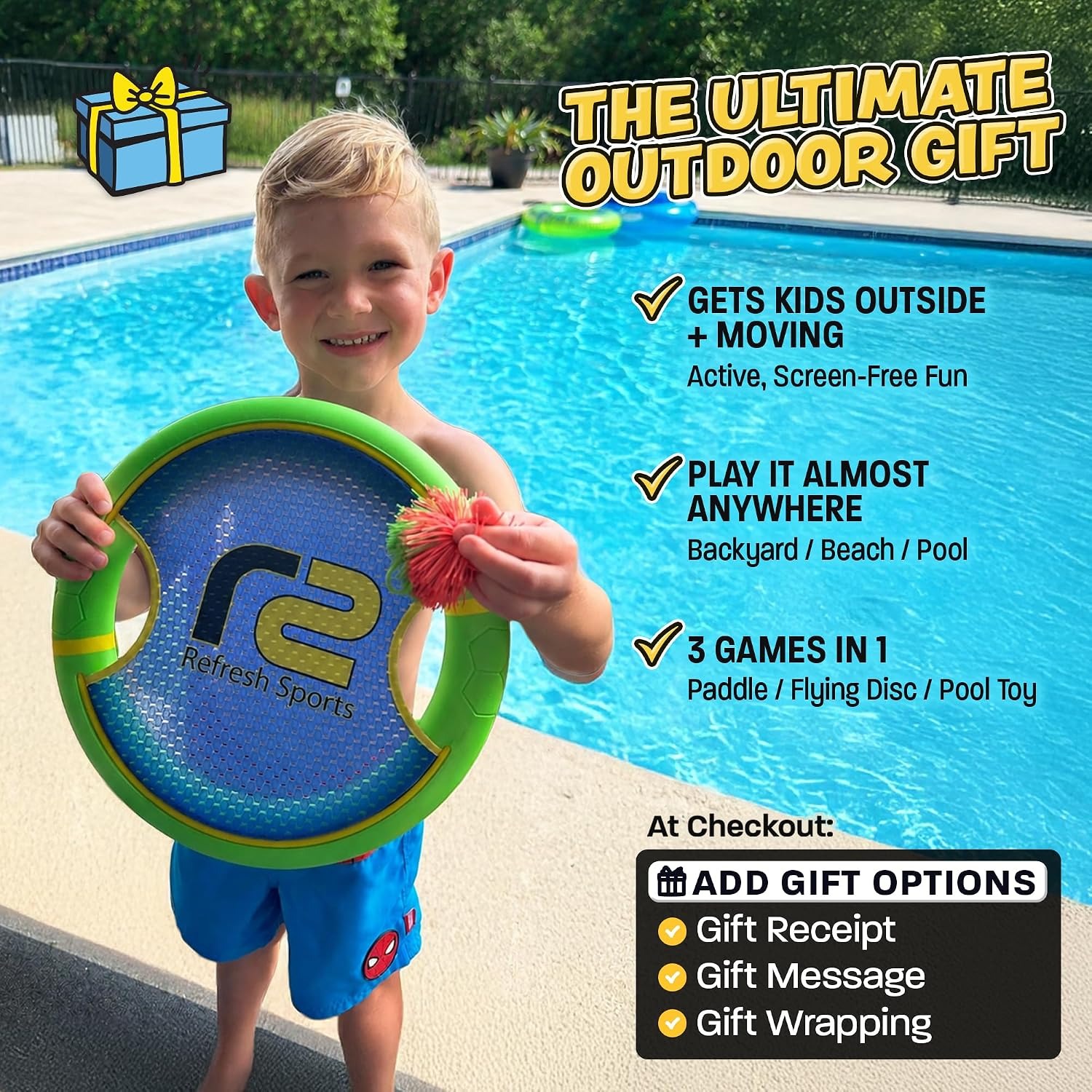
This set from Refresh Sports comes with trampoline paddles and stringy balls. Each paddle measures 30.5 x 30.5 x 2.5 cm, it is rated for ages 3 years and up, and it supports 1 to 4 players. There is no assembly and no batteries. The listed power source is manual, which is the polite way of saying it runs on children.
How a trampoline paddle differs from a flat bat
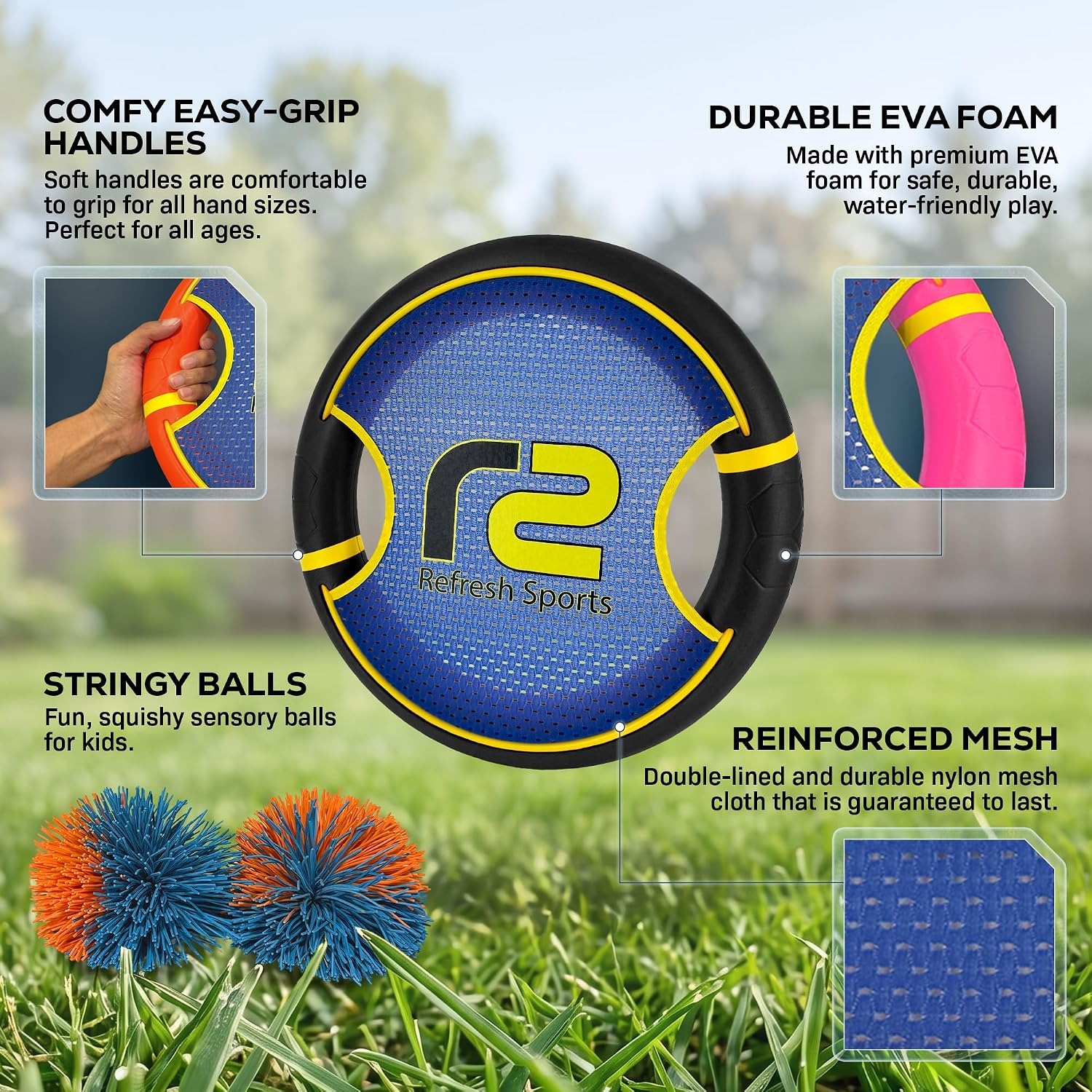
A standard bat or racket has a rigid face. Hit the ball and the energy goes mostly where you aimed it, which is fine but demands decent technique. A trampoline paddle has a springy playing surface instead. The face gives slightly on contact, then pushes back.
The practical effect is forgiving play. A weak toss from a five year old still comes back with life in it. A ball that lands off-centre still returns rather than dribbling to the grass. That forgiveness is the difference between a rally of three and a rally of thirty, and long rallies are where the fun actually lives.
It also changes the physical demand. You are not swinging hard for power, you are timing a catch and release. Kids who find bat-and-ball sports frustrating often get on much better with this, because success arrives fast.
Who it suits
The 3 years and up rating is the official line, and in practice the set grows with a child rather than being outgrown in a few months.
At three or four, most children will not rally at all. They will bounce the ball on the paddle over and over, on their own, counting. That is genuinely valuable practice for tracking a moving object and coordinating hands with eyes, and it keeps them busy far longer than you would guess.
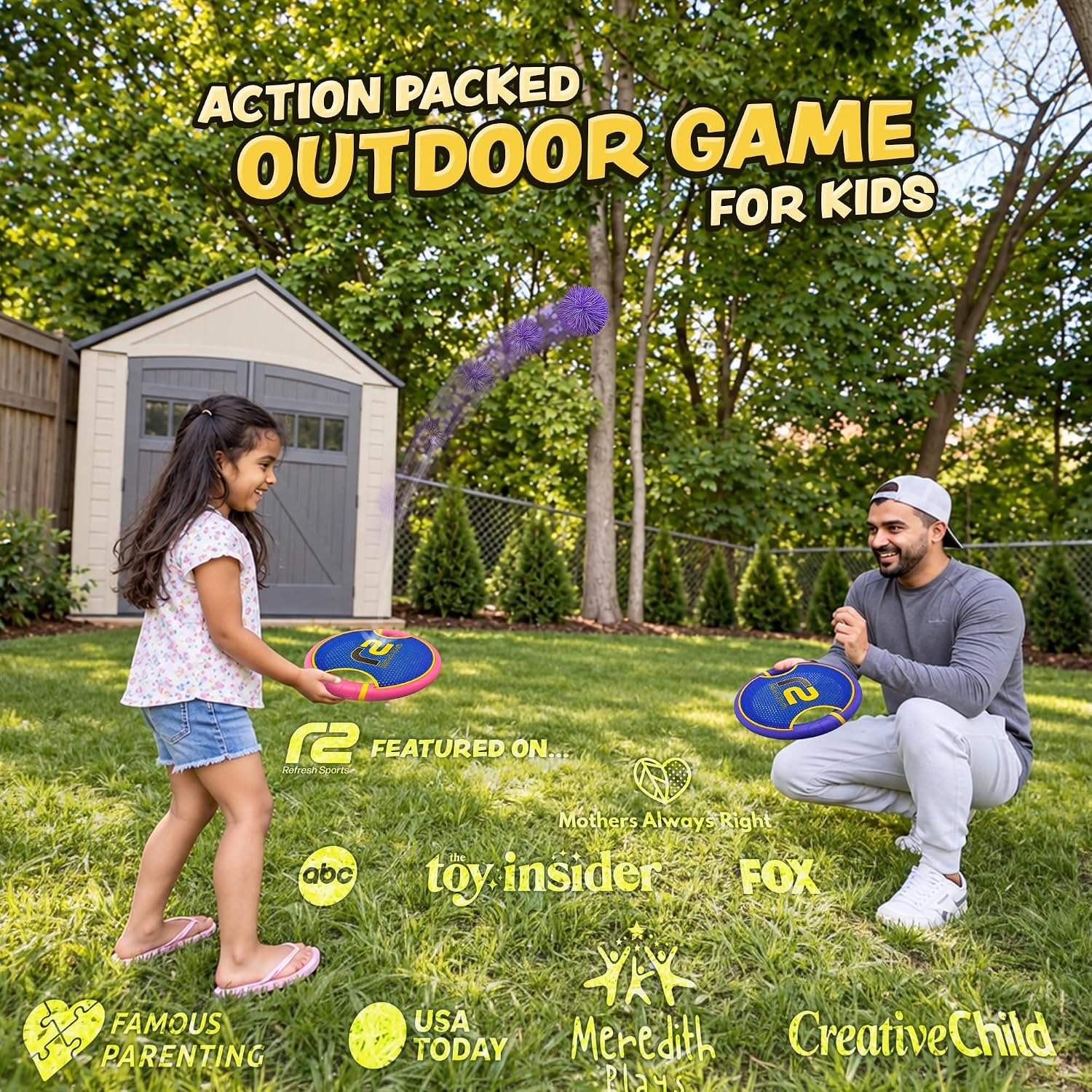
At six or seven, two-player rallies click into place. This is the sweet spot. Siblings will play until someone needs dinner.
At ten and above, and with adults, the game gets competitive. Players stand further apart, add rules like one-handed only or no stepping, and keep score properly. It stops being a kids' toy and becomes a proper park game.
The 1 to 4 player range matters for families with uneven numbers. One child on their own still has something to do. Four means two teams. Nobody sits on the step waiting their turn, which is the usual failure mode of group toys.
Where to play it
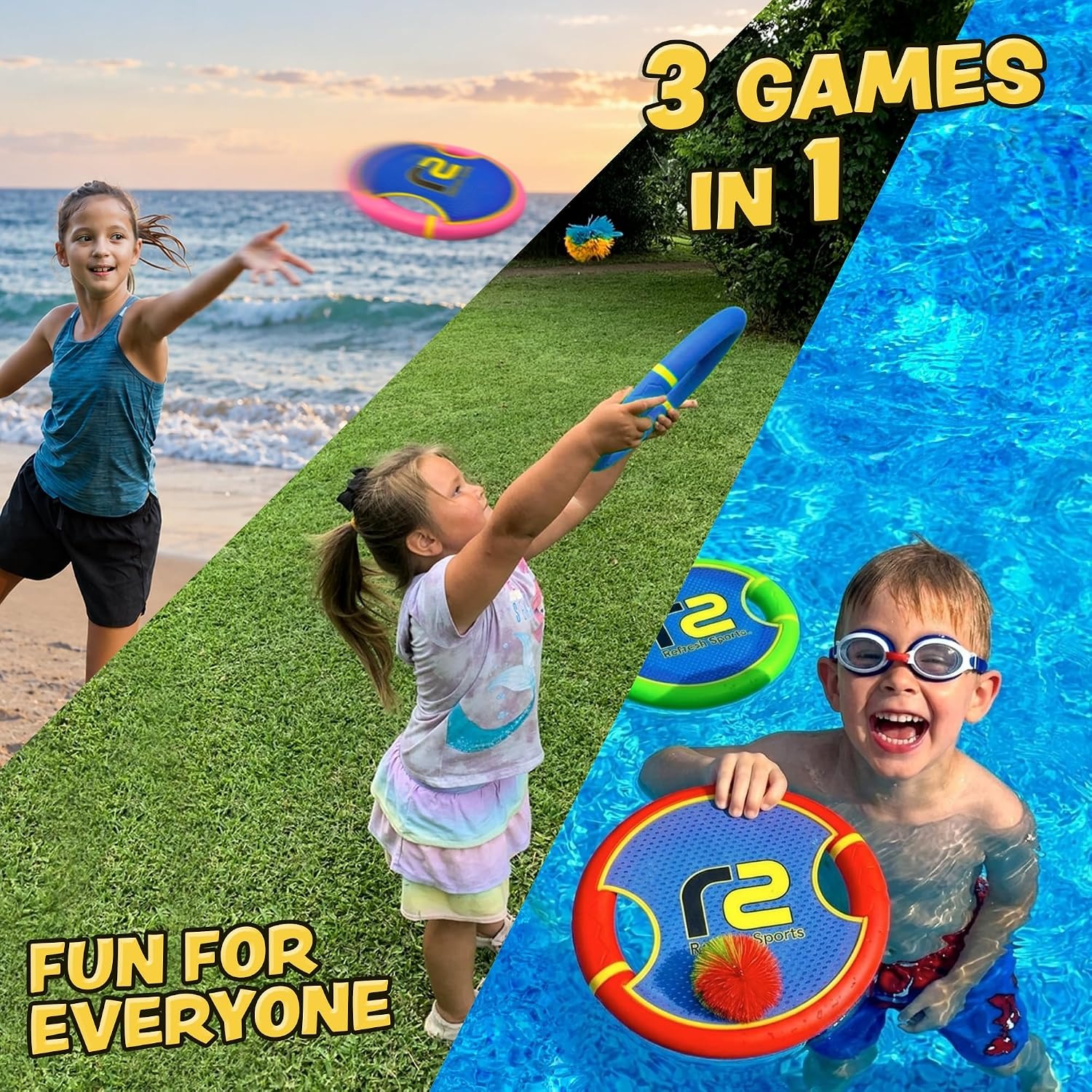
Grass is the kindest surface. Drops are soft, balls do not skitter away, and nobody grazes a knee diving for a catch. A small patch of grass is plenty of room.
Sand is the other natural home. Beach play suits the set well because the compact 30.5 cm size slides into a bag with the towels, and there is no pole, net or pump to carry. If you have been hunting for the best beach paddle game to replace the cheap plastic set that cracked last year, this is the category to look at.
Parks, campsites and school fields all work. Indoors is fine in a corridor or empty room, as long as you move the vase first. Concrete and tile are playable but harder on dropped balls over time.
Avoid playing near roads, glass doors or crowded picnic tables. Not because the set is dangerous, but because any thrown ball eventually goes somewhere unplanned.
How to choose between paddle sets
If you are comparing options, a few things separate a set that lasts from one that does not.
Paddle size. Too small and little hands cannot catch reliably. Too large and the paddle becomes awkward to swing. The 30.5 cm square here sits in the usable middle for both kids and adults sharing the same set.
Surface type. Springy beats rigid for mixed-age play, every time. Rigid faces favour skilled players and frustrate beginners.
Number of balls. More balls means less time hunting in bushes. This set includes stringy balls as a listed component.
Setup requirement. Anything with a net, frame or pump adds minutes to every session, and those minutes are exactly when a child changes their mind. Zero assembly is a real feature, not a spec-sheet filler.
Portability. At 2.5 cm thick, the paddles pack flat. That is what makes it one of the best travel games for kids rather than another bulky item you leave at home.
Batteries. None here. Nothing to run flat halfway through a holiday.
Getting more out of it
Once the basic rally is boring, change the rules. Children will usually invent variations on their own, but a few prompts help.
Count the record. Write the highest rally on the fridge and let them chase it. This single trick extends the life of the toy by months.
Move further apart each successful catch. The rally ends when someone drops it, then you reset. It adds pressure and makes the distance meaningful.
Play one-handed, or non-dominant hand only, which evens things out when an adult plays a child.
Teams of two with a bounce allowed between partners turns it into something closer to a proper game. For family gatherings this is where the best family outdoor games energy comes from, with three generations in the same rally.
Looking after it
The care routine is short, which is good, because long care routines get ignored.
After beach use, rinse or wipe off sand and salt. Sand is abrasive and will wear any play surface faster than normal use. After pool use, wipe off chlorine. Let everything dry fully before it goes in a cupboard, because damp storage is how toys start smelling.
Store the paddles flat rather than stacked under heavy objects, so the surface keeps its shape. Keep the balls in the same bag as the paddles. A missing ball is the most common reason a set like this stops being played with, and it is entirely preventable with one drawstring bag.
Bring it inside at the end of the day. Weeks of sun and rain will age any outdoor toy, and this one is small enough to live by the front door.
A note on gifting
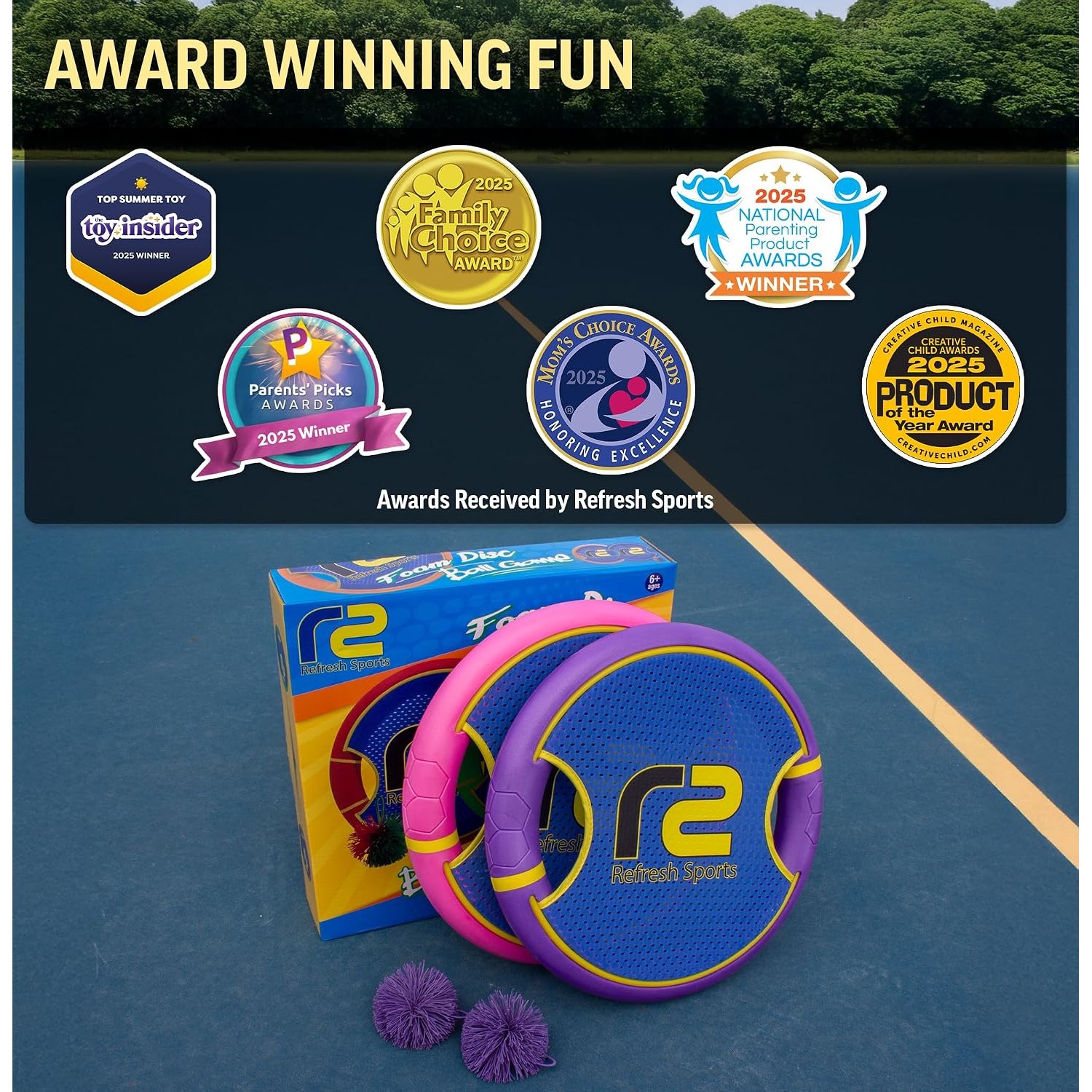
The pink and purple colourway reads as a present rather than sports gear, and the no-assembly design means a child can use it the moment the wrapping comes off. There is no parent disappearing for twenty minutes with a screwdriver, and no scramble for batteries on a Sunday.
The manufacturer lists the educational objective as promoting physical development and social skills through play. That is marketing language for something real. Rallying requires two people to pay attention to each other, adjust, and keep going. It is cooperative before it is competitive.
The short version
This is a simple, portable paddle catch ball game for ages 3 and up, playable by 1 to 4 people, with trampoline paddles and stringy balls included. Each piece is 30.5 x 30.5 x 2.5 cm, there is nothing to build and nothing to charge.
It suits fields, beaches, parks and campsites. It works for a single child practising alone and for four people running a scoring match. It stores flat, cleans with a damp cloth and travels in a beach bag.
Some product details, including material composition, weight and country of origin, are not specified in the supplied product record, and we would rather say so than guess. What is confirmed is the part that decides whether a toy gets used: it is fast to start, easy to learn and hard to put down once a rally gets going.