
Toy Warehouse
Company
Shop By Category
T&Cs
Shop Online
  • Box contents listed
  • Free tracked delivery across Singapore over $150
  • 14-day returns

Science Robotics Kit 6 Projects | STEM kit for kids | Build your own robot kit

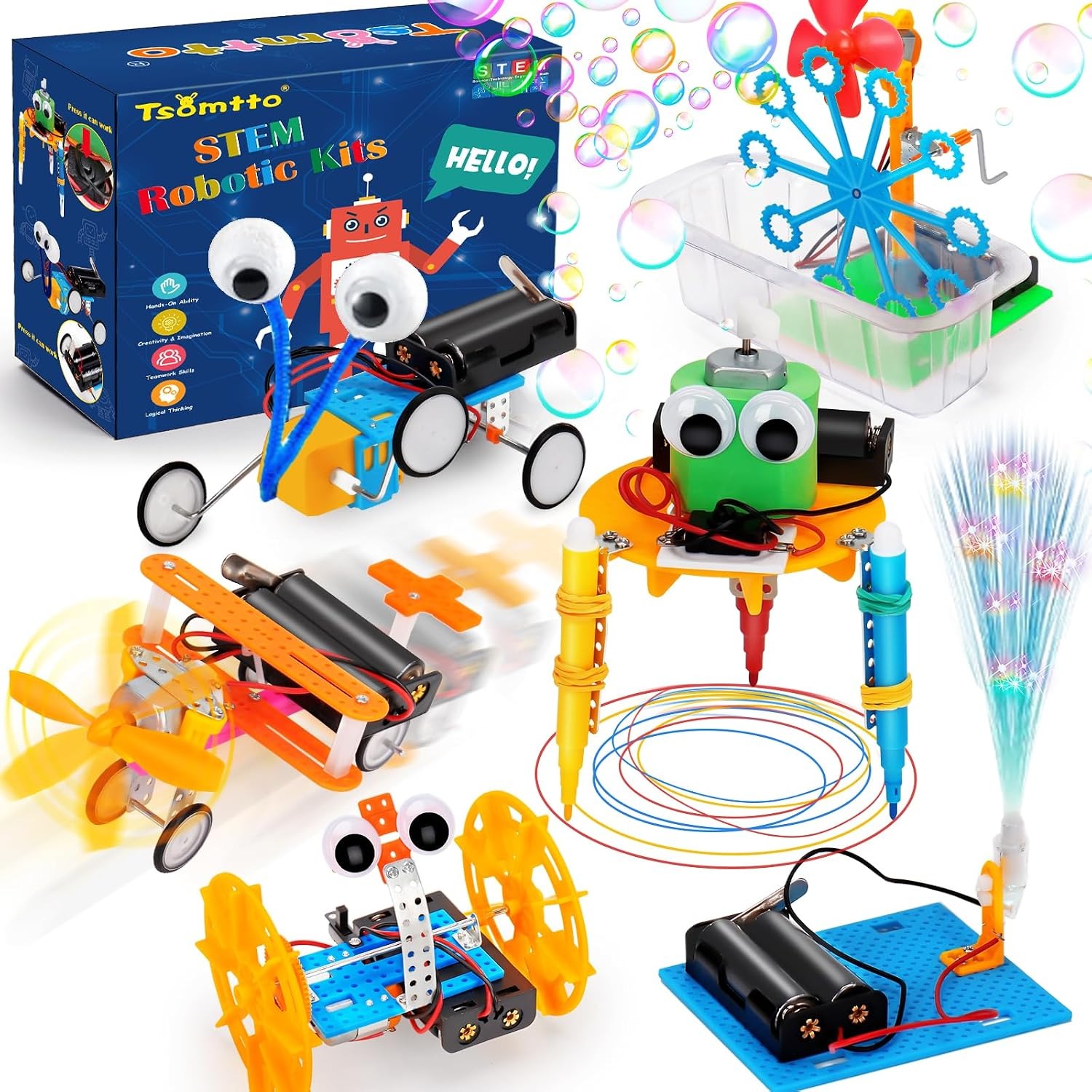
STEM Science Robotics Kit with 6 Build-It-Yourself Projects

$75.99 $90.99 Save $15
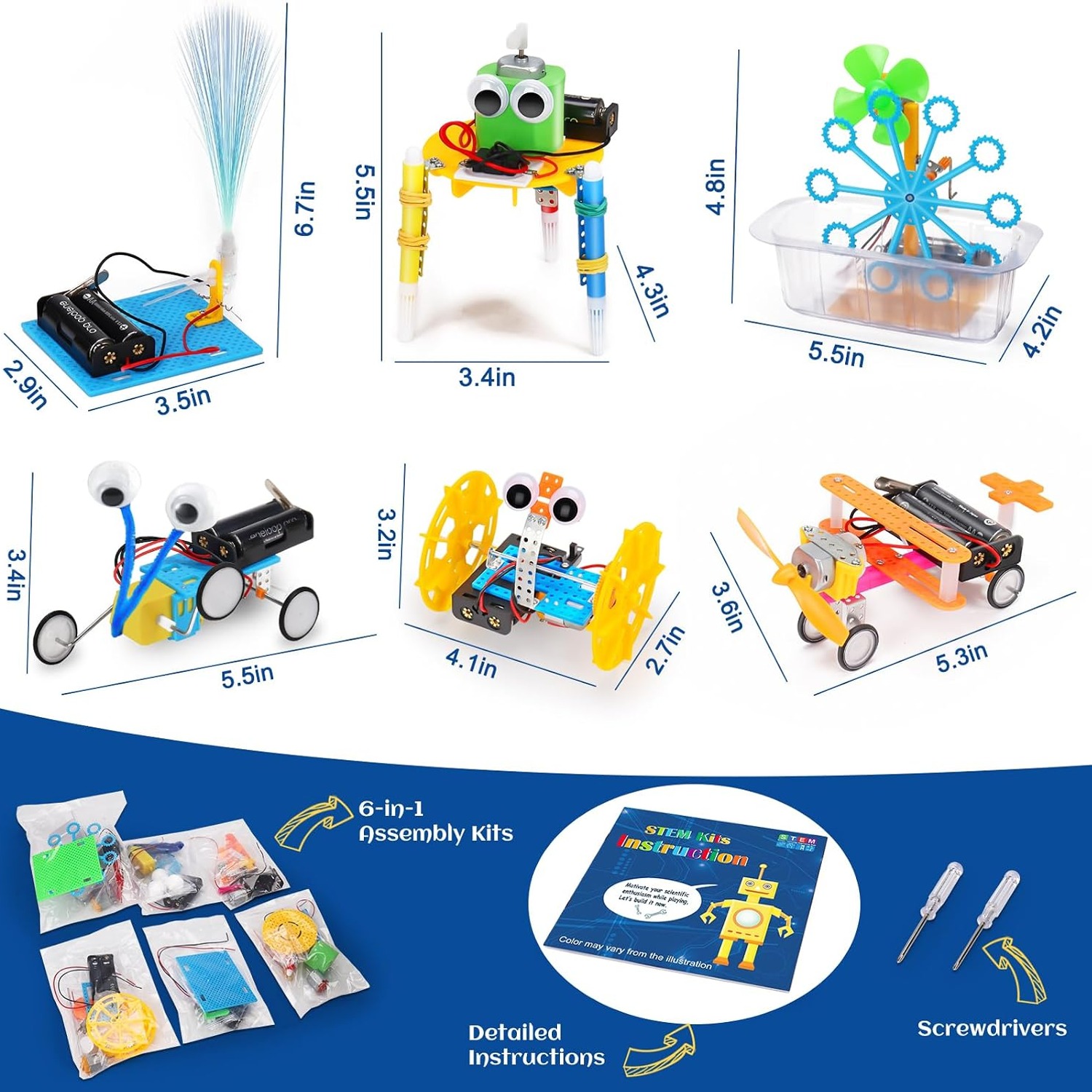
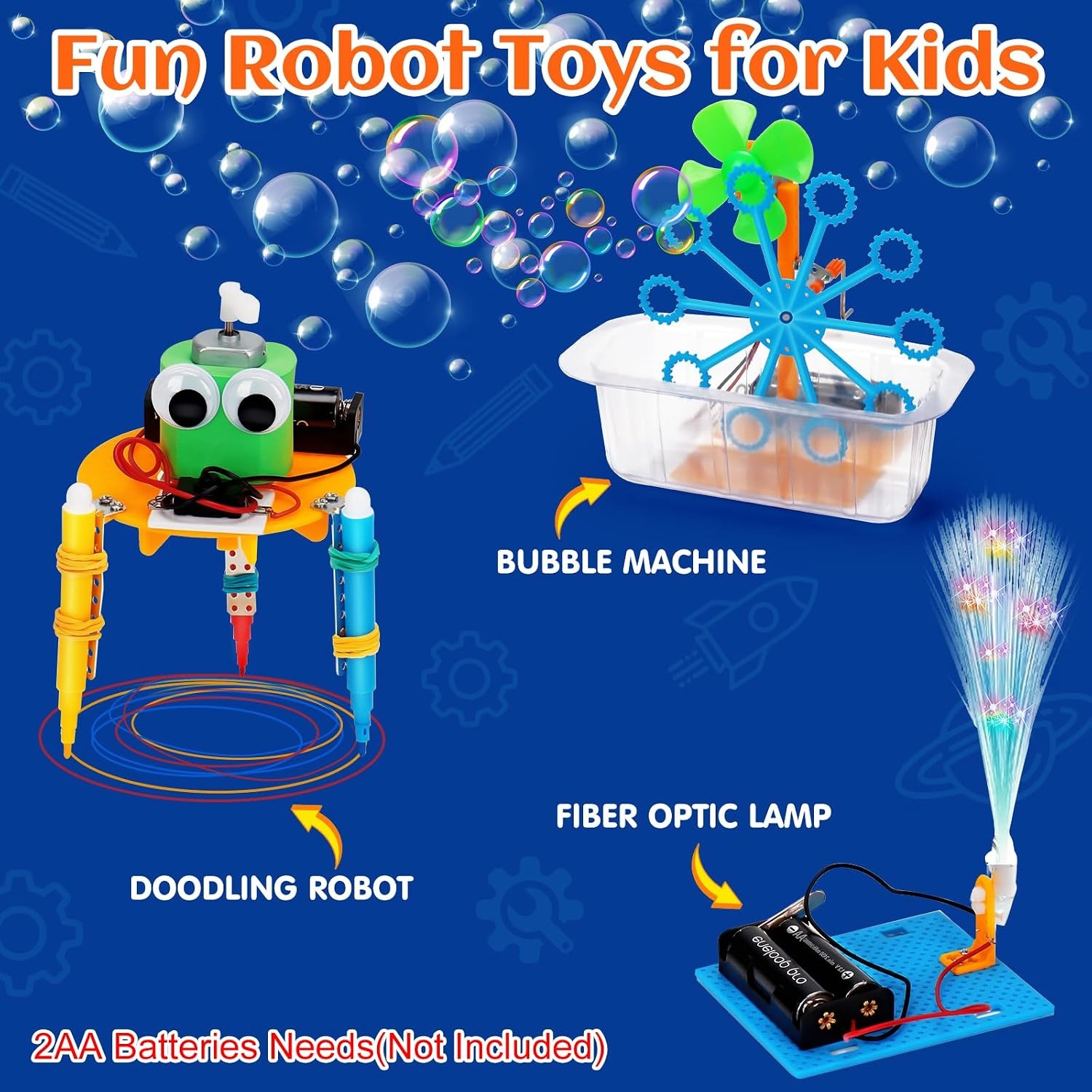
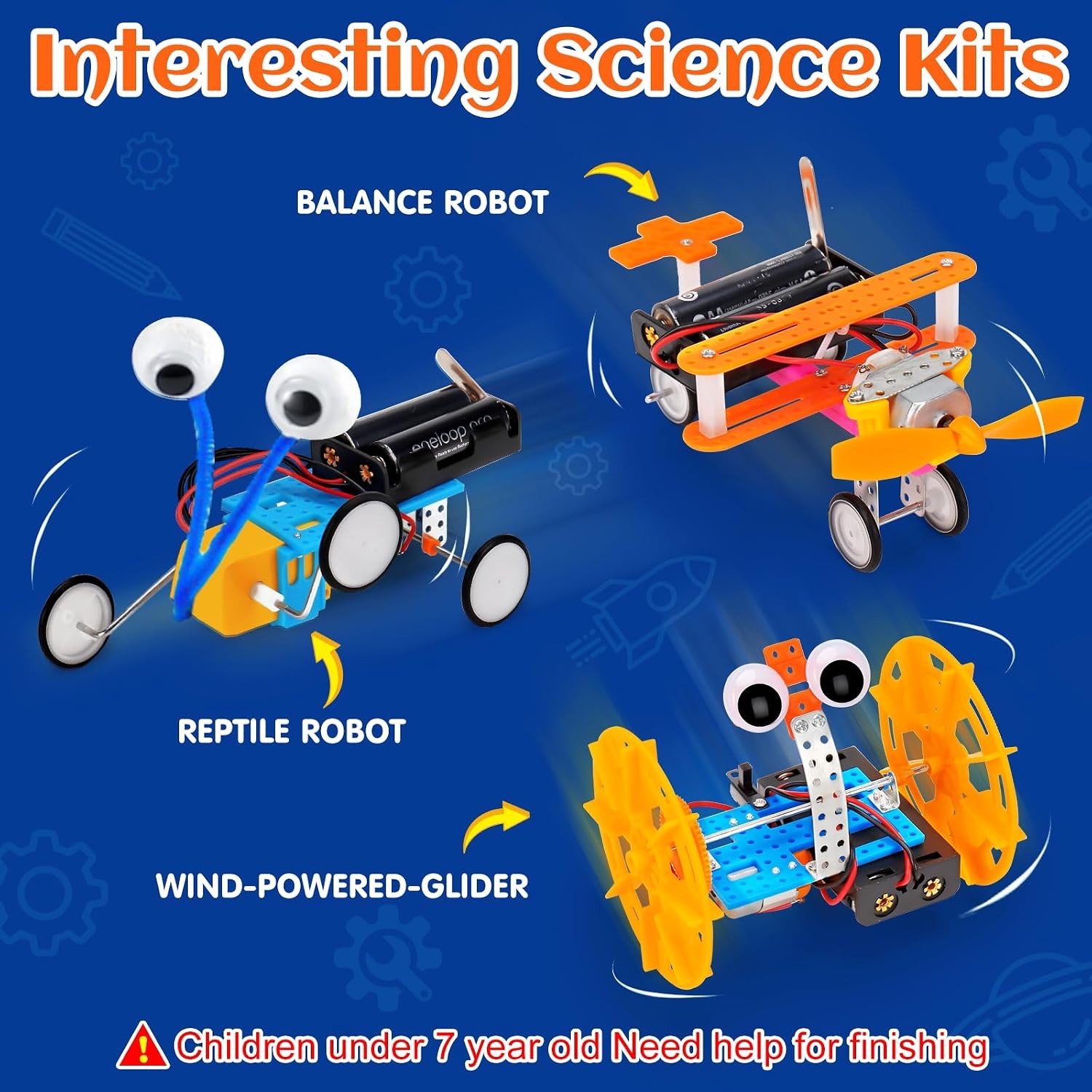
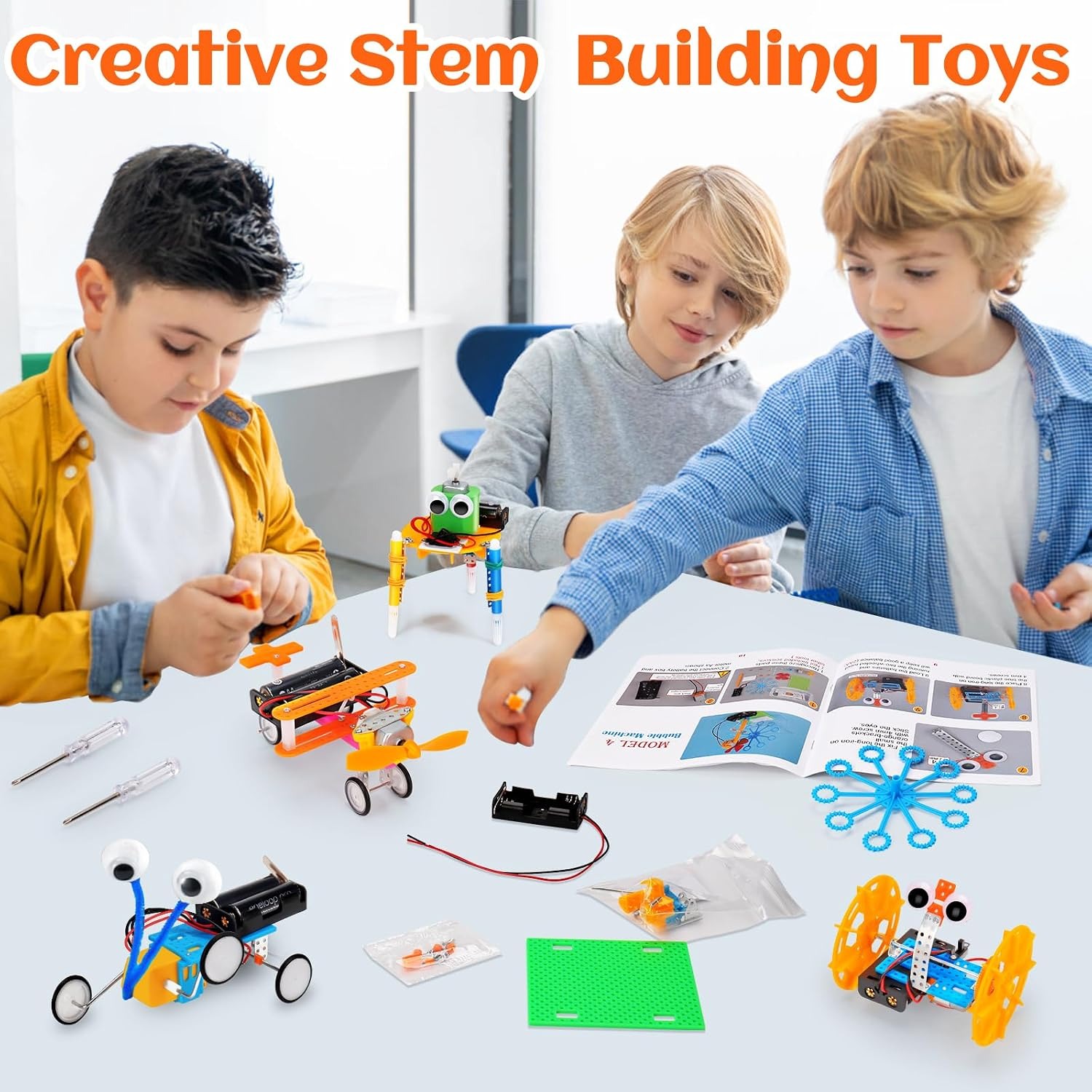
  • Six Separate Projects
  • Screwdriver Included
  • Step-By-Step Manuals
  • Made For Ages 8+

Price: $75.99 $90.99

  • Free tracked delivery across Singapore on orders $150+, otherwise a flat $20
  • Pay by card or PayPal, handled by the payment provider
  • 14 days to change your mind, plus your statutory rights
Product specifications
BrandTsomtto
Set NameSTEM Science Robotics Kit 6 Set
ThemeRobotics
Number of Projects6
Number of Items1000
Manufacturer Recommended Age8 years and up
Age Range DescriptionKid
Educational ObjectiveSkill development, following instructions, teamwork and basic scientific exploration
MaterialPlastic
Assembly RequiredYes
Manufacturer Part Number6-06
Item Weight0.48 kg
Item Dimensions (L x W x H)25 x 25 x 25 cm
Item TypeToys
Weight0.48 kg
Shipping & returns

Tracked delivery anywhere in Singapore. It is free on orders of $150 or more, and a flat $20 below that.

If it is not right for you, send it back within 14 days of delivery in resaleable condition and we refund the price you paid, including standard delivery. That is a voluntary policy we offer on top of your legal rights. You cover the cost of returning it unless the item is faulty.

If it arrives faulty, damaged or not as described, we put it right at no cost to you, return postage included, and your protection under the Consumer Protection (Fair Trading) Act 2003 is unaffected.

Shipping details · Refunds and returns

Six Separate ProjectsOne box holds six different models to build, not a single one-and-done toy.
Screwdriver IncludedThe tool comes in the box, so there is no hunting through the drawer first.
Step-By-Step ManualsPicture-led instructions let most kids work through a build on their own.
Made For Ages 8+Manufacturer recommended age is 8 years and up, with roughly 1,000 parts.

Six builds in one box, so a curious kid can turn a pile of parts into a working science robotics kit they built themselves.

Six separate robotics projects, a screwdriver, step-by-step picture instructions and roughly 1,000 parts that teach building, problem solving and patience in one sitting.

Six robotics and science projects come in one box, so there is a fresh build waiting every time boredom hits.

Roughly 1,000 plastic parts and a screwdriver give kids real hands-on practice with assembly rather than a quick snap-together toy.

Step-by-step instruction manuals walk through each model, which helps kids learn to read directions and follow a sequence.

Assembly is required, and that is the point, since the building itself is where the learning happens.

Recommended for ages 8 and up, which makes it an easy gift for birthdays, holidays or a long school break.

STEM Science Robotics Kit with 6 Build-It-Yourself Projects

Most science toys have one trick. You build the thing, it works for an afternoon, and then it sits on a shelf. This set takes a different route by packing six separate projects into a single box. Each one is its own small engineering puzzle, so a child gets six beginnings, six finishes and six chances to feel like they actually made something.

STEM Science Robotics Kit with 6 Build-It-Yourself Projects

The kit arrives as parts rather than a finished model, with around 1,000 pieces and a screwdriver included. Assembly is required for every build. That sounds like work, and it is, but it is the useful kind. Lining up a bracket, driving a screw straight and realising a piece is on backwards are all small lessons in patience that no screen-based toy can hand over.

STEM Science Robotics Kit with 6 Build-It-Yourself Projects

Instruction manuals guide each project step by step. For a lot of kids around eight or nine, this is the first time they follow a real technical sequence on their own, and that skill carries over into model kits, flat-pack furniture and school projects later. If a younger sibling wants to help, the manuals also make it easy for a parent to work alongside and hand over the easier steps.

STEM Science Robotics Kit with 6 Build-It-Yourself Projects

The manufacturer recommends ages 8 and up, and that guidance is worth taking seriously because of the parts count and the screwdriver work. Older kids who are already into building will move through the models faster and start modifying them, which is where the kit becomes a creative tool rather than a set of instructions. It is a solid pick when you want a hands on learning toy rather than another plastic figure.

STEM Science Robotics Kit with 6 Build-It-Yourself Projects

As a gift it is easy. The box holds enough to fill several afternoons, it suits boys and girls equally, and it does not need an app, a subscription or a screen. Made of plastic parts, weighing about 0.48 kg, it is light enough to post and sturdy enough to survive the shelf between builds.

Not sure yet? That is fine.

A toy has to suit the child it is for, and you cannot always judge that from a photograph. If it is not right for you, send it back within 14 days of delivery in resaleable condition and we refund the price you paid, including standard delivery. That is a voluntary policy we offer on top of your legal rights.

If it turns up faulty, damaged or not as described, that is on us. We pay the return postage, with your protection under the Consumer Protection (Fair Trading) Act 2003 unaffected. Read the full detail on our refunds and returns page, or ask us anything before you order.

Frequently Asked Questions

What exactly comes in the box?

The set includes the parts for six separate projects, a screwdriver and step-by-step instruction manuals. The listing records roughly 1,000 items in total. Anything beyond that, such as batteries, is not specified by the maker.

How many projects can my child build?

Six. Each project is its own model with its own instructions, so the kit gives you six distinct builds rather than one large one. That is a big part of why it works well as a best science kit for kids pick.

What age is this kit for?

The manufacturer recommends 8 years and up. That reflects the parts count, the small components and the screwdriver work involved. Younger children can take part with an adult doing the fiddlier steps.

Is it suitable for a 7 year old?

It sits just under the recommended age, so a seven year old will usually need an adult alongside them. Plenty of younger kids manage fine with help on the tricky steps. If they are already comfortable with building sets, they will likely enjoy it.

Will a 12 year old find it too easy?

Some twelve year olds will build the models quickly, which is not a bad thing. The interest usually shifts to modifying the designs and testing what else the parts can do. If they already build advanced kits, consider this a lighter project rather than a challenge.

Does it need to be assembled?

Yes. Assembly is required for every model, and that is the whole point of the kit. Nothing arrives pre-built, so your child does the work from the first screw to the last.

Are tools included?

A screwdriver is included in the box. You do not need to supply your own tools for standard assembly. Some families keep a small pair of needle-nose pliers nearby for stubborn parts, though it is not required.

How long does one project take to build?

It varies with the model and the builder, but a focused child will usually finish a project in one sitting over an afternoon. First builds often take longer while they get used to reading the manual. Later models tend to go faster.

What material are the parts made from?

The maker lists the material as plastic. No further detail on the plastic type or finish is specified. Metal fasteners such as screws are used with the included screwdriver.

Does it need batteries?

Battery requirements are not specified by the maker. Many motorised building models of this kind use common household batteries, so it is sensible to have some on hand. Check the manual in the box before the first build.

Can the models be taken apart and rebuilt?

Yes, screw-built models come apart with the same screwdriver used to assemble them. That lets a child rebuild a favourite model or recycle parts into the next project. Keep the screws together in a small container so nothing goes missing.

Is this a good gift for a birthday?

It is one of the easier gift calls for a child around eight to twelve. There is enough in the box to fill several afternoons, and the six-project format means the gift does not get used up in one go. It works equally well as a best christmas stem gift.

Is it better for boys or girls?

Neither, it suits both. Building, problem solving and following instructions are not gendered skills. It shows up on lists of the best educational toys for girls just as often as it does for boys.

What does my child actually learn from it?

The stated educational aims are skill development, following instructions, teamwork and basic scientific exploration. In practice, kids practise fine motor control, sequencing and spatial thinking. They also get a taste of how mechanical parts work together.

Can two children build it together?

Yes, and sharing a build is one of the better ways to use the kit. One child can read the manual while the other handles the parts, then they swap. Six projects also means two kids can work on different models at once.

Is it suitable for a classroom?

It works well as a classroom activity because six projects can be split across groups. The picture-led manuals mean a teacher is not explaining every step. Count the parts back into the box at the end of each session.

How big is the package?

The listed item dimensions are 25 x 25 x 25 cm and the weight is 0.48 kg. That is a compact box that stores easily on a shelf. It also wraps neatly as a gift.

What colour are the parts?

Colour is not specified by the maker. Building kits of this style usually combine several part colours by function. The product images are the best guide to appearance.

Is it suitable for younger siblings to be around?

Keep small parts away from children under three, as with any building kit. Kits with around 1,000 pieces include many small components that are a choking risk. Build on a table and sweep up loose parts afterwards.

How do I stop pieces going missing?

Build on a tray or a towel so pieces cannot roll off the table. Use small containers or a sectioned box to sort parts before you start. Returning everything to the original box after each session makes a real difference.

How do I clean the finished models?

Wipe them with a dry or barely damp cloth. Do not soak plastic models or put them in water, especially if any part is motorised. Dust that gets into joints can usually be blown out with a puff of air.

Can parts be replaced if one breaks?

Replacement part availability is not specified by the maker. Many builders substitute a similar screw or small component from a spares box. Contact us if a key part arrives damaged and we will help sort it out.

Do I need any technical knowledge to help my child?

No. The manuals are written to be followed step by step with pictures, so you do not need any engineering background. Most parents find their main job is finding the right part and holding things steady.

Is this a good first robotics kit?

It is a reasonable starting point and often suggested as a best robotics kit for beginners because the builds are mechanical and visual rather than code-heavy. Kids see the parts move and understand why. From there, a coding-based kit is a natural next step.

Does it involve any programming?

Programming is not mentioned in the maker's details, so treat this as a mechanical building kit rather than a coding one. The learning sits in assembly, structure and how parts drive movement. That makes it accessible for kids who have not coded before.

How does it compare to generic block sets?

Block sets snap together, while this kit uses screws and a tool, which is slower and closer to real assembly work. That extra effort builds patience and hand strength. Many families keep both, since they teach different things.

Can it be used more than once?

Yes. Models can be dismantled and rebuilt, and with six projects there is plenty of rotation. Some kids build one project, keep it on display for a week, then take it apart for the next one.

How is it delivered?

Most orders arrive within 7 to 12 working days of the order date. Our toys are sent from overseas warehouses, so allow for that if you are buying for a birthday. Delivery is to Singapore addresses only, free on orders of $150 or more and a flat $20 under that, and you get tracking by email once the parcel is on its way.

What is the returns policy?

You have 14 days from delivery to return it for a change of mind, provided it is unused, complete and in its original packaging. Return postage is yours to pay. If it arrives faulty or damaged, tell us and we will put it right at no cost to you.

What if it is not the right kit for my child?

It happens, and it is not a problem. Tell us a little about their age and what they already enjoy building, and we will point you toward something better matched, whether that is a simpler set or a more advanced one. If you would rather return it unused, contact us and we will walk you through the steps.

How to Choose a Science and Robotics Kit Your Child Will Actually Finish

6 min read Toy Warehouse

The problem with most "educational" toys

Walk down the toy aisle and nearly everything claims to be educational. A lot of it is not. The test is simple. Does the child do the work, or does the toy do it for them?

A talking tablet toy does the work. A pile of parts and a manual does not. That is the gap this kind of science robotics kit sits in. Nothing happens until your child picks up the screwdriver, finds the right piece and puts it where the picture says. The reward only arrives after the effort, which is exactly the loop you want them to learn.

The second problem is lifespan. Plenty of science kits are one experiment in a box. You mix the powder, the thing fizzes, and the box goes in the cupboard. A six-project set changes the maths. There are six separate starts, six finishes and six different sets of parts to figure out, so the box keeps earning its place on the shelf.

How a multi-project building kit actually works

The idea is straightforward. Instead of one big model, you get the parts and instructions for six different ones, plus a screwdriver to put them together.

Each project has its own manual. Your child opens to page one, finds the parts listed, and works through the steps in order. Screws go in with the included driver. Pieces fit into slots and brackets. By the end there is a model that holds together and, for the mechanical projects, moves.

What makes this different from snap-together blocks is the fastening. Screws take longer. They need the driver held straight and a bit of hand pressure. That slower pace is a feature, because it is where fine motor control and patience actually develop. Kids who rush strip a screw or cross-thread one, notice the problem and learn to slow down. No lecture required.

Reading the manual is its own skill. A lot of eight and nine year olds have never followed a technical diagram on their own. Working out that a small arrow means "this way up" or that a part is shown from behind is genuine problem solving. Parents often notice this spilling over into school projects and model kits later.

Who this kit suits

The manufacturer recommends 8 years and up, and that number is worth respecting. The kit carries around 1,000 items, many of them small, and the screwdriver work needs a bit of hand strength.

A child of eight or nine who likes building is the sweet spot. They can usually follow the manual with occasional help, they have the attention span for a one-afternoon build, and the finished model still feels like an achievement.

Seven year olds can manage with a parent nearby. Plan to handle the tighter screws and the part-finding, and let them do the satisfying bits. This turns the kit into a shared project, which is how a lot of families get the most out of it. Hunting for the best parent and child building project is half the reason these sets sell.

Ten to twelve year olds will move faster. Expect them to finish a model in under an hour and then start asking what else the parts could do. That is a good sign. Once they are modifying rather than following, the kit has done its job.

If your child is already deep into advanced model kits or electronics, this will feel light. In that case look at something with coding or circuitry. For a first proper build-it-yourself set, though, it lands well, which is why it turns up on so many shortlists for the best stem toys for 8 year olds.

What to look for when comparing kits

A few things separate a kit that gets finished from one that gets abandoned halfway.

Project count against part count. More parts is not automatically better. What matters is whether the parts are split into achievable chunks. Six projects out of roughly 1,000 pieces means each build is sized for one sitting, which keeps momentum up. A single 1,000-piece model is a very different ask for a young builder.

Tool included or not. If the kit needs a screwdriver and does not include one, you will be digging through a drawer at the worst moment. Having the right driver in the box removes that friction entirely.

Instruction quality. Picture-led steps beat walls of text for this age group. If a child can follow the manual without an adult translating it, they will keep going on their own.

Does it need a screen. App-based kits can be great, but they also mean a tablet, an account and sometimes a subscription. A purely mechanical kit works on a kitchen table with nothing else switched on. For families trying to cut screen time, that matters.

Can it be rebuilt. Screw-assembled models come apart again. Glue-assembled ones do not. Being able to dismantle a model and rebuild it, or reuse parts in another project, roughly doubles the value of the box.

Setting up for a good build session

A little preparation saves a lot of frustration.

Build on a tray, a towel or a large baking sheet. Small screws roll, and a raised edge catches them before they find the gap under the sofa. This one habit prevents most of the "we lost a piece" stories.

Sort before you start. Tip out only what the current project needs and keep the rest in the box. Small containers, an ice cube tray or a sectioned craft box all work. It takes five minutes and makes the build itself far smoother.

Pick a realistic window. An hour of calm time beats twenty rushed minutes before dinner. If a build has to be paused, bag the loose parts for that project and clip the manual open to the right page.

Let them make mistakes. The strongest learning in a build-your-own set comes from putting something on backwards, noticing it two steps later and taking it apart again. Jumping in to fix it removes the best part. Hold back unless they ask.

Care and storage between builds

These kits live or die on storage. The original box with its inserts is usually the best home, because the parts stay sorted. If the box gets battered, move everything to a lidded plastic container with a few dividers.

Keep finished models away from damp and direct heat. Plastic parts can warp in a hot car or a sunny window ledge. A shelf or a wardrobe top is fine.

Dust with a dry cloth or a soft brush. Do not run models under a tap, especially anything with a motor or battery compartment. If dust works into a moving joint, a quick puff of air usually clears it.

Check screws on any model that moves. Vibration slowly backs fasteners out, so a quick tighten every few weeks keeps things running. Use the included driver so you do not chew up the screw heads with a tool that is the wrong size.

If a model is going into long-term storage, take out any batteries first. Leaving them in is the most common way a working toy quietly dies in a cupboard.

Getting more out of it after the six builds

Once all six projects have been built at least once, the kit does not have to stop. Rebuilding from memory is a real challenge and surprisingly popular. Timing a rebuild turns it into a game.

Mixing parts across projects is where creative kids go next. Some combinations will not work, and failing at a homemade design teaches more than succeeding at an instructed one. Encourage sketching an idea before building it.

Siblings and friends change the dynamic too. Two kids on separate projects at the same table, comparing progress, usually both finish. Teamwork is listed as one of the kit's educational aims, and it genuinely plays out that way.

The short version

This is a six-project building kit for children aged 8 and up, with roughly 1,000 plastic parts, a screwdriver and step-by-step manuals in a 25 cm box weighing 0.48 kg. Everything is assembled by the child, which is the point.

It suits a kid who likes making things and is ready for real fastening work rather than snap-together blocks. It suits parents who want a screen-free project with enough in the box to last several afternoons. It makes a straightforward gift for a birthday or the holidays.

It is less suited to under-sevens working alone, or to older kids already building advanced electronics. If you are unsure which side of that line your child sits on, ask us and we will help you choose.

Browse the shop

Not sure if this is the right level?

Tell us your child's age and what they already like building, and we will help you pick the kit that fits.

Ask us a question

Page summary

The Tsomtto STEM Science Robotics Kit (part number 6-06) is a six-project building set for children aged 8 and up. The box contains roughly 1,000 plastic parts, a screwdriver and step-by-step instruction manuals, and assembly is required for every model. Its stated educational aims are skill development, following instructions, teamwork and basic scientific exploration, with a robotics theme. The item weighs 0.48 kg and measures 25 x 25 x 25 cm. Material is listed as plastic. Colour, country of origin, GTIN and any included batteries are not specified by the maker, and no warranty or rating data is provided. It is sold as a gift-ready educational toy for home or classroom use.