
The complete guide
A Buyer's Guide To Sea Animal Figure Sets
The problem with ocean-obsessed kids
A child who loves the sea will watch the same documentary six times. They will know what a manta ray is before they can tie their shoes. And then they get stuck, because there is nothing to actually do with that interest between screen time and the next aquarium trip.
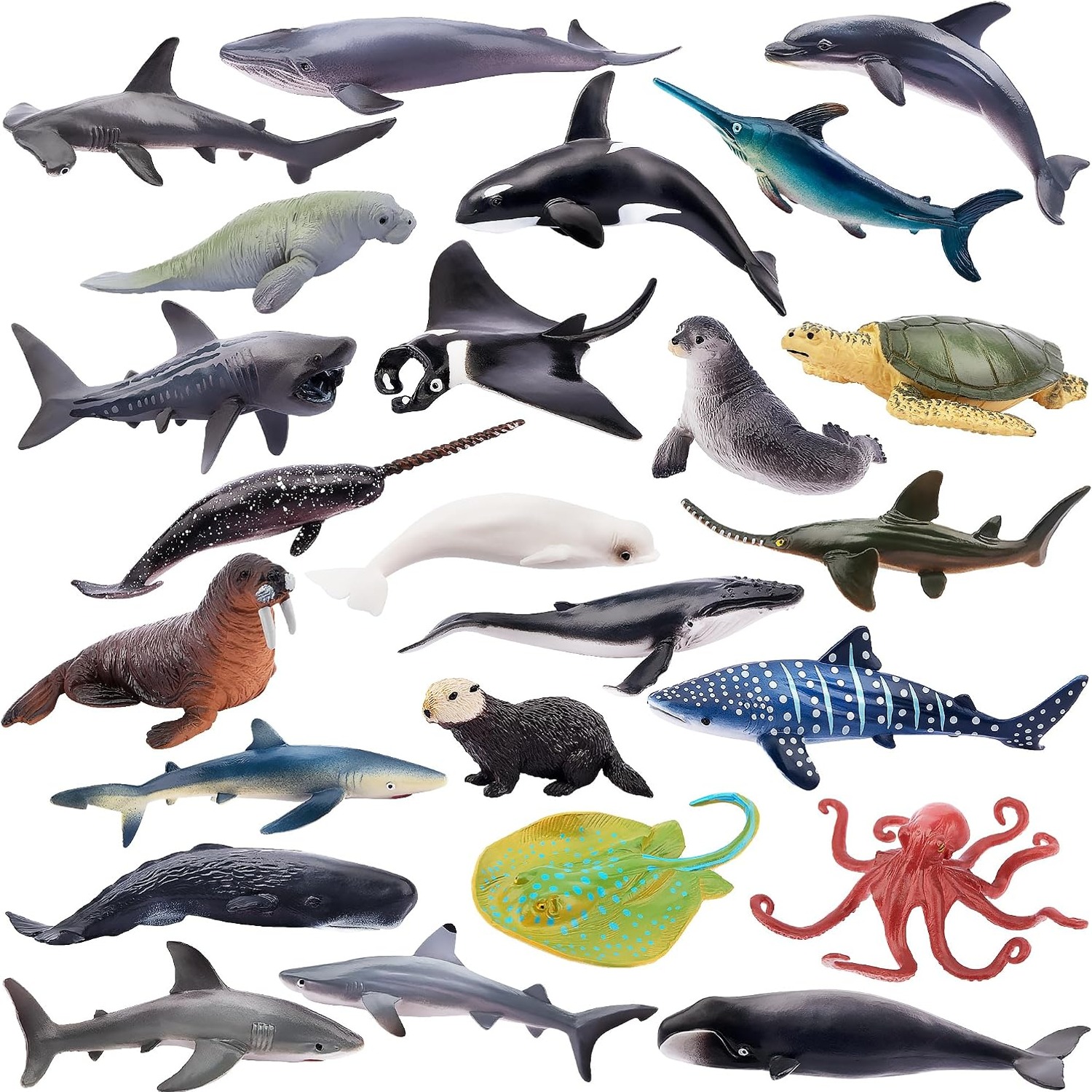
That gap is what a figure set fills. Twenty-four small, solid animals in a box give a child something physical to work with. They can line them up, sort them, hide them, name them wrong and be corrected, then name them right the next day. Screens give information. Figures give play, and play is where the information sticks.
The second problem is the toy box itself. Plenty of ocean toys are large, soft, battery-powered or single-purpose. They take up a shelf and get used twice. A mini set of 24 figures takes up a shoebox, gets split across a dozen different games, and still works as a party favour or a school prop years later.
What you are actually buying
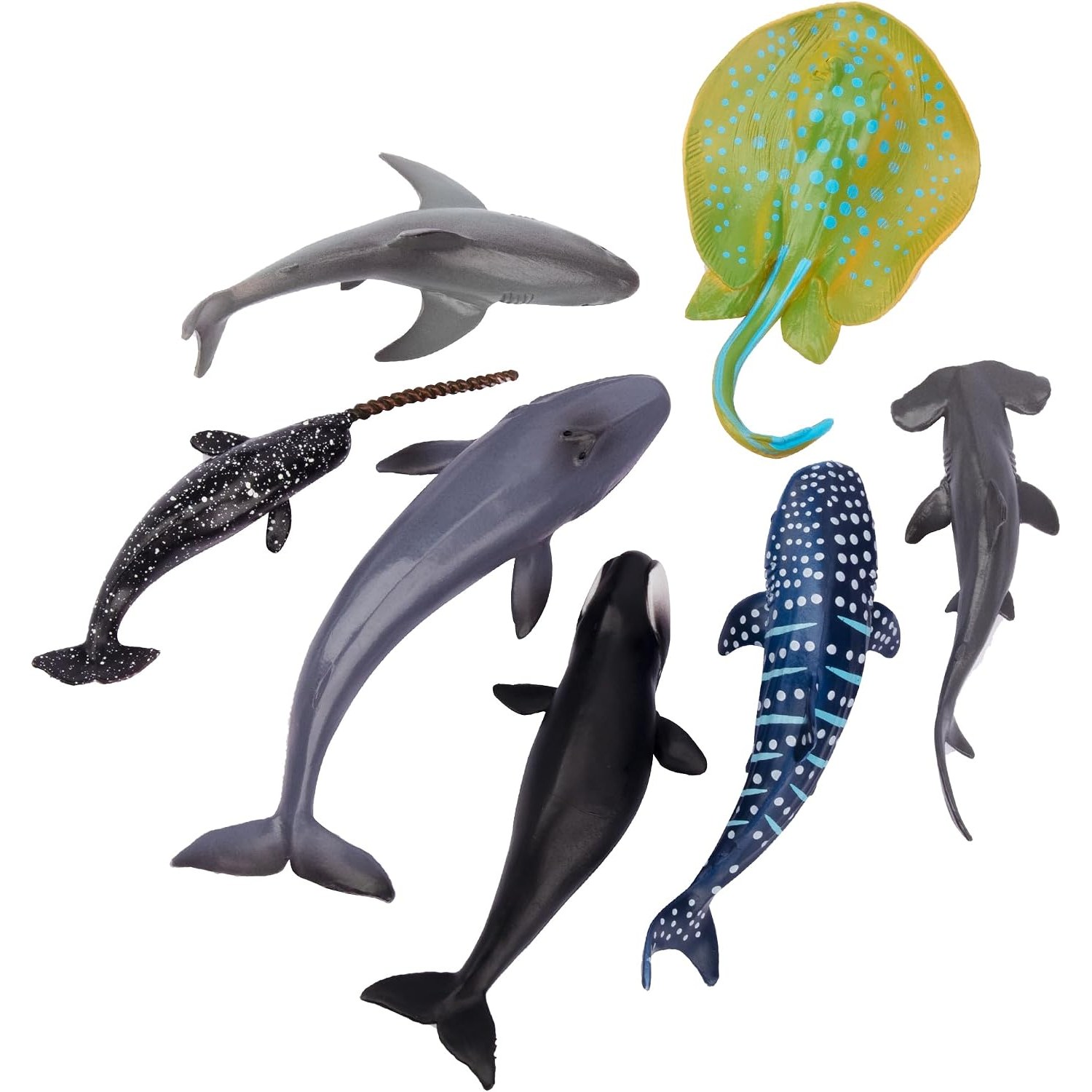
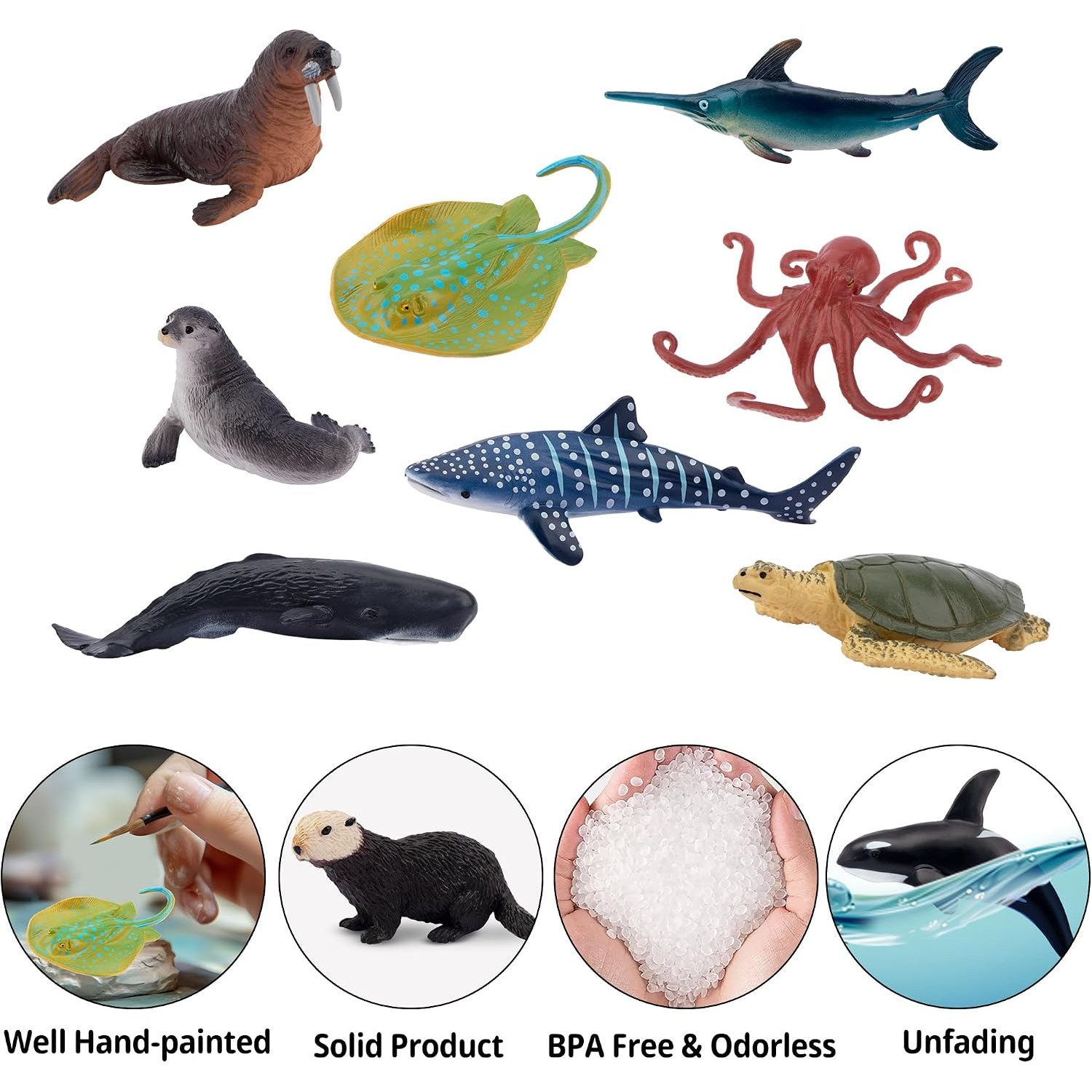
This set contains 24 mini sea animal figures from Toymany's sea creatures collection. They are solid moulded pieces in plastic, with ABS listed as the outer material and a painted finish. There is no assembly and there are no batteries, so the pack is usable the second it is opened.
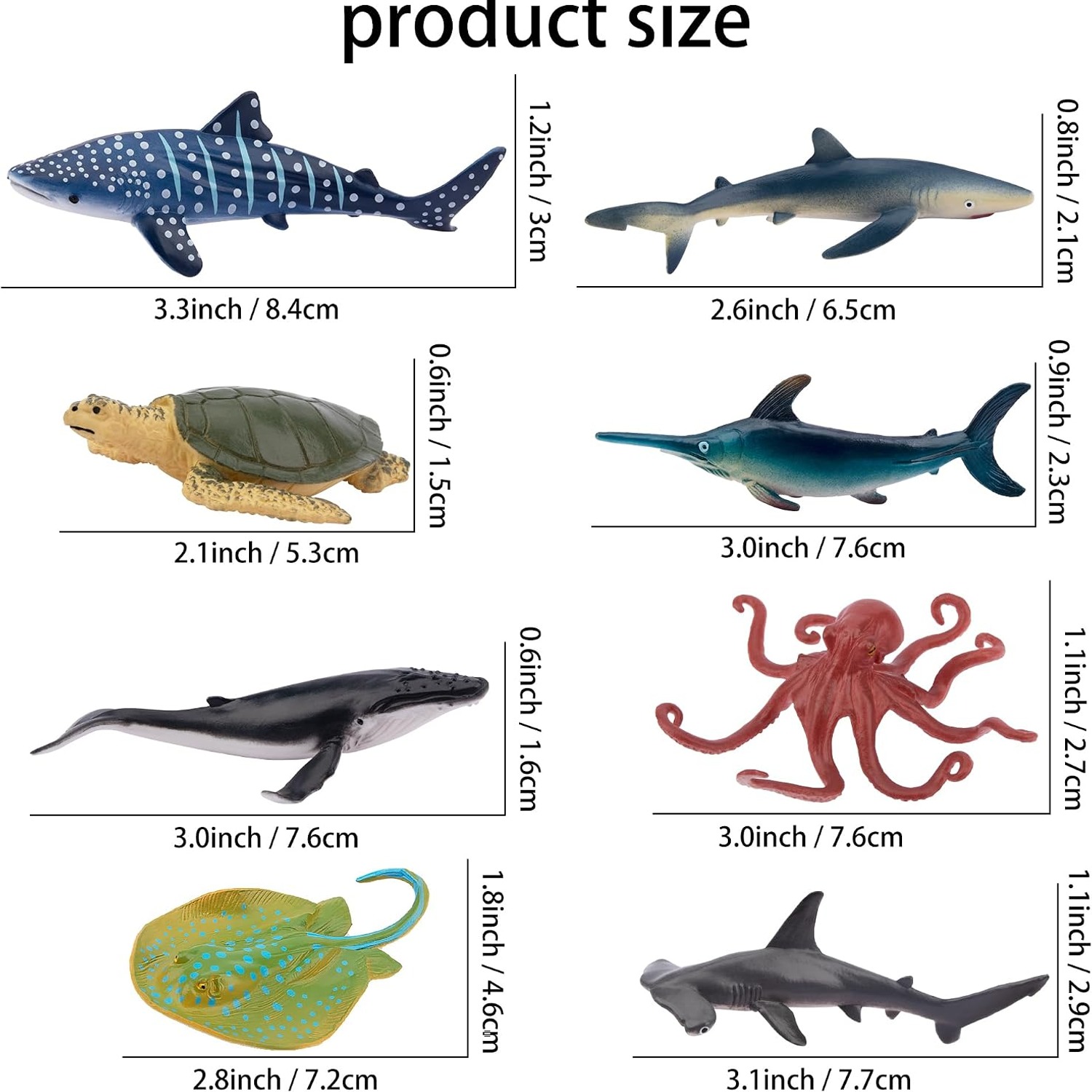
The whole thing ships in a flat package measuring 20 x 15 x 5 cm and weighing 240 g. That is light. It posts easily, it travels in a backpack, and it does not dominate a bedroom.
ABS is worth a quick word. It is the plastic used in a lot of durable toy figures because it keeps crisp moulded detail and takes a drop without shattering. That matters for a toy that will spend its life being carried, dropped on hard floors and tipped out of boxes.
Who the set suits
Toymany recommends ages 36 months to 12 years. The lower end exists for a reason. These are small parts, so they are not for children under 3 who still mouth their toys. If you have a younger sibling in the house, this is a set that lives on a high shelf and comes down for supervised play.
From three to about six, the play is sensory and imaginative. Children carry the figures around, make up stories, give them voices and build makeshift reefs out of cushions. Names get learned by accident, which is the best way.
From seven upwards the use shifts. Children start sorting by real categories, making displays, and using the figures as props for presentations and projects. By ten or eleven, many kids treat a set like this as a collection to arrange rather than a toy to play with, and that is a perfectly good second life for it.
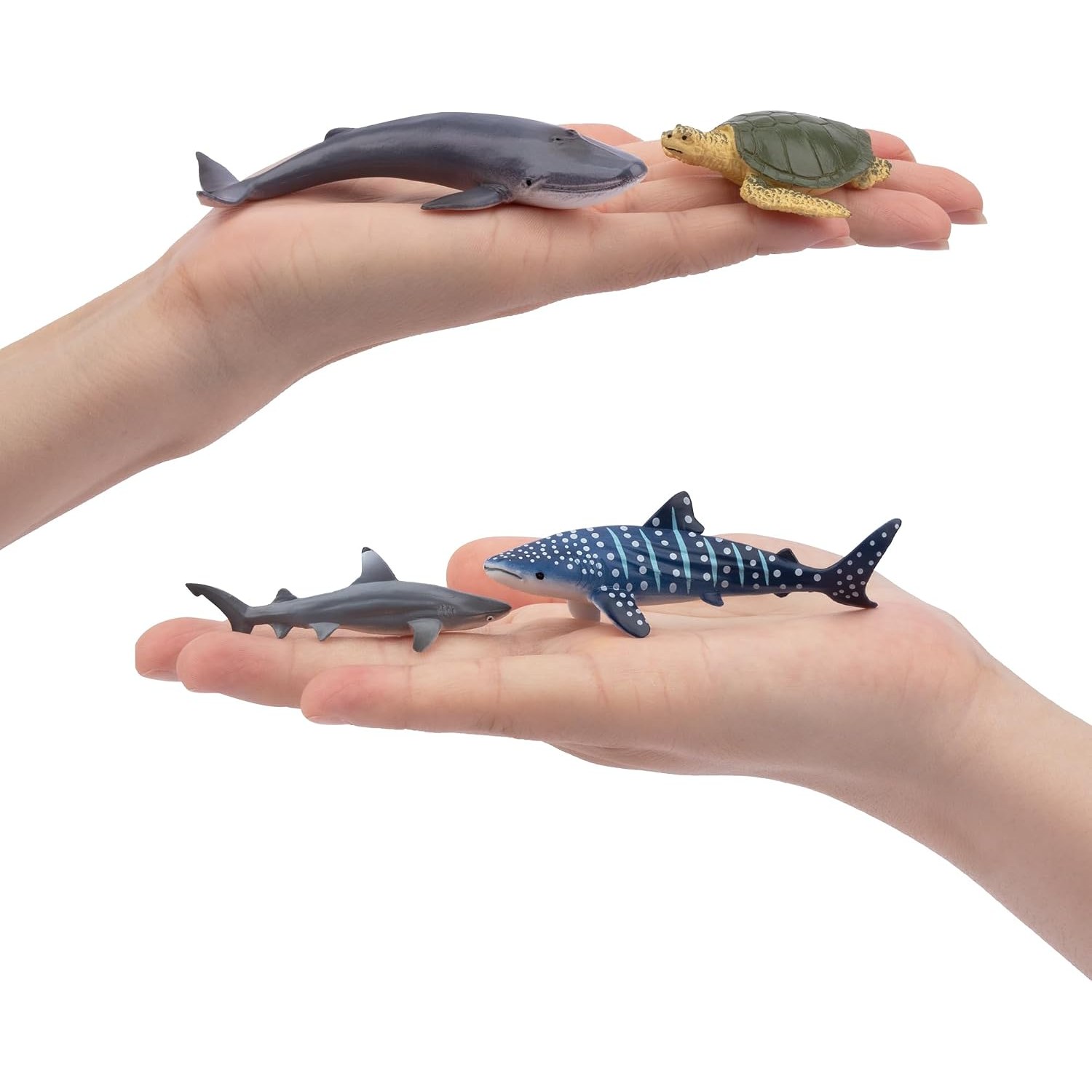
Adults buy these too, for cake decorating, classroom resources, craft projects and photography props. The mini scale is the reason. Big figures are awkward in all of those settings.
How to choose a sea animal figure set
A few things separate a set that lasts from one that gets thrown out.
Piece count against price. Twenty-four is a generous number. It covers a class-sized party with one each, or gives a single child enough variety to build real scenes rather than repeating the same two animals. Small sets of five or six run out of play value fast.
Solid versus hollow. Solid figures feel better in the hand and survive being stood on. Hollow figures can crack and collect water. This set is moulded as solid pieces.
Scale consistency. Mini sets keep every figure in a similar size range, which looks tidy on a shelf and works well in a diorama. If you want a shark that dwarfs everything, you want a single large figure instead, not a mini set.
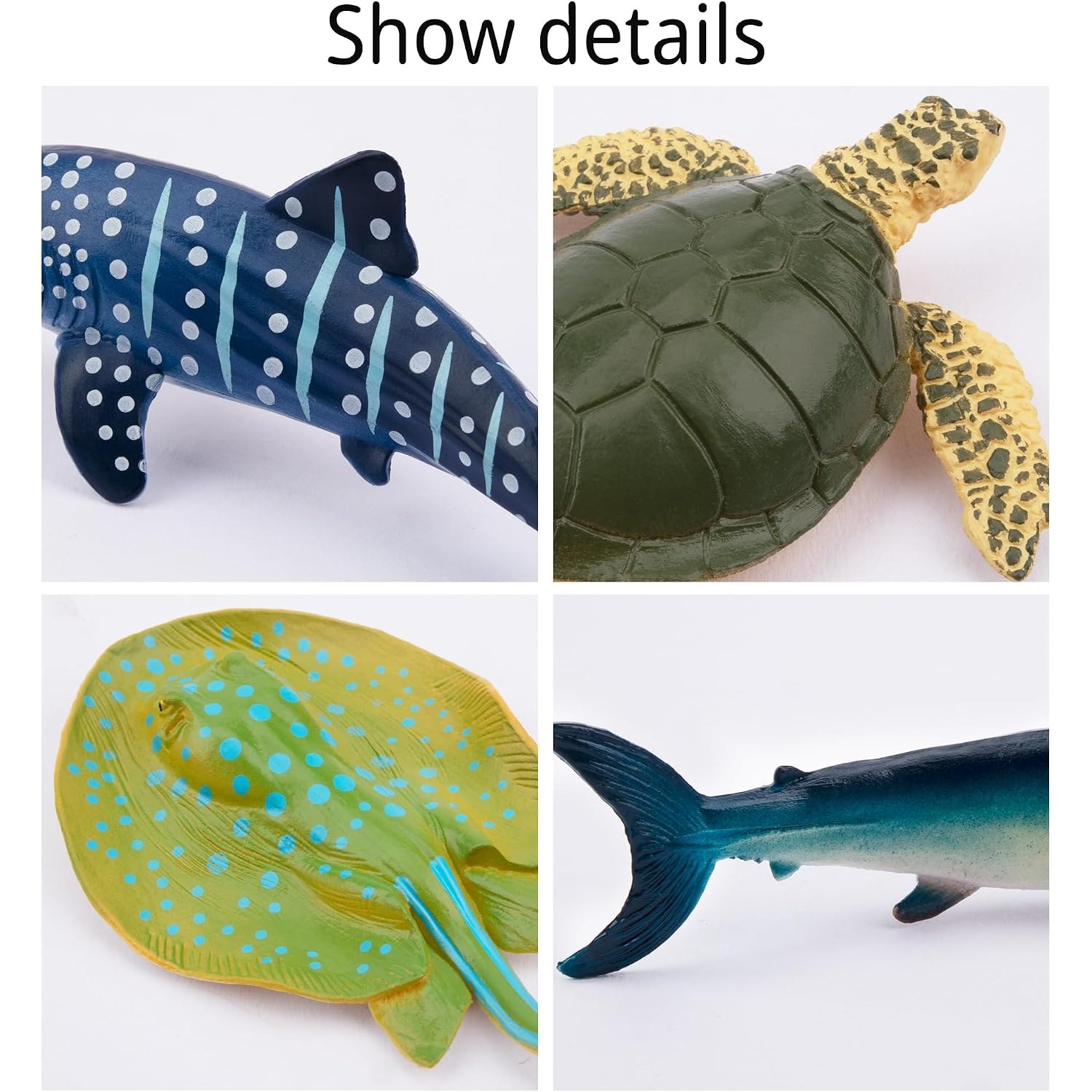
Finish quality. Painted detail is what makes a figure readable at small size. Moulded texture plus paint is the combination you want, and it is what you get here.
Storage. Think about where 24 small objects will live. A lidded tray or a zip bag solves it. Sets that come loose in a bag with no plan tend to scatter.
If you are comparing the best marine animal figurines on the market, those five points will tell you more than any photograph will.
Ways families actually use them
Small world play is the obvious one. A blue towel, a tray of water, a few pebbles, and you have an ocean floor. Kids will happily rearrange it for an hour.
School projects come next. Dioramas in shoeboxes, habitat posters, show and tell, species labelling. The figures are the right size to sit inside a shoebox scene without crowding it, which is why these are often picked as the best educational sea animal toys for primary classrooms.
Parties are the third big use. Set the figures along a dessert table for an ocean theme, stand a few on a cake as toppers, and hand one to each guest on the way out. You get decoration and favours out of a single purchase, and whatever comes home stays in the toy collection.
Then there are the odd uses that keep coming up. Sensory bins with rice or water beads. Counting and sorting games for early maths. Bath play, as long as everything gets dried afterwards. Even as a calm-down activity, since lining up 24 small things is genuinely soothing for a lot of children.
Looking after them
This is a low-maintenance toy, but a bit of care keeps the paint looking good.
Wipe the figures with a damp cloth and a drop of mild soap. Dry them properly before they go back in the box, especially after water play. Skip the dishwasher entirely, and avoid bleach, boiling water and long soaking, since heat and harsh chemicals are what dull a painted finish.
Keep them out of long stretches of direct sunlight. Colours fade on a sunny windowsill over months.
Storage is the main thing. Twenty-four small items will find their way under furniture if you let them. A box with a lid, a craft tray with sections, or a simple zip bag all work. Make the tidy-up part of the game and you will keep the full set together for years.
When this is not the right choice
Be honest about the age. If your child is under three, or still puts things in their mouth, choose something larger and move this set to the gift-for-later pile.
If you want one dramatic centrepiece animal, a mini set is not it. Buy a single large figure instead.
And if you want something that lights up or makes noise, this is not that either. It is manual, quiet and powered entirely by imagination, which most parents see as a feature rather than a drawback.
The short version
Twenty-four mini sea animal figures, solid plastic with an ABS outer and painted detail, no batteries, no assembly, recommended for ages three to twelve. The pack weighs 240 g and measures 20 x 15 x 5 cm, so it posts and stores easily.
It covers pretend play, school projects, party favours and cake decoration from a single box. For a child who cannot get enough of the ocean, it turns an interest they can only watch into one they can hold.