Toy Warehouse
Company
Shop By Category
T&Cs
Shop Online
  • Box contents listed
  • Free tracked delivery across Singapore over $150
  • 14-day returns

Rainbow Xylophone 8 Note | Wooden xylophone for kids | Kids glockenspiel

Rainbow 8-Note Wooden Xylophone for Kids

$60.99 $72.99 Save $12
  • Eight Tuned Bars
  • Wooden Build
  • Hands-On Skills
  • Small and Portable

Price: $60.99 $72.99

  • Free tracked delivery across Singapore on orders $150+, otherwise a flat $20
  • Pay by card or PayPal, handled by the payment provider
  • 14 days to change your mind, plus your statutory rights
Product specifications
BrandStoie's
InstrumentXylophone
Number of Keys8
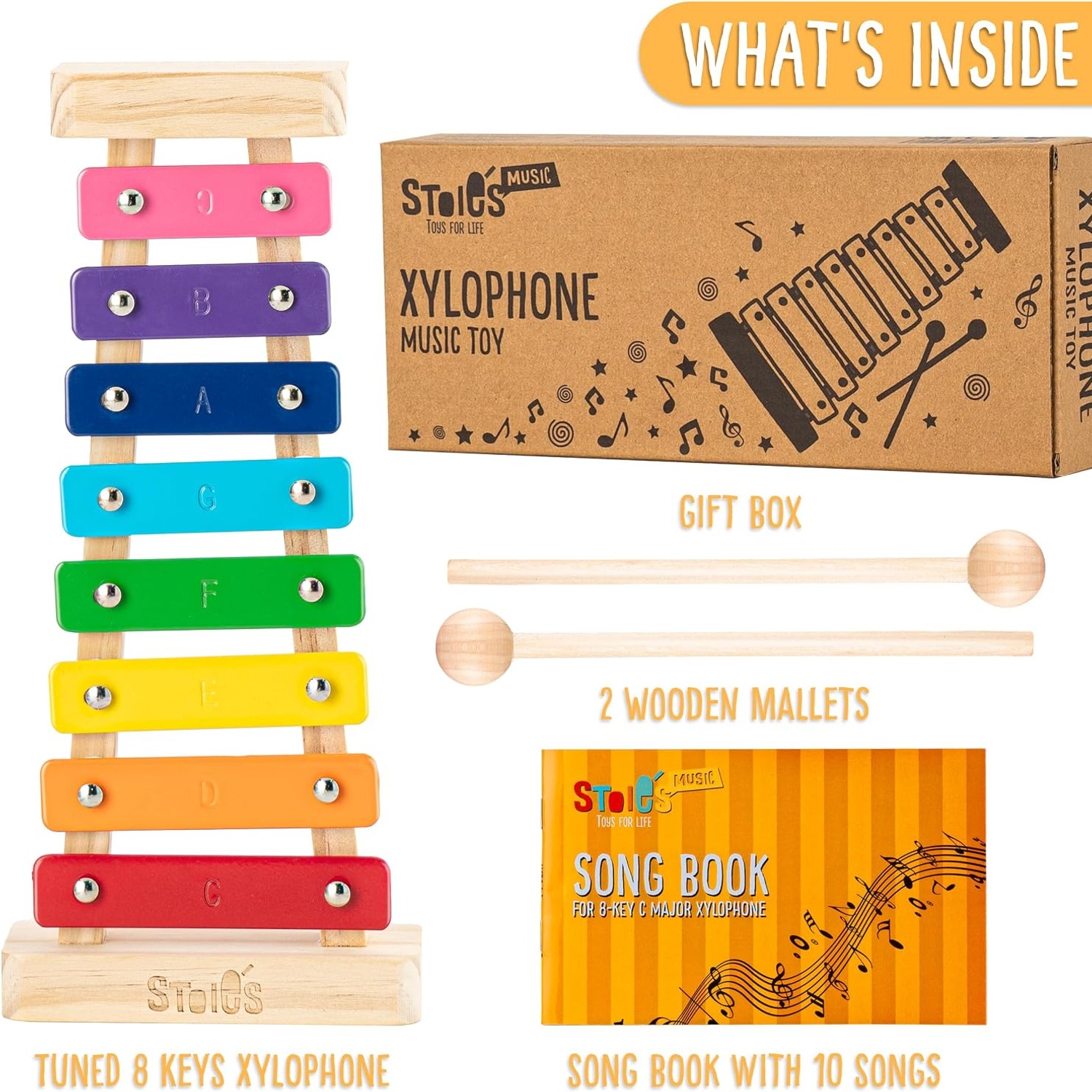
Included ComponentsXylophone and sticks
MaterialWood
ColourMulticolour
ThemeRainbow
SizeMini
Item Dimensions (L x W x H)25 x 12 x 5 cm
Item Weight0.2 kg
Manufacturer Recommended Age3 years and up
Number of Items1
Assembly RequiredNo
Operation ModeManual
Power SourceManual
Model NumberSX-0002
Manufacturer Part NumberSX-0002
ManufacturerNanchang Wanhua Industry Co., Ltd
Educational ObjectiveDevelop musical ability, fine motor skills and hand-eye coordination
Weight0.2 kg
Shipping & returns

Tracked delivery anywhere in Singapore. It is free on orders of $150 or more, and a flat $20 below that.

If it is not right for you, send it back within 14 days of delivery in resaleable condition and we refund the price you paid, including standard delivery. That is a voluntary policy we offer on top of your legal rights. You cover the cost of returning it unless the item is faulty.

If it arrives faulty, damaged or not as described, we put it right at no cost to you, return postage included, and your protection under the Consumer Protection (Fair Trading) Act 2003 is unaffected.

Shipping details · Refunds and returns

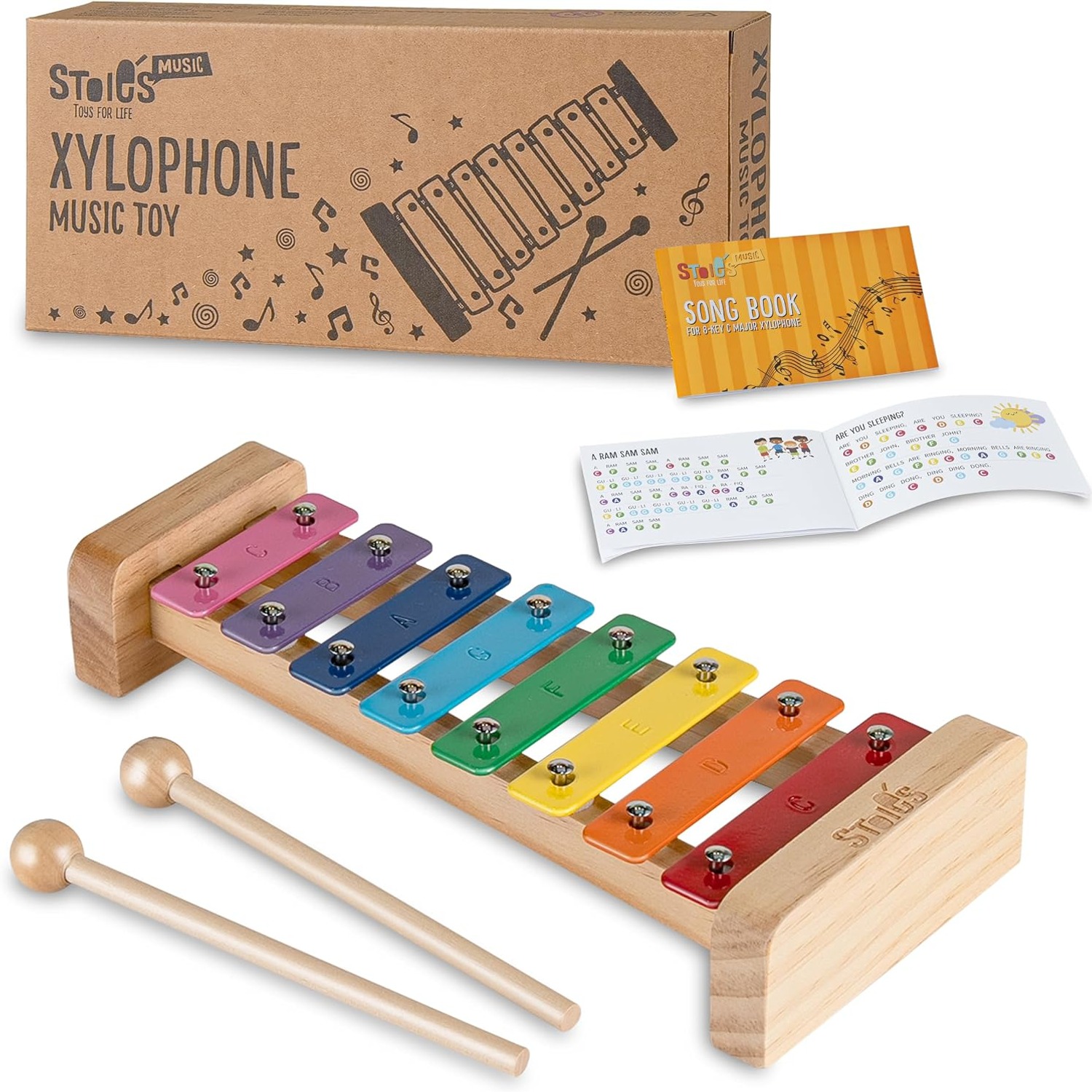
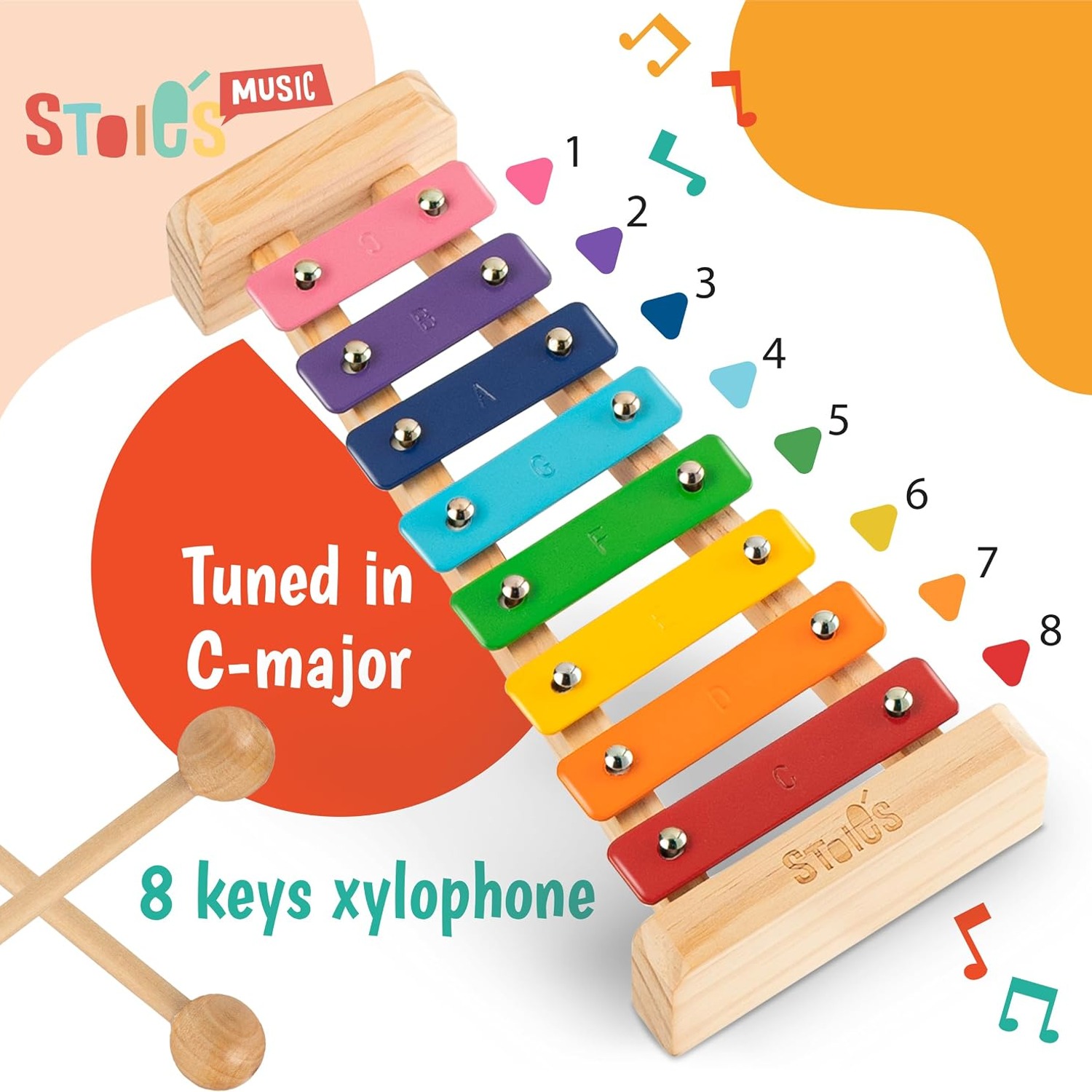
Eight Tuned BarsEight wooden bars of different sizes give eight distinct notes to play and learn.
Wooden BuildMade of wood with a bright multicolour rainbow finish children recognise instantly.
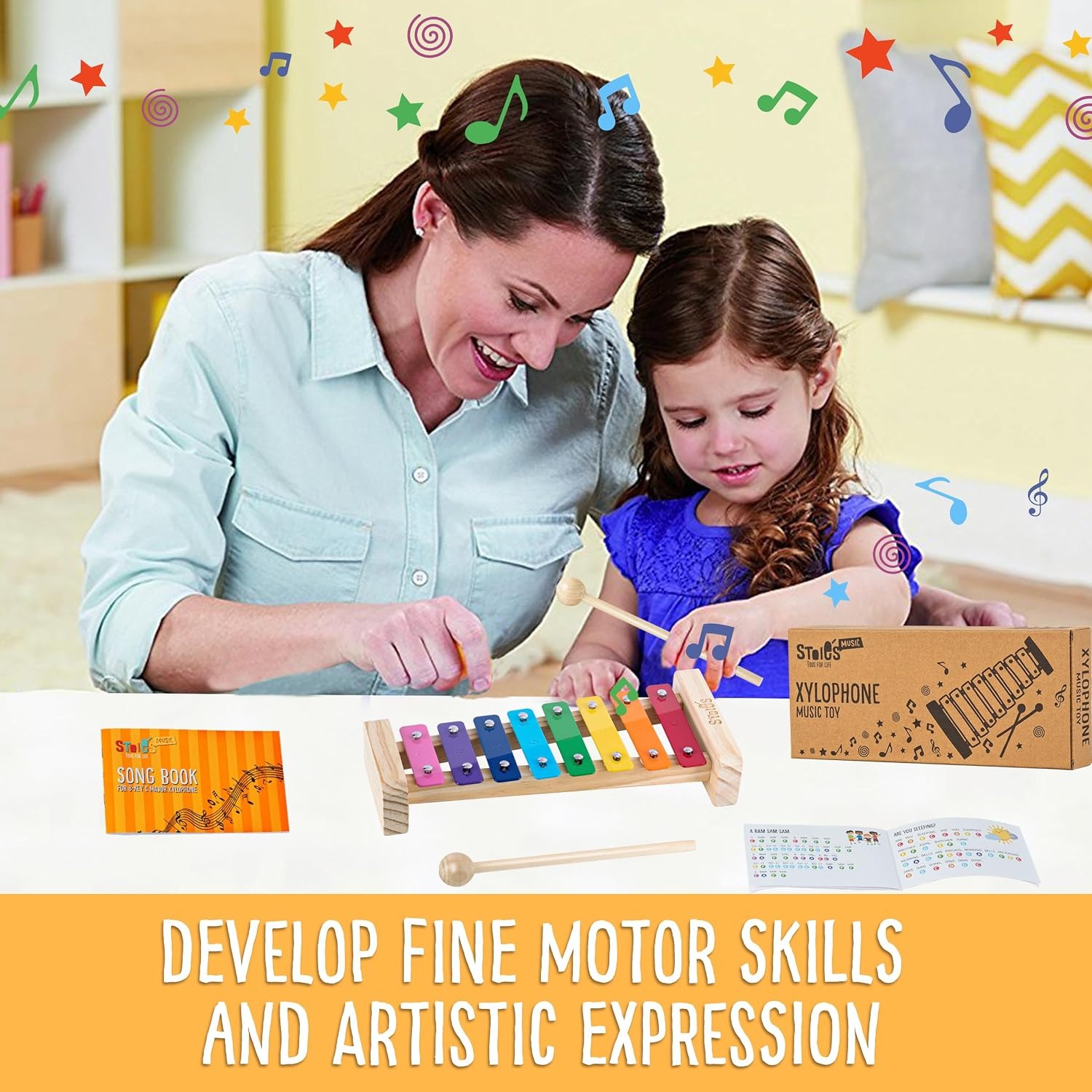
Hands-On SkillsSupports fine motor control, hand-eye coordination and early listening skills.
Small and PortableAt 25 x 12 x 5 cm and 0.2 kg it travels easily between rooms, cars and grandparents.

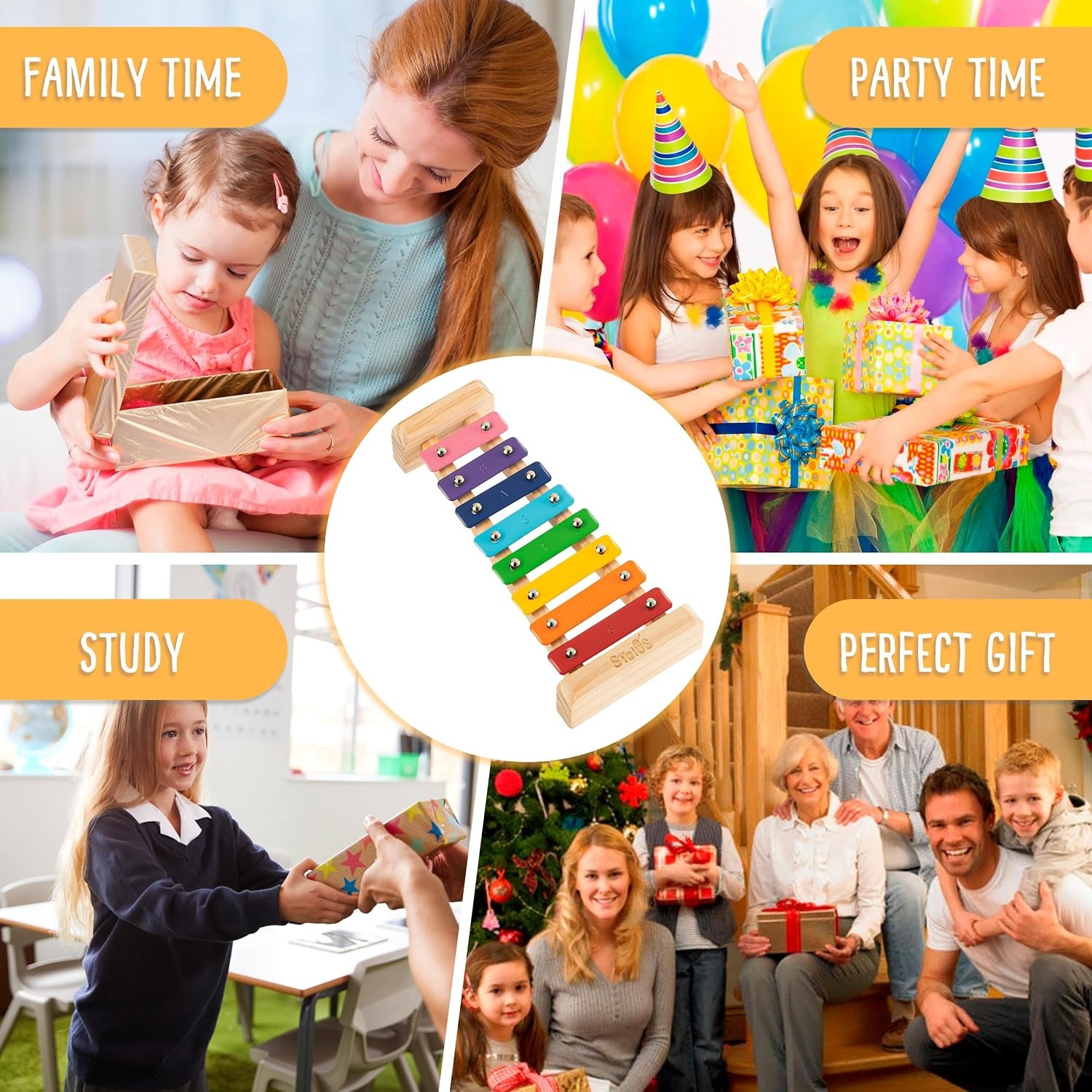
A rainbow xylophone 8 note set that turns a quiet afternoon into a child's first real music lesson.

Eight tuned wooden bars, two beaters and a compact 25 x 12 x 5 cm frame give small hands clear notes, steady rhythm practice and hours of hands-on play.

Eight tuned wooden bars give children a simple, satisfying way to make real notes from the very first tap.

The rainbow colour theme helps preschoolers recognise and name each bar long before they can read music.

Two beaters are included, so a child can play alone or share with a sibling or parent.

A compact 25 x 12 x 5 cm body and 0.2 kg weight make it easy to carry, store and bring along on trips.

No batteries, cables or assembly are needed, which means it works the moment it leaves the box.

Rainbow 8-Note Wooden Xylophone for Kids

Most preschoolers meet music through a screen or a toy that plays a recorded tune when you press a button. This rainbow xylophone 8 note set works the other way around. Nothing happens until the child does something, and what happens depends on where they hit and how hard. That small cause-and-effect loop is where early musical understanding starts, and it is the reason a simple wooden instrument often holds attention longer than a noisy electronic one.

Rainbow 8-Note Wooden Xylophone for Kids

The instrument has eight wooden bars, each a different size, laid out across a wooden frame. Shorter bars sound higher, longer bars sound lower. A child figures that out on their own within a few minutes of play. The bars are finished in bright rainbow colours, which gives parents and teachers an easy shortcut for games, like asking for the red note, then the yellow, then the red again. It becomes a pattern exercise without feeling like one.

Rainbow 8-Note Wooden Xylophone for Kids

Two beaters are included, so this is not a solo-only toy. A parent can play a short pattern and ask the child to copy it back, or two children can take a side each. Call-and-response games like that build listening skills and turn-taking at the same time. For a lot of families, that shared play turns out to be the main reason the xylophone stays in rotation instead of ending up at the bottom of the toy box.

Rainbow 8-Note Wooden Xylophone for Kids

The whole thing measures 25 x 12 x 5 cm and weighs 0.2 kg, which puts it firmly in the portable category. It fits in a nappy bag, a car door pocket or a backpack side pouch. There is no assembly, no battery compartment and no charging cable. Take it out of the box, hand over a beater and the child can start. That simplicity also makes it an easy choice as a best music gift for preschoolers when you do not know what the family already owns.

Rainbow 8-Note Wooden Xylophone for Kids

The manufacturer recommends it for ages 3 and up. Younger children often enjoy it under supervision, but the beaters are small loose parts, so adult supervision matters. Used sensibly, it is the kind of toy that gets handed down to a younger sibling or passed to a cousin, because there is no software to go out of date and nothing that stops working when a battery dies.

Not sure yet? That is fine.

A toy has to suit the child it is for, and you cannot always judge that from a photograph. If it is not right for you, send it back within 14 days of delivery in resaleable condition and we refund the price you paid, including standard delivery. That is a voluntary policy we offer on top of your legal rights.

If it turns up faulty, damaged or not as described, that is on us. We pay the return postage, with your protection under the Consumer Protection (Fair Trading) Act 2003 unaffected. Read the full detail on our refunds and returns page, or ask us anything before you order.

Frequently Asked Questions

What exactly is included in the box?

You get one xylophone and the sticks used to play it, listed by the maker as xylophone and sticks. There is nothing else to buy or charge before first use. No assembly is required.

How many notes does it have?

It has eight keys, which is the standard eight-note layout many children's instruments use. Each bar is a different size so it sounds a different pitch. That is enough range for simple nursery tunes and copying games.

What age is this suitable for?

The manufacturer recommends it for ages 3 years and up, and the age range is described as preschooler. Younger children often enjoy it with an adult sitting beside them. Always supervise, because the beaters are loose parts.

Is it a xylophone or a kids glockenspiel?

It is listed as a xylophone, and the bars are wood. A kids glockenspiel usually has metal bars with a brighter, ringing tone. The playing technique is the same either way, so a child who learns on one can pick up the other easily.

What is the xylophone made of?

The material is listed as wood. The specific wood species is not specified by the maker. The colour is described as multicolour with a rainbow theme.

How big is it?

It measures 25 x 12 x 5 cm and is described as mini size. That is small enough to sit on a lap or a low table. It also fits in most changing bags and backpacks.

How heavy is it?

The item weight is 0.2 kg. That is light enough for a small child to lift and carry, and light enough that it will not be a burden in a travel bag. It also means a preschooler can move it around without needing help.

Does it need batteries?

No. The power source and operation mode are both listed as manual, so it works purely by striking the bars. There is no battery compartment, no charging and nothing to replace.

Does it need to be put together?

No, assembly required is listed as no. It arrives ready to play straight out of the packaging. That makes it a practical last-minute gift.

Is it in tune?

The product is described as having tuned keys, with each bar a different length to produce a different note. Wooden instruments at this price point are built for play rather than for concert pitch accuracy. For learning patterns and rhythm it does the job well.

Can two children play at once?

Yes, since sticks are included rather than a single beater, two children can share one bar set. Many parents use this for copy-the-pattern games. Supervise sharing so the beaters are not swung at each other.

Will it help my child learn music?

The stated educational objective is developing musical ability, fine motor skills and hand-eye coordination. It gives a child a direct link between an action and a sound, which is the foundation of early music learning. It is a starting point rather than a formal lesson tool.

Is it loud?

Wooden bars generally produce a warmer, softer tone than metal ones. It still makes a clear sound that carries across a room. Most families find it easier to live with than electronic toys that play recorded loops.

Can I use it to teach colours as well as notes?

Yes, and that is one of its most useful features for parents. The rainbow theme means you can ask for a specific colour instead of a note name. It is a simple way to mix colour recognition into music play.

Is it good for travel?

At 0.2 kg and 25 x 12 x 5 cm it is one of the easier instruments to pack. It needs no power, so it works on planes, in cars and at a grandparent's house. Many people buy it specifically as a best travel music toy.

How do I clean it?

Wipe the bars and frame with a soft, slightly damp cloth, then dry straight away. Do not soak it or put it in a dishwasher, because moisture can affect wood and tuning. Keep it away from damp storage for long periods.

Where should I store it?

Somewhere dry and away from direct sun and heat. A shelf or toy basket indoors is ideal. Keep the beaters with the instrument so they do not go missing.

Can it be used outdoors?

It can be taken outside for short play sessions on a dry day. Bring it back indoors afterwards and avoid leaving it in rain or strong sun. Wood and moisture are a poor mix over time.

Is it suitable for a child to put in their mouth?

Mouthing is normal for very young children, but the beaters are small loose parts and should not be chewed or left unattended. Supervision is essential, especially under the recommended age of 3. Stop use if any part becomes damaged or loose.

What happens if a beater is lost?

Most generic wooden beaters of a similar size will work as a replacement. In a pinch, a child can also tap the bars gently with a finger, although the sound is much quieter. Keeping both sticks stored with the instrument is the easiest prevention.

Does it come with sheet music or a song guide?

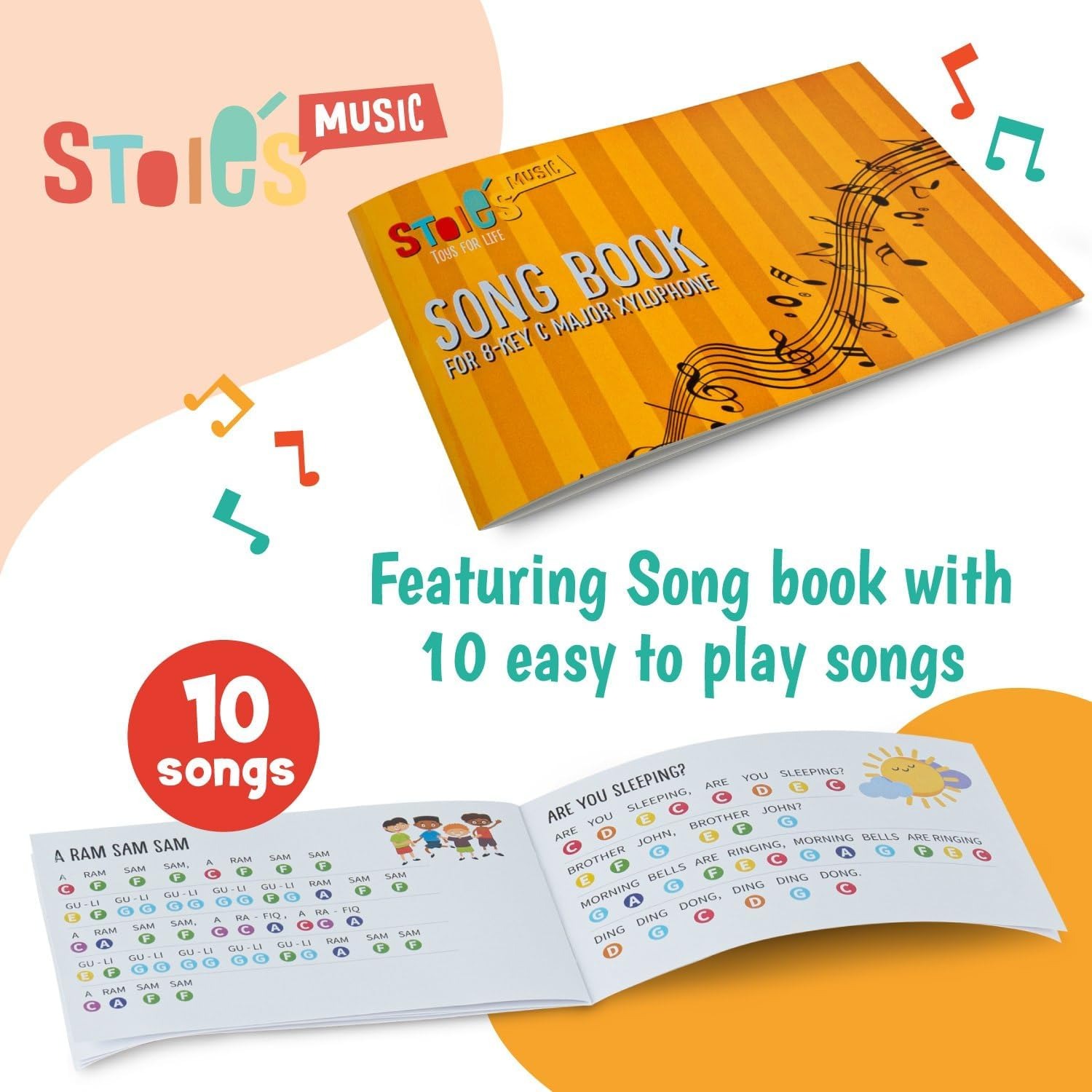
Nothing of that kind is listed in the product details. Most families start with simple copy-me patterns and nursery rhymes. Plenty of free beginner note charts for eight-note instruments are available online.

Is this a good first instrument?

It is one of the common choices for a best first instrument for kids because there is no technique barrier. A child taps a bar and gets a note immediately, with no breath control, finger placement or tuning needed. That instant success keeps them coming back.

How does it compare with an electronic music toy?

An electronic toy plays a result for the child, while this one waits for the child to create it. That difference tends to hold attention longer and encourages experimentation. It also means no batteries to replace and no volume you cannot control.

Is it suitable for a nursery or classroom?

Yes, small eight-note instruments are a staple of early years music corners. The rainbow colours make group instructions easy, and the light weight means children can set it up themselves. Buy more than one if you want group play.

Will the colours wear off?

Any painted toy will show marks from heavy use over time. Wiping it rather than soaking it, and storing it out of strong sun, helps the finish last. Normal play marks are part of a well-loved instrument.

What brand is it and who makes it?

It is branded Stoie's, with model and part number SX-0002. The manufacturer is listed as Nanchang Wanhua Industry Co., Ltd. The country of origin is not specified by the maker.

Does it make a good gift?

It works well for birthdays, holidays and new-sibling presents. It is compact to wrap, needs no setup and does not duplicate the screen-based gifts most children already have. That makes it a safe choice as a best birthday gift for preschoolers when you are not sure what the family owns.

How long will a child stay interested?

Interest usually comes in waves, with early tapping, then pattern games, then simple tunes as they get older. Because the instrument has no fixed program, it can grow with the child. Many families find it stays in use for several years.

How quickly will my order arrive?

Delivery is by tracked courier to any Singapore address. Allow 7 to 12 working days from the order date, as the toys travel from overseas warehouses. Orders of $150 or more are delivered free, and smaller orders pay a flat $20.

What if it is not right for us?

Contact us with your order number and tell us what the problem is. If the item arrives damaged or does not match the description, we will sort out a replacement or a refund under our returns policy. We would rather fix it than leave you with something that does not work for your family.

How to Choose a Wooden Xylophone for Kids

6 min read Toy Warehouse

The problem with most "musical" toys

Walk down any toy aisle and you will find a dozen things that claim to be musical. Press a button, a tune plays. Press it again, the same tune plays. The child is a spectator. They learn which button does what, and after a week or two the toy sits silent because there is nothing left to discover.

A real instrument behaves differently. It does nothing on its own. It waits. And when the child finally taps a bar, the sound they get belongs to them, not to a chip inside a plastic shell. That shift from consumer to maker is small on paper but large in practice, and it is the main reason a simple wooden xylophone tends to outlast the noisy stuff.

This guide covers what an eight-note wooden xylophone actually does, who it suits, how to pick one, and how to look after it so it survives more than one child.

How an eight-note xylophone works

The mechanics are refreshingly simple. Each bar is a different length. Longer bars vibrate slower and sound lower. Shorter bars vibrate faster and sound higher. Lay them out in order and you get a scale, which on an eight-note instrument runs from one note up to the same note an octave higher.

Children work this out without being told. They start by hitting bars at random, then they notice the sound changes as they move along the row, then they start moving in order on purpose. That is the moment a toy becomes an instrument.

The beaters matter too. How hard you hit changes the volume, and where you hit changes the tone a little. A bar struck in the middle rings more cleanly than one struck near the end. None of that needs explaining. A child discovers it by trying, which is exactly the kind of learning that sticks.

This particular model has eight keys on a wooden frame, measures 25 x 12 x 5 cm and weighs 0.2 kg. It comes with sticks, needs no assembly and has no power source beyond a pair of small hands.

Wood or metal: the short answer

You will see two broad families of small bar instruments. Wooden-bar instruments are usually called xylophones. Metal-bar instruments are usually called glockenspiels. People use both words loosely, so it is worth checking the material rather than the name.

Wood gives a warmer, rounder sound with a short decay. The note arrives, does its job and fades. Metal rings longer and brighter, which some people love and others find piercing after the fortieth repeat.

For a household with a preschooler and thin walls, wood is usually the kinder option. It is also the more forgiving material when the instrument gets dropped, which it will. This model uses wooden bars, so you get the softer tone.

If your child later gravitates towards something brighter, a best kids percussion toy with metal bars is an easy second step. The playing technique transfers directly.

Who it suits

The manufacturer recommends ages 3 and up, and describes the age range as preschooler. That lines up with how most children use it. By three, a child has the grip strength and coordination to hold a beater, aim it and repeat a pattern.

Younger children can absolutely enjoy it with an adult nearby. The caution is simple: the beaters are small loose parts, so they should not be left alone with them.

It also works well in small group settings. Nurseries and playgroups use eight-note instruments constantly because they are cheap enough to buy several, light enough for children to carry themselves, and simple enough that a two-minute explanation covers everything. If you are putting together a music corner, a best preschool instrument should be exactly this uncomplicated.

For home use, it is a good pick for families trying to cut back on screen time without replacing one passive activity with another.

What to look for when choosing

A few things separate a xylophone that lasts from one that gets quietly retired.

Check the number of notes. Eight gives you a full scale, which is enough for most nursery rhymes. Fewer than that and you start running into tunes the child cannot complete, which is frustrating for them.

Check the size against how you plan to use it. This one at 25 x 12 x 5 cm sits comfortably on a lap or a low table and travels easily. A larger instrument sounds fuller but stays home.

Check whether beaters are included. It sounds obvious, but some sets ship with one and some with none. This set includes sticks, so sharing is possible from day one.

Check that it needs no batteries. Manual operation means it never stops working at an awkward moment and there is no volume setting a child can max out when you are on a phone call.

Finally, think about colour. The rainbow finish here is not just decoration. It gives you a vocabulary a two-year-old already has. Asking for green then blue then green is a pattern exercise disguised as a game, and it is one of the quiet advantages of a best rainbow music toy over a plain wooden one.

Getting started together

Hand over a beater and let them bash for a while. Resist the urge to correct anything in the first few sessions. Random exploration is how they build a mental map of the instrument.

When they settle, try a two-note pattern and ask them to copy it. Keep it short. Two notes, then three. If they miss, play it again rather than explaining. This is listening practice, and explanation gets in the way.

After that, colour games work well. Call out colours in a sequence and let them follow. Then swap, and let them call while you play. Children love being the one giving instructions, and it makes them listen to their own patterns more carefully.

Simple songs come next. Most nursery rhymes fit inside eight notes, and free beginner charts for eight-note instruments are easy to find online if you want something to follow.

Looking after it

Wood and water do not get along. Wipe the bars and frame with a soft, slightly damp cloth and dry them immediately. Never soak the instrument and never put it in a dishwasher.

Store it somewhere dry, out of direct sun and away from heat. Extremes of heat and damp are what warp wooden bars and shift their tone over time.

Keep the beaters with the instrument. A basket or a shelf spot that belongs to the xylophone saves a lot of hunting. If one goes missing, generic wooden beaters of a similar size usually work fine as a replacement.

Give it a quick look over now and then. If a bar or beater is cracked or loose, stop using it until it is fixed or replaced.

The short version

An eight-note wooden xylophone is one of the few toys that asks a child to do something before it gives anything back. That is the whole point.

This one has eight tuned keys, comes with sticks, needs no assembly and no batteries, and weighs 0.2 kg in a 25 x 12 x 5 cm body. It is recommended for ages 3 and up, and its stated purpose is building musical ability, fine motor skills and hand-eye coordination.

If you want a first instrument that is genuinely playable, easy to carry and not dependent on a battery, this is a sensible place to start. Hand over the beaters and let them find the rest out for themselves.

Browse the shop

Ready to hand over the beaters?

Order the rainbow 8-note xylophone today and give your child an instrument that works the moment the box is open.

Ask us a question

Page summary

The Rainbow 8-Note Wooden Xylophone is a manual wooden musical toy from Stoie's, model SX-0002, made by Nanchang Wanhua Industry Co., Ltd. It has eight tuned keys on a wooden frame with a multicolour rainbow theme, and ships with the xylophone plus sticks. The mini size measures 25 x 12 x 5 cm and weighs 0.2 kg. No assembly, batteries or power source is required, as it is played by hand. The manufacturer recommends it for ages 3 and up, with an age range described as preschooler. Its stated educational aim is developing musical ability, fine motor skills and hand-eye coordination. Colour, specific wood type and country of origin are not specified by the maker.