
The complete guide
Choosing a Solar System Floor Puzzle, A Parent's Guide
The question every kid asks
Somewhere around three or four, children start asking about space. It usually begins with the moon, then the sun, then why the sun does not fall down. The questions are good ones. The problem is that space is abstract. You cannot hand a child a planet, and photographs of Jupiter mean very little when you have no sense of scale.
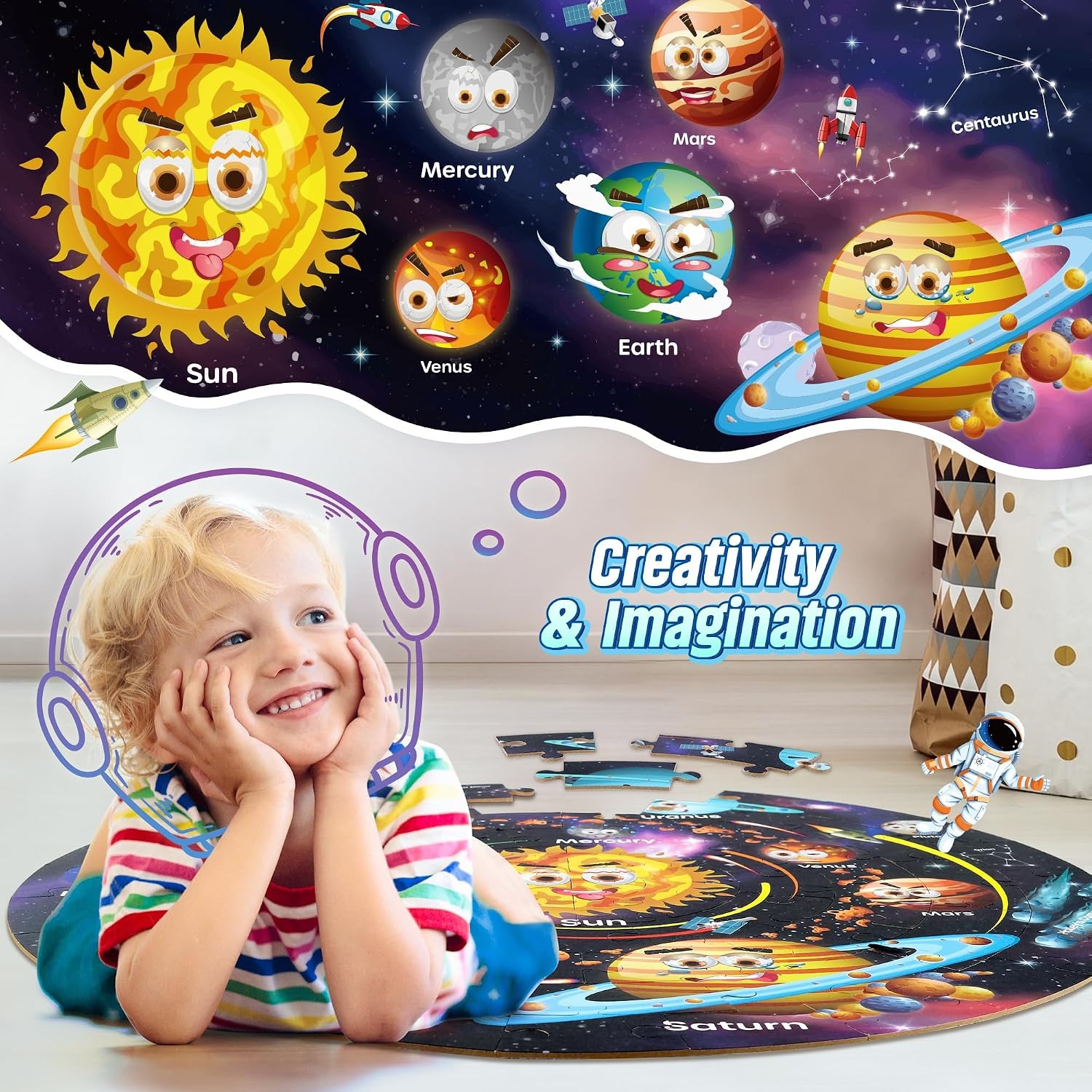
A puzzle solves part of that. It gives the solar system a shape, a layout and an order that a child can touch. They put Mercury next to Venus because the shapes fit, and after three or four builds they remember that Mercury goes next to Venus. Nobody sat them down and taught it. That is the quiet trick of a good space puzzle for kids.
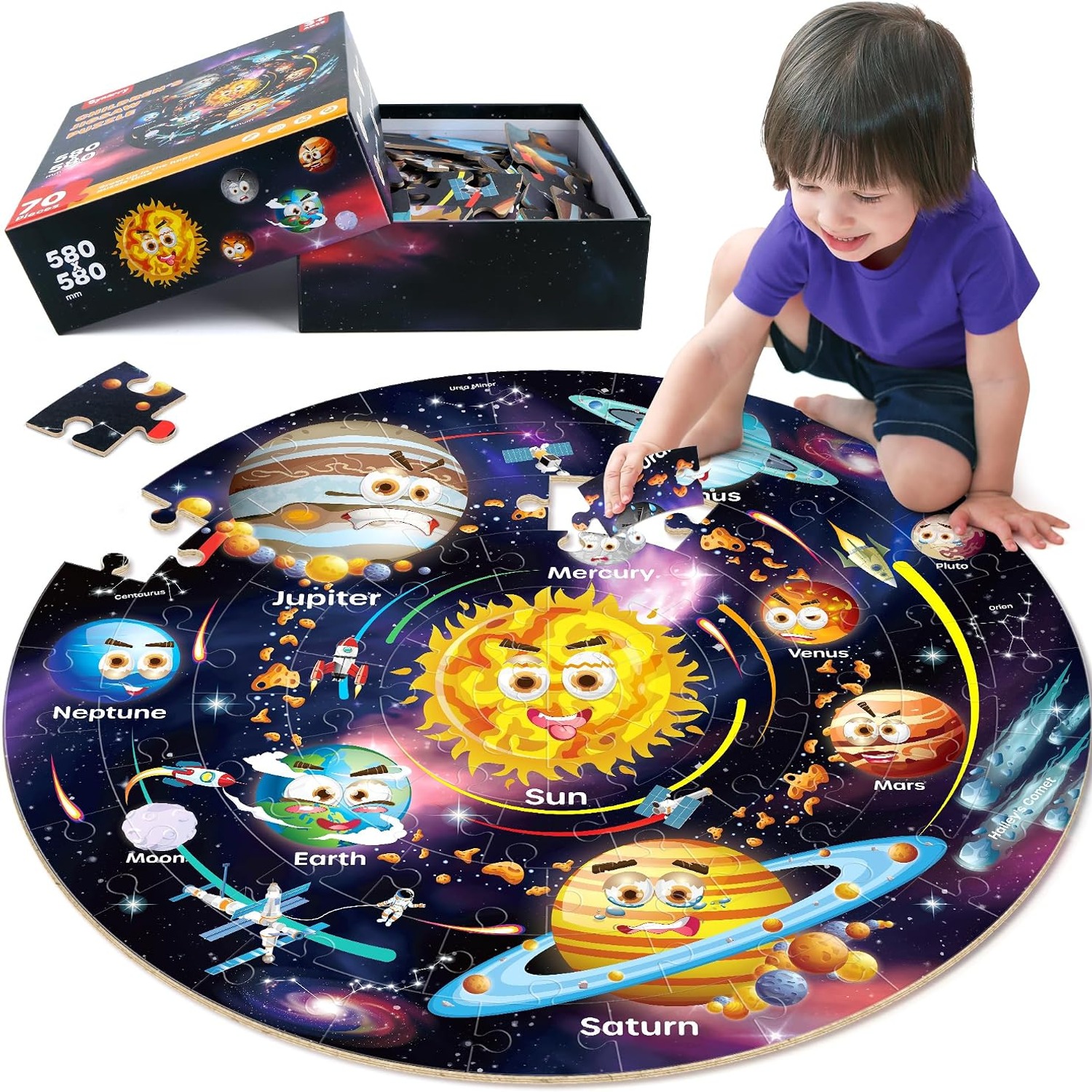
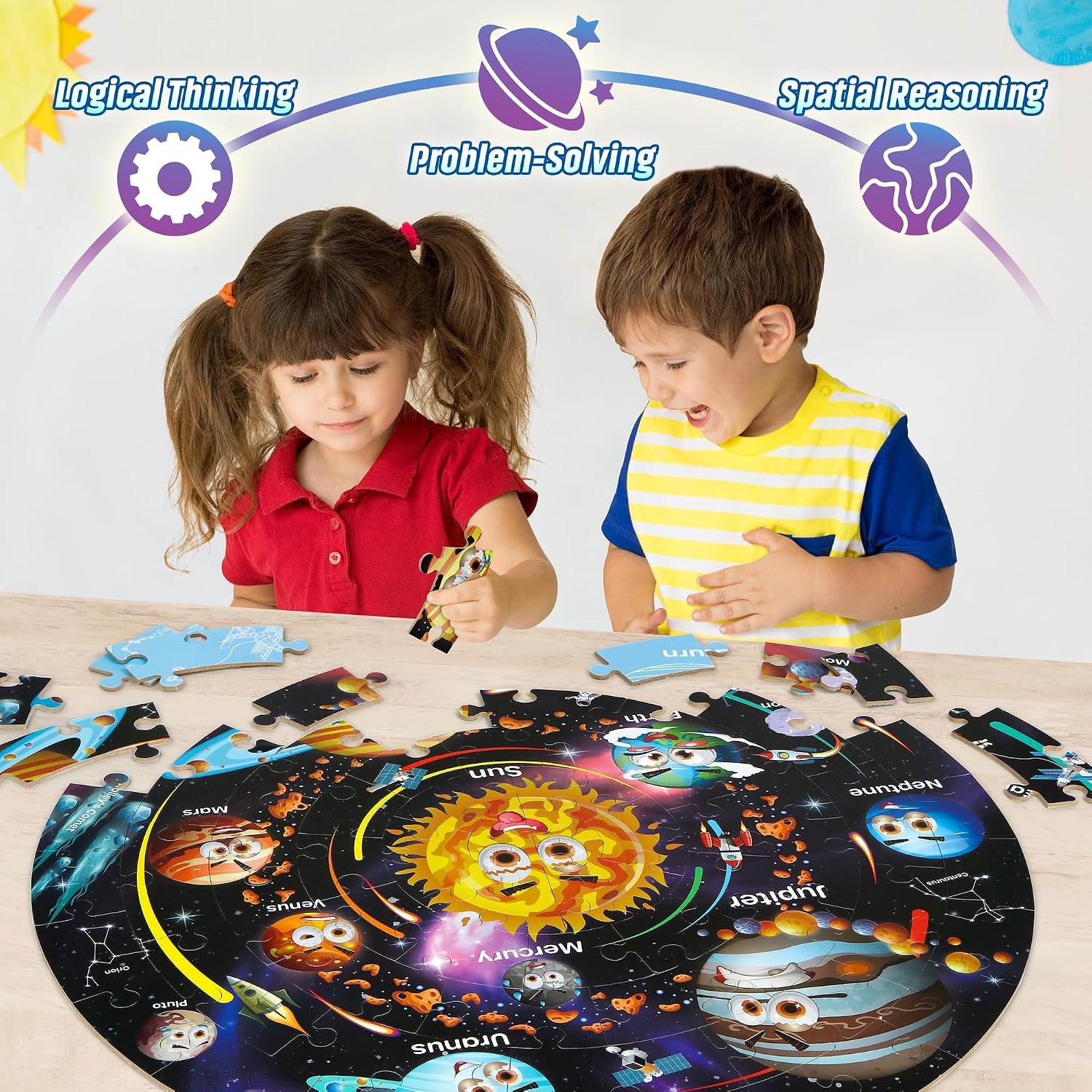
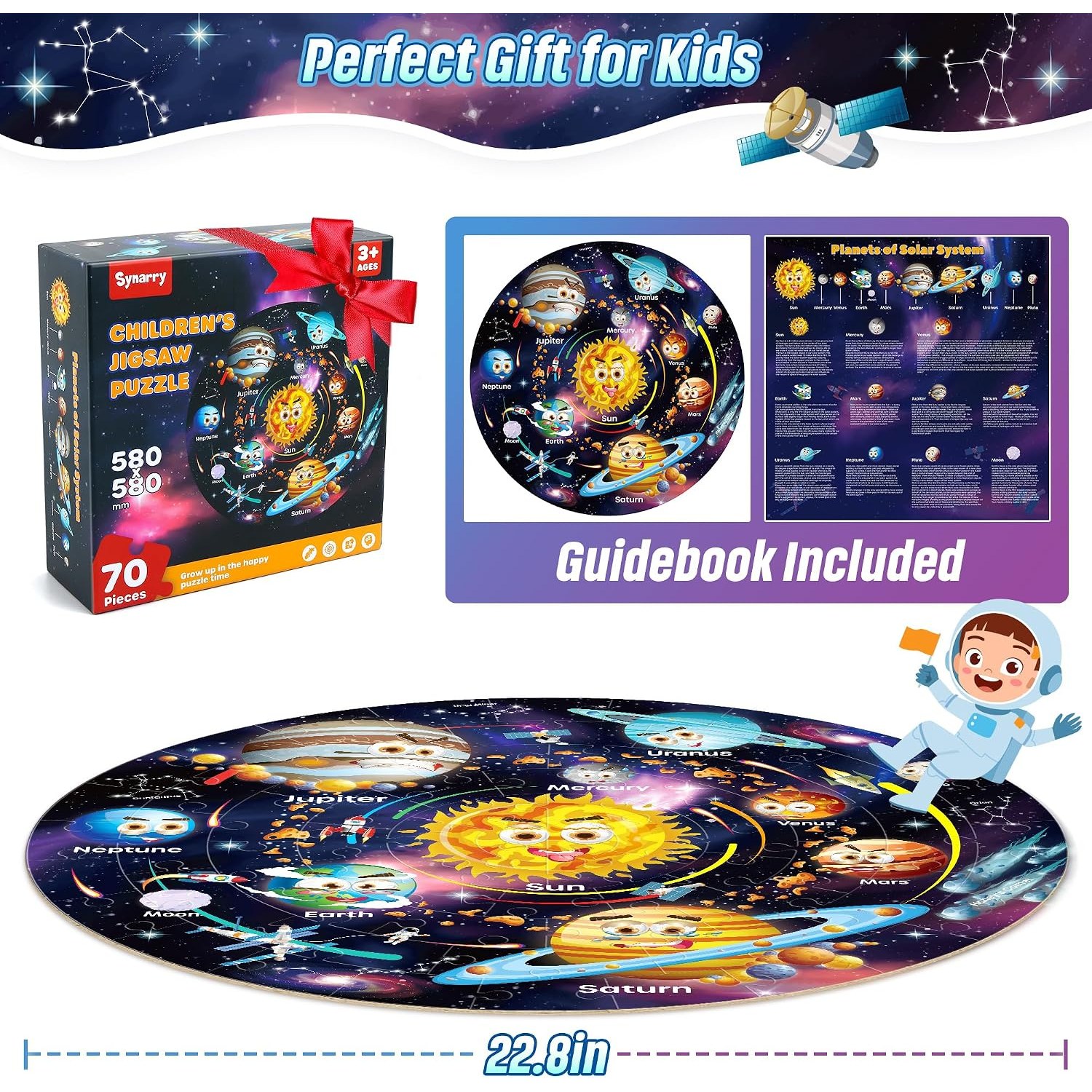
This one is 70 pieces and builds into a circle. The sun sits in the middle, the planets ring around it, and the gaps are filled with rockets, meteors and astronauts so there is something to look at everywhere. It is recommended from 36 months to eight years.
How a floor jigsaw actually works for a child
Adults do jigsaws by sorting. Edges first, then colours, then detail. Young children do not work that way. They pick up a piece, look at it, and try it somewhere. If it does not fit they try the next spot. It looks inefficient, and it is, but that trial and error is exactly where the learning sits.
Every attempt is a tiny prediction. The child looks at a shape, guesses where it belongs, tests the guess and gets instant feedback. Nobody has to mark it right or wrong. The piece either clicks in or it does not. That loop is why puzzles come up so often in lists of the best educational puzzle for preschoolers, and why early-years classrooms always have a few on the shelf.
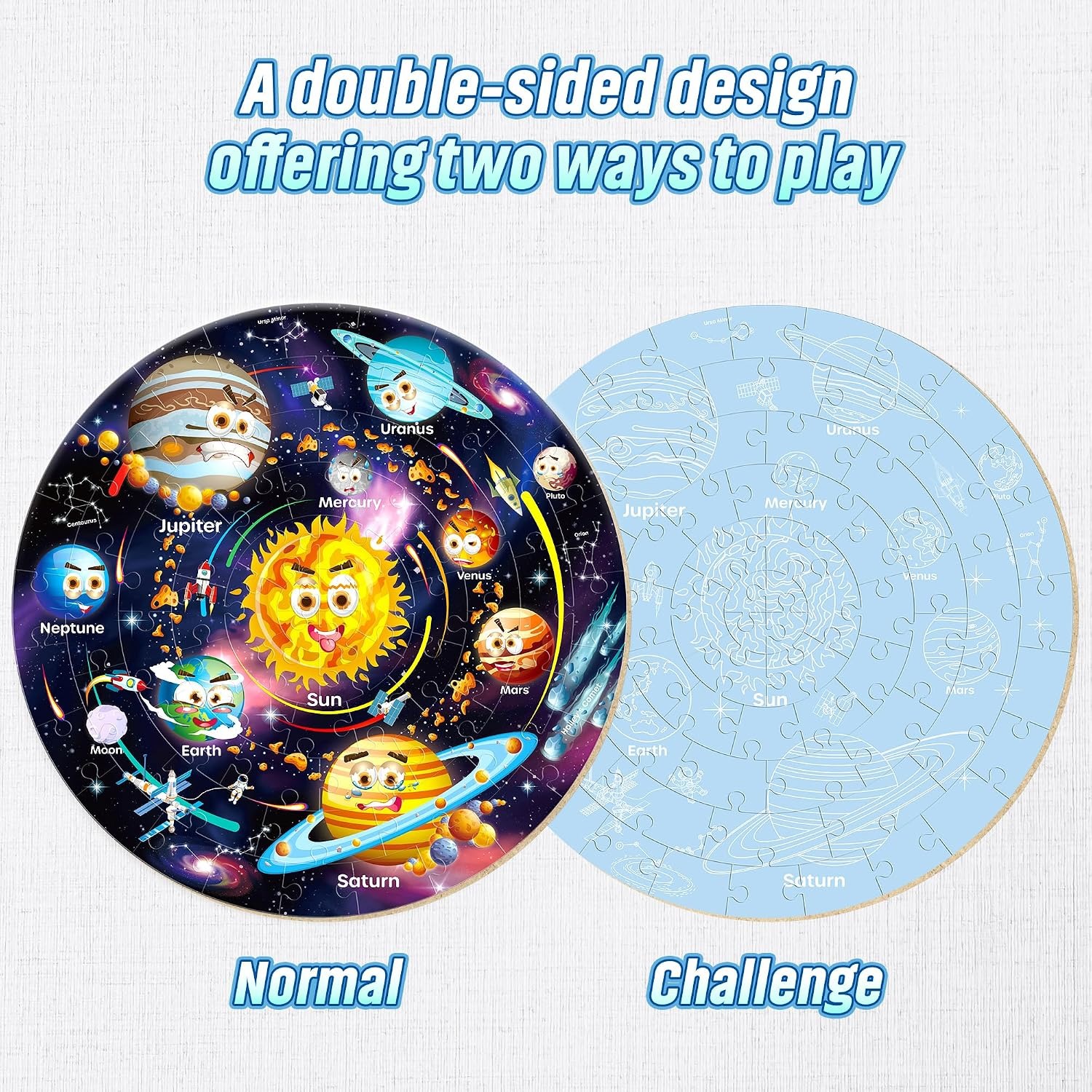
The round shape adds something here. With a square puzzle, most children learn to find the flat-edged pieces and build the frame. It is a reliable strategy and it works, but it also means a lot of the build is done on autopilot. Take the frame away and the child has to read the picture. They start noticing that the orange pieces belong near the sun and the dark ones belong at the outer edge. That is a different skill, and a slightly harder one.
Who this suits
The sweet spot is roughly four to six. A child at that age has usually finished a few 24 and 48 piece sets and is ready for more without needing an hour of concentration.
Three year olds can manage it with company. Sit next to them, sort the pieces into rough piles by colour, and let them place while you offer the occasional nudge. Expect the first build to take a while and expect them to wander off halfway. That is normal. By the third or fourth attempt most will stay with it.
Seven and eight year olds are at the top end. They will finish it quickly, which is not a bad thing. A puzzle a child can complete alone, confidently and fast, becomes a go-to for quiet time. Some children will time themselves and try to beat their record, which keeps it in rotation long after the challenge has gone.
It also works well for a child who is new to puzzles but older, say a six year old who has never been that interested. Starting them on a preschooler set feels patronising. Seventy pieces with a subject they actually care about is a better entry point.
How to choose the right piece count
Piece count is the single most important decision, and it is easy to get wrong in both directions.
Too few and a child finishes in two minutes and loses interest. Too many and they stall, get frustrated and decide puzzles are not for them. That second outcome is worse, because it puts them off for months.
A rough guide that holds up well in practice:
- Age 2 to 3, somewhere between 12 and 24 pieces
- Age 3 to 4, 24 to 48 pieces
- Age 4 to 6, 48 to 100 pieces
- Age 6 plus, 100 and upwards
At 70 pieces, this one sits in the four to six band, which matches the manufacturer's 36 months to eight years range with a bit of room at either end. If your child already breezes through 48 pieces, this is the natural next step. If they are still working hard at 24, give it a few months.
Subject matters almost as much as count. A child who loves space will push through a harder puzzle than they would attempt with a picture of a farmyard. Interest buys you patience. That is worth remembering when you are choosing between the best starter jigsaw puzzle options at similar sizes.
Setting up a good session
Clear the surface first. A table works, and so does a patch of floor, as long as there is nothing else competing for the space. Crumbs, toys and a half-finished drawing all pull attention away.
Tip the pieces out and turn them face up before you start. Children find flipping pieces boring, and if the first five minutes are boring they drift. Doing it for them is not cheating.
Sort by colour if the child is young. Oranges and yellows near the sun, blues and greens for Earth and Neptune, dark pieces for the background. Sorting is itself a skill, and it makes the build achievable.
Then step back. The urge to point at the right spot is strong, especially when your child is turning a piece the wrong way round for the fifth time. Resist it where you can. The value is in the struggle, not the finished circle.
Looking after it
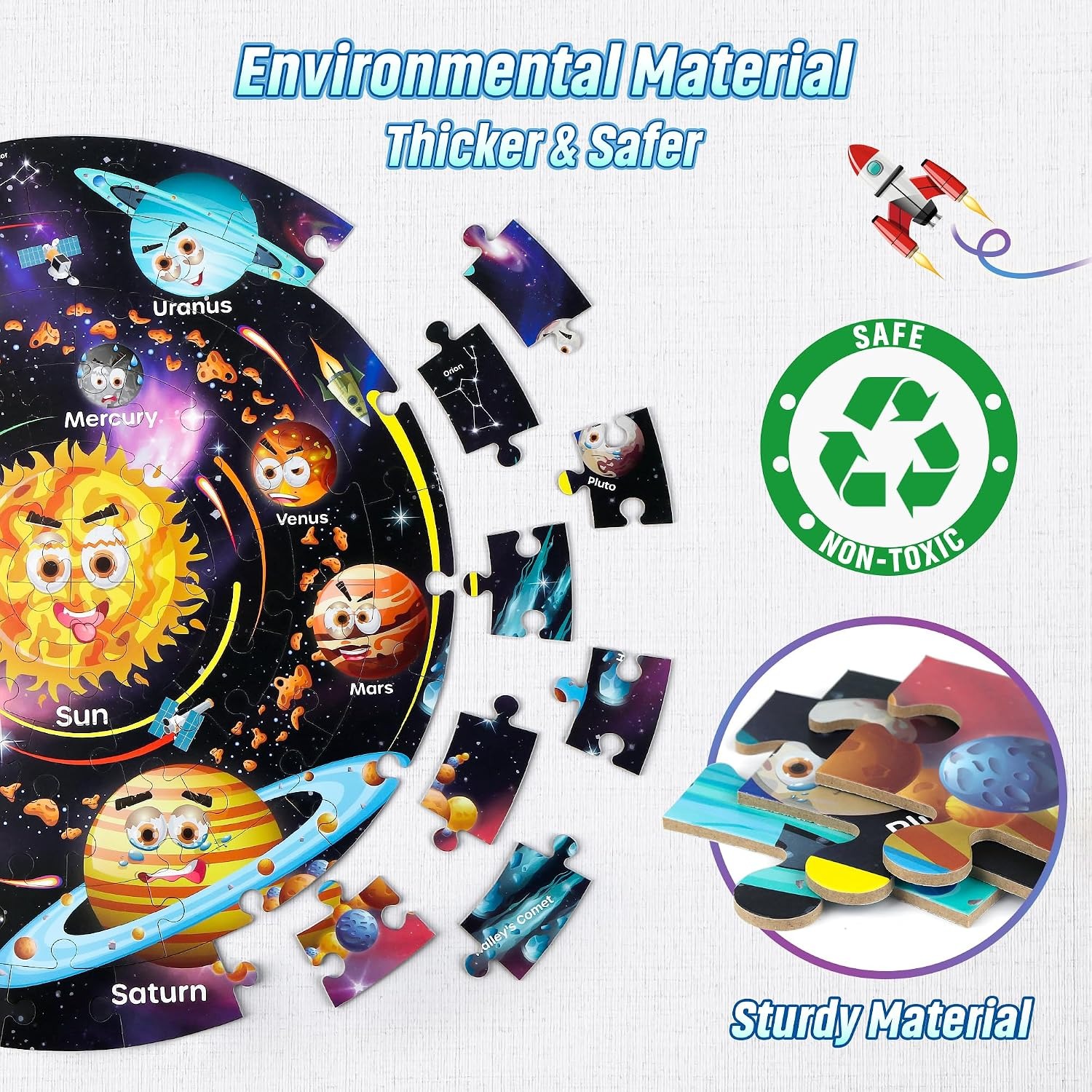
Wooden puzzle pieces are tougher than cardboard but they are not indestructible. Two things damage them, water and pressure.
Keep it dry. Wipe the surface with a barely damp cloth if something sticky lands on it, then dry it straight away. Never soak the pieces and never leave them on a wet surface. Wood swells, the fit goes loose and the puzzle never feels quite right again.
Keep feet off it. A piece that gets trodden on, especially near a narrow tab, can crack. If your child builds on the floor, make a rule about shoes off and no running through the room.
Pack up every time. Count the pieces back into the box. Seventy is a manageable number to check, and catching a missing piece on the same day means you can usually find it. A lost piece discovered three weeks later is gone for good. Storing the box somewhere dry, upright and out of direct sun handles the rest.
The short version
This is a 70-piece round jigsaw of the solar system, listed as wood, plastic free and PVC free, finished at about 21 by 21 centimetres and recommended for children from three to eight. It needs no batteries, no assembly and no screen.
Buy it if you have a four to six year old who already manages smaller puzzles and has started asking about planets. Buy it as a gift for a space-mad child, because it boxes and posts easily at around 0.82 kg. Hold off if your child is still finding 24 pieces hard, and come back to it in six months.
The best thing about a puzzle like this is that it gets rebuilt. A toy with a single trick gets played with once. A puzzle a child can finish, and finish faster each time, keeps coming off the shelf. And every time it does, they look at the planets again.